Brand:

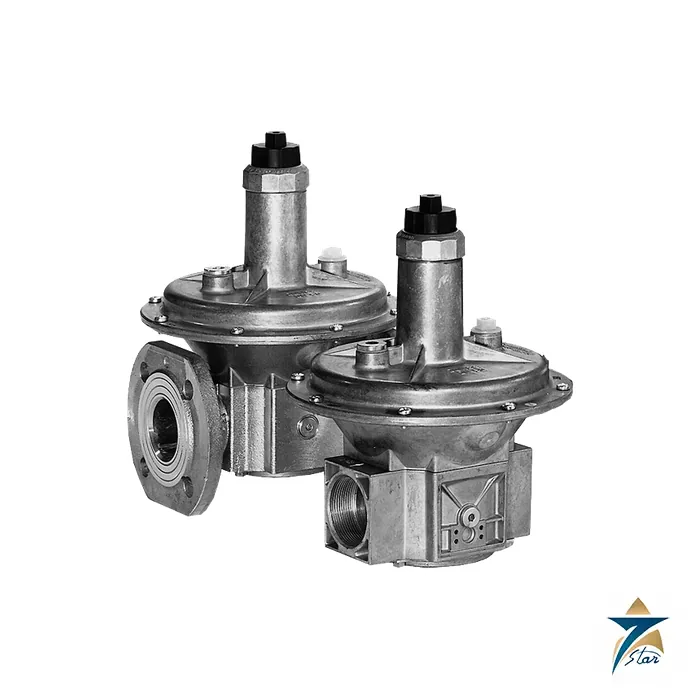
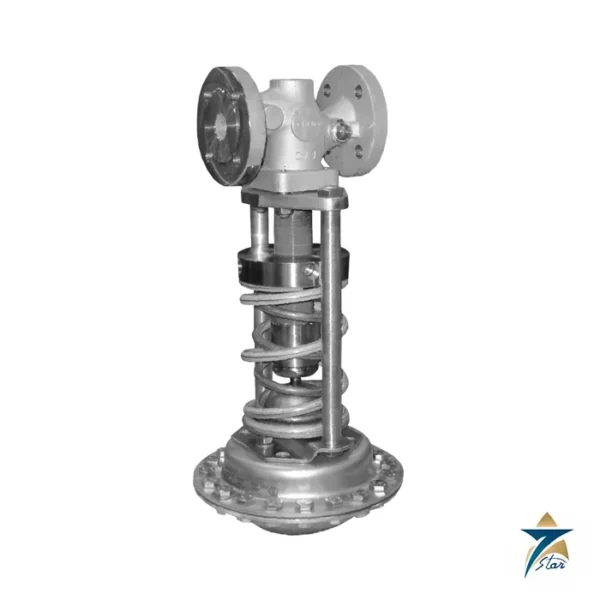
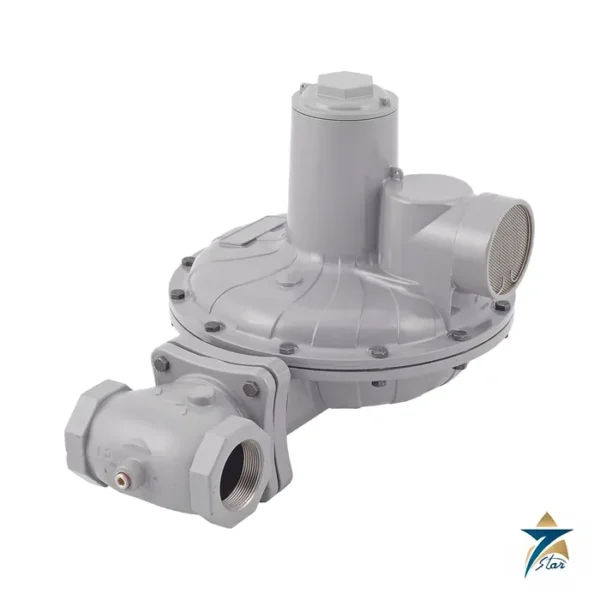
Dungs FRS Gas Pressure Regulator Rp 3/8 to DN 150

Description

Overview

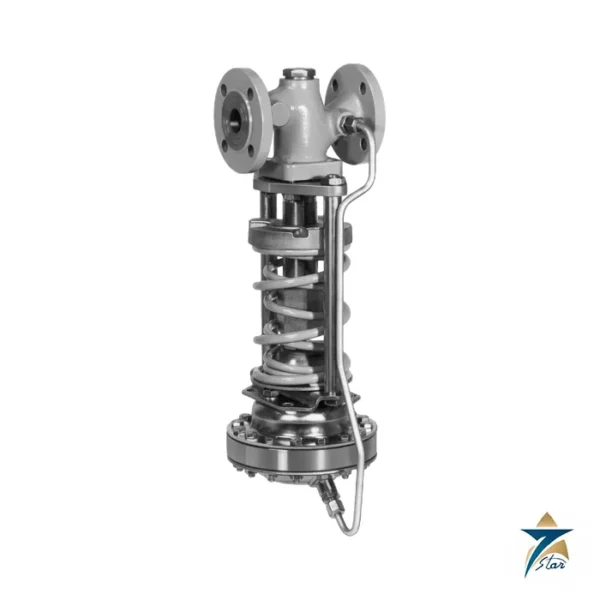
The Dungs FRS is a spring-loaded gas pressure regulator with an adjustable setpoint spring, designed for gas burners and gas-fired equipment. It complies with EN 88-1 and DIN 3380 and reduces a supply pressure of up to 500 mbar to a stable outlet pressure between 2.5 and 200 mbar. With threaded sizes from Rp 3/8 and flanged sizes up to DN 150, the Dungs FRS covers everything from a small domestic-scale appliance to a large industrial burner from a single product family.

Seven Star LLC supplies the Dungs FRS to burner OEMs, gas contractors and facility engineers in Oman and the GCC. As a trusted supplier with engineering support in Muscat, we help customers select body size and setpoint spring from flow and pressure data, and we can match replacement units to the order number of an existing regulator.

Working Principle

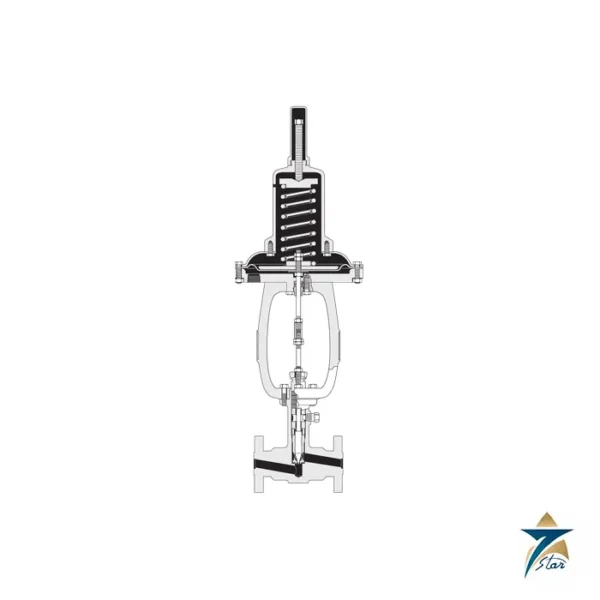
The regulator works on a force comparison between three forces: the adjustable setpoint spring, the differential pressure acting on the working diaphragm, and the weight of the moving parts. When outlet pressure drops because burner demand increases, the spring force opens the regulating cup further; when outlet pressure rises, the diaphragm force closes it. An inlet pressure compensation diaphragm reduces the influence of supply pressure changes, which gives sturdy, precise and sensitive regulation of the outlet pressure.

The outlet pressure is sensed through an internal pulse tap as standard. An external pulse connection can be ordered on both sides of the housing when the pressure should be controlled at a point further downstream, for example near the burner head. Because safety diaphragms are fitted, the Dungs FRS normally does not need a ventilation pipe to atmosphere, which simplifies installation inside buildings.

Engineering Design of the Dungs FRS

The housing is aluminium and steel, and the seals and diaphragms are NBR. The regulator contains no non-ferrous metals in the gas path and is suitable for dry gases with up to 0.1 vol.% H2S, as well as gases of families 1, 2 and 3 and other neutral gaseous media. Measuring connections are G 1/4 on both sides of the inlet section, and the regulator dome can be installed from vertically upright to lying horizontally.

Threaded models FRS 503, 505, 507, 510, 515, 520 and 525 cover Rp 3/8 through Rp 2 1/2 to ISO 7/1, while flanged models FRS 5040 to FRS 5150 use PN 16 flanges to DIN EN 1092-1 from DN 40 to DN 150. Nine setpoint springs, colour-coded brown, white, orange, blue, red, yellow, black, pink and grey, cover outlet ranges from 2.5–9 mbar to 140–200 mbar; the blue spring No. 4 for 10–30 mbar is fitted as standard.

Key Features

The Dungs FRS offers the following features for burner gas trains:

  • The regulator conforms to EN 88-1 Class A Group 2 and DIN 3380, with EC type examination under the Gas Appliances Regulation.
  • Inlet pressure up to 500 mbar is reduced to an outlet setpoint between 2.5 and 200 mbar.
  • An inlet pressure compensation diaphragm keeps the outlet stable when supply pressure varies.
  • Safety diaphragms are installed, so a vent line is needed only in special cases.
  • Internal pulse tapping is standard, with optional external pulse connections on both sides.
  • Sizes run from Rp 3/8 threaded to DN 150 flanged, sharing one spring and setting concept.
  • The gas path is free of non-ferrous metals and tolerates dry gas with up to 0.1 vol.% H2S.
  • Ambient temperature range is −15°C to +70°C, suitable for plant rooms and outdoor gas skids under cover.

Industrial Applications

The Dungs FRS is used upstream of burner safety valves on boilers, thermal oil heaters, industrial ovens, kilns, dryers and air heaters, and as an appliance regulator on commercial catering equipment. Gas-conveying lines and pulse lines should be steel of at least PN 1, DN 6, the regulator should be protected by a suitable dirt trap, and condensate must not drain into the housing, points our engineers check during selection. Final sizing follows the flow and pressure drop charts in the manufacturer datasheet, using the correction factor for the actual gas density.

Across Oman, typical sites include hotel and hospital boiler houses in Muscat, food and beverage plants in Rusayl and Sohar, and process-heat equipment in the Salalah free zone. Seven Star LLC supports these users with genuine Dungs FRS regulators together with downstream safety components such as the DUNGS DMV-D 5125/11 ECO double solenoid valve, the Dungs SV-D 505 safety solenoid valve and the DUNGS VPS 504 valve proving system, so a full gas train can be sourced in one GCC order.

Technical Specifications

The main Dungs FRS data from the manufacturer datasheet are shown here:

Parameter Specification
Model Dungs FRS 503 / 505 / 507 / 510 / 515 / 520 / 525 (threaded); FRS 5040 / 5050 / 5065 / 5080 / 5100 / 5125 / 5150 (flanged)
Connections Rp 3/8 to Rp 2 1/2 (ISO 7/1); DN 40 to DN 150, PN 16 flange to DIN EN 1092-1
Max. operating pressure 500 mbar (50 kPa)
Inlet pressure range +5 mbar or p2 +2.5 mbar up to 500 mbar
Outlet pressure range 2.5 to 200 mbar depending on setpoint spring
Standard EN 88-1 Class A Group 2, DIN 3380, RG 10
Setpoint springs Nine springs from 2.5–9 mbar to 140–200 mbar; blue No. 4 (10–30 mbar) standard
Media Gases of families 1, 2, 3 and neutral gases; dry, max. 0.1 vol.% H2S
Materials Aluminium and steel housing, NBR seals and diaphragms
Ambient temperature −15°C to +70°C
Pulse connection Internal standard; external optional on both sides
Weight 0.6 kg (FRS 503/505) to 38 kg (FRS 5150)

How to Order

For a Dungs FRS quotation, send Seven Star LLC your RFQ with the model or connection size, required flow rate, inlet pressure and target outlet pressure, or the order number of the regulator being replaced. Our instrumentation division in Muscat recommends body size and spring, confirms availability and delivery time, and provides the manufacturer datasheet for download. Seven Star LLC supplies genuine Dungs FRS gas pressure regulators with engineering support throughout Oman and the GCC.

Datasheets & Documents
  • PDF Datasheet Dungs FRS Pressure Regulator Datasheet (manufacturer, Ed. 01.18, No. 214 743) Download
Reviews (0)

Reviews

There are no reviews yet.

How would you rate this product?

It takes about 10 seconds — just tap a star. Your email is never published.

About brand

Open the gas train cabinet of a boiler or an industrial burner and there is a good chance the valves and pressure switches inside are marked DUNGS. Karl Dungs GmbH & Co. KG is a German maker of gas valves, regulators, pressure switches and combustion controls, based in Urbach near Stuttgart.

The company is family-owned and was established in 1945. Its North American business trades as DUNGS Combustion Controls through Karl Dungs Inc. Seven Star LLC is an independent supplier in Muscat. We source DUNGS gas valves, regulators, pressure switches and valve proving systems for burner operators and boiler contractors in Oman and the GCC, identified by type designation and article number.

DUNGS at a glance

Established 1945, Urbach, Germany, which is still the main manufacturing site
Company Karl Dungs GmbH & Co. KG, with subsidiaries including Karl Dungs Inc. in the USA
Product families Gas pressure regulators, safety shut-off solenoid valves, double solenoid valves, GasMultiBloc combined units, pressure switches, valve proving systems, burner controls and air/gas ratio controls
Applications Boilers and burners, process heat and furnaces, gas engines and CHP, heating appliances

DUNGS products we list

Series Type Role in the gas train
FRS Gas pressure regulator Holds a stable outlet pressure to the burner; sizes from Rp 3/8 to DN 150
MB-DLE GasMultiBloc Combined regulator and two safety valves Filter, regulator and two shut-off valves in one compact body, e.g. MB-DLE 407 B01 S50
DMV-D, DMV-D 5125/11 ECO Double solenoid valve Two automatic shut-off valves in series in one body, the standard safety shut-off arrangement for a burner
SV-D 505 Single safety solenoid valve Fast-closing shut-off valve, Rp 1/2 to Rp 2
GW A6, GW 150 A6 Pressure switch Low and high gas pressure and air pressure monitoring, e.g. 5 to 150 mbar
VPS 504 Valve proving system Checks that both shut-off valves seal tightly before every burner start

A typical gas train runs from the manual isolation valve through a filter, the regulator, a low gas pressure switch and two automatic shut-off valves to the burner. Larger burners add a high pressure switch and valve proving. Combined units such as the GasMultiBloc put several of these functions in one body, which saves space in compact burner housings.

Standards behind a DUNGS gas train

Each component in a gas train is tested to its own European product standard, and the standard printed on the DUNGS nameplate tells you which role the part is approved for. A replacement must carry the same approval for the same role.

EN 161 Automatic shut-off valves for gas burners and gas appliances: DMV double solenoid valves, SV single valves and the valve section of a GasMultiBloc
EN 88-1 Gas pressure regulators with inlet pressures up to 500 mbar, such as the FRS series
EN 1854 Pressure sensing devices for gas burners: GW gas and air pressure switches
EN 1643 Valve proving systems for automatic shut-off valves, such as the VPS 504
EN 298 Automatic burner control systems that supervise flame and start-up sequence
EN 676 Forced-draught gas burners as a whole, which sets when a high-pressure switch and valve proving are required

DMV, GasMultiBloc or separate components?

A DMV double solenoid valve puts two class A shut-off valves in one body and is used where the regulator and filter are separate parts of the train. A GasMultiBloc such as the MB-DLE adds the filter and regulator to the same body, so it is the usual choice on compact packaged burners. Larger and industrial burners keep separate components: a flanged FRS regulator, a DMV or two SV valves, GW pressure switches and a VPS valve proving system. When replacing a part, keep the same arrangement as the burner manufacturer, because the burner approval was issued for that train.

Where DUNGS products are used

In Oman and the GCC, DUNGS components sit on burners for steam and hot water boilers in hotels, hospitals, laundries and food plants, on industrial furnaces and dryers, and on gas engine fuel trains. Most requests are like-for-like replacements of valves, coils and pressure switches during burner servicing.

Ordering DUNGS parts: what we need

Send the full type designation and the 6-digit article number from the label (for example VPS 504 S04, 219881), the connection size, the maximum inlet pressure, the coil voltage, and the burner make and model if known.

Facts checked against DUNGS product information and company directory records, October 2026.

FAQ

Questions about the Dungs FRS Gas Pressure Regulator Rp 3/8 to DN 150

Answers from our engineering team on installation, compatibility and integration.

01What pressures can the Dungs FRS handle?
The Dungs FRS accepts inlet pressures up to 500 mbar and regulates the outlet pressure between 2.5 and 200 mbar, depending on the setpoint spring installed. The inlet pressure must be at least 5 mbar, or the outlet pressure plus 2.5 mbar.
02How is the outlet pressure range changed?
Nine colour-coded setpoint springs cover ranges from 2.5-9 mbar up to 140-200 mbar. The regulator is supplied with the blue spring No. 4 for 10-30 mbar as standard, and exchanging the spring allows other outlet pressures; each spring has a size-specific order number.
03Which sizes are available?
Threaded versions FRS 503 to FRS 525 cover Rp 3/8 to Rp 2 1/2, and flanged versions FRS 5040 to FRS 5150 cover DN 40 to DN 150 with PN 16 flanges to DIN EN 1092-1. Weights range from 0.6 kg for the smallest threaded body to 38 kg for DN 150.
04Does the FRS need a vent line?
Normally not. Safety diaphragms are installed, so a ventilation pipe is only required in special cases. The breathing connection is G 1/4 up to Rp 1 and G 1/2 from Rp 1 1/2 and DN 40.
05Can Seven Star LLC help select the right FRS size?
Yes. Seven Star LLC supplies Dungs FRS regulators with engineering support in Muscat. We check required flow, inlet pressure and burner pressure against the manufacturer flow charts and recommend size and spring for projects in Oman and the GCC.