- Automation & ControlView all 3,144 products
- Automation Accessories
- AC Drives
- PLC & I/O Cards
- Industrial Communications
- Vibration Monitoring
- Controllers & Data Acquisition
- Isolator & Barrier
- Safety Switches & Guard Locking
- Encoders
- Motor Soft Starters
- CCTV & Security
- Pneumatic Cylinders
- HMI Displays
- Servo Drives
- Industrial Computers
- Machine Vision
- Automation Software
- Robotics
Brand: Autonics
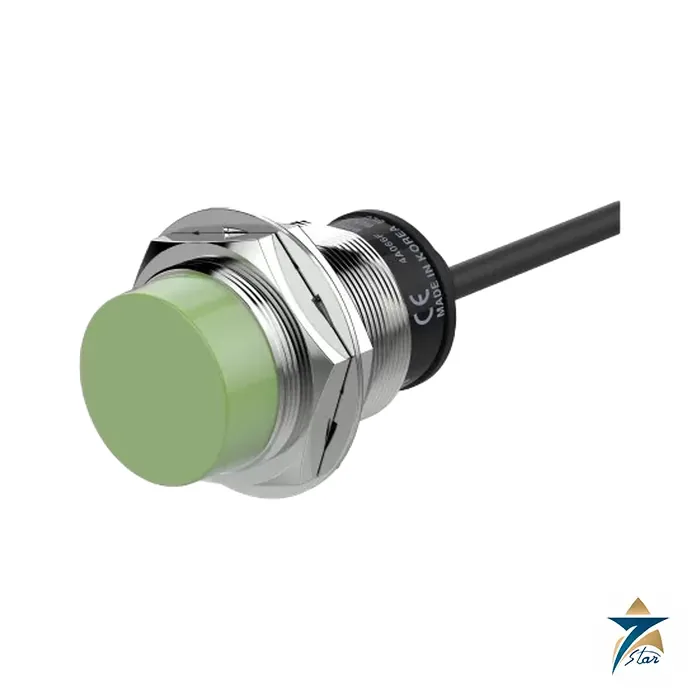
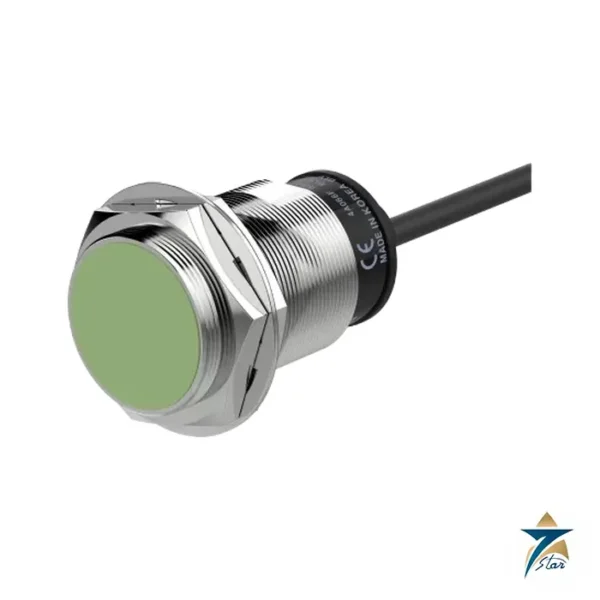
Autonics PR30-15DN M30 Inductive Proximity Sensor NPN NO
Description
Overview
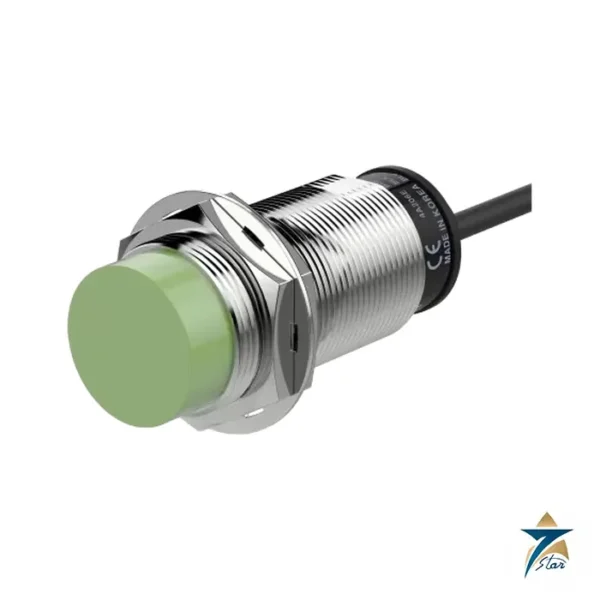
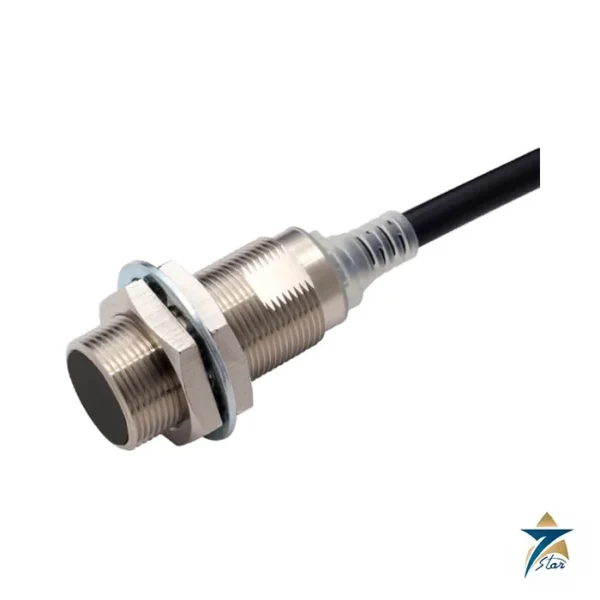
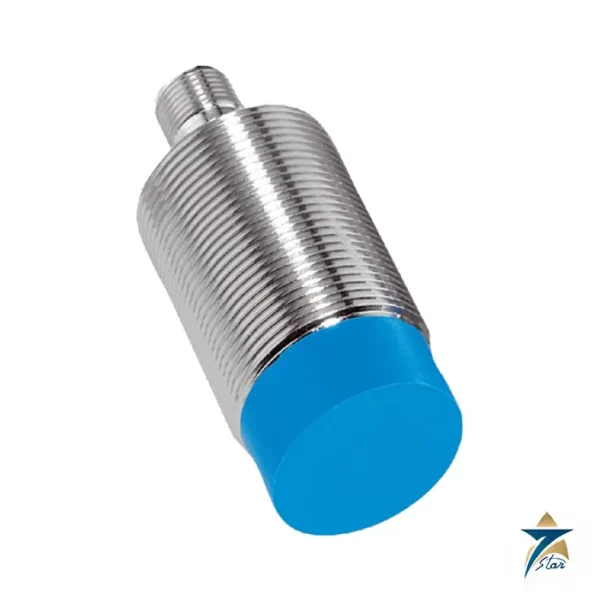
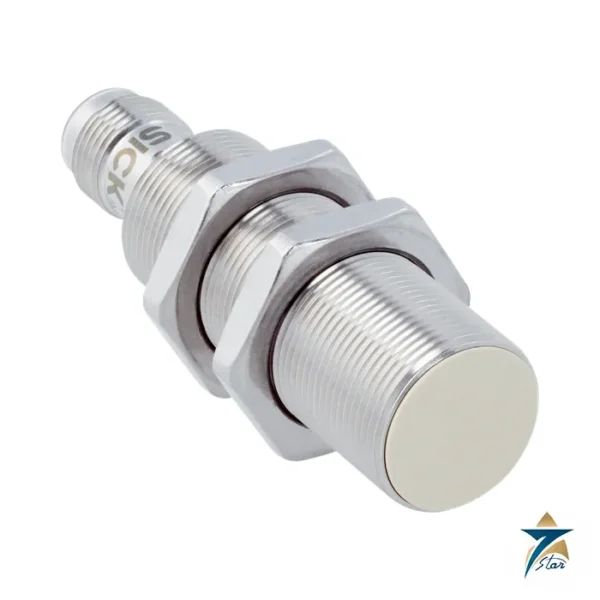
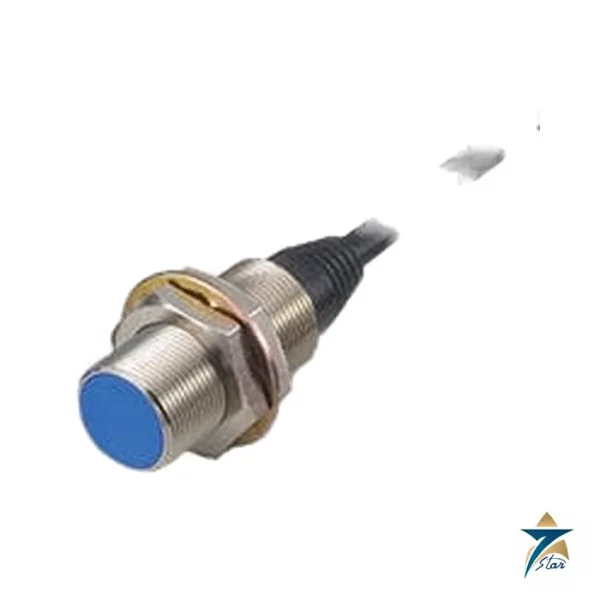
The Autonics PR30-15DN is the standard-length M30 inductive proximity sensor of the PR family, with a non-flush head and the longest reach of the 30 mm range at 15 mm. It is a three-wire DC device: supply 12 to 24 V DC, output NPN normally open, switching current up to 200 mA. Seven Star LLC is an independent supplier serving Oman and the GCC.
Plants use this sensor wherever a thick steel target passes with a wide mechanical tolerance, for example a shaft collar, a pusher plate or a cam, and where the sensor body has to stay out of the splash and swarf zone. Its large 30 mm sensing head tolerates bigger gaps than the M18 and M12 versions, which makes alignment forgiving after a service.
What each field of Autonics PR30-15DN tells you
The two digits after PR give the diameter of the sensing side, which is 30 mm, and the two digits after the dash give the rated sensing distance, which is 15 mm. Because the ratio of 15 to 30 is the larger of the two columns in the manual, you can conclude the head is non-flush; the flush 30 mm version is rated for 10 mm. There is no L or S, so the body has normal length, no W or CM, so it is the cable type with 2 m of 5 mm cable. The final D and N fields are 12 to 24 V DC and NPN normally open.
Autonics PR30-15DN data table
| Item | Data |
|---|---|
| Diameter of sensing side | 30 mm |
| Installation type | Non-flush |
| Sensing distance | 15 mm |
| Setting distance | 0 to 10.5 mm |
| Standard sensing target | Iron 45 x 45 x 1 mm |
| Average response frequency | 200 Hz |
| Operating voltage | 10 to 30 V DC |
| Current consumption | 10 mA or less |
| Control output | NPN, normally open, up to 200 mA |
| Residual voltage | 1.5 V or less |
| Protection circuits | Surge, output over-current, reverse polarity |
| Ambient temperature | -25 to 70 C |
| Humidity | 35 to 95 percent RH |
| Enclosure rating | IP67 |
| Case and nut | Nickel plated brass; PBT sensing face |
| Weight | About 170 g, about 207 g with packing |
Why a 15 mm gap matters
Sensing distance is not a pure number: for the Autonics PR30-15DN the stated 15 mm applies to the standard iron plate of 45 x 45 x 1 mm, and the real switching point moves with target size, thickness and material. A smaller or non-ferrous target will switch at a smaller gap, and the manual notes that the detecting distance changes with the shape, size or material of the target. Temperature adds a further shift of up to plus or minus 10 percent of the sensing distance. This is why the recommended working gap is only 70 percent of nominal, and why you should always prove the installed gap on the real machine.
Hysteresis of 10 percent or less is the difference between the point at which the output switches on and the point at which it switches off. In practice it prevents chatter when a target hovers at the edge of the range, for example on a vibrating guard. A wide gap setting uses the hysteresis band more, so when vibration is present, move the target closer to the middle of the setting distance.
Practical advantages
- Highest sensing distance in the M30 range of this series
- Compact normal-length body, easier to fit in a tight enclosure than the long version
- Short-circuit protected output that survives a miswired load during commissioning
- Two nuts and a washer come in the box
- Operation indicator visible from the side of the head
Installation guide
Mount the Autonics PR30-15DN so that the face is at about 10 mm from the target, which corresponds to 70 percent of the rated distance. Keep the zone in front of the head free of other metal to a diameter of 90 mm. With two sensors facing each other keep 90 mm between them, and also 90 mm when they sit side by side. Tighten the nuts using the supplied washer, with up to 49 N m at the front position and 78.4 N m at the rear.
Electrical connection is brown to positive, blue to zero volts and black to the input. Allow 0.8 seconds after switching on. The manual asks for the 12 to 24 V DC supply to be insulated and limited in voltage and current, or a Class 2 SELV supply, so do not feed it from an unregulated rectifier.
Comparison with other M30 PR sensors
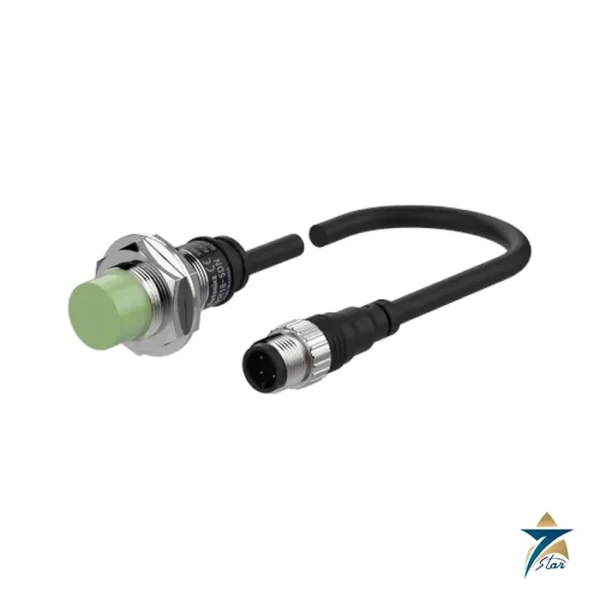
The long-body PRL30-15DN has identical electrical data but weighs about 210 g, against about 170 g here. The flush PR30-10DN offers 10 mm and 400 Hz. The cable connector style swaps the 2 m lead for a 300 mm tail with an M12 plug. The AC 2-wire PR30-15AO works from 100 to 240 V AC with a response of only 20 Hz, so for any counting job the DC type here is a better fit.
Typical applications
Typical jobs in Oman and the GCC include position feedback of heavy gate and penstock slides at water works, confirming the end stop of sliding doors on cargo handling gear, detecting steel carriers on chain conveyors in food and beverage plants, and monitoring bolt heads on rotating drums in recycling plants. Dusty yards ask for a periodic wipe. Because the manual excludes explosive atmospheres, install it outside classified areas.
Selecting the supply and the input card
A DC three-wire sensor such as the Autonics PR30-15DN is only as good as the input it feeds. With NPN output, the signal line is pulled to 0 V when the target is present, which matches sinking inputs wired to a positive common. Many European and Middle East PLC cards expect PNP, so check the card datasheet before purchase. The residual voltage across the output is 1.5 V or less, and the output can carry up to 200 mA, which is enough to drive a small relay or an interposing LED module directly, but inductive loads need a flywheel diode.
Do not run the sensor cable in the same duct as motor leads or variable speed drive outputs. Induced noise can create false pulses on the input even though the sensor has surge protection built in. Where long runs are unavoidable, use a shielded extension and ground the shield at the panel end only.
Service and care
Clean with a dry cloth. Do not rub the face with hard objects. When replacing a failed sensor, check the new unit for NPN against PNP before connecting it to the input card, because the wrong polarity will not damage the sensor but will leave the signal stuck. Keep cable runs below 200 m when extended with AWG 22.
Related items you may also need: Autonics PR18-8DN M18 Inductive Proximity Sensor 8 mm | Autonics E40S6-2500-6-L-5 Rotary Encoder Incremental | Omron E2E-X14MD1 M18 2-Wire Proximity Sensor | All Autonics products.
Points to confirm for the Autonics PR30-15DN
- If the Autonics PR30-15DN is a like-for-like replacement, read the full code from the installed nameplate and compare it with this page.
- For each Autonics PR30-15DN request we confirm the exact code, new or surplus condition and lead time in writing.
- Dimensions, ratings and connection data for the Autonics PR30-15DN are in the datasheet attached to this page.
- The Autonics PR30-15DN belongs to our inductive proximity sensors range and can be delivered to Muscat, Sohar, Duqm and other GCC locations.
- Plants that run the Autonics PR30-15DN on critical service often hold a spare unit in the store.
Documents and quotation
The series instruction manual is attached as a datasheet to this product page. Send an RFQ to Seven Star LLC quoting Autonics PR30-15DN, the quantity and your destination in Oman or the GCC, and we will answer with stock and lead time.
Other Models in the PR DC3 Range
Seven Star LLC supplies models from the PR DC3 range in Oman and the GCC. Compare the related models below and request a quote for the one that matches your application.
| Model | Category | |
|---|---|---|
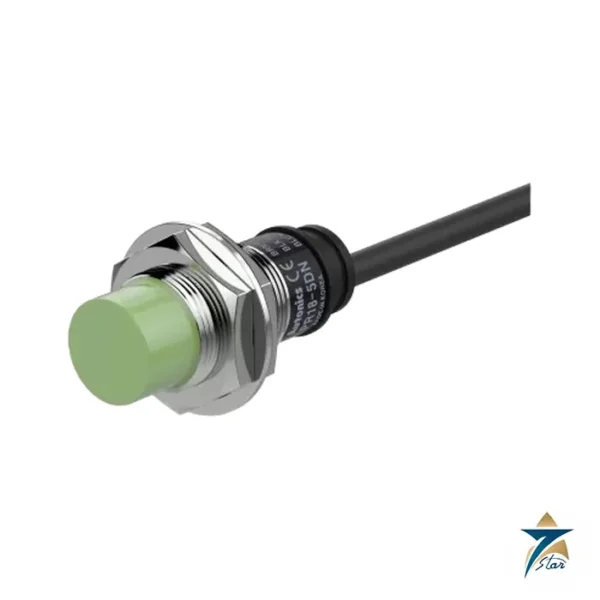
| Autonics PR18-5DN M18 Inductive Proximity Sensor, NPN NO | Inductive Proximity Sensors | View details |
| Autonics PRL30-15DN M30 Long Inductive Proximity Sensor, NPN | Inductive Proximity Sensors | View details |
| Autonics PR30-15DN M30 Inductive Proximity Sensor NPN NO | Inductive Proximity Sensors | You are viewing this model |
Datasheets & Documents
- Datasheet Autonics PR30-15DN M30 Inductive Proximity Sensor NPN NO Datasheet Download
Reviews (0)
How would you rate this product? Cancel reply
About brand
Autonics is a South Korean maker of sensors and controllers, founded in 1977 as a small engineering business making controllers for looms. It took the Autonics name in 1988 and opened a new corporate headquarters in Busan in 2014. Autonics makes proximity and photoelectric sensors, rotary encoders, temperature controllers, counters, timers and stepper motor systems, with factories in Busan and Yangsan.
Seven Star LLC lists the Autonics E40S6-2500-6-L-5 incremental rotary encoder and supplies Autonics sensors and control devices in Oman and the GCC.
Autonics company profile
| Founded | 1977, South Korea |
|---|---|
| Current name | Autonics, since 1988 |
| Headquarters | Busan, South Korea |
| Factories | Busan and Yangsan |
| Product families | E40 and E50 rotary encoders, PR proximity sensors, BJ photoelectric sensors, TK temperature controllers |
Milestones
- 1977: The company is founded.
- 1988: Renamed Autonics Corporation.
- 2014: Opens its Busan headquarters.
Reading the Autonics E40S encoder code
E40S is the 40 mm diameter shaft-type incremental encoder, and the 6 that follows is the 6 mm shaft. 2500 is the resolution in pulses per revolution. The next 6 means six output signals: A, B and Z with their inverted signals. L is a line driver output and the final 5 is a 5 V DC supply. The same 40 mm body is made in hollow shaft form as the E40H and E40HB series.
Where Autonics encoders are used
Servo and spindle feedback, conveyor length measurement, packaging and printing machines.
Ordering Autonics encoders: what we need
Send the complete model string from the label. If it is worn off, give the body and shaft diameter, pulses per revolution, output type, supply voltage and cable or connector style.
Facts checked against Autonics corporate profiles, October 2026.
Browse Autonics products by category: Encoders.
FAQ
Questions about the Autonics PR30-15DN M30 Inductive Proximity Sensor
Answers from our engineering team on installation, compatibility and integration.
01How far does the Autonics PR30-15DN sense?
The rated sensing distance is 15 mm on the 45 x 45 x 1 mm iron target, with a recommended setting distance of 0 to 10.5 mm.
02Is PR30-15DN a flush or non-flush sensor?
It is a non-flush type, so a metal-free zone with a diameter of 90 mm in front of the head and 90 mm spacing between neighbours is required.
03What output does the PR30-15DN provide?
It has an NPN output with normally open function, rated up to 200 mA, with surge, short-circuit and reverse polarity protection.
04How fast can the PR30-15DN switch?
The average response frequency is 200 Hz, which suits slow to medium speed targets but not fast shaft counting.
05What is the cable length on the PR30-15DN?
The cable type has 2 m of 5 mm diameter, 3-wire cable; the cable connector version is a different code.


Reviews
There are no reviews yet.