Overview
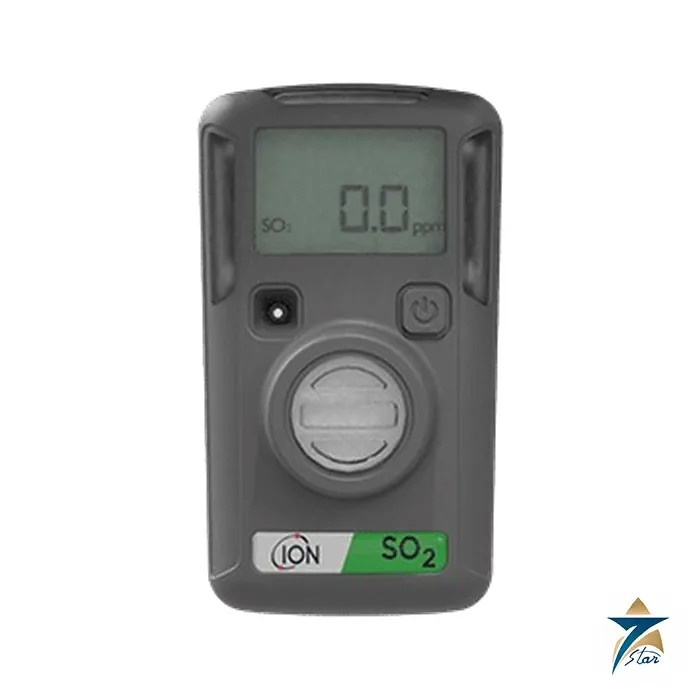
The ION Science ARA400 is a personal, disposable single gas detector built to watch for sulphur dioxide while a worker moves through a plant. It belongs to the ARA family from ION Science, a British gas detection manufacturer, and it is the member of that family dedicated to SO2 with a detection range of 0 to 50 ppm. The case is a compact 87 x 50 x 29 mm and weighs 92 g, so it clips to a collar or chest strap without drawing attention.
Because the unit is disposable, there is no sensor to replace and no routine recalibration cycle to administer in the same way as a reusable instrument. The user switches it on, checks the live reading on the LCD, and relies on the audible, visual and vibrating alarms if the gas level rises. At the end of its stated operating life the whole detector is retired, which removes a lot of maintenance paperwork from busy shutdown crews.
Seven Star LLC is an independent supplier serving Oman and the GCC. We list the ION Science ARA400 for refineries, gas processing sites, sulphur recovery units, power stations and chemical plants that need a simple personal SO2 monitor, and we quote it on request.
Key features of the ION Science ARA400
- Plug-in electrochemical sensing cell dedicated to sulphur dioxide, with a 0 to 50 ppm detection range.
- Single-button operation, so a worker in gloves can start the unit, run a self-test and read the display.
- Live reading and instantaneous alarms, with adjustable low and high alarm set points.
- Audio alarm of 95 dB at 10 cm, a bright LED visual alarm and a vibrating alarm that still works at the colder end of the range.
- Self-test routine that exercises the sounder, LED and vibrator on a single press, with a configurable reminder interval.
- Lifetime-remaining countdown that helps supervisors plan which units to issue before a long turnaround.
- Event log holding the last 30 events, which can be downloaded through the optional infrared link.
- IP67 enclosure, rated for dust and temporary immersion, with operation from minus 40 to plus 60 degrees Celsius for SO2 models.
ION Science ARA400 technical specifications
The table below collects the figures stated for the SO2 model in the manufacturer brochure. Where a value is shared by the whole ARA family it is shown for completeness, and the full order code should always be confirmed on the nameplate of the unit you intend to purchase.
| Parameter |
Value |
| Model |
ARA400, sulphur dioxide (SO2) |
| Sensor type |
Single plug-in electrochemical cell |
| Detection range |
0 to 50 ppm SO2 |
| Battery |
3.6 V DC, 1.65 Ah lithium |
| Battery life |
24 months of operation with 2 minutes of alarm per day |
| Event log |
Last 30 events |
| Audio alarm |
95 dB at 10 cm |
| Visual and vibrating alarms |
LED and vibrator (vibration operates within plus or minus 10 degrees Celsius) |
| Operating temperature |
Minus 40 to plus 60 degrees Celsius |
| Humidity |
5 to 95 percent RH |
| Ingress protection |
IP67 |
| Display |
Liquid crystal display |
| Weight |
92 g |
| Dimensions |
87 x 50 x 29 mm |
| Shelf life |
12 months for SO2 |
| Hazardous area rating |
Class I Division 1 Groups A, B, C, D T4; Class I Zone 0 AEx ia IIC T4 Ga; Ex ia IIC T4 Ga |
How ION Science ARA400 differs from other ARA variants
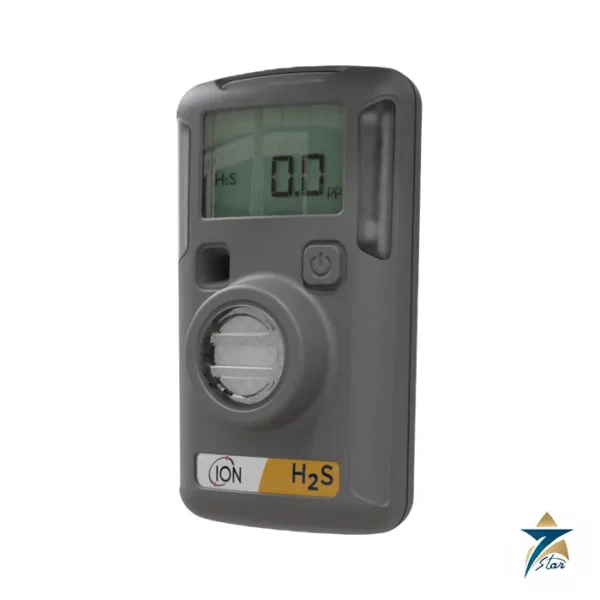
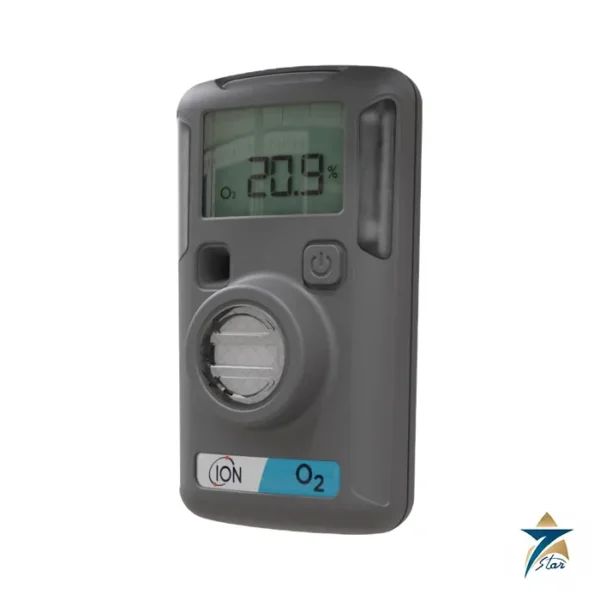
The ARA family shares one housing, one display and one set of user options, so the difference between members is the gas and the numbers that go with it. The ION Science ARA400 covers SO2 at 0 to 50 ppm, whereas the ARA100 measures hydrogen sulphide up to 100 ppm, the ARA200 measures carbon monoxide up to 300 ppm, and the ARA300 measures oxygen from 0 to 25 percent. The shelf life of the SO2 model is 12 months, while the oxygen model is limited to 6 months.
Two variants, the ARA100H and ARA200H, add a hibernation function that stretches battery life from 24 to 36 months. The ARA400 is a standard 24 month model with no hibernation option. Its minimum temperature of minus 40 degrees Celsius matches the H2S and CO models, while the oxygen detector starts at minus 30 degrees Celsius.
Typical applications in oil, gas, utilities and industry
Sulphur dioxide appears wherever sulphur bearing fuel is burned or sour gas is processed. In Oman and across the GCC, that means flare stacks, sulphur recovery trains, amine and Claus units, sour gas gathering stations and the stack areas of power and desalination plants. A worker walking a flare knock-out drum or opening a scrubber vessel needs a personal alarm at the breathing zone, and the ARA400 provides that with no set-up beyond switching it on.
Outside hydrocarbon processing, SO2 is encountered in metal smelting, pulp and paper, sulphuric acid handling, wine and food preservation, and water treatment where sulphite is used for dechlorination. Emergency responders also like a disposable detector because a unit can be issued to each member of a team without a docking schedule. Confined space entry teams can pair the unit with a separate oxygen and flammable monitor for a complete picture.
Selection and compatibility notes
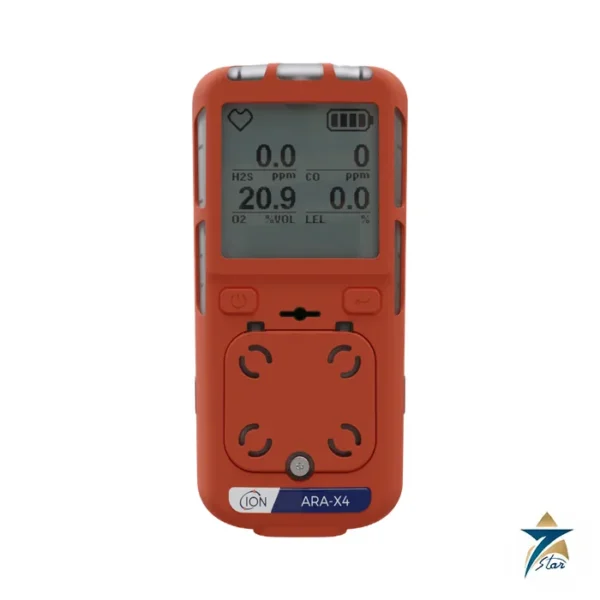
Choose the ARA400 when the hazard is sulphur dioxide and a single-gas personal alarm is enough. If the task also involves hydrogen sulphide, carbon monoxide and oxygen at the same time, a four-gas monitor such as the ARA-X4 is a better fit than carrying several disposable units. Remember that electrochemical sensors can respond to other gases, so refer to the manual for cross sensitivity data when other toxic gases are present.
Check the hazardous area marking against your site classification before issue. The brochure lists Class I Division 1 and Zone 0 intrinsically safe ratings for the ARA400 with an ambient range from minus 40 to plus 60 degrees Celsius, together with the applicable CAN/CSA and ANSI/UL 60079 standards. The optional ARA DOCK4 station can bump test and calibrate up to four units at once, and the infrared link lets a PC configure alarms and download logs. Both accessories are ordered separately.
Installation and commissioning
There is nothing to install in the plant sense. Remove the detector from its packaging, press the button to start it, and watch the start-up sequence confirm the sounder, LED and vibrator. Record the unit serial number against the person or job it is issued to, and run a self-test so that the reminder interval starts counting from a known date.
If the infrared link is available, set the user ID, the low and high alarm levels, the displayed data (live reading or lifetime remaining), and the calibration, bump test and self-test intervals before the unit goes to the field. Clip it within the breathing zone, clear of clothing folds that could muffle the sounder, and keep the gas inlet free of paint, tape and dirt. A functional bump test with SO2 gas is good practice before each shift on critical work.
Maintenance and service life
Maintenance is limited to inspection and testing. Keep the housing clean with a damp cloth, check that the display is legible, and repeat the self-test on the schedule your safety procedure sets. Bump test frequency and calibration intervals are configurable, and reminders on the unit prompt the user when a test is due.
When the lifetime-remaining counter approaches zero, plan the replacement. Stock held on the shelf has a stated shelf life of 12 months for SO2, so avoid over-ordering far ahead of need. Retire any unit that fails a bump test, shows a damaged case or has been exposed to a gas level above its range, and follow your site rules for disposal of lithium batteries.
Related products and ordering notes
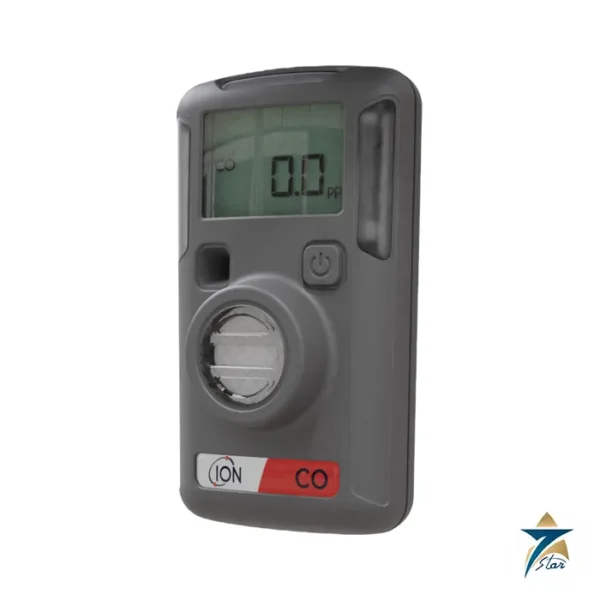
Related items from the same manufacturer include the ARA100 for H2S, the ARA200 for CO, the ARA300 for oxygen, the ARA100H and ARA200H hibernation models, the ARA DOCK4 test station and the ARA-X4 multi-gas monitor. When you ask us to quote the ION Science ARA400, tell us the quantity, whether you need the infrared link or the dock, and your delivery location so that we can confirm availability.
Seven Star LLC deals with industrial instruments from many manufacturers, so one request can combine gas detectors with analysers, valves or electrical items that are needed for the same project.
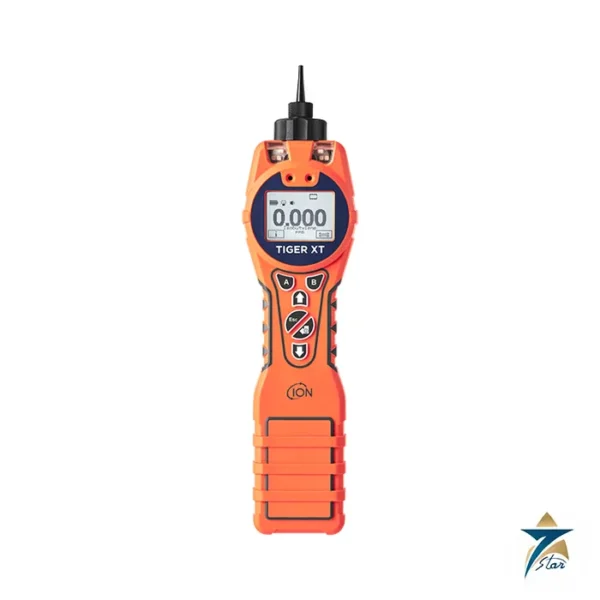
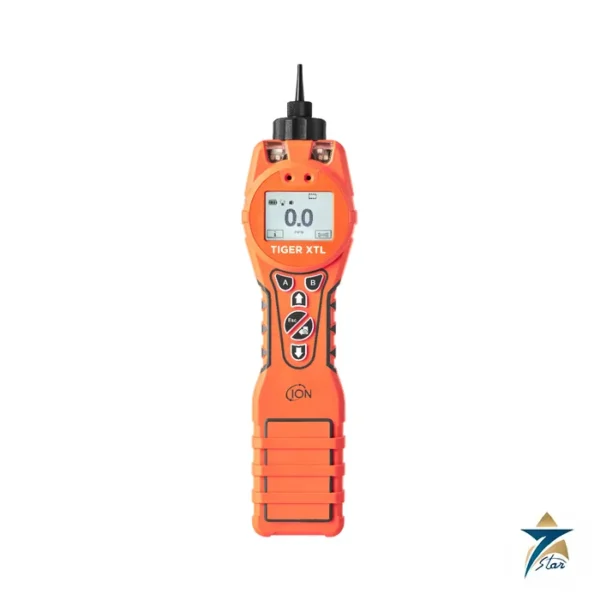
Related items you may also need: ION Science Tiger XTL Handheld VOC Gas Detector | ION Science Tiger XT Handheld VOC Detector | ION Science Titan 2 Fixed Benzene Monitor | All ION Science products.
Documents and quotation
The manufacturer brochure for the ARA range, which covers the ARA400, is available as a datasheet from this page. It states the detection ranges, battery life, approvals, alarm levels and dimensions used above. Please send your RFQ with the part number ARA400, the quantity and any accessories you need, and we will respond with availability and lead time for Oman and the GCC.
Other Models in the ARA Range
Seven Star LLC supplies models from the ARA range in Oman and the GCC. Compare the related models below and request a quote for the one that matches your application.

 Automation & Control
 Electrical & Power
 Fittings & Valves
 Sensors & Transmitters
 Emergency Power
 Analyzer Systems
 Motors, Pumps & Turbines
 Metering Systems
 Fire & Gas Systems
 Portable Test & Measurement
 Welding
 Compressor & Cooling
 Bearings & Power Transmission
 Filtration
 Safety & PPE
 Material Handling & Lifting Equipment
 Non-Destructive Testing (NDT)



Reviews
There are no reviews yet.