- Automation & ControlView all 3,164 products
- Automation Accessories
- AC Drives
- PLC & I/O Cards
- Industrial Communications
- Vibration Monitoring
- Controllers & Data Acquisition
- Isolator & Barrier
- Safety Switches & Guard Locking
- Encoders
- Motor Soft Starters
- CCTV & Security
- Pneumatic Cylinders
- HMI Displays
- Servo Drives
- Industrial Computers
- Machine Vision
- Automation Software
- Robotics
Brand: ION Science
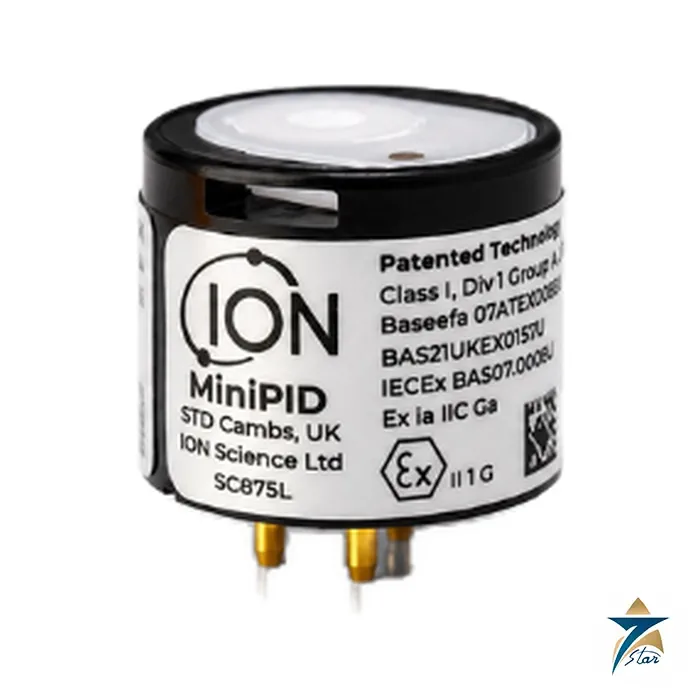
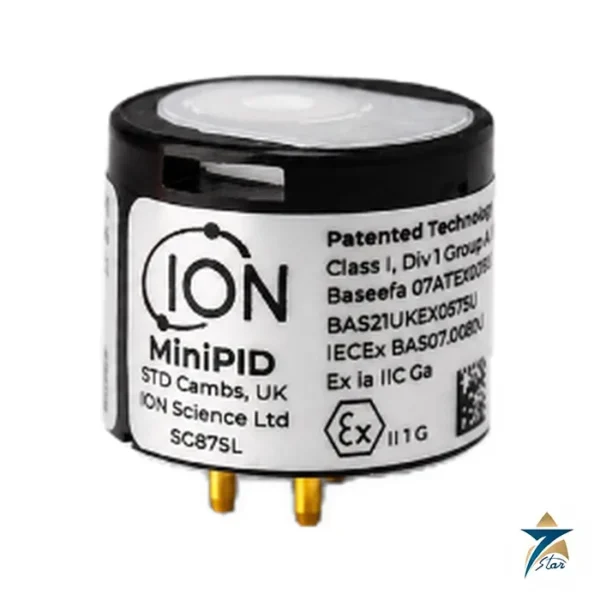
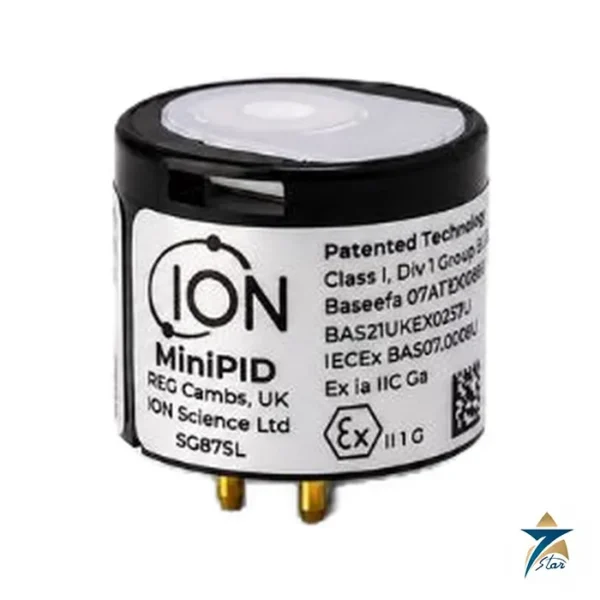
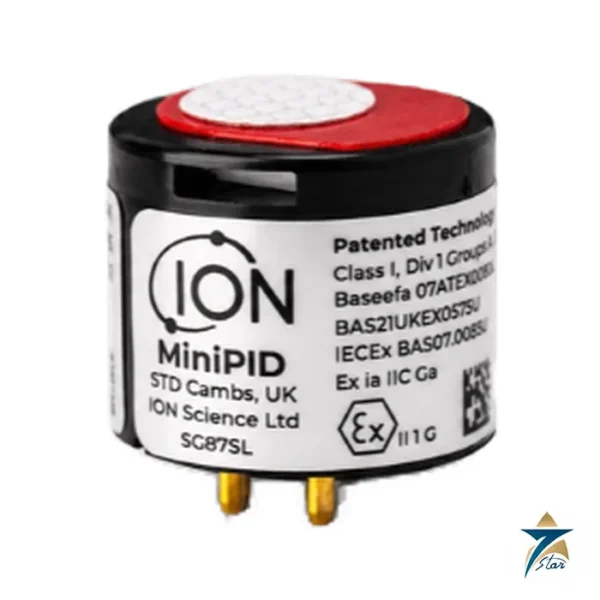
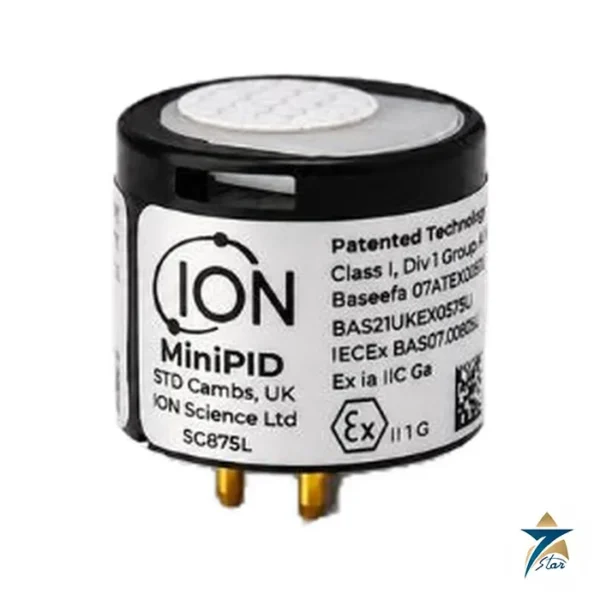
ION Science MiniPID 2 10.0 eV BTEX Benzene PID Gas Sensor
Description
Overview
The ION Science MiniPID 2 10.0 eV swaps the usual 10.6 eV lamp for a 10.0 eV lamp so that the sensor responds mainly to compounds with lower ionisation energies. The datasheet states that it is designed for enhanced selectivity and that a key application is the measurement of ambient levels of aromatic compounds, including benzene. Seven Star LLC is an independent supplier serving Oman and the GCC. The lamp energy, not the electronics, is what makes this sensor different from its siblings, and the page below explains what that means in practice.
Selectivity through lamp energy
A photoionisation detector can only ionise molecules whose ionisation energy is lower than the photon energy of its lamp. Benzene, toluene, ethylbenzene and xylenes, together known as BTEX, have ionisation energies below 10.0 eV, while many small aliphatic hydrocarbons such as methane, ethane and propane sit above it. A 10.0 eV lamp therefore ignores part of the background that a 10.6 eV lamp would count, and the reading is weighted toward the aromatics that matter for toxicity. That is why the datasheet lists detection of ppb levels of BTEX and benzene monitoring among the key features, and why fugitive emissions work features among the applications. It does not turn the sensor into a benzene-only analyser, however; other compounds below 10.0 eV still respond.
Specification of ION Science MiniPID 2 10.0 eV
| Item | Value |
|---|---|
| Electrode stack colour | white with gold spot |
| Lamp energy | 10.0 eV |
| Minimum detection limit | 5 ppb |
| Range | more than 100 ppm |
| T90 response time | less than 8 seconds |
| Sensitivity | more than 15 mV/ppm |
| Lamp warranty | 10.0 eV lamp and MiniPID 2 body, 12 months |
| Supply voltage, internal regulator | 3.6 to 18 V (10 to 18 V when not intrinsically safe) |
| Supply voltage, regulated supply | 3 to 3.6 V |
| Current | 20 to 32 mA, 130 mA for 100 ms at start-up |
| Power consumption | 100 mW at 3.3 V |
| Output signal | 0 to rail voltage minus 0.1 V |
| Temperature range | minus 40 to plus 65 degrees C |
| Humidity range | 0 to 99 percent RH, non-condensing |
| Sensor body life | more than 5 years |
| Lamp life | 10,000 hours |
| Package | Series 4/A |
| Order codes | MP3SBL0AU2 (3.0 to 3.2 V), MP3SBL0BU2 (3.2 to 3.6 V), MP3SBL0CU2 (3.6 to 10.0 V), MP3SBL0NU2 (3.6 to 18 V) |
| Hazardous area approvals | ATEX II 1G Ex ia IIC Ga and IECEx Ex ia IIC Ga, minus 40 to plus 55 degrees C ambient at 1.1 W; UL913 Class I, II, III Division 1; EAC |
Using the ION Science MiniPID 2 10.0 eV in oil, gas and petrochemical sites
- Benzene monitoring and BTEX monitoring around refineries and storage terminals
- Industrial health and safety and confined space entry
- Fugitive emission detection
- Ambient air quality monitoring
- Fracking and wellsite monitoring, named in the datasheet
Oman and its neighbours operate refineries, petrochemical complexes and gas processing plants where benzene exposure limits are tight. A fixed or portable instrument built on this sensor can watch fence lines, loading arms and sample points. Gold-spot electrode stacks are easy to identify during service, which reduces the risk of mixing the 10.0 eV sensor with a 10.6 eV one that has the same housing.
How MiniPID 2 10.0 eV differs from the 10.6 eV and 11.7 eV versions
Compared with the PPB sensor, the 10.0 eV model has a higher detection limit, 5 ppb against 1 ppb, and lower sensitivity of more than 15 mV per ppm against more than 30. Its range above 100 ppm is wider. Compared with the 11.7 eV version, which reaches chlorocarbons, formaldehyde and methanol, the 10.0 eV unit deliberately excludes those. If an instrument must report aromatic compounds only, the lower lamp is the better basis; if it must report the widest possible set of organics, the higher lamp is the right choice. The three lamp options share the Series 4/A package, so a designer can offer all three from the same board.
Electrical data
The supply may be 3.6 to 18 V through the internal regulator, rising to 10 to 18 V when intrinsic safety is not needed, or 3 to 3.6 V from a regulated rail. Current is 20 to 32 mA with a 130 mA start-up peak for 100 ms, and power consumption is 100 mW at 3.3 V. The output signal runs from zero to the rail voltage minus 0.1 V. Operating temperature is minus 40 to plus 65 degrees C and humidity 0 to 99 percent RH without condensation. The sensor carries ATEX II 1G Ex ia IIC Ga and IECEx approvals, UL913 for Class I, II, III Division 1, and Eurasian customs certification. Lamp life is 10,000 hours.
Calibration and response factors
Because a PID reports a sum of everything it can ionise, calibration is normally done with isobutylene and then converted with a response factor for the compound of interest. For benzene, the factor depends on the lamp, so use the figure that matches a 10.0 eV lamp rather than a published 10.6 eV value. ION PC software, used with the ION CONNECT kit over UART or I2C, lets you enter response factors and alarm thresholds. A mixed environment will always need judgement: a high reading on a BTEX instrument signals aromatics and other low-energy species, not a certified benzene concentration, so confirm critical alarms with a laboratory method.
Field reality of aromatic monitoring
Wind direction, temperature and the distance to the source all change readings at a fence line, so a sensor is only one part of a monitoring strategy. Mount the unit where air actually flows, protect it from direct rain and sun, and log the weather data alongside the concentration. Trends and rate of change are usually more informative than a single value, and a sustained rise above the local background deserves investigation even if the absolute number is below an alarm limit.
Maintenance
The electrode stack and lamp are serviceable. Clean the lamp window at intervals suited to the environment, and replace the lamp when sensitivity drops or the response becomes noisy. Keep spare 10.0 eV lamps separate from 10.6 eV ones to avoid mix-ups during field service.
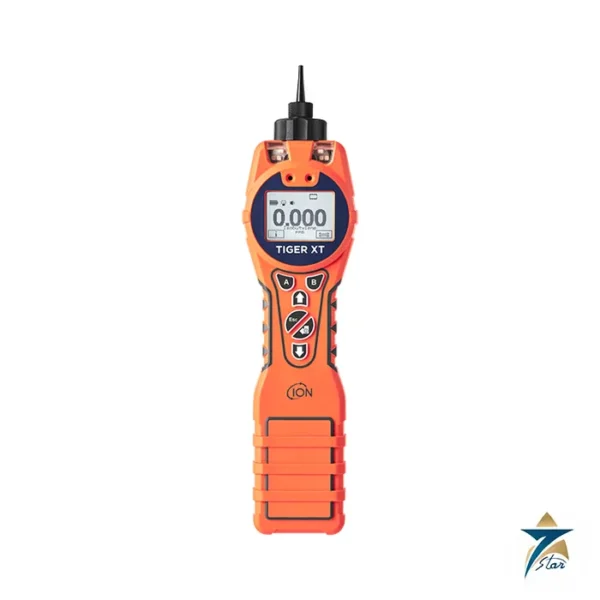
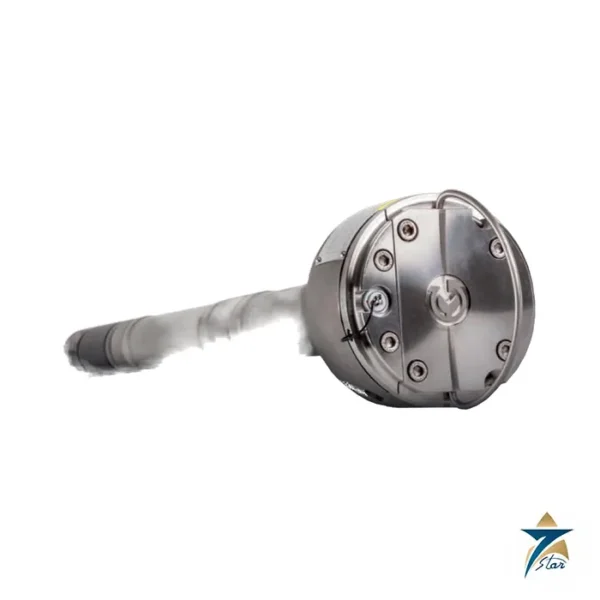
Related items you may also need: ION Science Titan 2 Fixed Benzene Monitor | ION Science Tiger XT Handheld VOC Detector | Apollo SA5100-600 Soteria Optical Smoke Detector | All ION Science products.
Points to confirm for the ION Science MiniPID 2 10.0 eV
- If the ION Science MiniPID 2 10.0 eV is a like-for-like replacement, read the full code from the installed nameplate and compare it with this page.
- For each ION Science MiniPID 2 10.0 eV request we confirm the exact code and lead time in writing.
- Dimensions, ratings and connection data for the ION Science MiniPID 2 10.0 eV are in the datasheet attached to this page.
- The ION Science MiniPID 2 10.0 eV belongs to our fire & gas detectors range and can be delivered to Muscat, Sohar, Duqm and other GCC locations.
- Plants that run the ION Science MiniPID 2 10.0 eV on critical service often hold a spare unit in the store.
Documents and quotation
The ION Science MiniPID 2 10.0 eV datasheet from the manufacturer lists the performance, approvals and order codes. We include the sensor datasheet with this page; it shows the drawings and the order codes. Send your RFQ stating the model, the order code that matches your supply voltage, the quantity, and your delivery location in Oman or the GCC.
Other Models in the MiniPID2 Range
Seven Star LLC supplies models from the MiniPID2 range in Oman and the GCC. Compare the related models below and request a quote for the one that matches your application.
| Model | Category | |
|---|---|---|
| ION Science MiniPID 2 PPB VOC PID Gas Sensor | Fire & Gas Detectors | View details |
| ION Science MiniPID 2 PPB WR Wide-Range PID Gas Sensor | Fire & Gas Detectors | View details |
| ION Science MiniPID 2 PPB XF Long-Life PID Gas Sensor | Fire & Gas Detectors | View details |
| ION Science MiniPID 2 HS High-Sensitivity PID Gas Sensor | Fire & Gas Detectors | View details |
| ION Science MiniPID 2 10.0 eV BTEX Benzene PID Gas Sensor | Fire & Gas Detectors | You are viewing this model |
Datasheets & Documents
- Datasheet ION Science MiniPID 2 10.0 eV BTEX Benzene PID Gas Sensor Datasheet Download
Reviews (0)
How would you rate this product? Cancel reply
About brand
ION Science is a British maker of gas detection instruments, based in Fowlmere, Cambridgeshire. It has been active since 1989 and is best known for photoionisation detectors (PIDs) that measure volatile organic compounds at low concentrations. Its portable and fixed instruments are used for worker exposure monitoring, leak detection and environmental surveys.
Seven Star LLC is an independent supplier in Muscat. We list ION Science detectors for oil and gas, petrochemical and environmental users in Oman and the GCC.
ION Science company profile
| Active since | 1989, United Kingdom |
|---|---|
| Head office | Fowlmere, Cambridgeshire |
| Core technology | Photoionisation detection (PID) with patented Fence Electrode design |
| Product families | Tiger XT and Cub portable PIDs, Titan benzene monitor, Falco fixed detectors |
Milestones
- 1989: ION Science begins operating.
- 1998: Patents its PID sensor.
- 2002: Patents the Fence Electrode for humidity-resistant PIDs.
- 2017: Opens its head office in Fowlmere.
ION Science product series
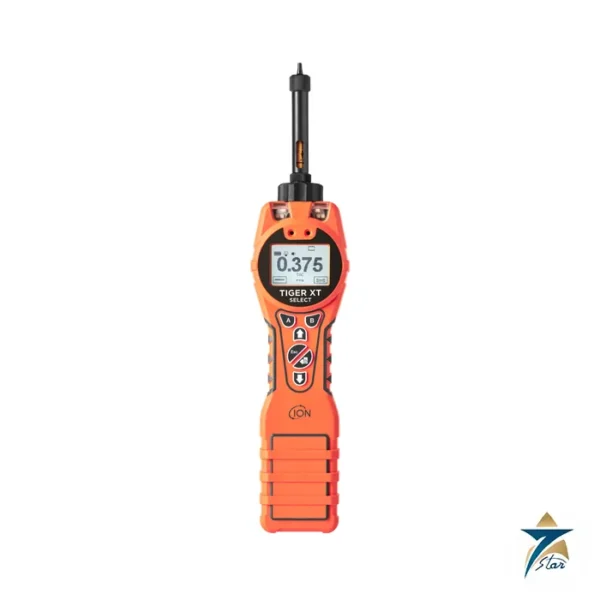
The Tiger XT is a handheld VOC detector for hazardous areas, and the Titan 2 is a fixed benzene monitor.
A PID uses ultraviolet light to ionise volatile organic compounds and measures the resulting current, which allows detection down to ppb levels. Response factors convert the reading for each specific compound. General VOC detectors measure the total, while benzene-specific monitors separate benzene from other hydrocarbons, which matters because benzene has very low exposure limits.
Where ION Science detectors are used
Leak detection, confined space entry checks, worker exposure monitoring, refinery and terminal benzene monitoring, and environmental and soil surveys.
Ordering ION Science detectors: what we need
Send the model, the compounds and ranges, lamp type, hazardous-area requirement and accessories such as probes, filters and calibration kits.
Facts checked against ION Science's published company history, October 2026.
Browse ION Science products by category: Gas Analyzer Systems, Fire & Gas Detectors.
FAQ
Questions about the ION Science MiniPID 2 10.0 eV BTEX Benzene PID Gas
Answers from our engineering team on installation, compatibility and integration.
01Why choose the ION Science MiniPID 2 10.0 eV instead of a 10.6 eV sensor?
Its lower lamp energy gives enhanced selectivity for compounds with lower ionisation energy, notably BTEX aromatics including benzene, while ignoring many small hydrocarbons.
02What are the detection limit and range of the MiniPID 2 10.0 eV?
The datasheet gives a minimum detection limit of 5 ppb and a range above 100 ppm, with T90 under 8 seconds and sensitivity above 15 mV per ppm.
03Which order codes does the MiniPID 2 10.0 eV have?
MP3SBL0AU2 for 3.0 to 3.2 V, MP3SBL0BU2 for 3.2 to 3.6 V, MP3SBL0CU2 for 3.6 to 10.0 V and MP3SBL0NU2 for 3.6 to 18 V.
04Does the 10.0 eV sensor measure only benzene?
No. It responds to compounds with ionisation energy below 10.0 eV, so aromatics and other low-energy VOCs are detected, and benzene needs a response factor.
05How can the 10.0 eV stack be recognised?
The datasheet lists the electrode stack colour as white with a gold spot.


Reviews
There are no reviews yet.