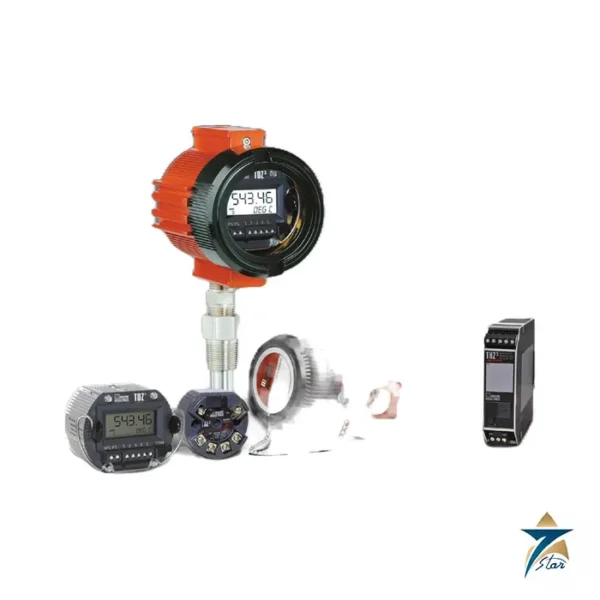
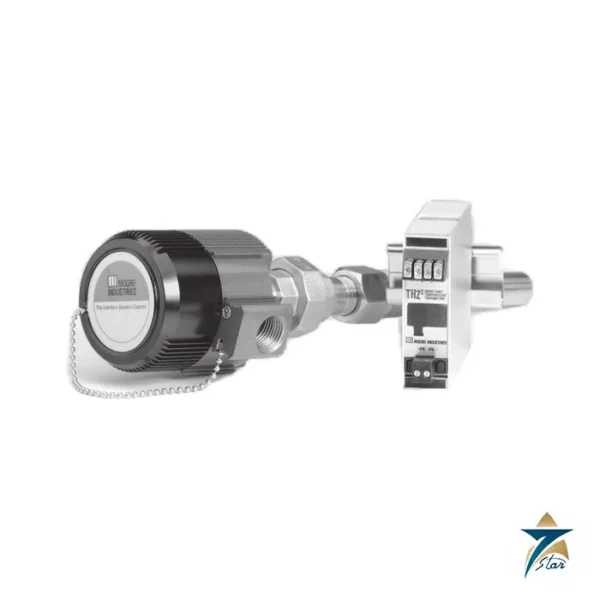
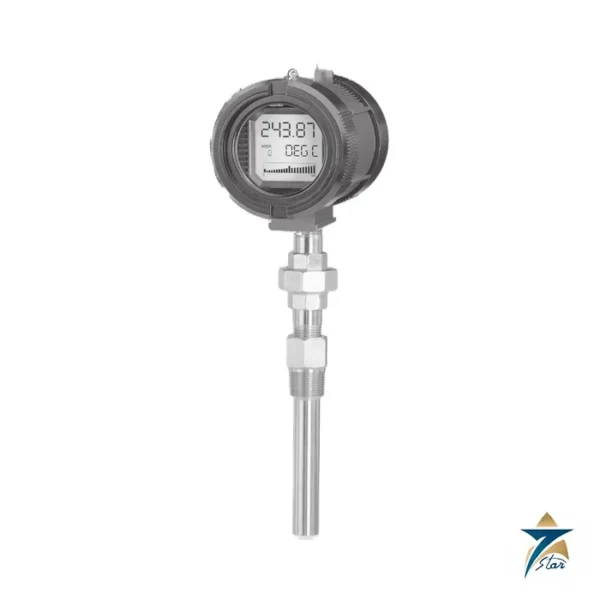
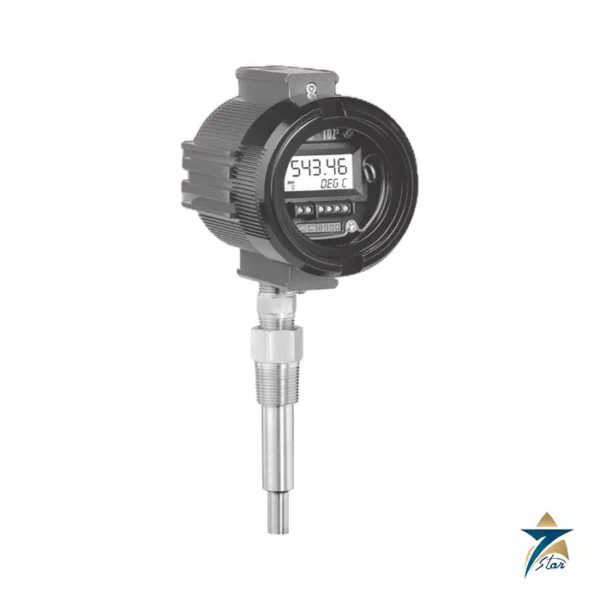
Moore Industries TFZ/TPRG/H1/9-32DC [BH2NG] Fieldbus Transmitter

Description

Moore Industries TFZ/TPRG/H1/9-32DC [BH2NG]: temperature transmitter for FOUNDATION fieldbus H1

Moore Industries TFZ/TPRG/H1/9-32DC [BH2NG] is a loop-powered programmable temperature transmitter that speaks FOUNDATION fieldbus H1 instead of 4-20 mA. It conforms to IEC 61158-2 at 31.25 kbits/s and, as an H1 Basic Device, Group 3 and Class 31, can share a segment with up to 32 other TFZ units, saving a pair of wires per device.

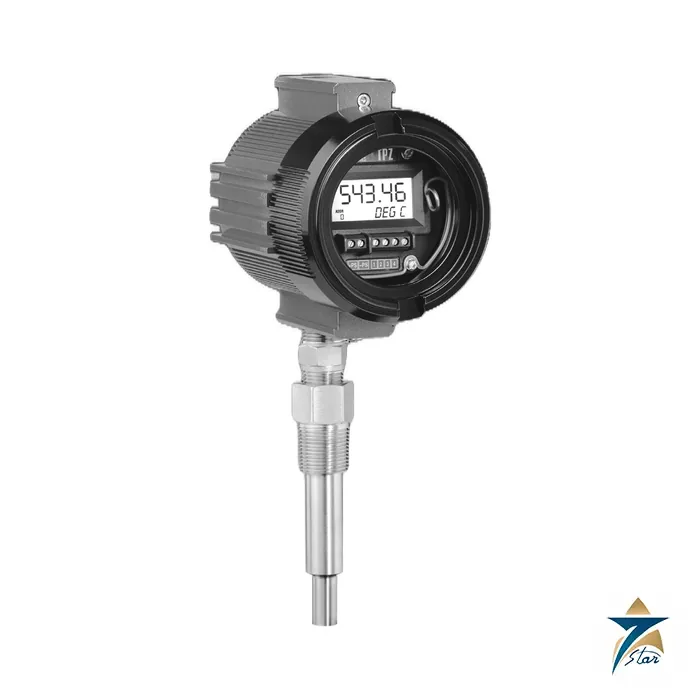
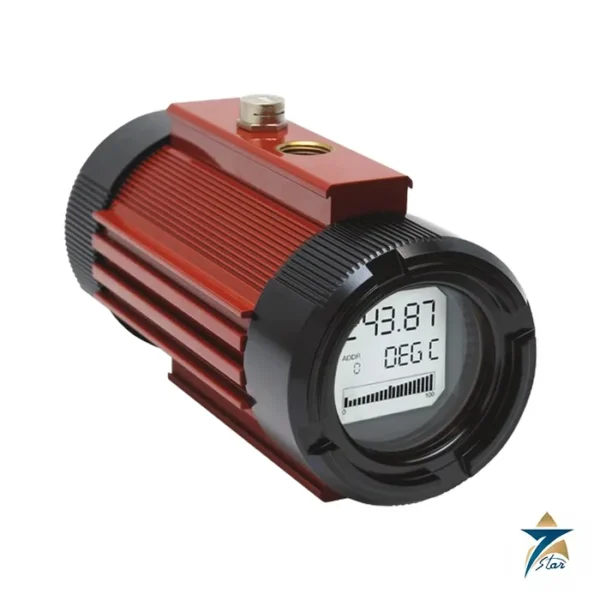
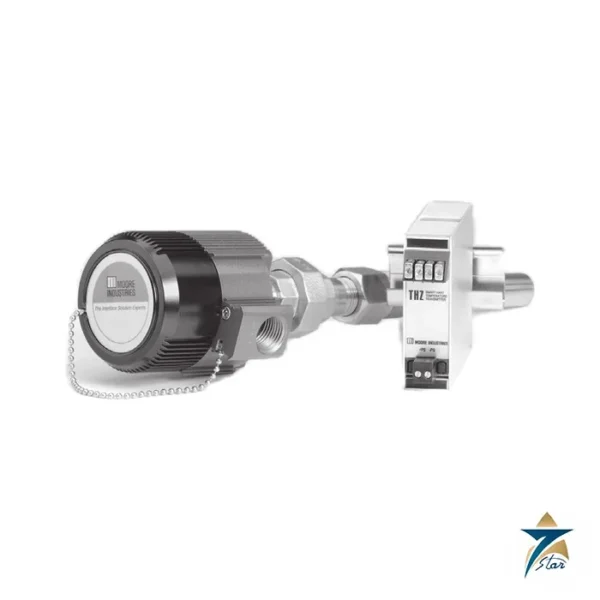
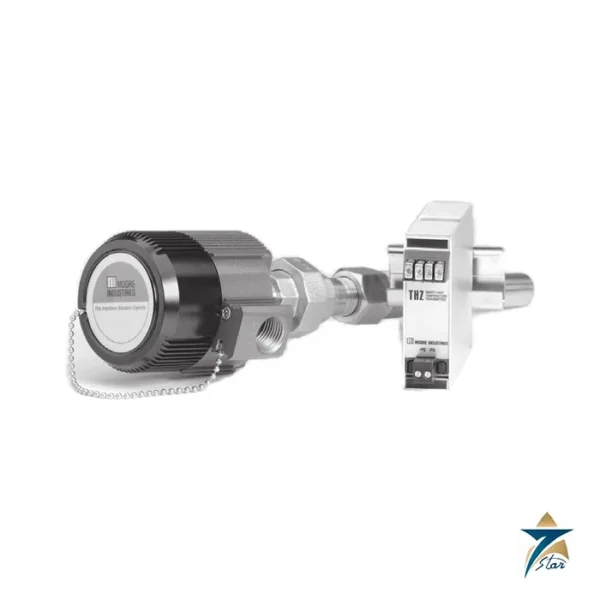
The code spells out the configuration: TPRG selects the programmable temperature input family, H1 replaces the output field normally filled by 4-20MA, 9-32DC is the fieldbus supply window, and BH2NG identifies the aluminum explosion-proof enclosure with two 1/2-inch NPT entries and a glass cover that lets the operator read the display.

A practical consequence of the fieldbus approach is how the device is commissioned. Instead of connecting a calibrator to a loop terminal, the engineer works through the host, selects the sensor type in the Temperature Transducer block, scales the Analog Input block, and watches the quality status. Any parameter changed in the host is stored in the transmitter, so a replacement unit can be given the same identity quickly.

Highlights of TFZ/TPRG/H1/9-32DC [BH2NG]

  • Three standard function blocks: a Resource block for diagnostics, a Temperature Transducer block for sensor data and an Analog Input block that publishes the measurement with a quality status.
  • Configuration from the control room over the segment with a standard FOUNDATION fieldbus configuration tool, handheld, DCS or AMS.
  • A display with a two-digit fieldbus address indicator and decimal point adjustable up to four places.
  • 20-bit input resolution and stability of 0.019% of span over five years for thermocouple or millivolt input.
  • Operation between -40 and +85 C with immunity of 20 V/m.

The unit carries no 4-20 mA output, so it replaces analog transmitters only where the host system has a fieldbus interface.

TFZ/TPRG/H1/9-32DC [BH2NG] specifications

Data from the TFZ datasheet specification page.

Parameter Value for TFZ/TPRG/H1/9-32DC [BH2NG]
Model code TFZ/TPRG/H1/9-32DC [BH2NG]
Protocol FOUNDATION fieldbus H1 (IEC 61158-2, 31.25 kbits/s); H1 Basic Device, Group 3, Class 31
Segment capacity Up to 32 TFZ transmitters on one H1 segment
Input TPRG: RTD, thermocouple J, K, E, T, R, S, B, N, C, millivolt, resistance, potentiometer
Supply 9-32 V DC, 10.5 mA typical, 12.07 mA maximum, 18 mA maximum under fault
Housing BH2NG: aluminum explosion-proof BH, two 1/2-inch NPT entries, glass cover
Function blocks Resource block (RB), Temperature transducer block (TB), Analog input block (AI)
Isolation 500 Vrms between input, output and case; 500 Vac dielectric test for one minute
Step response 500 ms maximum, 256 ms typical
Input resolution 20-bit
Display Top row 10 mm, bottom row 6 mm; two-digit fieldbus address; range -99999 to 99999
Weight 210 g (7.4 oz) for the HP module
RFI/EMI immunity 20 V/m at 80-1000 MHz, 1 kHz AM, IEC 1000-4-3, 0.5% of span or less
Stability T/C, mV (1/3/5 years) 0.008%, 0.014%, 0.019% of maximum span
Ambient -40 to +85 C, 0 to 95% RH non-condensing

How TFZ/TPRG/H1/9-32DC [BH2NG] differs from the HART and PROFIBUS versions

The THZ and TDZ families deliver 4-20 mA with HART, and the TPZ delivers PROFIBUS PA; the TFZ delivers FOUNDATION fieldbus H1 with function blocks. Power is 9-32 V DC at about 10.5 mA, so a segment power supply rather than a loop supply feeds it, and the load-capability calculation used for 4-20 mA loops does not apply.

The TFZ weighs 210 g in its HP module form compared with 235 g for the TPZ, and its display shows a FOUNDATION fieldbus address instead of a PROFIBUS address.

In an H1 segment the practical limits are set by power and cable length rather than by device count. At 12.07 mA maximum per TFZ, thirty-two devices draw about 386 mA, before accounting for fault current, so the segment coupler and the cable must be sized for that load. This arithmetic is one reason segment designers rarely fill a segment to its datasheet maximum.

Applications

Fieldbus temperature points are common in plants whose DCS is built around FOUNDATION fieldbus, particularly newer petrochemical, power and water projects in the Gulf. A single segment can serve a bank of reactor or heat exchanger sensors.

Because the display remains local, operators can see the process temperature without a handheld.

Selection notes

Verify that the control system supports the TFZ device description and that the segment power budget covers the 12.07 mA maximum per device and the 18 mA fault level. Use the datasheet certification section for the hazardous-area marks, which include FISCO-related entries in the ordering table for the intrinsically safe version.

Remember that a 32-device segment is a limit of the datasheet, not a design target; derate for power and cable length.

Mounting and configuration

Install the BH enclosure on a 2-inch pipe or surface, fit certified glands, terminate the sensor on terminals 1 to 4 and the segment on the PS terminals. Using the host configuration tool, set the sensor type, range, damping and tag, and map the AI block output into the control strategy.

Check that the quality status of the AI block reads good before putting the loop in service.

Document the physical device tag, the fieldbus node address and the sensor serial number together. When a TFZ is replaced years later, the same information tells the technician which block mapping to restore and which sensor curve was in use.

Maintenance

Check the glass cover and seals, review diagnostics held in the Resource block, and compare the reading with a reference thermometer. Stability figures in the datasheet support multi-year intervals.

Keep the configuration saved in the host so a replacement can be downloaded.

Supply of TFZ/TPRG/H1/9-32DC [BH2NG]

Quote TFZ/TPRG/H1/9-32DC [BH2NG] in full when enquiring and mention the host system and sensor type.

Seven Star LLC is an independent supplier serving Oman and the wider GCC and is not affiliated with the manufacturer; all names and part numbers are used only to identify the product being requested.

Documents and quotation

The datasheet for Moore Industries TFZ/TPRG/H1/9-32DC [BH2NG] can be sent with our quotation. Submit an RFQ with the part number, quantity and delivery point.

Datasheets & Documents
  • PDF Datasheet Moore Industries TFZ/TPRG/H1/9-32DC [BH2NG] Fieldbus Transmitter Datasheet Download
Reviews (0)

Reviews

There are no reviews yet.

How would you rate this product?

It takes about 10 seconds — just tap a star. Your email is never published.

About brand

Moore Industries is an American manufacturer of signal interface instruments, founded in 1968 by engineer Leonard W. Moore in North Hills, California. Its first product was the SCT signal converter, built in a friend's workshop. The company has been at its North Hills headquarters since 1974 and still designs and builds its products there, known for rugged aluminium housings.

Seven Star LLC, an independent supplier in Oman, lists Moore Industries temperature transmitters, limit alarm trips, isolators and a PID backup controller, and sources units and replacements by full model number.

Moore Industries company profile

Founded 1968, North Hills, California, USA, by Leonard W. Moore
Headquarters North Hills, California, since 1974
Ownership Privately owned (Moore Industries-International, Inc.)
First product SCT signal converter
Product families Signal isolators and converters (ECT, SCT), temperature transmitters (TRY, THZ), alarm trip units (SPA), miniMOORE multichannel signal conditioners, HART interfaces, SIL-rated safety logic solvers (STA)

Milestones

  • 1968: Leonard W. Moore founds the company and builds the first SCT signal converter.
  • 1974: The company moves into its North Hills headquarters.
  • 2009: miniMOORE wins a Control Engineering Engineers' Choice Award.

Moore Industries product families on this page

The manufacturer's catalog is arranged by function, and many of the items listed here map onto it directly:

  • Temperature transmitters: the TRX, and the STZ functional safety dual input smart HART transmitter
  • Alarm trips: the SPA2 programmable limit alarm trip, including an SPA2 with HLPRG input and four relay outputs
  • Signal isolators, repeaters and converters: the SIX
  • PID controllers and backup stations: the 535 in 1/4 DIN format

Other catalog groups include temperature assemblies and sensors, I/P and P/I converters, remote I/O, HART gateways and interfaces, indicators, and fieldbus device couplers.

Where Moore Industries instruments are used

These are control room and marshalling cabinet devices, plus field-mounted transmitters. Typical jobs are isolating a 4-20 mA loop between two systems, converting a thermocouple or RTD signal for a DCS input, adding an independent high or low trip next to the control system, and keeping a control loop running on a backup station when the main controller is out of service. Process plants in oil and gas, chemicals and power across the GCC use them for exactly these tasks.

Moore Industries products we list

Family Examples
Controllers & Data Acquisition Moore 535-21120BD000 | Industrial PID Ba…, SPA2 Programmable Limit Alarm Trip, Moore-SPA2HL Associated IS Programmable…
Isolator & Barrier HIM Smart HART Loop Interface and Monitor, SIX Signal Isolator, SLA SIL 2/3 Safety Logic Solver and Alarm
Temperature Instrumentation STZ Functional Safety Dual Input Smart H…, TRX Temperature Transmitter
Industrial Communications HES HART to Ethernet Gateway
Valve Positioners IPT2 Current-to-Pressure I/P Transmitter

Ordering Moore Industries instruments: what we need

Moore Industries model numbers are built from fields separated by slashes: unit, input, output, power and options, followed by the housing code in brackets. Every field matters. Send the complete string from the label, the serial number, and for programmable units the input type and range you want set. State any hazardous area or functional safety requirement, because approved versions are ordered with their own option codes.

Facts checked against trade press obituaries of Leonard W. Moore (Control Engineering, Control Global), October 2026.

FAQ

Questions about the Moore Industries TFZ/TPRG/H1/9-32DC [BH2NG]

Answers from our engineering team on installation, compatibility and integration.

01Which fieldbus does the TFZ use?
FOUNDATION fieldbus H1 according to IEC 61158-2 at 31.25 kbits/s.
02How many TFZ units can share a segment?
The datasheet states up to 32 transmitters per H1 segment.
03Which function blocks does it provide?
A Resource block, a Temperature Transducer block and an Analog Input block.
04What supply does it need?
9-32 V DC, with 10.5 mA typical and 12.07 mA maximum under normal operation, 18 mA under fault conditions.
05Does it have a display?
Yes, with a 10 mm top row, a 6 mm bottom row and a two-digit fieldbus address indicator.