Moore Industries THZ/PRG/4-20MA/12-30DC/-ISF [DH2NGP]: dual-compartment THZ with FM intrinsically safe approval
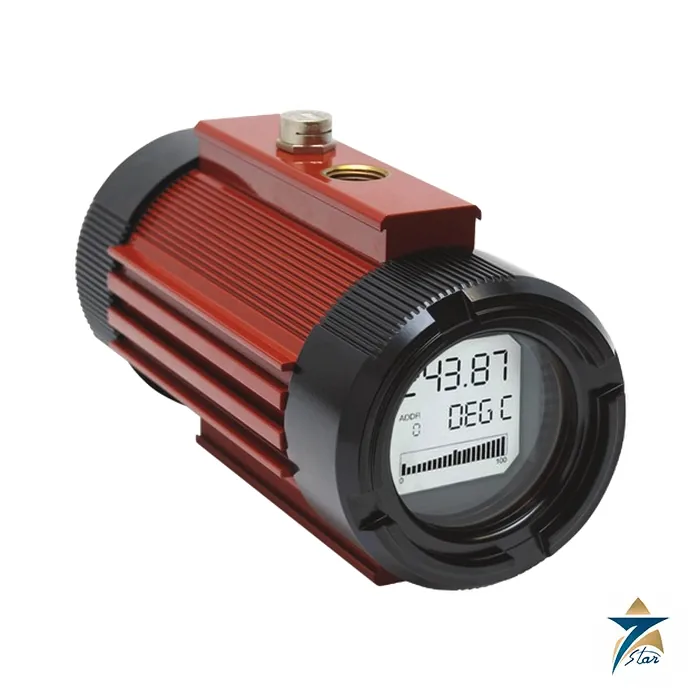
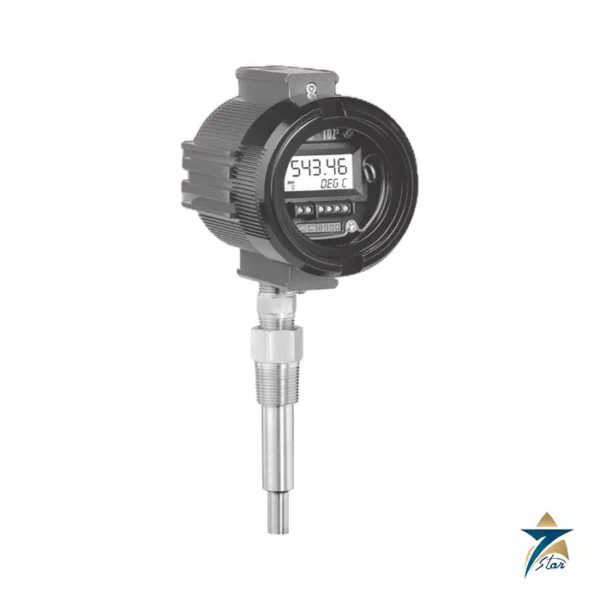
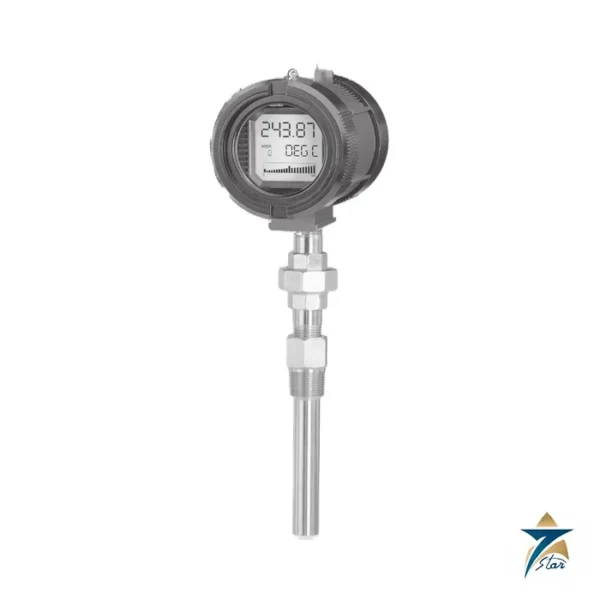
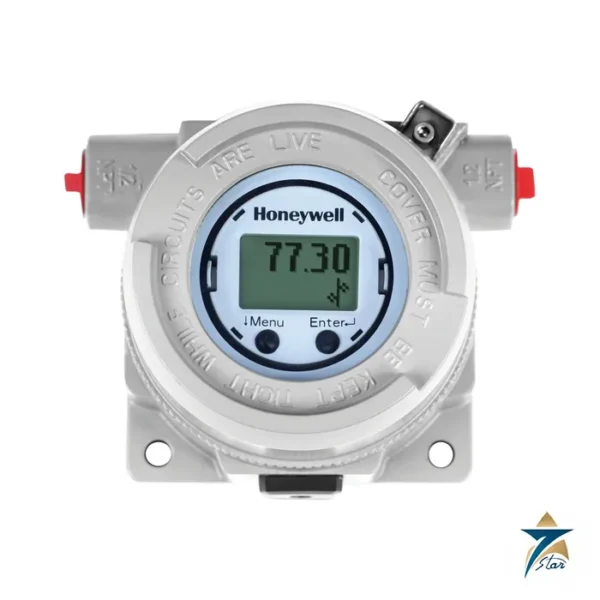
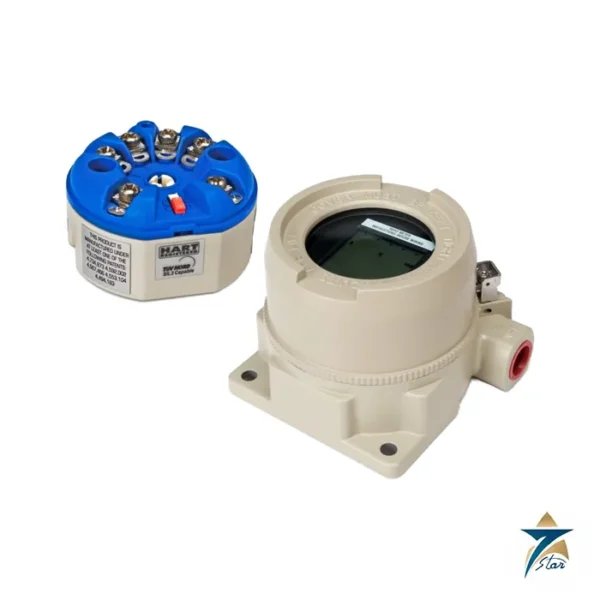
Moore Industries THZ/PRG/4-20MA/12-30DC/-ISF [DH2NGP] is a Smart HART temperature transmitter built into the DH dual-compartment field enclosure and ordered with the -ISF option. The THZ module accepts almost any RTD or thermocouple, plus ohm, millivolt and potentiometer sources, and turns it into an isolated, linear 4-20 mA signal with HART communication riding on the same two wires. In this configuration the electronics sit in one compartment behind a glass window while the field wiring lands in the second, so the wiring side can be serviced separately from the electronics compartment.
The big difference from a bare module is the combination of three letters in the order code. The -ISF suffix carries the FM intrinsically safe and non-incendive listing, and the datasheet restricts that option to the DH enclosure. The suffix P at the end of DH2NGP tells you the case ships with the two-inch pipe-mount hardware kit, so the unit is ready for a stanchion or a pipe rack without a separate bracket order.
Key features of THZ/PRG/4-20MA/12-30DC/-ISF [DH2NGP]
- Large display with an 18 mm top row and 10 mm bottom row, a two-digit HART address and a percent-of-span bar graph readable from a distance.
- Total sensor diagnostics: a broken or shorted sensor drives the output upscale or downscale and the display names the type and location of the fault on RTD inputs.
- Trim of the sensor curve at two points inside the programmed range, so the measurement can follow the real sensor between chosen temperatures instead of the ideal curve.
- Damping from 0 to 30 seconds, custom linearization tables through the PC software, and a loop test that fixes the output at a chosen current.
- Non-volatile memory keeps every setting through a power loss and the unit restarts within 8 seconds of power being applied.
Because HART addresses 0 to 15 are available, the same THZ/PRG/4-20MA/12-30DC/-ISF [DH2NGP] can sit on a multidrop segment with up to fifteen other THZ or TDZ transmitters; in that mode the output current is parked at 4 mA and the measurement travels digitally.
THZ/PRG/4-20MA/12-30DC/-ISF [DH2NGP] technical specifications
The table collects the figures that matter when you compare this exact code with other THZ variants.
| Parameter |
Value for THZ/PRG/4-20MA/12-30DC/-ISF [DH2NGP] |
| Model code |
THZ/PRG/4-20MA/12-30DC/-ISF [DH2NGP] |
| Unit |
THZ Smart HART temperature transmitter with display |
| Input |
Programmable (PRG): RTD 2-, 3-, 4-wire Pt, Cu, Ni; thermocouple J, K, E, T, R, S, B, N, C; 0 to 4000 ohm; -50 to 1000 mV; potentiometer |
| Output |
4-20 mA, scalable, with HART digital signal superimposed |
| Power code |
12-30DC, the intrinsically safe supply selection; standard version runs 12-42 V DC |
| Approval option |
-ISF, FM approved intrinsically safe and non-incendive (offered only with the DH enclosure) |
| Housing code |
DH2NGP: explosion-proof dual-compartment enclosure, two 1/2-inch NPT entries, glass cover, 2-inch pipe-mount kit supplied |
| Analog output accuracy |
Plus or minus 0.015% of span |
| Digital accuracy |
Plus or minus 0.1 C with Pt RTDs; best case input-to-output analog accuracy of plus or minus 0.014 C using a 4-wire 1000 ohm Pt RTD |
| Resolution |
Input 20-bit, output 16-bit |
| Step response |
700 ms maximum, 500 ms typical, in the DH enclosure; rise time 100 ms maximum |
| Isolation |
500 Vrms input to output continuous; withstands a 500 Vac dielectric test for one minute |
| Display |
Top row 18 mm digits, bottom row 10 mm digits, two-digit HART address, bar graph in percent of span |
| Sensor burnout |
Upscale to 23.6 mA or downscale to 3.6 mA, user selected; limits 3.8 mA and 21.6 mA |
| Ambient range |
-40 to +85 C operating and storage, 0 to 95% RH non-condensing |
| Weight |
1.75 kg (3 lb 14.5 oz) in the DH enclosure |
How THZ/PRG/4-20MA/12-30DC/-ISF [DH2NGP] differs from other THZ and TDZ variants
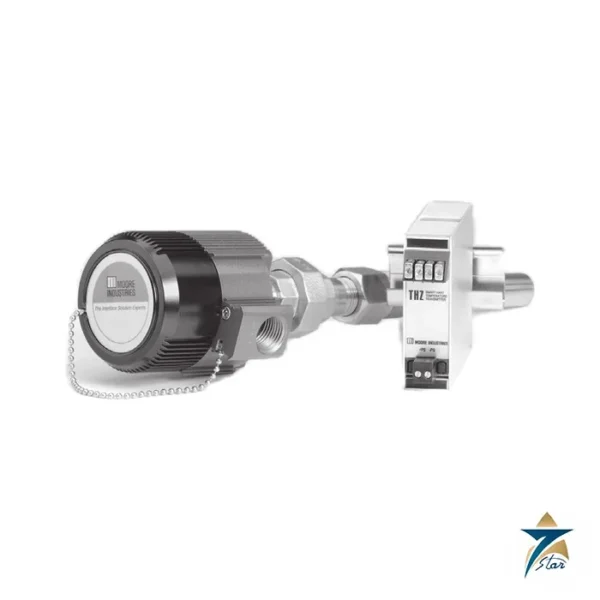
Within the same datasheet the THZ is sold in a DIN rail housing, a hockey-puck module for connection heads, several LH heads and the DH enclosure. The DH version is the only one that combines the 18 mm display with the -ISF approval, and it is also the heaviest at 1.75 kg compared with 221 g for the DIN style and 101 g for the HPP module.
Radio-frequency immunity is quoted at 30 V/m for the DH and DIN versions but 10 V/m for the HPP, LH and CH6 versions, and the step response is 700 ms maximum here against 600 ms maximum for the other THZ housings. Compared with the TDZ, whose digits are smaller (10 mm and 6 mm), the DH THZ trades a heavier case for a larger readout.
Typical applications of THZ/PRG/4-20MA/12-30DC/-ISF [DH2NGP] in Oman and the GCC
A DH-housed THZ fits the kind of installation where an operator walks past a process line and wants to read the temperature without a handheld: crude heater outlets, stabilizer overheads, glycol regeneration, and seawater-cooled exchangers on Gulf platforms and onshore plants. The explosion-proof casing and the intrinsically safe listing suit classified areas around gas gathering, tank farms and petrochemical units.
In desalination and power stations the same code reads bearing, steam and condensate temperatures, while in manufacturing it can monitor kiln, oven or reactor jackets. The wide ambient range of -40 to +85 C copes with summer cabinet heat in Sohar, Duqm and Salalah as well as cold-store applications.
Selection and compatibility notes for THZ/PRG/4-20MA/12-30DC/-ISF [DH2NGP]
Confirm first that your classified-area scheme matches FM intrinsic safety; if the plant works to ATEX or CSA rules, the datasheet lists separate -ISE and -ISC options and those are not interchangeable with -ISF. The supply must stay in the intrinsically safe window, and a loop calculation with your barrier or isolator is still required.
Remember that the load limit follows the supply: the available loop resistance equals the supply voltage minus 12 V divided by 0.024 A. A HART communicator or modem needs between 250 and 1100 ohms in the loop. Sensors can be remote RTDs or thermocouples; for the best accuracy use a four-wire 1000 ohm platinum element and ask for sensor-to-transmitter matching.
Installing and commissioning THZ/PRG/4-20MA/12-30DC/-ISF [DH2NGP]
Mount the enclosure by its pipe plate or on a flat surface, route the sensor cable through one of the two 1/2-inch NPT entries and seal the unused entry with a suitable certified plug. Remove the captive screws to lift the electronics module out if you need clear access to the terminal strip, then connect the sensor to terminals 1 to 4 and the loop to the PS terminals.
Commission with a HART communicator, a HART host or the PC configuration software through a HART modem. Set the input type, range, units, burnout direction and damping, perform a loop test, and write the tag and message fields before closing the glass cover. Record the final configuration so that a replacement module can be loaded identically.
Maintenance of THZ/PRG/4-20MA/12-30DC/-ISF [DH2NGP]
The unit has no adjustments inside the case. Routine work is limited to checking the glass for cracks, the cover threads for corrosion and the entry plugs for tightness. Recalibration intervals can be long: the stability tables in the datasheet allow up to five years between scheduled calibrations for typical spans.
If the display shows a sensor fault, check continuity on a four-wire element or the cold junction on a thermocouple before suspecting the electronics. Because the module is removable, a spare can be swapped in minutes without disturbing the sensor assembly or the conduit.
Ordering notes and supplier information
When requesting THZ/PRG/4-20MA/12-30DC/-ISF [DH2NGP], quote the complete string including the bracketed housing code, and tell us the sensor type and range you intend to use so that the configuration can be stated clearly. Accessories such as the HART interface cable or a configuration kit are separate lines.
Seven Star LLC is an independent supplier serving Oman and the wider GCC and is not affiliated with the manufacturer; all names and part numbers are used only to identify the product being requested.
Documents and quotation
The datasheet for Moore Industries THZ/PRG/4-20MA/12-30DC/-ISF [DH2NGP] describes the DH enclosure, the intrinsically safe option and the full specification tables; we can send it with a quotation. To receive an offer, send the RFQ with the part number, the quantity, the delivery location and any requirement for test data. Please note that prices are provided only in the quotation.
Other Models in the THZ TDZ Range
Seven Star LLC supplies models from the THZ TDZ range in Oman and the GCC. Compare the related models below and request a quote for the one that matches your application.

 Automation & Control
 Electrical & Power
 Fittings & Valves
 Sensors & Transmitters
 Emergency Power
 Analyzer Systems
 Metering Systems
 Welding
 Fire & Gas Systems
 Motors, Pumps & Turbines
 Portable Test & Measurement
 Compressor & Cooling
 Bearings & Power Transmission
 Filtration
 Safety & PPE
 Material Handling & Lifting Equipment
 Non-Destructive Testing (NDT)








Reviews
There are no reviews yet.