WIKA 910.11 pressure gauge shut-off valve for pressures up to 400 bar
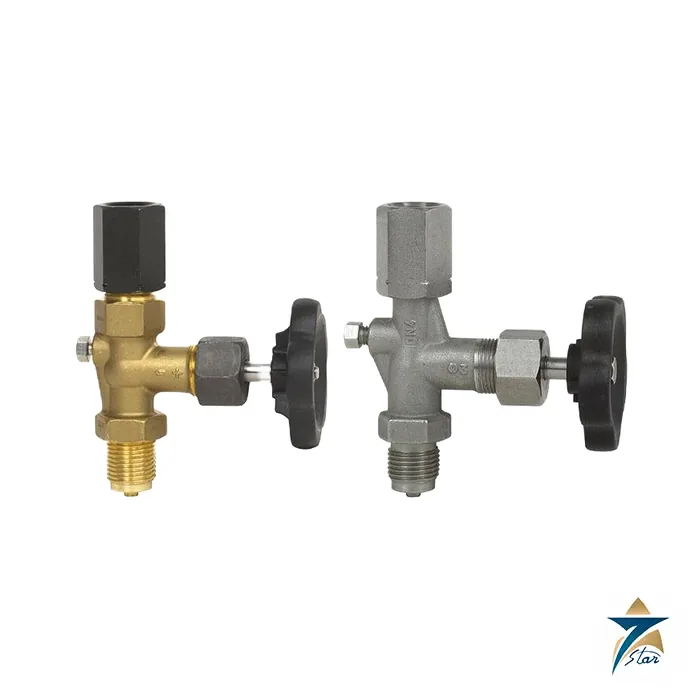
The WIKA 910.11 is a shut-off and throttle valve for pressure gauges and other pressure measuring instruments, made in brass, steel or stainless steel. Where the 910.10 stopcock stops at PN 25, the 910.11 is the version for higher nominal pressures, up to 400 bar. The designs follow DIN 16270 (without test connection), DIN 16271 (with test connection and vent screw) and DIN 16272 (with a separately isolated test connection). Seven Star LLC supplies the 910.11 in Oman and the GCC as an independent supplier in Muscat, and this page explains the forms and options so that the right 910.11 can be requested the first time.
Forms, standards and what the 910.11 does
The valve isolates the gauge from the process line using a needle and seat made of corrosion and acid resistant stainless steel, with PTFE packing and a heat-resistant plastic hand wheel. Because it can be opened gradually, it also throttles flow into the instrument, which softens pressure surges. A vent screw lets pressure trapped in the gauge side be released after the valve has been closed. Two forms are made. Form A has an LH-RH union with male G 1/2 on the instrument side. Form B has a shaft for the mounting bracket, with a nipple and union nut.
- DIN 16270: shut-off valve without test connection, with vent screw.
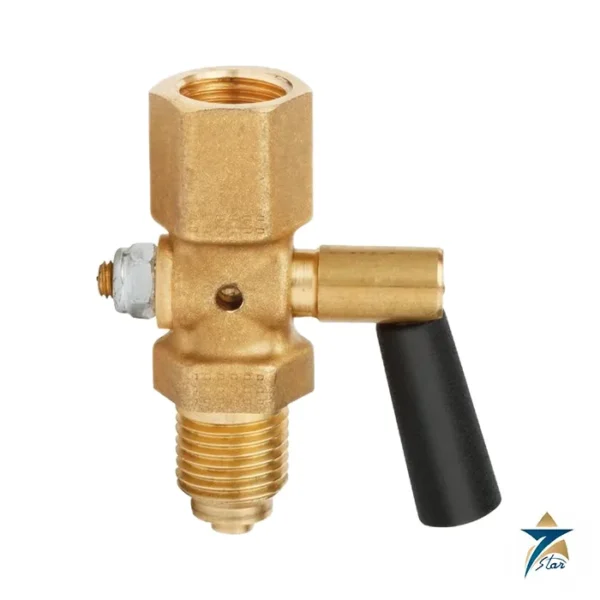
- DIN 16271: valve with test connection; the test pivot is sealed by a lens-type sealing ring and a screw cap placed on top.
- DIN 16272: valve with a separately isolated test connection, closed by an additional valve spindle, so the test gauge can be connected under pressure without interrupting the process measurement.
Technical specifications of the 910.11
| Parameter |
Specification |
| Manufacturer / part number |
WIKA / 910.11 |
| Design standards |
DIN 16270, DIN 16271, DIN 16272 |
| Nominal pressure |
PN 250 (brass) or PN 400 (steel, stainless steel) |
| Temperature range |
Brass -10 … +120 °C; steel -10 … +120 °C; stainless steel -20 … +200 °C |
| Wetted parts |
Brass, steel (phosphated) or stainless steel 1.4571 |
| Needle and seat |
Corrosion and acid resistant stainless steel |
| Packing |
PTFE |
| Hand wheel |
Heat-resistant plastic |
| Pressure connection |
G 1/2; test connection M20 x 1.5 |
| Silicone |
Silicone-free |
| Weight (brass / steel / 1.4571) |
DIN 16270 Form A 0.54 / 0.52 / 0.52 kg; DIN 16272 Form B 1.00 kg |
| Dimensions |
Length 100 mm (Form A) or 120 mm (Form B) |
Options and special versions of the 910.11
The data sheet lists a long set of options: free from oil and grease; acceptance test certificate 3.1 per DIN 50049 / EN 10204; DVGW version at PN 100 per DIN 16270; connection M20 x 1.5 or 1/2 NPT; bellows sealing up to PN 100; and a version per NACE. For oxygen the valve can be supplied with PN 100 or PN 160 at up to 60 °C, PN 250 at up to 60 °C, or PN 230 at up to 200 °C with graphite packing. Steel or stainless wetted parts can be supplied with special pure graphite packing up to 250 °C, and with pressure ratings up to PN 640 bar. An adapter piece for valves with test connection (test female G 1/2 to female M20 x 1.5) is available in brass or 1.4571.
Choosing between DIN 16270, 16271 and 16272
The decision depends on how the gauge is checked during service. DIN 16270 is the simplest and the lightest, and suits points where gauges are removed and calibrated in a workshop. DIN 16271 adds a test pivot, so a test gauge can be connected while the plant gauge stays on the line. DIN 16272 isolates the test connection with its own spindle, which is the safe route when the test gauge may need to be connected and removed repeatedly in a live line. Weights increase with the added functions, from about 0.52 kg to 0.95 kg for Form A.
Where the 910.11 fits and related WIKA accessories
The 910.11 sits at the process-side end of a gauge assembly: line, syphon (910.15) or cooling element (910.32) for hot media, the valve, then snubber (910.12) or overpressure protector (910.13), then the gauge or transmitter. Mounting brackets (910.16) take the Form B shaft. Sealings per 910.17 are used at each parallel thread. The 910.10 stopcock covers lower pressures to 25 bar. Gauge families such as the 232.50 and 213.53, and transmitters such as the S-20, can sit downstream of the valve.
Selection and ordering checklist for the 910.11
- Maximum pressure and temperature, which decide the material (brass PN 250, steel or stainless PN 400).
- Form A (LH-RH union) or Form B (nipple, union nut, bracket shaft).
- Test connection: none, DIN 16271, or isolated DIN 16272.
- Medium: oxygen, aggressive, sour (NACE) or high temperature (graphite packing).
- Special certificates: 3.1 inspection certificate, DVGW.
- Thread variants: M20 x 1.5 or 1/2 NPT.
- Quantity and spares such as adapter pieces and seals.
Installation and maintenance of the 910.11
Close the valve before fitting or changing an instrument. Open it slowly after installation to avoid a pressure shock on the gauge. Use a suitable sealing between the valve and the instrument and tighten with a spanner on the flats only; the LH-RH union per DIN 16283 and the sealing nipple connection per DIN 16284 are standardised connections, so use the matching counterpart. When the valve has been exposed to steam or high temperature, retighten the packing gland if the spindle leaks. Replace the valve when the seat is damaged, as the needle will no longer shut tightly, and never use the hand wheel as a lever.
Typical applications in Oman and the GCC
WIKA names the process industry: machine building, plant construction, chemical and petrochemical plants, power plants, mining, on- and offshore and environmental technology. In Oman and the Gulf the 910.11 is found on pump discharge, boiler feed, steam and condensate lines, hydraulic power units and fuel gas systems. The stainless steel version is the usual choice in coastal plants, while the brass version is common on inland utility systems.
Materials and ratings at a glance
| Wetted material |
PN (bar) |
Temperature |
Typical use |
| Brass |
250 |
-10 … +120 °C |
Water, air, oil utilities |
| Steel, phosphated |
400 |
-10 … +120 °C |
Hydraulics, oil |
| Stainless steel 1.4571 |
400 |
-20 … +200 °C |
Aggressive media, steam, coastal sites |
Information to send with an RFQ
- Model 910.11 with DIN design and form
- Material and pressure rating
- Test connection requirement
- Special cleanliness, NACE or packing
- Quantity, delivery site and certificates
Documents and quotation
The WIKA data sheet for the 910.11 is attached on this page, with dimension tables and the order-number overview.
Send the DIN design, form, material and pressure and Seven Star LLC will confirm availability and a quotation.
Other Models in the Wika 910 Valves Range
Seven Star LLC supplies models from the Wika 910 Valves range in Oman and the GCC. Compare the related models below and request a quote for the one that matches your application.




















Reviews
There are no reviews yet.