Fisher 8532 high-performance butterfly valve, NPS 14 to 48
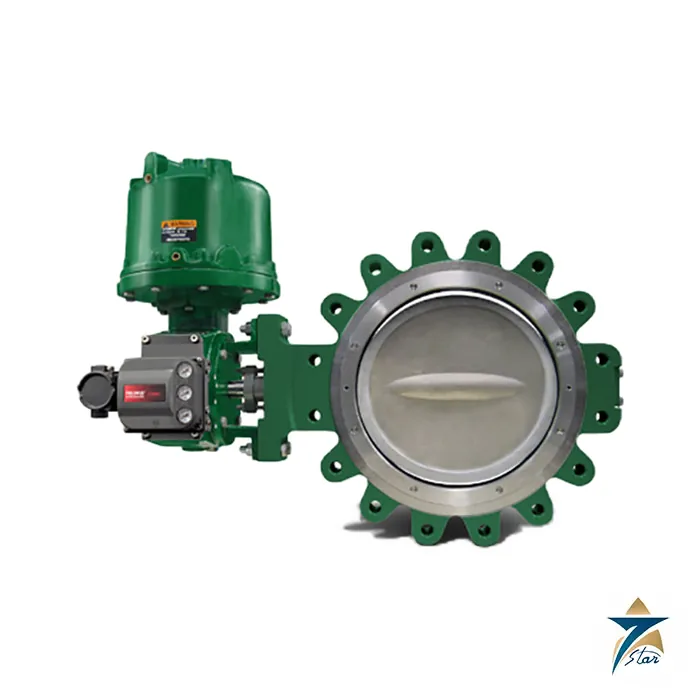
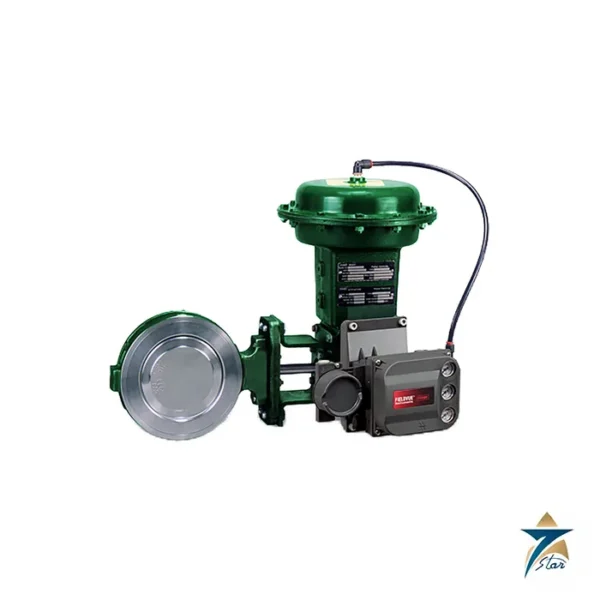
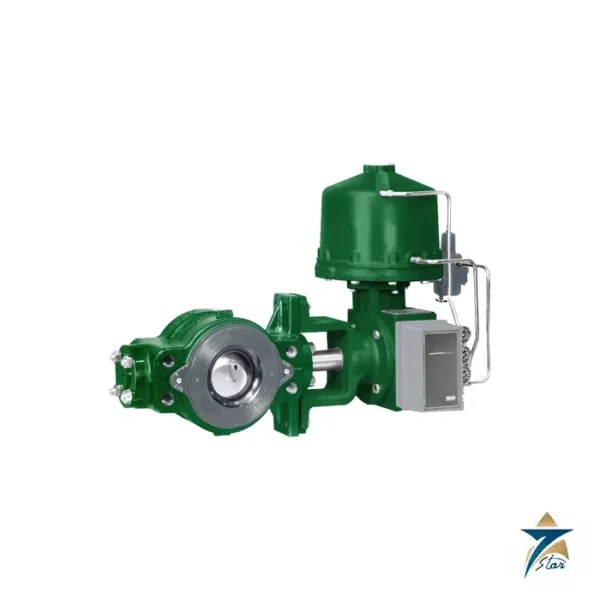
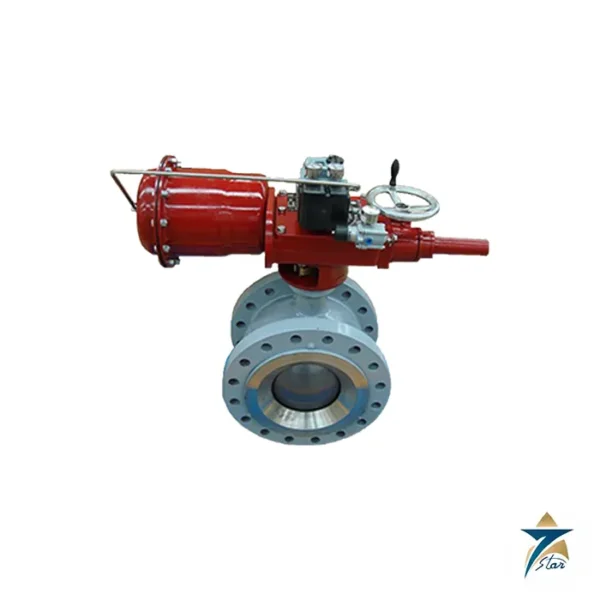
The Fisher 8532 is a high-performance (double-offset style) butterfly valve for large lines in the bulletin covered here, NPS 14 through 48. It is built for throttling or on/off service where pressure, temperature or shutoff demands exceed what a resilient-seated butterfly valve can handle. It holds tight shutoff, can be ordered in a fire-tested version, and can be specified for cryogenic and oxygen service. The valve is supplied either as a flangeless wafer body or as a single-flange lugged body, with a splined drive shaft that accepts most Fisher spring-and-diaphragm and pneumatic piston rotary actuators. Seven Star LLC supplies Fisher 8532 valves in Oman and the GCC as an independent supplier in Muscat.
8532 technical specifications
| Parameter |
Specification |
| Manufacturer / part number |
Fisher (Emerson) / 8532 |
| Configurations |
Wafer (flangeless), lugged (single flange) or double flanged body |
| Sizes |
NPS 14, 16, 18, 20, 24, 30, 36, 42 and 48 |
| Pressure classes |
CL150 and CL300 per ASME B16.34; NPS 30 to 48 also CL150/150 (CL150 body with 150 psid rated trim) |
| End connection fit |
NPS 14 to 24 between ASME B16.5 raised-face flanges; above NPS 24 between ASME B16.47 Series A flanges |
| Face-to-face |
Wafer and lugged to MSS SP-68 and API 609 through NPS 24; double flange to API 609 short pattern |
| Body and disk materials |
ASTM carbon steel, stainless steel, duplex or super duplex |
| Shaft materials |
S17400 (17-4PH H1025), S20910, S31803 or S32760 |
| Seal options |
Standard soft seal, NOVEX metal seal, Phoenix III seal, cryogenic seal |
| Shutoff (ANSI/FCI 70-2, IEC 60534-4) |
Soft seal and Phoenix III: Class VI bidirectional; NOVEX: Class IV unidirectional, Class VI optional (not NPS 42 and 48) |
| Fire test |
Phoenix III fire-tested version per API 607 Rev. 4, reverse-flow direction |
| Flow characteristic |
Modified equal percentage, 90° disk rotation, rangeability 100:1 |
| Max Cv at 90° (CL150) |
NPS 14: 6320; NPS 24: 21,500; NPS 36: 50,500; NPS 48: 92,600 |
| Disk rotation |
Clockwise to close |
Seal choices on the 8532 and what they do
The seal is the heart of a high-performance butterfly valve, and the 8532 offers four. The standard soft seal gives bubble-tight Class VI shutoff in both directions with a PTFE or UHMWPE ring supported by a backup O-ring, and the O-ring compound (nitrile, chloroprene, PTFE, fluorocarbon or EPR) is chosen for hydrocarbons, chemicals, steam or water. The NOVEX metal seal is unidirectional, with Class IV shutoff in the preferred direction, for high-temperature duty where polymers cannot survive. The Phoenix III seal is bidirectional Class VI and the version for fire-tested applications, which must be installed in its preferred orientation. The cryogenic seal is likewise unidirectional. Pressure-assisted sealing means the process pressure itself pushes the seal harder against the disk, which holds tight shutoff up to the full pressure rating of the chosen body class.
Direction and orientation
The valve may be installed in forward or reverse flow, but the bulletin recommends the shaft horizontal in the normal (reverse) flow direction: fluid then sweeps solids away from the seal area. NOVEX and cryogenic seals should be installed with the shaft upstream of the seal. The valve and actuator can be assembled eight ways to give the desired actuator motion and disk position at fail.
8532 design features that matter on site
- Shaft blow-out protection: the shaft has a turned-down shoulder that locks against an anti-blowout gland.
- Splined shaft end allowing lever clamping by most Fisher rotary actuators with minimal deadband; optional keyed shaft for on/off duty and wider actuator choice.
- Interchangeable parts including shafts and disks, which simplifies spares stocking.
- Body self-centres on the line flange bolts, and seal retainer screws are positioned so they do not interfere with flat sheet or spiral wound line gaskets.
- Optional ENVIRO-SEAL PTFE or graphite packing with live loading, designed to hold emissions below the EPA 100 ppm limit.
- Bearings of PEEK as standard; stainless steel, PTFE composition or CoCr-A (Alloy 6) optional.
- Shaft extensions are optional above 343 °C (6 in. for 343 to 538 °C, 12 in. above 538 °C); cryogenic extension 914 mm.
Selecting a Fisher 8532 valve
Start with size and class, then decide whether the application is throttling (modified equal percentage over 90° of rotation) or on/off. Choose the seal from temperature, shutoff class, fire-safety requirement and flow direction, then confirm body, disk and shaft materials for the process medium. For throttling, the bulletin notes that throttling PTFE seals at differential pressures above 300 psid with the disk less than 20° open is not recommended because of erosion and seal failure. Fast-cycling services need attention to the seal ring: CTFE is not recommended for cycling faster than 2 seconds. Actuator selection follows: spring-and-diaphragm or piston, with a FIELDVUE digital valve controller if modulating.
Installation and maintenance
Ensure the pipeline flanges are aligned and use gasket types compatible with the seal retainer arrangement. Install with the shaft horizontal where possible. Recheck packing load after the first thermal cycles, especially on graphite packing at high temperature. Because shafts, disks and seals are interchangeable parts, re-sealing a valve is a workshop task and should be planned together with stroke testing of the actuator and positioner.
Where the 8532 is used in Oman and the GCC
Large-diameter butterfly valves of this class turn up on cooling-water headers, seawater intake and desalination plant lines, fuel gas and flare headers, amine and process-water circuits, steam and condensate service and power-plant bypass systems. High-temperature gas and steam duties favour metal-seated NOVEX or fire-tested Phoenix III constructions, while cooler hydrocarbon and water services suit the soft seal. Coastal humidity and sand place extra weight on stainless or duplex materials and clean shaft sealing.
Related Fisher rotary valves
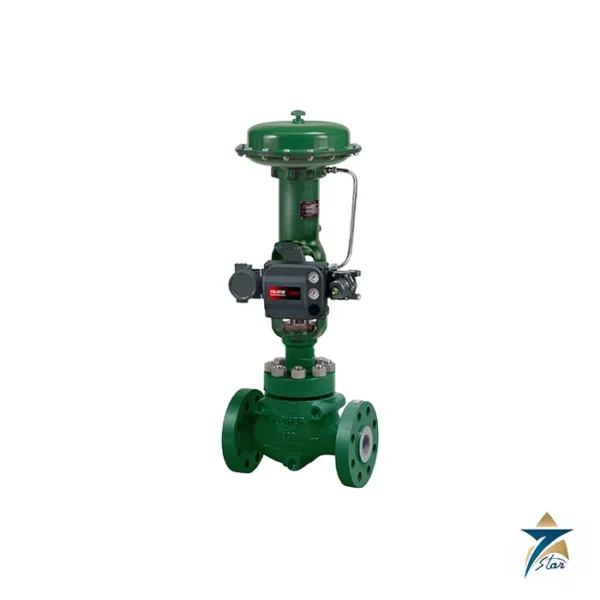
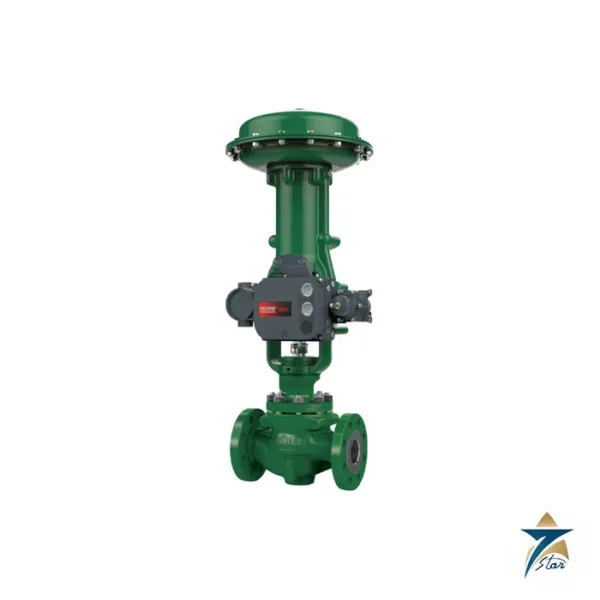
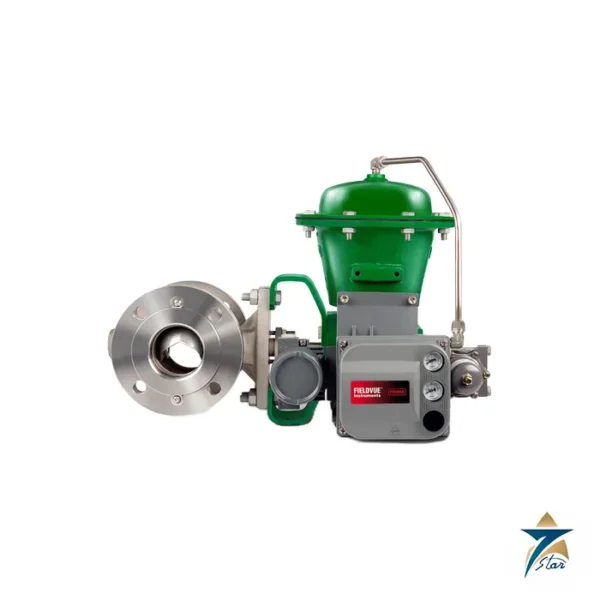
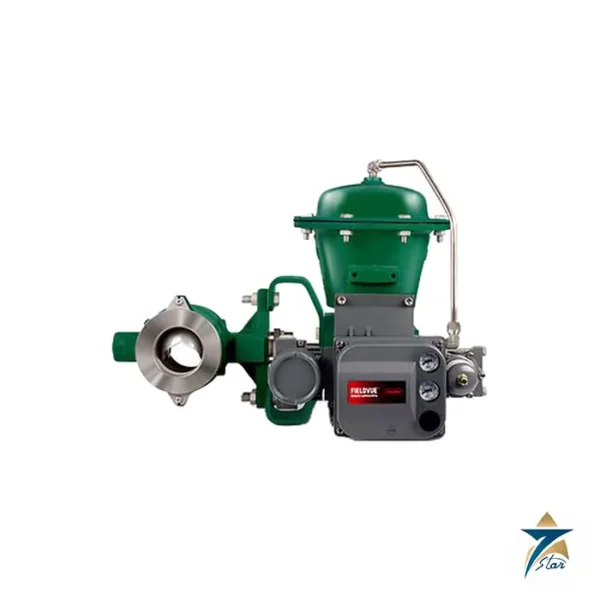
Other Fisher rotary options listed at Seven Star LLC include the 8560 and 8580 high-performance butterfly valves, the Vee-Ball V150, V200 and V300 segmented ball valves, the V250 Hi-Ball and the CV500. Actuators include the 1051, 1052 and 1061.
Information to send with an RFQ
- Line size, pressure class, flange standard and mating flange type.
- Fluid, minimum and maximum flow, differential pressure and temperature.
- Throttling or on/off duty, shutoff class and fire-test requirement.
- Body, disk and shaft material, packing and emission needs.
- Actuator action, fail position, positioner and accessories.
Documents and quotation
The Fisher 8532 product bulletin is attached to this page as a datasheet. Please send the data above and we will confirm the matching construction and prepare a quotation.



























Reviews
There are no reviews yet.