Fisher ED, EAD and EDR sliding-stem globe control valves
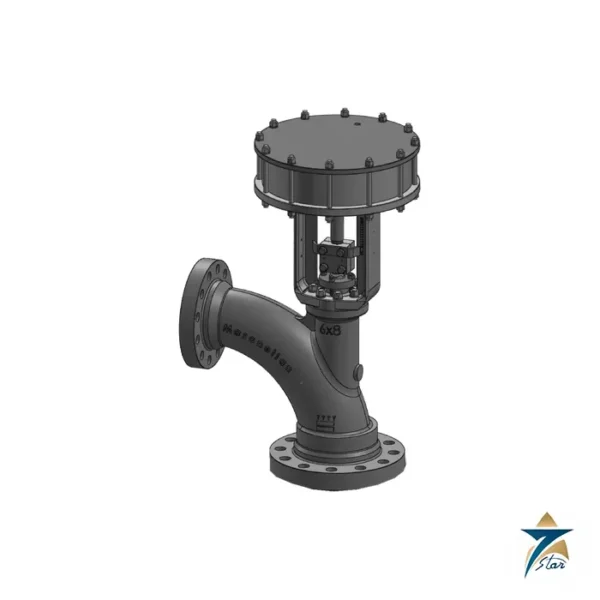
The Fisher ED is a single-port, globe-style control valve with a balanced plug, cage guiding and metal-to-metal seating, designed for general throttling or on/off duty on liquids and gases across a wide span of pressure drops and temperatures. Two close relatives share the same trim and body philosophy: the EAD is the angle-body version, useful where piping layout or self-draining is wanted, and the EDR is the reverse-acting version with a push-down-to-open plug. All three belong to the easy-e family of Fisher industrial control valves. Seven Star LLC supplies Fisher ED-series valves in Oman and the GCC as an independent supplier in Muscat; this page condenses the product bulletin so you can pin down the construction before requesting a quotation.
ED valve technical specifications
| Parameter |
Specification |
| Manufacturer / part number |
Fisher (Emerson) / ED, EAD, EDR |
| Configuration |
ED: single-port globe, push-down-to-close; EAD: angle body; EDR: push-down-to-open |
| Sizes |
ED NPS 1 to 8; EAD NPS 1, 2, 3, 4, 6; EDR NPS 1 to 4 (EN: ED DN 25 to 200, EAD DN 25 to 150, EDR DN 25 to 100) |
| End connections |
Cast iron CL125 FF or CL250 RF flanged; steel and stainless CL150, 300, 600 RF or RTJ flanged per ASME B16.5, EN 1092-1 PN16 to PN100 RF, screwed or socket weld NPS 1 to 2, buttweld NPS 1 to 8 |
| Body and bonnet materials |
Cast iron, WCC and LCC carbon steel, WC9 chrome moly, CF8M, CF3M; other materials on request |
| Trim temperature capability |
Standard metal seats to 427 °C / 800 °F; Class IV or Class V shutoff to 593 °C / 1100 °F with the stated options |
| Flow characteristics |
Standard cages: quick-opening, linear or equal percentage; Whisper and WhisperFlo cages: linear |
| Shutoff classes (ANSI/FCI 70-2, IEC 60534-4) |
Class II standard; Class III optional; Class IV with multiple graphite piston rings; Class V with C-seal trim |
| Stem diameters |
9.5, 12.7, 19.1, 25.4 and 31.8 mm |
| Packing |
Single PTFE V-ring standard; double, leak-off and ENVIRO-SEAL (PTFE, Graphite ULF or Duplex) arrangements |
| Approximate weights |
NPS 1: 14 kg; NPS 2: 39 kg; NPS 4: 77 kg; NPS 6: 159 kg; NPS 8: 408 kg |
| Safety classification |
Optional SIL 3 capable, certified by exida |
How the ED balanced-plug design works
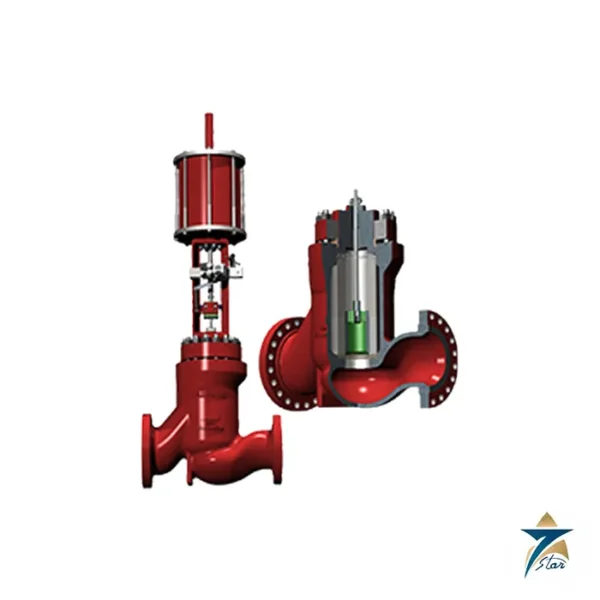
Process fluid enters the body and passes through the cage windows. The plug slides inside the cage, which guides it along its full stroke and suppresses the vibration that would otherwise shake an unguided plug. A balancing port through the plug lets line pressure act on both faces, so the actuator only has to fight the packing friction and the residual force at the seat rather than the full pressure drop. That is why an ED can be fitted with a smaller and cheaper actuator than an unbalanced globe valve of the same size. The cage window pattern fixes the inherent flow characteristic; changing from linear to equal percentage means changing the cage and plug rather than the body.
ED, EAD and EDR flow directions
For the ED and EAD with a standard cage the normal flow direction is down through the seat; with Whisper Trim, Whisper NXG Trim and WhisperFlo cages flow is always up. On the EDR with a standard cage the normal direction is up, and with a Whisper Trim cage it is always down. Check this against your process before ordering because it also affects shutoff and noise behaviour.
Trim, noise and sour service options for ED
Standard trim uses hardened stainless steel for wear resistance. Where aerodynamic noise in gas service is a concern, Whisper Trim I, Whisper Trim III, Whisper NXG Trim and WhisperFlo cages attenuate it. Restricted-capacity trims and full-size trims are interchangeable, so a valve can be re-ranged by swapping trim parts while the body stays in the line. For oil and gas production the bulletin states that the ED line is available for sulfide and chloride stress-cracking environments; optional materials meet NACE MR0175 / ISO 15156 and MR0103, and the specific standard and edition must be named at ordering. For fugitive-emission control, ENVIRO-SEAL packing with PTFE, Graphite ULF or Duplex rings and live loading is offered; the PTFE and Duplex systems are stated for full CL300 up to 232 °C, and Graphite ULF for 104 bar at 316 °C. C-seal trim, with a nickel-alloy metal plug seal, allows Class V shutoff on balanced plugs up to 593 °C for port diameters from 2.875 in. to 8 in.
Selecting an ED, EAD or EDR valve
- Pick the body style: straight globe ED, angle EAD for piping layout or draining, or EDR when push-down-to-open action suits the fail-safe logic.
- Define size, pressure class and end connection (ASME or EN). Certain bonnet bolting choices may require derating a CL600 assembly.
- Select body and trim material for temperature and corrosion: carbon steel WCC or LCC, WC9 for higher temperatures, CF8M or CF3M for corrosive media.
- Choose cage characteristic and capacity: quick-opening, linear or equal percentage, restricted or full size, plus low-noise cages for gas.
- Choose bonnet and packing: plain or extension bonnet, ENVIRO-SEAL bellows bonnet, ENVIRO-SEAL or HIGH-SEAL packing.
- Specify required shutoff class and the maximum pressure drop, noting the limits tied to Whisper Trim and NACE constructions.
Installation and maintenance of ED valves
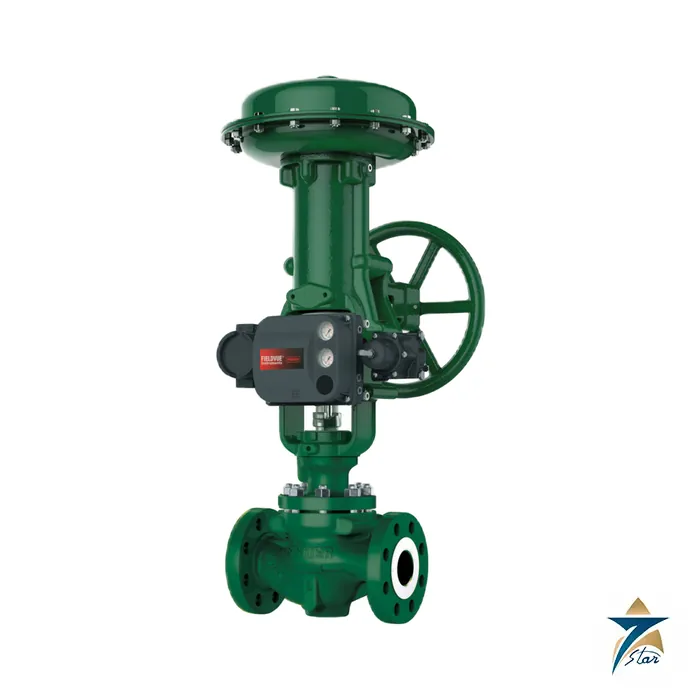
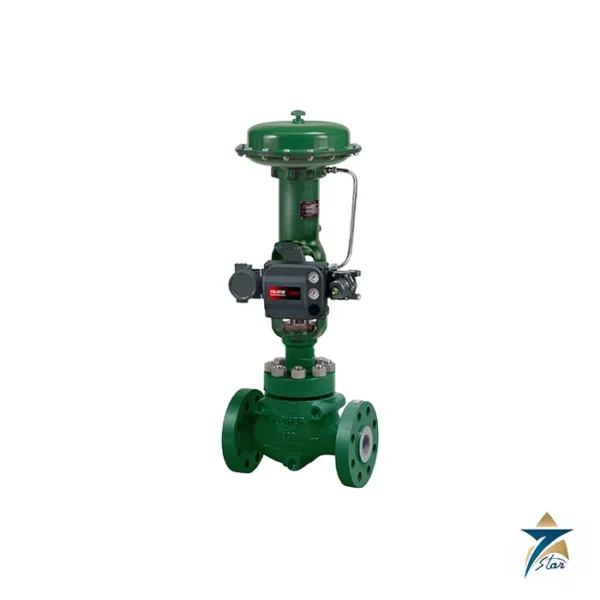
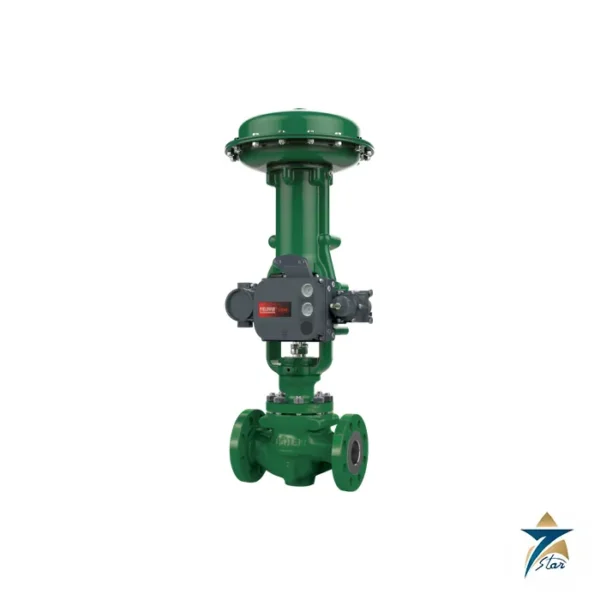
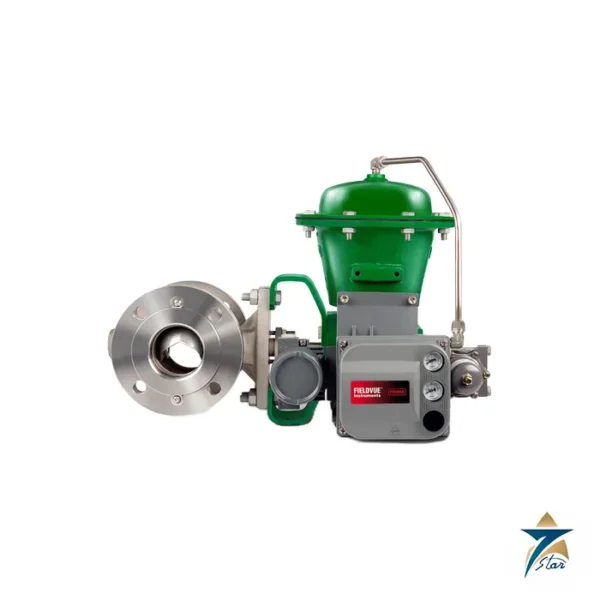
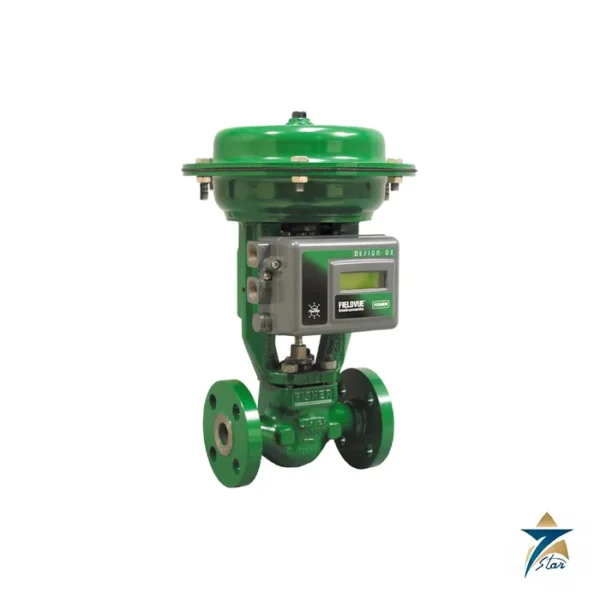
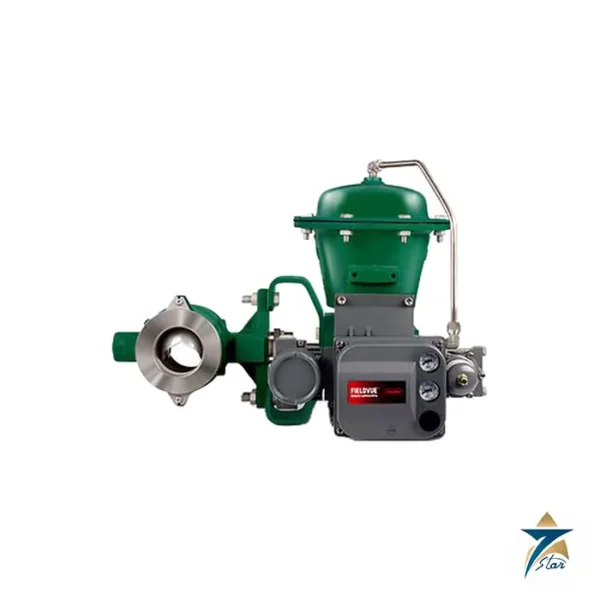
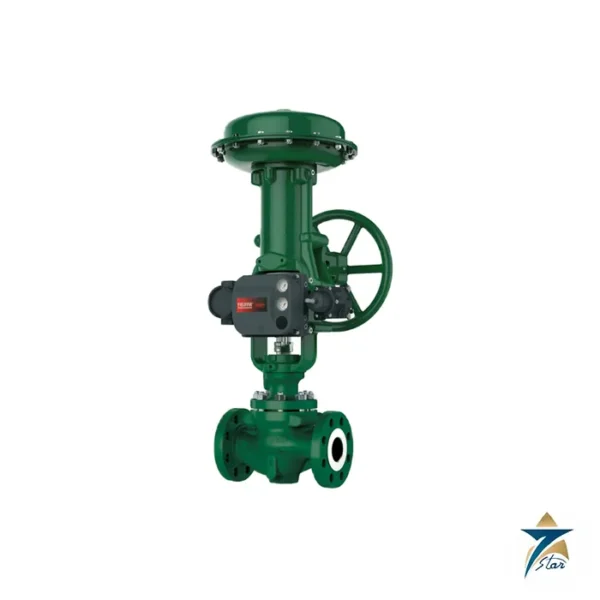
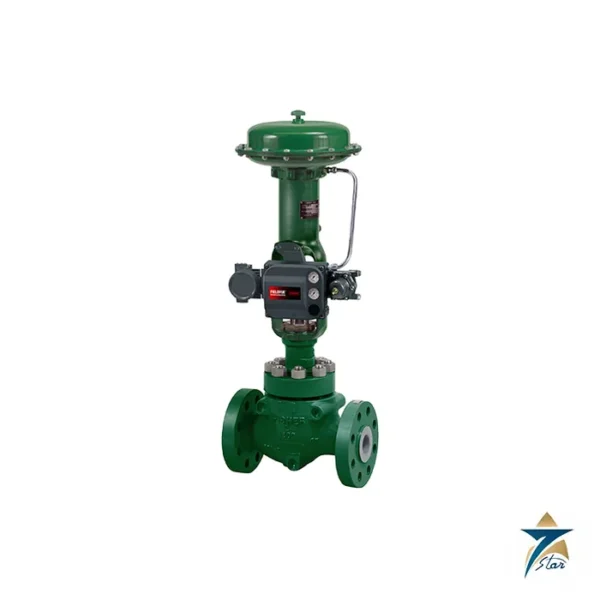
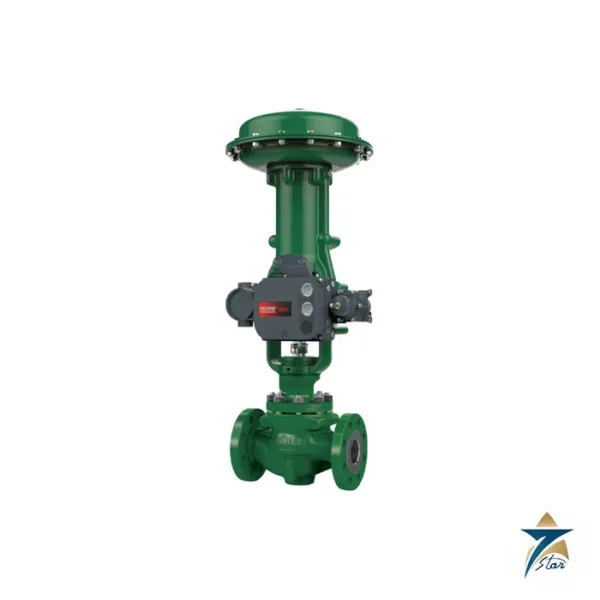
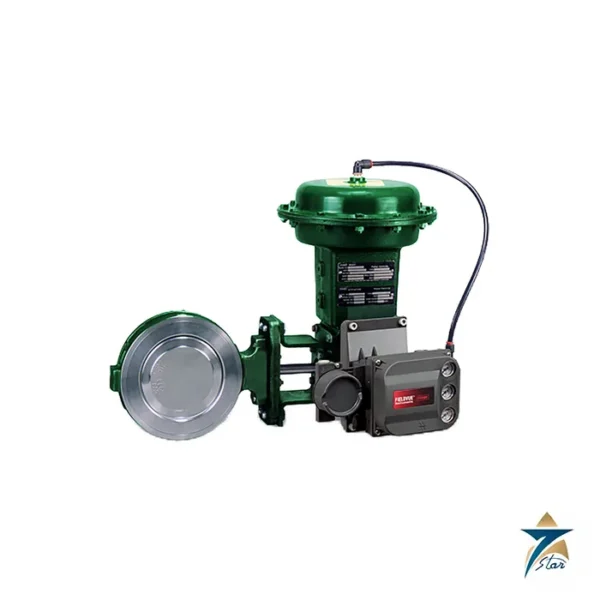
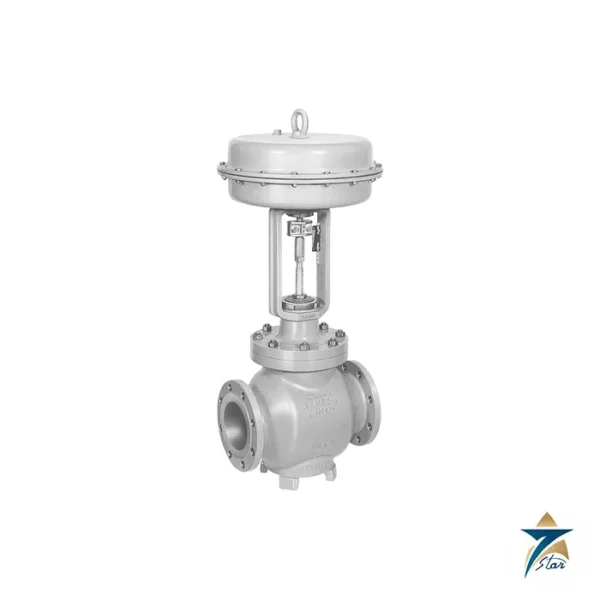
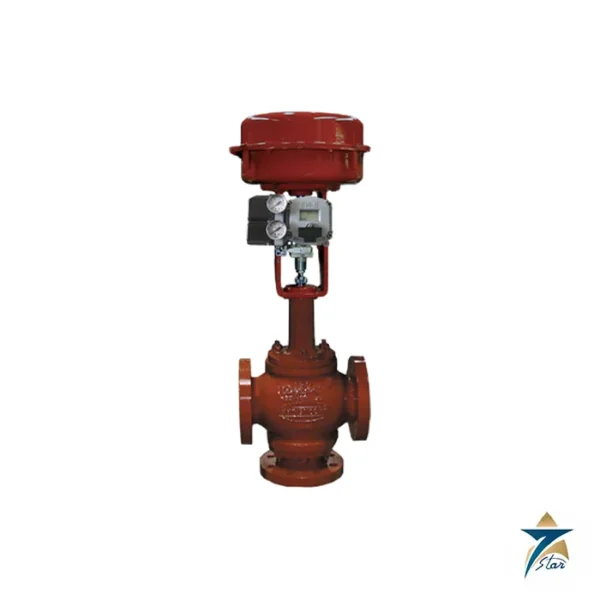
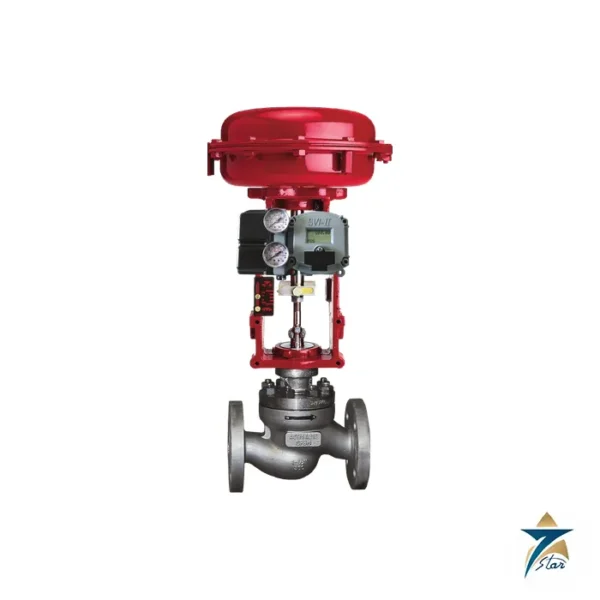
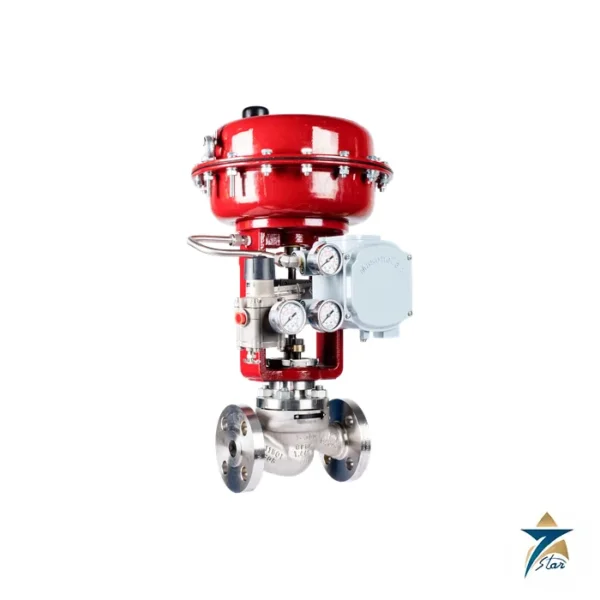
The valve body can stay in the pipeline while trim parts are removed, which shortens turnaround work. The EDR adds easy valve access without removing the actuator. Standard packing box parts are 316 stainless steel, and optional extras include lubricators, drain plugs, leak-off connections in the extension bonnet, fabricated extension bonnets for cryogenic service and a seismic-service bonnet. Actuators commonly paired with the series include the Fisher 657 and 667 diaphragm actuators, shown in the bulletin photographs, with a digital valve controller such as the FIELDVUE DVC6200 on top.
ED valve applications in Oman and the GCC
These valves are found throughout Gulf oil and gas and power plants: pressure and level control on separators, fuel gas let-down, boiler feedwater and attemperation lines, steam header control, condensate and cooling-water services, and chemical injection skids. High ambient temperatures and hot process fluids favour the metal-seated, high-temperature trims, while salt-laden coastal air makes stainless packing parts and sealed bonnets worthwhile. The sour-service constructions are relevant to wellhead and gathering systems that handle H₂S.
Related Fisher products
Within the same easy-e family, Seven Star LLC also lists the Fisher easy-e ES, ET and EZ valves, and the Fisher EW valve family. Rotary alternatives include the 8532 high-performance butterfly valve and the Vee-Ball V150, V200 and V300 segmented ball valves.
Information to send with an RFQ
- Fluid, phase, flow rates (minimum, normal, maximum), inlet and outlet pressure and temperature.
- Line size, pressure class, end connection standard and face-to-face requirement.
- Body and trim material, sour-service standard and edition if applicable.
- Required shutoff class, flow characteristic, noise limit and fail-safe action.
- Packing and emission requirements, bonnet type and actuator and positioner preference.
Documents and quotation
The Fisher ED, EAD and EDR product bulletin is attached to this page as a datasheet. Send your duty data and options and we will confirm a matching construction and prepare a quotation.



























Reviews
There are no reviews yet.