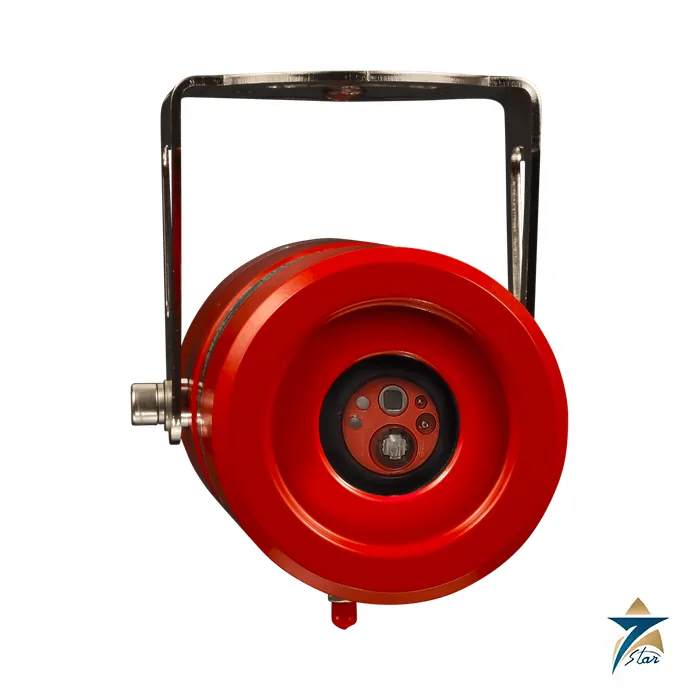
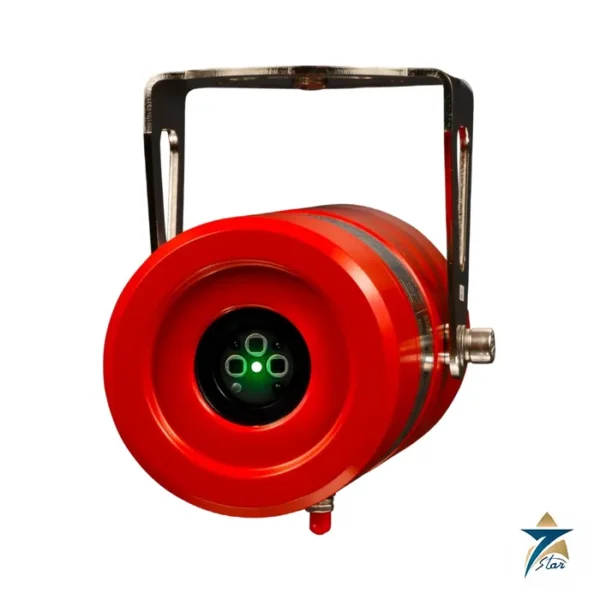
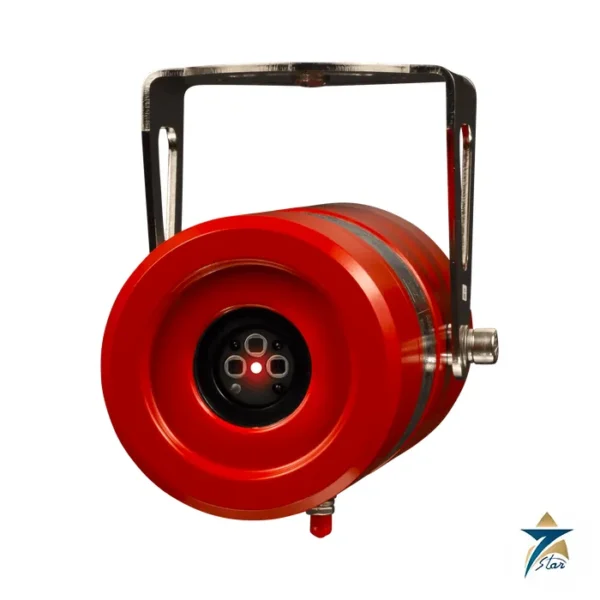
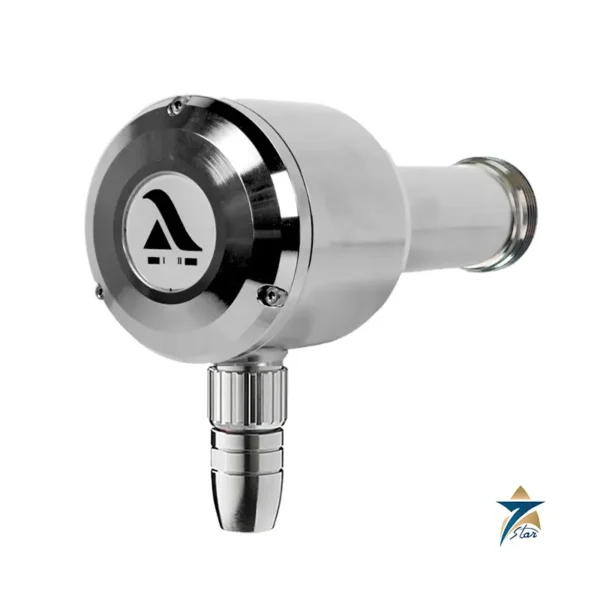
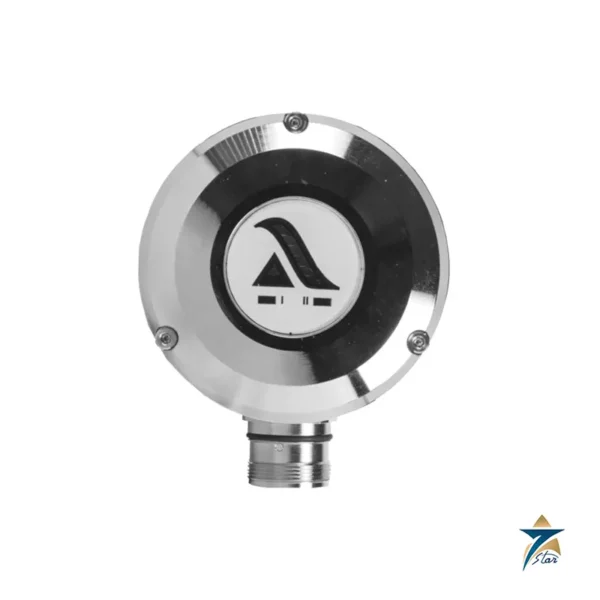
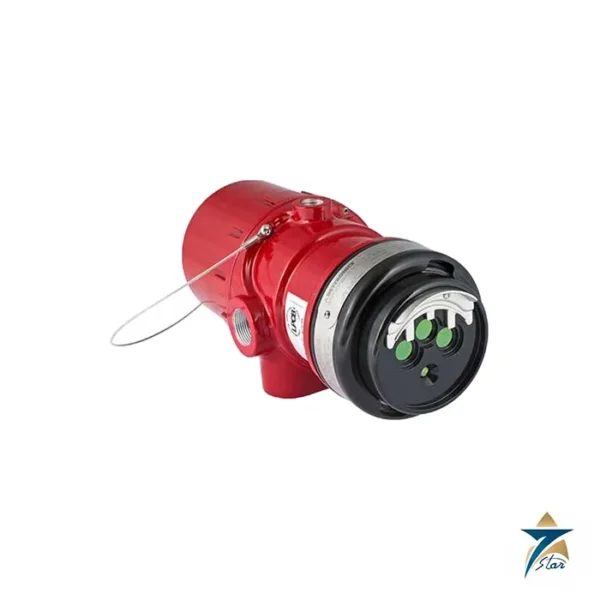
An explosion-proof UV-IR flame detector with adjustable sensitivity
The Crowcon Fgard UVIR combines ultraviolet and infrared sensing to detect hydrocarbon flames, including those outside the visible spectrum. Three selectable sensitivity levels let you match each detector to its space and avoid cross-voting between neighbouring units. Microprocessor-controlled heated optics keep the window clear of snow, ice and condensation, and an automatic optical verification test checks the lens and electronics without a reflector.
Technical specifications
| Parameter |
Specification |
| Detection principle |
Ultraviolet-infrared (UVIR) flame detection with heated optics |
| Sensitivity settings |
Three selectable levels |
| Enclosure |
Copper-free aluminium or 316 stainless steel |
| Dimensions |
100 mm dia x 200 mm (4 in x 8 in) |
| Weight |
Aluminium 2.5 kg (5.5 lb); stainless steel 6.0 kg (13.2 lb) |
| Cable entry |
3/4 inch NPT or M25 |
| Operating voltage |
24 Vdc nominal (18 to 32 Vdc) |
| Power consumption |
3 W minimum without heater; 15 W maximum with heater |
| Response time |
Less than 5 seconds (typical) |
| Outputs |
Relay contacts (DPDT 2 A at 30 Vdc) for alarm and fault; 0-20 mA; HART |
| Operating / storage temperature |
-60 to +85 degC for both |
| Humidity |
0 to 93 percent RH, non-condensing |
| Performance approvals |
FM 3260; EN 54-10; IP66 / NEMA 4X; SIL 2 certified to IEC 61508 |
| Hazardous area certification |
Class 1 Div 1 Groups B, C, D T4 (ambient -50 to +85 degC); Class 1 Zone 1 AEx/Ex db IIC T4; ATEX II 2 G Ex db IIC T4; IECEx Ex db IIC T4; INMETRO Ex db IIC T4; PESO Ex db IIC T4 (Ta -60 to +85 degC). CCC and GB-Ex listed as pending |
| Tested detection |
Hydrocarbon pan fire at over 130 ft in under 5 seconds (independent test, per datasheet) |
Detection distances
The datasheet lists the same sensitivity table as the Fgard IR3. At high sensitivity: n-heptane, gasoline and JP4 (30 cm pans) 60 m; diesel 50 m; crude oil (0.5 m pan) 50 m; methane (60 cm plume) 50 m; ethanol and methanol 42 m. At standard sensitivity the distance is 30 m for n-heptane, gasoline, JP4, methane and ethanol.
Where UV-IR suits
Typical applications listed are oil and gas processing, refineries, petrochemical and chemical plants, aircraft hangars, road tunnels, tank farms, loading racks, LNG and LPG, and printing. UV-IR detectors can be sensitive to arc welding and other UV sources, so review the site hazards and the sensitivity setting with your fire and gas designer. The triple IR alternative is the Fgard IR3, and more are listed under flame detectors.
Selection considerations for UV-IR flame detection
A UV-IR detector responds when both the ultraviolet and the infrared signatures of a flame are present, which helps reject many false alarm sources that affect single-spectrum detectors. It is a common choice for hydrocarbon fire risks where a fast response is required and where the area is not dominated by sources of UV radiation. Before selection, list the fuels present in the protected area, the expected fire size that must be detected, and any potential nuisance sources such as welding, lightning, hot surfaces or reflected sunlight. Compare these with the detection distances in the sensitivity table, and choose the sensitivity level that covers the area without reaching beyond it into neighbouring zones.
Housing material is a further decision. The copper-free aluminium version is lighter, while 316 stainless steel is often preferred in offshore, coastal and corrosive chemical environments. Confirm the cable entry thread and the hazardous area certification required by the project before ordering.
Installation and coverage planning
Detector coverage should be designed by a competent fire and gas engineer using the manufacturer cone of vision and the site layout. Mount each detector so that it has a clear line of sight to the potential fire sources, aimed slightly downwards where possible to reduce the chance of dirt collecting on the window and to limit exposure to the sky. Avoid obstructions such as pipe racks, vessels and structural steel that could shadow a fire. Make the cable entries in a way that maintains the certified Ex db protection, and follow the installation manual and local hazardous area regulations.
Commissioning and integration
Connect the alarm and fault relays or the 0-20 mA output to the fire and gas panel or safety system, and confirm that each state is correctly recognised at the control end. HART can be used for configuration and diagnostics where the system supports it. At commissioning, verify the sensitivity setting, confirm the fault signalling, and use a suitable flame simulator test according to the manufacturer procedure. Record the results for every detector in the commissioning file.
Operation in GCC heat, dust and sand
In Oman and the GCC, detectors on refineries, tank farms and loading racks face strong sunlight, high temperatures and windblown dust and sand. The heated optics and automatic optical verification help, but they do not replace routine inspection: clean the window at intervals set by the site conditions, check that the detector has not been knocked out of alignment, and review fault logs. Coastal humidity and salt air are further reasons to consider the stainless steel housing.
Periodic testing and maintenance
Flame detectors are part of a safety function, so their proof testing should follow the intervals defined in the fire and gas philosophy or the SIL verification for the site. A typical routine combines a visual inspection of the housing and window, a check of the mounting and line of sight, a review of fault and alarm history, and a functional test with a suitable test source. Any change to the area around a detector, such as new equipment, scaffolding or modified pipework, should trigger a review of its coverage. Keep a record of each test and inspection, as this supports both safety audits and the planning of future maintenance work. Where the plant runs with frequent hot work, coordinate inhibits with the permit-to-work system so that detectors are not left inhibited after the work has finished.
What to include in your RFQ
State the housing material, cable entry, required certification, quantity and the fuels to be detected, together with the project or end-user specification if one applies.
Documents and quotation
The attached Crowcon datasheet (UK edition, September 2026) includes the specification and sensitivity table. Send the housing material, cable entry and certification needed with the quantity for a quotation.










Reviews
There are no reviews yet.