LC1D12F7 contactor, 12 A frame, 110 V AC control
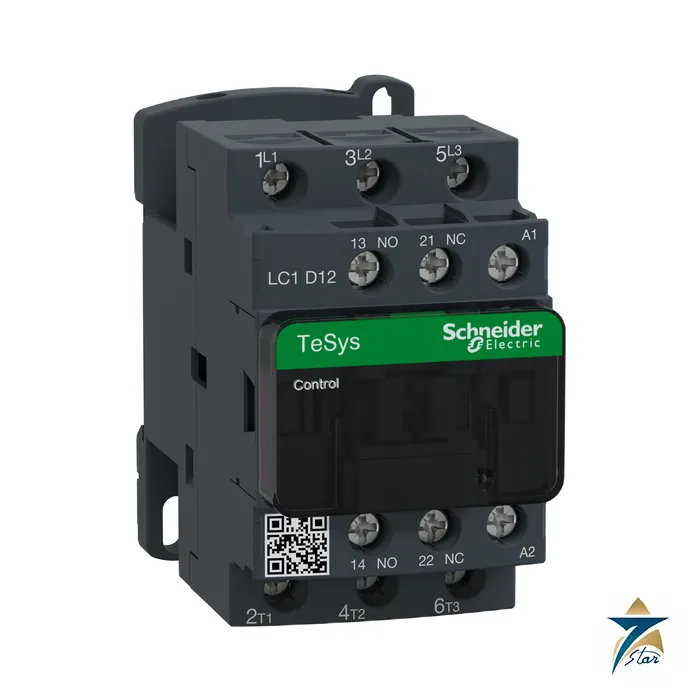
The LC1D12F7 is a Schneider Electric TeSys Deca contactor listed in the datasheet as: TeSys D contactor – 3P(3 NO) – AC-3 – ≤ 440 V 12 A – 110 V AC coil. The LC1D12 is the 12 A frame of the TeSys Deca range. It shares the 45 mm wide body of the 9 A and 18 A versions but rates AC-3 at 12 A and 440 V, which suits motors a little above fractional-horsepower sizes. In many panels it is the default for 5.5 kW pumps on a 400 V supply. Seven Star LLC supplies the LC1D12F7 in Oman and the GCC as an independent supplier based in Muscat.
Decoding the reference from the datasheet title: LC1D is the three-pole TeSys Deca contactor, 12 is the 12 A frame, and F7 is the control voltage code, here a 110 V AC 50/60 Hz coil. This frame is also available with other coil codes, such as LC1D12B7, LC1D12M7, LC1D12P7, LC1D12U7. The datasheet gives dimensions of 77 x 45 x 86 mm (H x W x D) and a net weight of 0.325 kg.
Technical specifications of the LC1D12F7
| Parameter |
Specification |
| Manufacturer / part number |
Schneider Electric / LC1D12F7 |
| Description |
TeSys D contactor – 3P(3 NO) – AC-3 – ≤ 440 V 12 A – 110 V AC coil |
| Range of product |
TeSys Deca Advanced |
| Device short name |
LC1D |
| Product or component type |
Contactor |
| Contactor application |
Motor control; resistive load |
| Utilisation category |
AC-3; AC-3e; AC-1; AC-4 |
| Poles / contact composition |
3P; 3 NO |
| Rated operational voltage [Ue] |
Power circuit: up to 690 V AC (25 to 400 Hz); up to 300 V DC |
| Rated operational current [Ie] |
12 A at <60 °C at up to 440 V AC (AC-3 and AC-3e); 25 A in AC-1 |
| Control circuit voltage [Uc] |
110 V AC 50/60 Hz |
| Coil technology |
Without built-in suppressor module |
| Inrush / hold-in power |
70 VA inrush; 7 VA (50 Hz) and 7.5 VA (60 Hz) hold-in |
| Motor power (AC-3), 400 V |
5.5 kW at 380/400 V |
| Motor power, 60 Hz |
7.5 hp at 460/480 V |
| Conventional free-air thermal current |
25 A at 60 °C |
| Rated making / breaking capacity |
250 A at 440 V |
| Associated fuse rating |
40 A gG (type 1) and 25 A gG (type 2) at up to 690 V |
| Auxiliary contacts |
1 NO + 1 NC, mechanically linked; NC mirror contact |
| Mechanical durability |
15 Mcycles |
| Electrical durability |
2 Mcycles at 12 A AC-3; 0.8 Mcycles at 25 A AC-1 |
| Maximum operating rate |
3600 cycles per hour at 60 °C |
| Operating time |
12 to 22 ms closing; 4 to 19 ms opening |
| Power terminals |
1 to 4 mm² per terminal flexible without ferrule, 1 to 2.5 mm² per terminal with two ferruled conductors |
| Tightening torque (power) |
1.7 N.m |
| Mounting support |
Rail; plate |
| IP degree of protection |
IP20 front face (IEC 60529) |
| Ambient temperature |
-40 to 60 °C; 60 to 70 °C with derating |
| Operating altitude |
0 to 3000 m |
| Dimensions (H x W x D) |
77 x 45 x 86 mm |
| Net weight |
0.325 kg |
| Product certifications |
UL; CCC; CSA; Marine; UKCA; EAC; CB Scheme |
Control supply for the LC1D12F7: the 110 V AC coil
The coil of the LC1D12F7 is rated 110 V AC 50/60 Hz. The datasheet gives an inrush of 70 VA (cos phi 0.75, at 20 °C) and a hold-in of 7 VA at 50 Hz and 7.5 VA at 60 Hz (cos phi 0.3). Dividing by the coil voltage, that is roughly 0.64 A at the moment of closing and 0.06 A while held in at 50 Hz; these are our own calculations from the VA figures and are only an order-of-magnitude guide for sizing control fuses and transformers. The coil has no built-in suppressor module, so a surge suppressor or RC network is an add-on if the coil is switched by a PLC output or a small relay. Control circuit voltage limits per the datasheet: drop-out between 0.3 and 0.6 Uc, operational at 0.8 to 1.1 Uc at 50 Hz and 0.85 to 1.1 Uc at 60 Hz in the range from -40 to 60 °C, and 1 to 1.1 Uc between 60 and 70 °C. Use the 110 V AC coil when the control transformer is already sized for it. When many contactors close together after a power restoration the inrush adds up, so total the inrush VA of all coils that can close simultaneously against the transformer rating.
Wiring a 110 V AC coil: the control transformer is normally fed from two phases or from phase and neutral and earthed on one side. Protect the secondary with a miniature breaker or fuse, size it for the closing VA of all coils that may be energised together, and keep the coil wiring segregated from the power cables inside the panel.
Commissioning check on a 110 V AC coil: confirm the transformer secondary reads 110 V within 0.8 to 1.1 Uc (88 V to 121 V) with all coils energised, and that one side of the control circuit is earthed as the panel design requires. A coil that chatters at closing points to low secondary voltage or a loose neutral on the control circuit.
Typical homes for the LC1D12F7: industrial pump and fan panels, material-handling lines and workshop machines that were built to a 110 V control standard. Maintenance teams like the arrangement because a stop-button circuit at 110 V is less hazardous than one at 230 V or 415 V.
What the LC1D12F7 can switch: motors, heaters and categories
At 12 A AC-3 the datasheet lists 3 kW at 220/230 V, 5.5 kW at 380/400 V and 415/440 V, and 7.5 kW at 500 V and 660/690 V, and 7.5 hp at 460/480 V for three-phase motors. In AC-1 the contactor is rated 25 A at 440 V, and the conventional free-air thermal current is 25 A at 60 °C.
| Supply voltage (AC-3) |
Motor power |
| 220/230 V |
3 kW |
| 380/400 V |
5.5 kW |
| 415/440 V |
5.5 kW |
| 500 V |
7.5 kW |
| 660/690 V |
7.5 kW |
Those motor ratings apply to AC-3 and AC-3e starting at up to 440 V; for AC-4 (plugging and inching) the datasheet gives a reduced figure, so a repetitive-reversing duty needs its own check. For the Omani and GCC 415 V network, the 380/400 V and 415/440 V rows are the relevant ones. Power circuit insulation is rated 690 V with an impulse withstand of 6 kV, overvoltage category III and pollution degree 3.
Before ordering the LC1D12F7: points to confirm
- Motor rating: up to 5.5 kW at 400 V in AC-3 per the datasheet, or 7.5 hp at 460/480 V.
- Whether the load is a motor (AC-3 12 A) or resistive (AC-1 25 A).
- Coil voltage and frequency, and whether the control is AC.
- Overload relay and short-circuit protection coordination: 40 A gG type 1 or 25 A gG type 2.
- Panel space on a rail, and the number of auxiliary blocks if more than 1 NO + 1 NC are needed.
- Check that the existing control transformer is 110 V (not 115 V or 120 V) and that the 50/60 Hz coil is suitable for the local 50 Hz supply.
- Confirm the control supply really is 110 V AC before ordering the LC1D12F7; coil voltage cannot be changed on the contactor.
Other coil options beside the LC1D12F7
All references below share the 12 A power section and differ in coil voltage. The datasheet data for ratings, terminals and endurance are the same across them; only the coil voltage changes. Against its neighbours, the 110 V AC coil needs a control transformer in most 415 V panels, which the 230 V and 240 V versions avoid; in return it gives a safer control circuit and handles long pushbutton wiring well. If the panel already carries a 110 V control winding, no other coil code makes sense.
| Part number |
Coil voltage |
Note |
| LC1D12B7 |
24 V AC |
Same frame, different coil |
| LC1D12F7 |
110 V AC |
This page |
| LC1D12M7 |
220 V AC |
Same frame, different coil |
| LC1D12P7 |
230 V AC |
Same frame, different coil |
| LC1D12U7 |
240 V AC |
Same frame, different coil |
Terminals, mounting and endurance of the LC1D12F7
Each power terminal accepts 1 to 4 mm² flexible conductors, with 1.7 N.m tightening. The contactor mounts on a 35 mm rail or on a plate.
The 12 A frame is rated for 15 million mechanical cycles and 2 million electrical cycles at 12 A AC-3 at up to 440 V, and 0.8 million at 25 A AC-1. Dissipation is only 0.36 W per pole in AC-3, a useful figure when the contactor is placed in a sealed enclosure.
Where the LC1D12F7 works in Oman and the GCC
A 12 A contactor is a standard choice for submersible and booster pumps, small compressors, ventilation fans, bench machines and heater banks up to about 5.5 kW at 400 V. In Oman it is regularly found in water-transfer pump panels and in packaged HVAC chillers.
The 110 V AC coil is typical of industrial panels with a 110 V control transformer. Ambient temperatures inside outdoor panels in Oman often exceed the 60 °C limit for full rating in summer; the datasheet allows operation to 70 °C with derating, but the usual practice is to shade, ventilate or air-condition the enclosure. Fine dust and humid coastal air call for sealed enclosures because the contactor itself is only IP20 on the front face.
Information to send with an RFQ for the LC1D12F7
- The reference LC1D12F7 and the quantity required
- Whether it replaces an existing LC1D12 contactor and the coil voltage printed on it
- Motor power, supply voltage and starting method (direct-on-line, reversing, star-delta)
- Number of auxiliary contacts and overload relay that will be fitted
- Delivery location in Oman or the GCC and the timing needed
Documents and quotation
A datasheet for this product is attached on this page. It lists the electrical, mechanical and environmental data summarised above.
Send us the part number LC1D12F7, the quantity and the application and we will confirm availability and a quotation. Seven Star LLC is an independent supplier in Muscat and is not affiliated with the manufacturer.
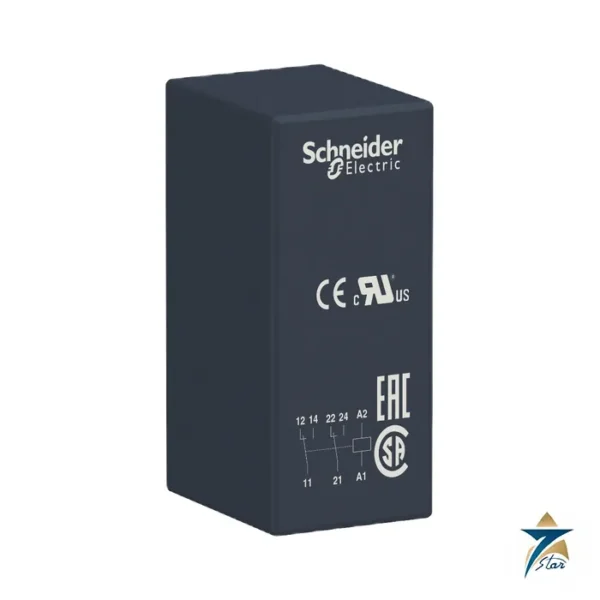
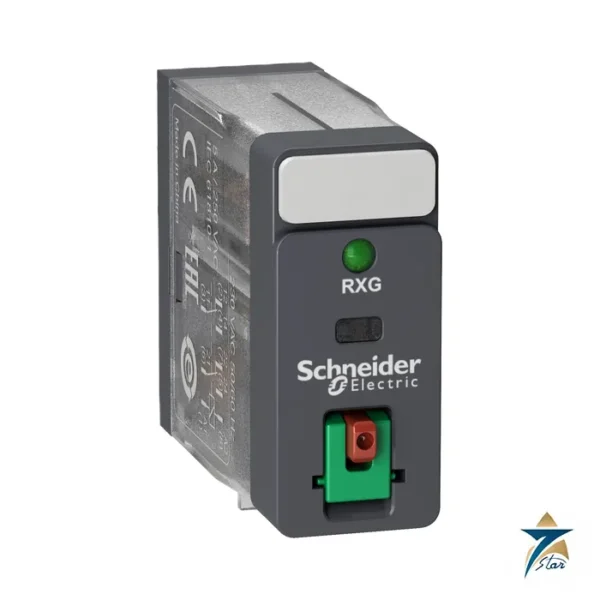
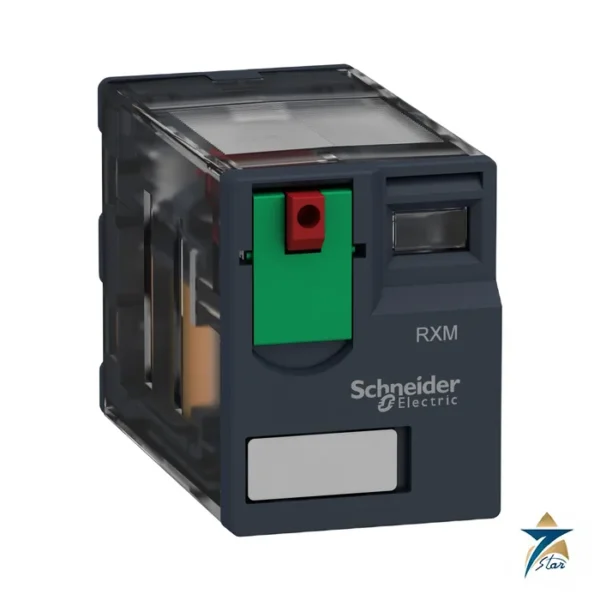
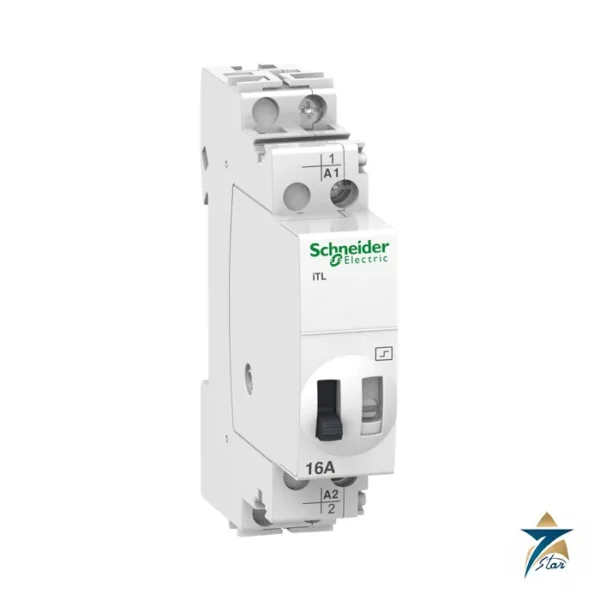
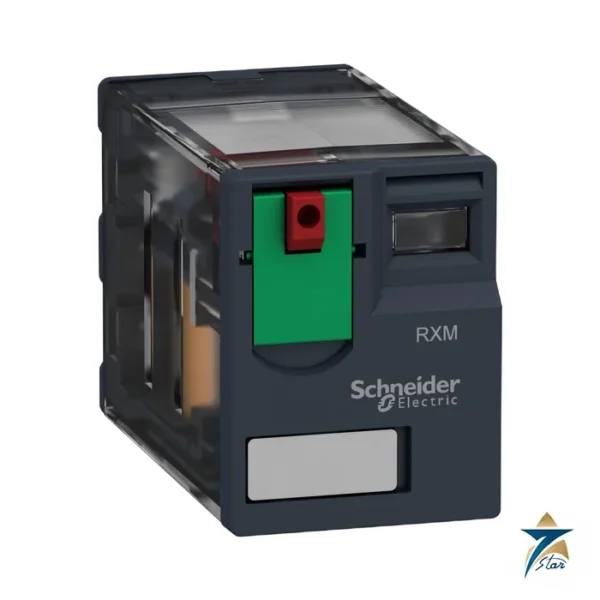
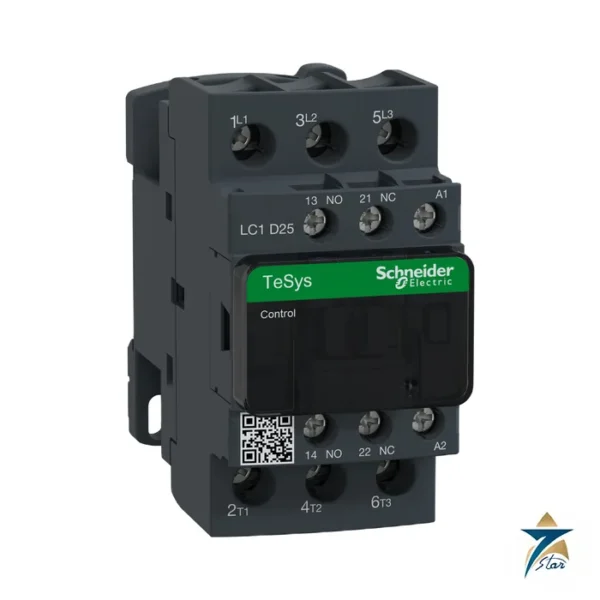
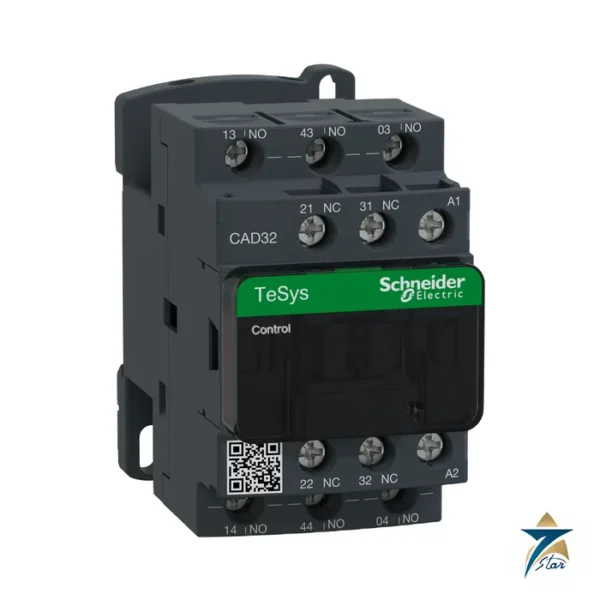
Other Models in the Se Lc1d12 Ac Range
Seven Star LLC supplies models from the Se Lc1d12 Ac range in Oman and the GCC. Compare the related models below and request a quote for the one that matches your application.




















Reviews
There are no reviews yet.