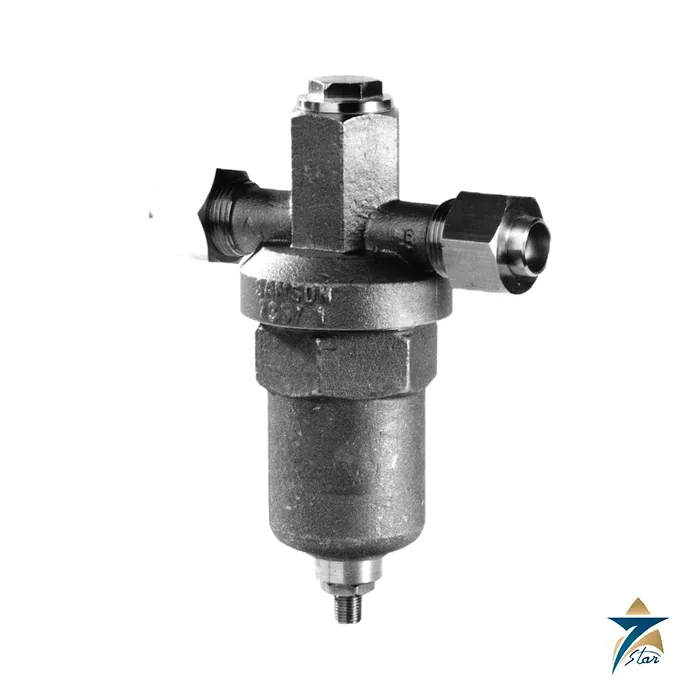
Samson 2357-1 cryogenic pressure regulator for liquefied gas tanks
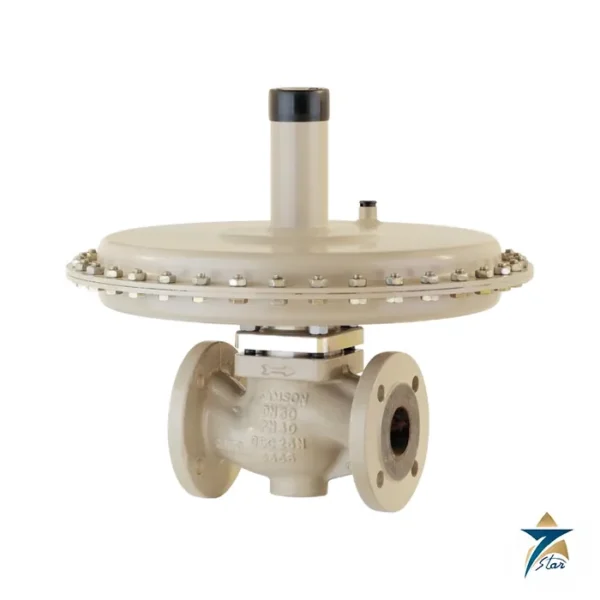
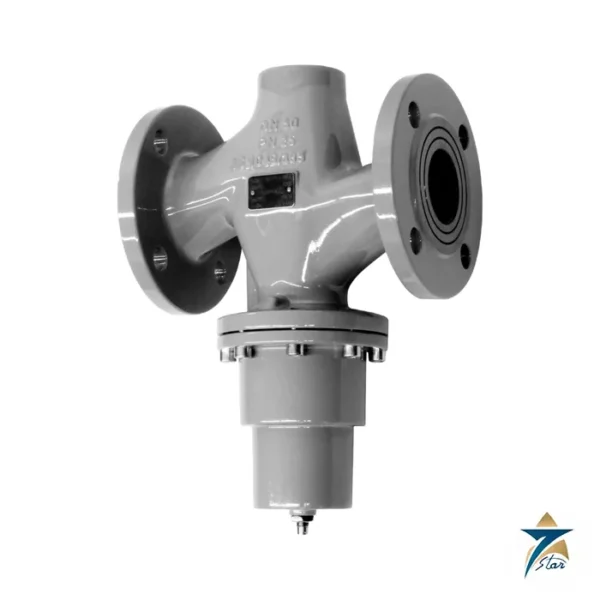
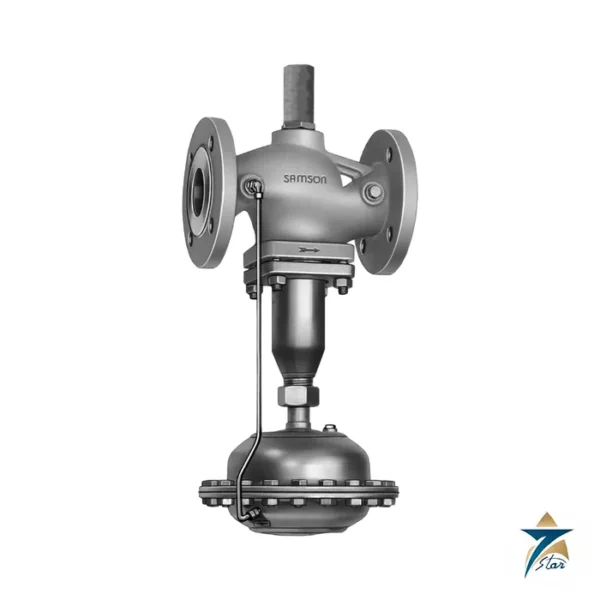
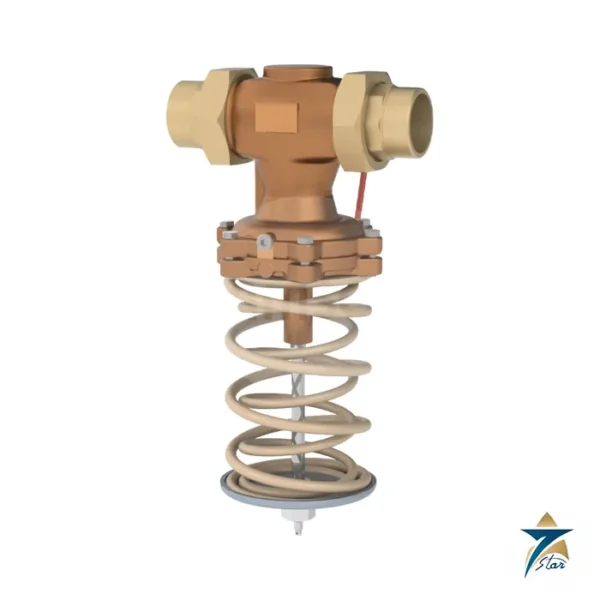
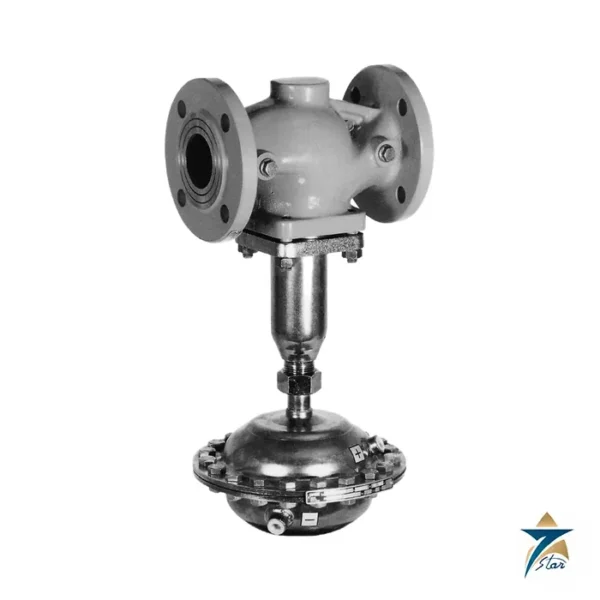
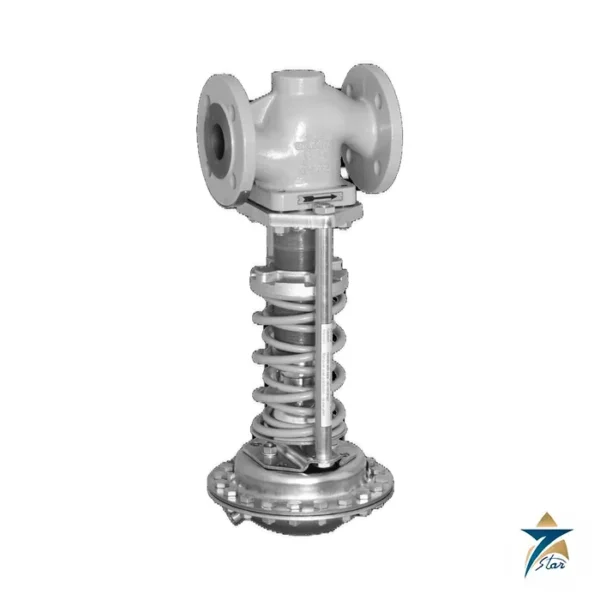
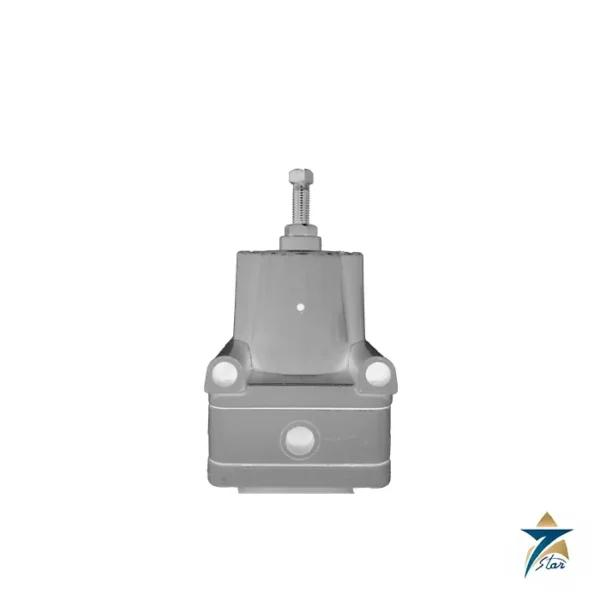
The Samson 2357-1 is a compact, self-operated pressure regulator designed for cryogenic service. It is used on insulated storage tanks of liquefied industrial gases such as argon, nitrogen and oxygen, either as a pressure build-up regulator or as a pressure reducing valve. Operating pressures reach 50 bar, set points range from 0.2 to 40 bar, and the temperature range is from –196 to +200 °C. The regulator is supplied cleaned and packed for oxygen service. Seven Star LLC supplies the Samson 2357-1 in Oman and the GCC as an independent supplier in Muscat.
Series 2357 is built for cryogenic conditions, but it can also handle other gases, liquids and vapors under different operating conditions. The valve body has two ports, marked A and B, with an internal operating diaphragm and a set point adjuster. The direction of flow decides the function: from B to A the device is a pressure build-up regulator, from A to B it is a pressure reducing valve. Both versions include a safety function that relieves the pressure chamber.
2357-1 technical specifications
| Parameter |
Specification |
| Manufacturer / part number |
Samson / 2357-1 pressure regulator for cryogenic gases |
| Function |
Pressure build-up regulator (opens when upstream pressure drops) or pressure reducing valve (closes when downstream pressure rises) |
| Pressure rating |
PN 40 or PN 50 (for oxygen, pmax = 40 bar) |
| KVS coefficient |
0.25 (PN 40); 0.8 (PN 50) |
| Set point ranges, PN 40 |
1 to 25 bar; 10 to 36 bar |
| Set point ranges, PN 50 |
0.2 to 2.5; 1 to 8; 5 to 25; 8 to 40 bar (others on request) |
| Max. differential pressure Δp |
Gases 30 bar; liquids 6 bar |
| Safety function |
Relieves the pressure chamber when the pressure exceeds the set point by more than 5 bar |
| Temperature range |
–196 to +200 °C |
| End connections |
G ¾ A conical joint, inlet and outlet |
| Body, cover, plug |
Brass CC754S-GM (PN 40: CW617N), plug CW602N with PTFE soft seal |
| Operating diaphragm / springs / gasket |
CuBe / stainless steel 1.4310 / PTFE |
| Oxygen service |
Cleaned and packed per international oxygen standards |
| Approval note |
EC type examination to Pressure Equipment Directive 2014/68/EU, Module B, performed on the Type 2357-1 |
How the 2357-1 works as build-up regulator and reducing valve
As a pressure build-up regulator, flow runs from port B to port A. The tank pressure at port B acts on the operating diaphragm. When the tank pressure drops below the set point, the valve opens and lets liquefied gas run into the pressure build-up vaporizer; the gas then expands, raises the tank pressure, and the regulator closes again. The safety function acts when the liquid trapped between the shut-off valve and the regulator warms up and vaporizes: the plug lifts at 5 bar above the set point and equalizes the pressure.
As a pressure reducing valve, the process medium flows from port A to port B. The valve is open without pressure. The downstream pressure at port B is led to the operating diaphragm, whose force moves the plug against the adjustable spring, and the valve closes as the downstream pressure rises. If the downstream pressure goes more than 5 bar above the set point, the safety function opens the plug, so that the downstream pressure then stays 5 bar below the upstream pressure. The set point is changed at a hex socket adjuster (A/F 5) and locked with a nut (A/F 17).
Typical cryogenic tank circuit with the 2357-1
The datasheet shows a standard installation: the cryogenic tank feeds a pressure build-up circuit with the 2357-1 as build-up regulator and a pressure build-up vaporizer, a Type 2357-2 excess pressure valve works as economizer, and a second 2357-1 serves as pressure reducing valve in the draw-off line to the final vaporizer. A Type 2040 temperature monitor, level meter, safety valve, strainer and shut-off valves complete the circuit. This arrangement keeps the tank at a constant operating pressure while the user receives a stable lower-pressure gas supply.
2357-1 flow capacity as a build-up regulator
The capacity of the regulator, installed in the liquid phase of the build-up circuit, depends on the liquid column in the tank. Values are theoretical and do not include pipe losses.
| Filling level (m) |
N2 (kg/h) |
O2 (kg/h) |
Ar (kg/h) |
CO2 (kg/h) |
LNG (kg/h) |
| 1 |
248 |
351 |
427 |
359 |
130 |
| 5 |
475 |
673 |
819 |
689 |
249 |
| 9 |
624 |
884 |
1076 |
906 |
328 |
| 14 |
771 |
1093 |
1329 |
1119 |
405 |
| 20 |
918 |
1300 |
1580 |
1331 |
482 |
Further levels, such as 3, 7, 11 and 17 m, are in the datasheet. Real flow can deviate from the figures because of piping losses, so confirm the capacity needed for your tank.
Selecting and ordering the 2357-1
The ordering text asks for the set point range and any accessories or special version. Before you request a quote, define:
- Function: pressure build-up regulator (B to A) or pressure reducing valve (A to B).
- Medium and phase: argon, nitrogen, oxygen, carbon dioxide or natural gas, and whether the regulator sits in the liquid or gas line.
- Required set point and range, and the PN 40 or PN 50 version. For oxygen the maximum pressure is 40 bar.
- Operating pressure, differential pressure (gases 30 bar, liquids 6 bar) and required mass flow.
- Accessories: solder nipple with ball-type bushing for 16 or 15 mm pipe, and filter with 270 µm mesh.
Because cleanliness is critical in oxygen service, keep the original packing closed until installation.
Installing and servicing the 2357-1
Mount the regulator with the spring housing hanging downward; other positions are available on request. Respect the A and B port markings, since the function depends on the flow direction. Handle with clean gloves and clean tools, protect the open ports, and use only oxygen-compatible lubricants if any are needed. After installation, leak-test with an approved medium, and set the pressure slowly. For servicing, inspect the filter and the PTFE seat, check the diaphragm for fatigue, and replace sealing parts at planned stops. Note the serial number on the nameplate when ordering spare parts.
Applications of the 2357-1 in Oman and the GCC
Cryogenic tanks are common at industrial gas plants, hospitals, steel and fabrication yards, refineries and LNG-related facilities in the region. The 2357-1 is relevant for the vendor-supplied tank skids and for the maintenance of existing ones, where a failed pressure build-up regulator would reduce the tank pressure and limit the draw-off. In hot desert climates, external frost and heat gain are less of a concern than the quality of the cleaning for oxygen service and the correct set point for the vaporizer circuit.
Information to send with a 2357-1 RFQ
Please send the part number 2357-1, the medium, function, set point range, PN version, tank pressure and the needed flow. Photographs of the nameplate and the existing circuit help us to identify matching parts. Add your project name and delivery location.
Documents and quotation
A Samson datasheet for the 2357-1 is attached on this page and includes the technical data, materials and mass flow tables.
Seven Star LLC is an independent supplier in Muscat. Send the part number 2357-1 with your application details and we will confirm availability and lead time with your RFQ.






















Reviews
There are no reviews yet.