Rotork Q Range part-turn electric actuators: Q100, Q300, Q450 and Q650
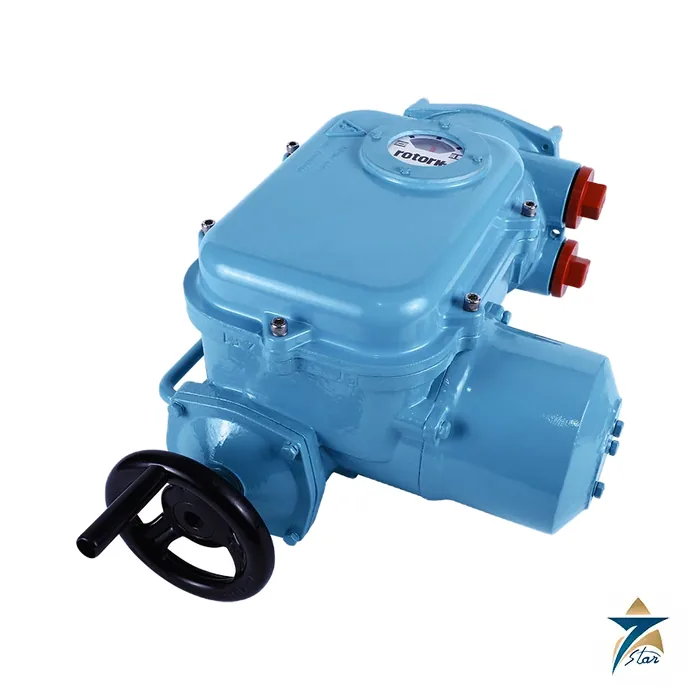
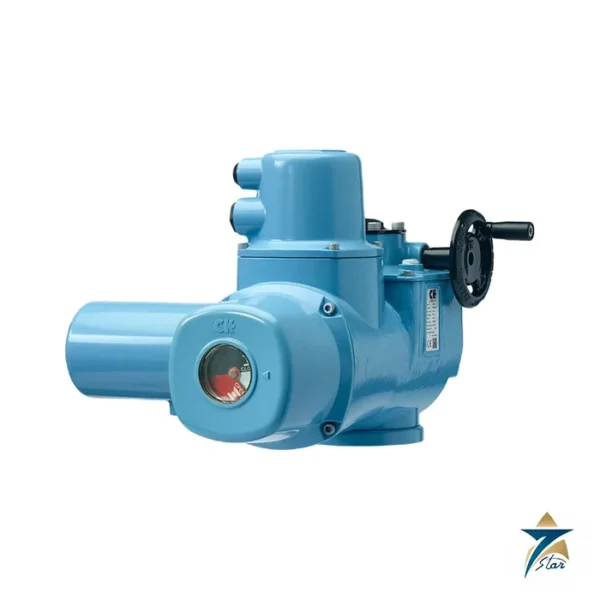
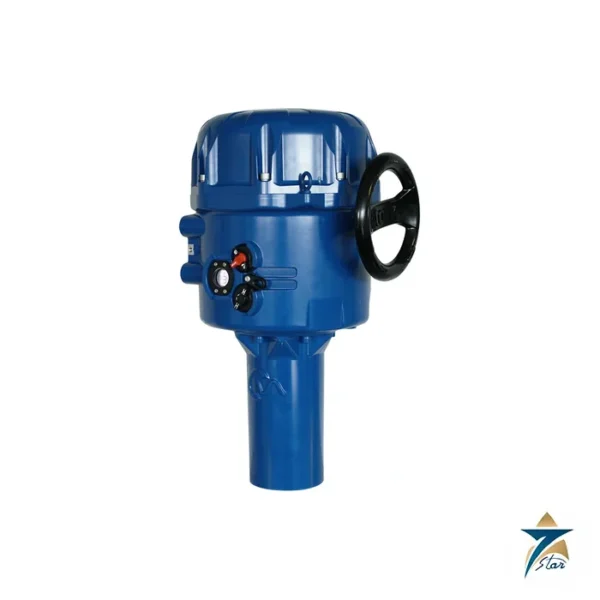
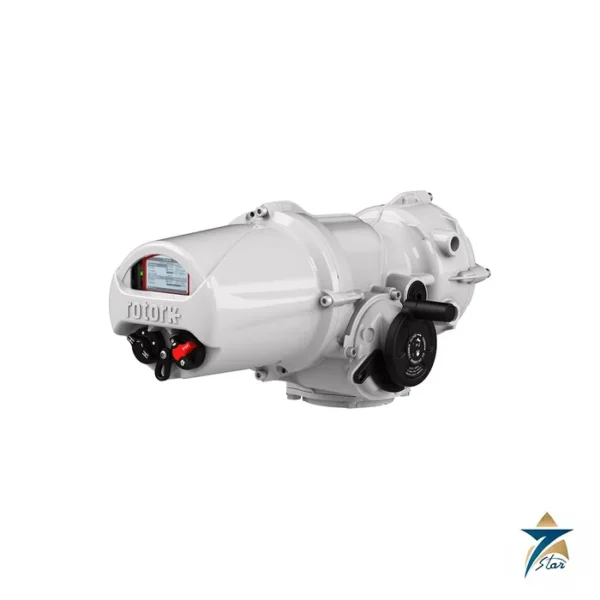
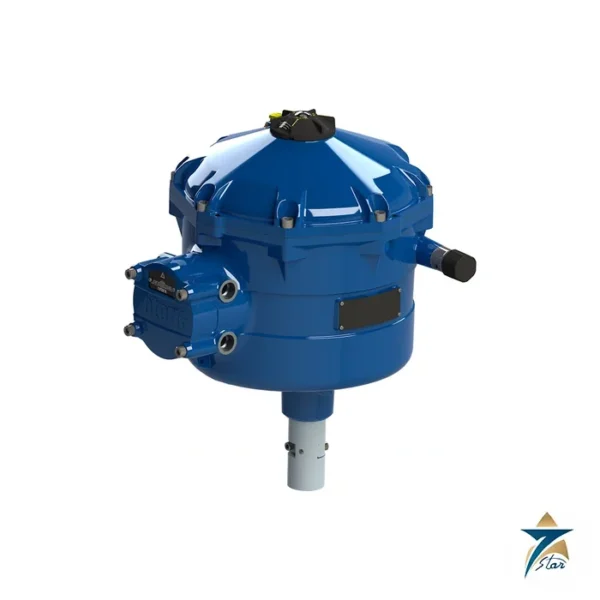
The Rotork Q Range is a line of compact electro-mechanical quarter-turn actuators for ball, butterfly and plug valves and for dampers. The range has four frame sizes, Q100, Q300, Q450 and Q650, and each can be bought in two forms. Q Standard is the bare actuator that relies on an external motor starter, while Q Pak adds a deep control cover with selectors, logic board, reversing contactor and transformer. Seven Star LLC quotes Q Range units to customers in Oman and the GCC as an independent supplier based in Muscat. The number in the model name is the nominal rated torque in lbf.ft, which makes the sizing logic easy to follow.
Q Range specifications and rated torque
| Parameter |
Specification |
| Manufacturer / part number |
Rotork / Q Range (Q Standard, Q Pak; sizes Q100, Q300, Q450, Q650) |
| Rated torque |
Q100 135 Nm (100 lbf.ft); Q300 406 Nm (300); Q450 610 Nm (450); Q650 900 Nm (664 lbf.ft) |
| Operating time for 90 degrees at 50 Hz |
Q100 9, 18 or 27 s; Q300 and Q450 18, 36 or 54 s; Q650 15, 30 or 45 s |
| Mounting flange |
ISO 5211 F05/F07 (Q100), F10/F07 (Q300, Q450), F14/F12/F16 (Q650); MSS SP-101 equivalents |
| Supply, 3-phase 50 Hz |
380, 400, 415 V; 60 Hz 440, 460, 480 V; Q450 and Q650 are 3-phase only |
| Supply, 1-phase |
110 to 240 V at 50 or 60 Hz on Q100 and Q300 |
| Enclosure |
IP68, 3 m for 48 hours, protection retained with the terminal cover removed |
| Operating temperature |
-30 to +70 °C |
| Motor duty |
Class A and B (EN 15714-2), 60 starts per hour; 1-phase limited to five consecutive operations |
| Insulation |
Class F with integrated thermostat |
| Housing |
Die-cast aluminium LM4 gearcase and motor housing |
| Travel stops |
Adjustable mechanical stops, 80 to 100 degrees |
| Conduit entries |
2 x M32 or 2 x 1 inch NPT; extra M20 optional |
How the Q Range drive works
The motor drives a double-reduction worm gear set: a steel worm and an aluminium-bronze wheel. The second worm stage is self-locking, so neither the valve nor wind or flow forces can turn the actuator backwards in electric or manual mode. All gearing sits in an oil bath, which removes the greasing routine and lets the actuator be mounted in any orientation. A hammer-blow mechanism in the drive train gives the motor a short run-up on isolating service, helping to free a valve that has stuck after a long period without movement.
Valve end positions are normally set on torque, with position switches used for remote indication. Torque switches are adjustable from 30% to 100% of the rating. A mechanical position indicator is driven from the output and is visible through the cover at all times, even when power is off. Intermediate or extra end-of-travel indication can come from two additional switches, a potentiometer or a Current Position Transmitter with a 4-20 mA loop-powered signal. The handwheel works independently of the motor through a padlockable hand/auto lever, with 15 turns for 90 degrees on Q100 to Q450 and 52 on Q650.
Q Standard versus Q Pak for the Q Range
Choose Q Standard when starters already exist in a motor control centre. Choose Q Pak when you want a unit that works with only a power feed and a few command wires. Q Pak includes Syncrophase automatic phase rotation correction, so a mis-phased supply cannot drive the actuator the wrong way, and a reversing contactor with a timed delay that allows instant reversal without shocking the valve stem. It supports Folomatic 4-20 mA analogue control for intermediate positions and internally powered position feedback. For network control it can join Rotork Pakscan, which supervises up to 240 field devices, or Profibus, Foundation Fieldbus, DeviceNet and Modbus systems.
Matching a Q Range actuator to the valve
Start with the valve manufacturer break-out and running torque, then apply the safety factor your specification requires and select a frame with a rated torque above that number. Remember that the rated value is the maximum torque switch setting; stall torque is higher. Check that the valve top flange matches the actuator flange and that the stem or shaft fits the removable drive sleeve. The drive sleeves arrive blank and are machined by the valve supplier: the maximum bore with keyway is 22 mm on Q100 with F05, 28 mm on F07, 42 mm on F10 and 56 mm on Q650, and square drives to 16, 20, 30 and 40 mm respectively.
Installation and maintenance notes for Q Range units
- Mount the actuator on the valve with the valve in mid-position or with the handwheel engaged so you can verify rotation direction before electric power is applied.
- Set the mechanical stops to 80 to 100 degrees of travel to protect the valve before electric operation.
- Wire the terminal compartment using glands suited to the conduit entry, since the actuator keeps its IP68 rating with the cover off but the glands must still be sealed.
- On single-phase units, observe the limit of five consecutive operations before a cooling pause.
- Check that the thermostat circuit is connected to the starter so that an overtemperature condition actually stops the motor.
- Include a spare Q Pak control module and a set of switches in critical-valve spares.
Typical Q Range applications in Oman and the GCC
The Q Range is a good fit for small and medium quarter-turn valves in water and utility service: seawater cooling branches, chemical dosing isolation, filter backwash valves, potable water network valves, fire-water system valves outside classified areas, and HVAC or ventilation dampers. Heat is the main environmental factor in the Gulf; the 70 °C upper limit and class F insulation with thermostats cover most outdoor installations, but you should still provide a sunshade where surface temperatures are extreme. Dust and humidity are handled by the IP68 sealing. Choose a different Rotork range if the area is hazardous, because the data sheet lists only the IECEE CB scheme approval in its design specification.
Q Range size comparison
| Size |
Rated torque |
Flange |
Typical valve class |
| Q100 |
135 Nm |
F05/F07 |
Small ball and butterfly valves, dampers |
| Q300 |
406 Nm |
F10/F07 |
Medium quarter-turn valves |
| Q450 |
610 Nm |
F10/F07 |
Larger butterfly and ball valves, three-phase only |
| Q650 |
900 Nm |
F14/F12/F16 |
Large butterfly valves, three-phase only |
Information to send with a Q Range RFQ
- Valve type, size, pressure class and torque data (break-out and running).
- Required stroke time for 90 degrees and supply frequency.
- Standard or Pak version, and desired control signal: on-off, 4-20 mA or fieldbus.
- Voltage and phase, with note if only single-phase power is available.
- Flange size, drive dimensions and keyway data.
- Ambient temperature, hazardous-area status and quantity.
Documents and quotation
The Rotork Q Range brochure is attached on this page. It includes the performance tables, supply voltage matrix and design specification used above.
Send us the valve data and electrical supply and we will confirm the Q Range model and quote for Oman and the GCC.






















Reviews
There are no reviews yet.