Rotork CK Range modular electric valve actuators and how the model code is built
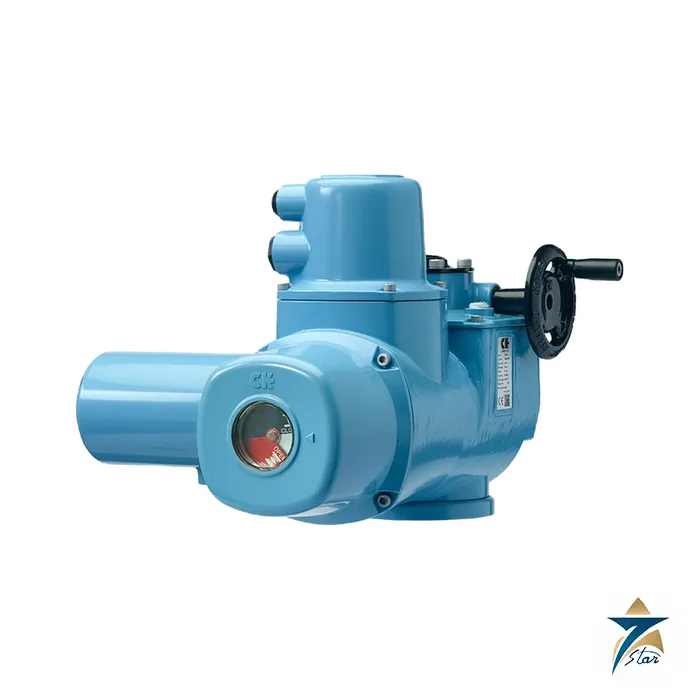
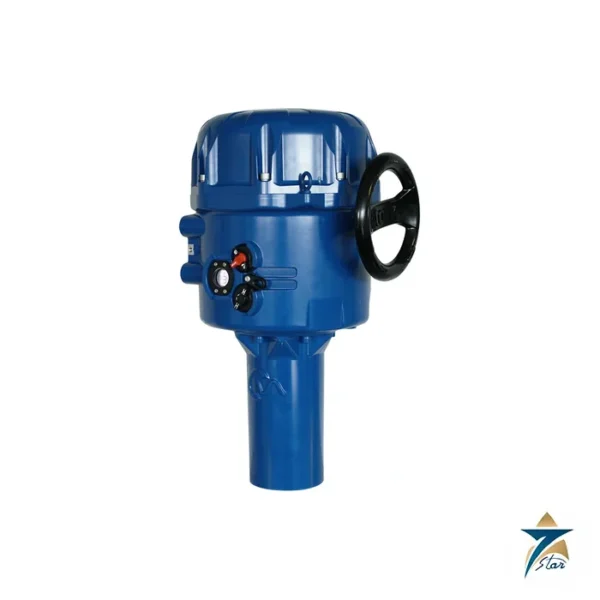
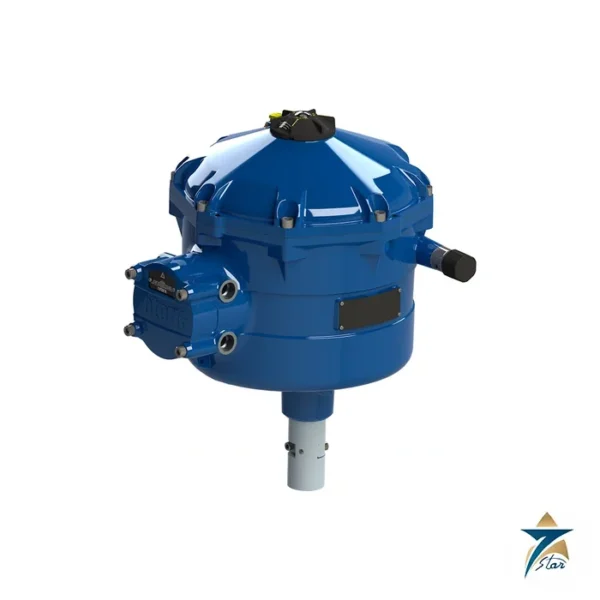
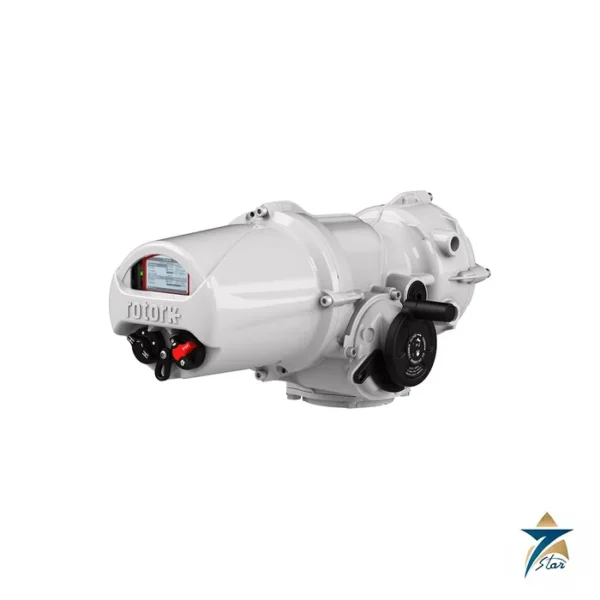
The Rotork CK Range is a family of watertight, multi-turn electric actuators built from interchangeable modules. A motor-and-gear base is combined with a switch mechanism and, if required, a control module, so one frame can be configured as a bare actuator, a ready-to-run unit with simple integral controls, or a fully intelligent unit with a data logger. Seven Star LLC supplies CK Range actuators in Oman and the GCC as an independent supplier in Muscat, and this page explains how the range is organised so that an enquiry can be specified correctly the first time.
The model name tells you the duty and the control package. A plain CK is an isolating-duty unit for valves that are operated infrequently, such as shut-off and maintenance isolation valves. A CKr is the modulating-duty version for control valves and dampers that move often. Adding the letter a (CKa, CKra) means the Atronik control module is fitted, and adding c (CKc, CKrc) means the Centronik module. The number is the frame size, which corresponds to the maximum torque in newton-metres: 30, 60, 120, 250 and 500.
| Model |
Meaning |
| Prefix |
Meaning |
| CK |
Isolating duty, no control module; needs external motor switchgear |
| CKa |
Isolating duty with Atronik integral controls (reversing contactor, LED status, DIP switch setup) |
| CKc |
Isolating duty with Centronik intelligent controls (display, data logger, bus options) |
| CKr |
Modulating duty, no control module |
| CKra / CKrc |
Modulating duty with Atronik or Centronik controls |
CK Range technical specifications
| Parameter |
Specification |
| Manufacturer / part number |
Rotork / CK Range (CK, CKa, CKc, CKr, CKra, CKrc) |
| Sizes |
30, 60, 120, 250, 500 (maximum torque 30 to 500 Nm) |
| Isolating duty rating |
ISO 22153 Class A and B, 60 starts per hour; operational torque 10, 20, 40, 83 and 167 Nm for sizes 30 to 500 (3-phase) |
| Modulating duty rating |
ISO 22153 Class C; operational torque up to 120 Nm (CKr 250) or 200 Nm (CKr 500) at 25% duty with up to 600 starts per hour; up to 1,200 starts per hour at 50% duty |
| Output speeds, 50 Hz (3-phase isolating) |
9, 12, 18, 24, 36, 48, 72, 96, 144 rpm, plus 192 rpm on selected sizes |
| Mounting flanges |
ISO 5210 F07/F10 (sizes 30 and 60), F10 (120), F14 (250 and 500); MSS SP-102 equivalents FA07 to FA14 |
| Maximum axial thrust, type A coupling |
40 kN (sizes 30, 60 and 120), 70 kN (250), 160 kN (500) |
| Enclosure |
IP68, 8 m for 96 hours, double-sealed |
| Operating temperature |
-30 to +70 °C standard for 3-phase units; -40 to +60 °C optional low-temperature build; 1-phase isolating units -25 to +70 °C |
| Lubrication |
Oil bath, standard SAE80EP automotive grade; low-temperature and food-grade oils available |
| Finish |
RAL5024 pale blue; coating tested to a 1,000 hour cyclic salt-spray procedure |
| Area classification |
For non-hazardous locations |
How the CK Range works
Inside every CK is a high-starting-torque motor that drives an oil-immersed gear train to the output drive. Because the gears run in oil rather than grease, the unit can be mounted at any angle and the lubricant does not channel away from moving parts. On isolating models a hammer-blow mechanism lets the motor build speed before it meets the valve stem, which helps to break a valve off its seat. A thermostat buried in the motor winding stops operation if the winding overheats, and the handwheel path is completely separate from the motor path: a padlockable hand/auto lever engages the handwheel through a slow-speed clutch, and the actuator drops back to motor drive automatically the next time the motor runs.
Valve position and torque are sensed by one of two switch mechanisms. The Mechanical Switch Mechanism uses cam-driven IP67 micro-switches for the end-of-travel and torque-trip signals, with reduction gearing that can accommodate up to 1,500 output turns. The Digital Switch Mechanism pairs an absolute encoder with a torque sensor and can span up to 8,000 output turns; it is used with the Centronik module so that limits are set through the display rather than by opening the cover. An optional Additional Indication Drive adds a mechanical position disc that keeps tracking the valve even without power, plus intermediate switches, a potentiometer or a loop-powered 4-20 mA position transmitter.
Atronik and Centronik control modules on the CK Range
The Atronik module is a compact starter for sites that only need local control and basic feedback. It contains the reversing contactor and control logic, offers open/close and local/stop/remote selectors that are magnetically coupled through the cover, and indicates position and faults with four configurable LEDs. Functions are chosen with DIP switches. Two relays are standard, with four more and analogue control or feedback (4-20 mA, 0-5 V, 0-10 V) available as option cards.
The Centronik module is the intelligent choice. It has a multilingual LCD, password-protected setup, an event and data logger, interlock inputs, loss-of-signal actions and NAMUR-category fault classification. Setting can be done from the local knobs, by infrared, or over an optional Bluetooth link using the Rotork setting tool or Insight 2 software. It can be mounted remotely at up to 100 m from the actuator, which is useful where the valve sits in a congested or hot area. Network options include Modbus and Profibus DP cards, and up to two option cards can be fitted.
Where CK Range actuators fit in a plant
Rotork positions the CK Range for water, power and general industrial duty in non-hazardous areas. In the Gulf this means desalination and water-transmission isolation valves, cooling-water and circulating-water systems, HVAC and district-cooling plants, power-station auxiliary systems, wastewater treatment works and dampers. For classified areas such as hydrocarbon process zones, a different Rotork actuator range with a hazardous-area certificate must be selected; do not specify a CK for a Zone 1 or Zone 2 location. Part-turn duty is possible by adding an IW or ABM gearbox. Related Rotork ranges that Seven Star LLC can quote on request include the IQ3 intelligent actuator, the Q Range part-turn unit and the A Range heavy-duty actuator.
Selecting a CK Range actuator: ordering checklist
- Valve type and whether duty is isolating (CK, CKa, CKc) or modulating (CKr, CKra, CKrc).
- Required valve torque, including break-out, and the margin applied to the maximum rating; the operational torque is much lower than the maximum figure, so size on the operational column.
- Stem details: rising or non-rising, stem diameter, and whether a thrust (type A) or torque-only (type B1, B3, B4) coupling is needed. Type B1 bores are 28, 42 and 60 mm depending on frame.
- Mounting flange per ISO 5210 or MSS SP-102.
- Supply voltage and frequency (3-phase 220 to 500 V at 50 Hz or 220 to 600 V at 60 Hz; 1-phase on smaller sizes) and the speed needed for the required stroke time.
- Control philosophy: external starter, Atronik, or Centronik, plus analogue, bus or position-transmitter options.
- Ambient range, low-temperature or food-grade oil needs and coating category for coastal sites, noting that C5-M marine and C5-I industrial finishes are special requests.
Installing and commissioning CK Range actuators
The actuator is bolted to the valve flange with a machined drive nut or bush, then the limits are set. On mechanical units the torque and position cams are adjusted with a flat screwdriver after removing the switch cover; on Centronik units the limits are set through the display or Bluetooth tool. Select cable glands that preserve the IP68 rating, because glands are not supplied as standard, and use the optional parking housing to protect unmated plug faces during outages. The plug-and-socket terminal housing can be rotated in 90 degree steps so that cable entry suits the site. Three-phase Atronik and Centronik units correct wrong phase rotation automatically, which removes a common commissioning fault.
Maintenance is light because the oil is filled for life and the modules unplug. Plan periodic checks of seals, cable entries and the heater circuit, and review data-logger records on Centronik units for rising torque trends, which often reveal a stem or packing problem before it becomes a failure. Keep a spare plug-and-socket terminal housing and, for critical valves, a spare control module to shorten any outage.
CK Range applications in Oman and the GCC
High ambient temperatures, dust and humidity at coastal sites make sealing and thermal protection the first concerns. The CK double-sealed enclosure, class F or H insulation with winding thermostats and the 70 °C upper operating limit address those points, while the oil-bath gearing avoids grease separation in heat. Typical uses include seawater intake and brine isolation, potable-water pump stations, reservoir inlet valves, cooling-tower makeup lines, power-plant condenser water and air-handling dampers. Always compare the site design temperature, including solar gain on the actuator, against the stated limit and ask for the low-temperature or special-finish option only where the site needs it.
CK Range family comparison
| Model |
Control module |
Main features |
Typical use |
| CK / CKr |
None; external switchgear |
Lowest cost, retrofit friendly |
Existing MCC with starters |
| CKa / CKra |
Atronik |
Local controls, LED indication, DIP setup |
Simple on-off or basic modulating |
| CKc / CKrc |
Centronik |
Display, data logger, Bluetooth, bus cards, remote mounting |
Asset-managed plants, DCS integration |
Information to send with a CK Range RFQ
- Valve type, size, pressure class and manufacturer, with seating and break-out torque.
- Isolating or modulating duty and number of starts per hour.
- Stem diameter, rising or non-rising, and flange standard.
- Power supply voltage, frequency and phase count.
- Control interface: hardwired, 4-20 mA, Modbus, Profibus or other bus.
- Ambient temperature range and site corrosion category, and whether the area is non-hazardous.
- Quantity, delivery location in Oman or the GCC and required documents.
Documents and quotation
A Rotork CK Range brochure is attached on this page for reference. It covers the module concept, torque and speed tables, supply options and approvals summary.
Send us the actuator code, valve data and supply details and Seven Star LLC will confirm the configuration and quote delivery to Oman and the wider GCC.
























Reviews
There are no reviews yet.