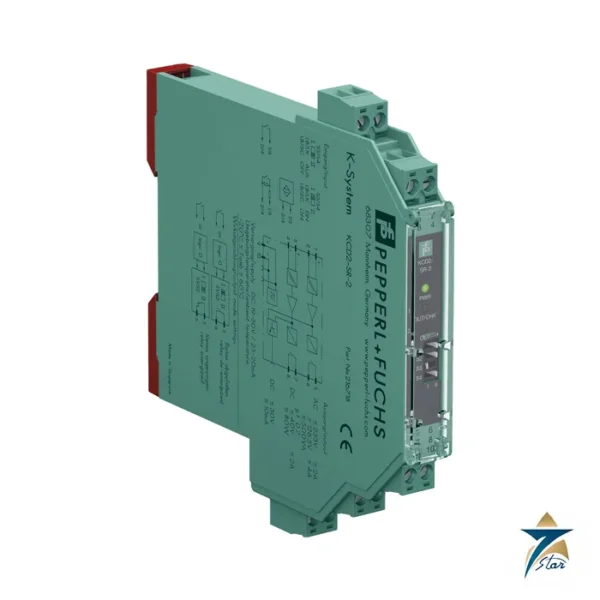
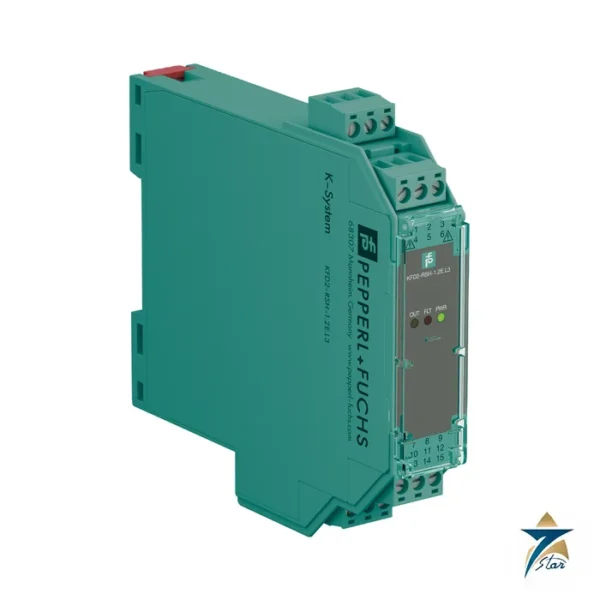
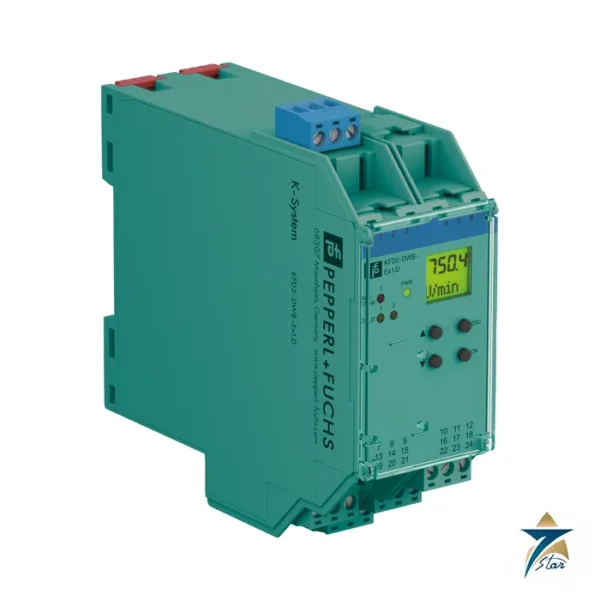
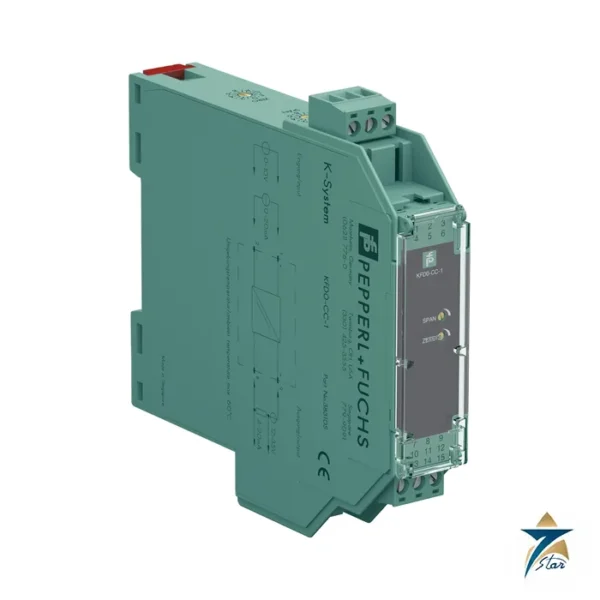
Brand:

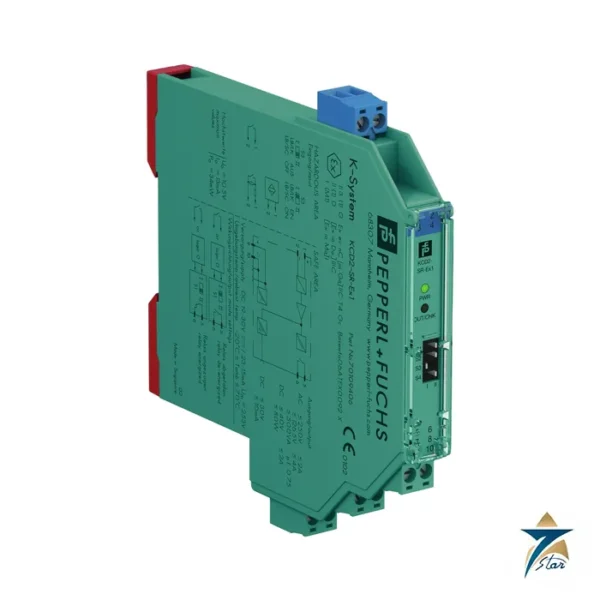
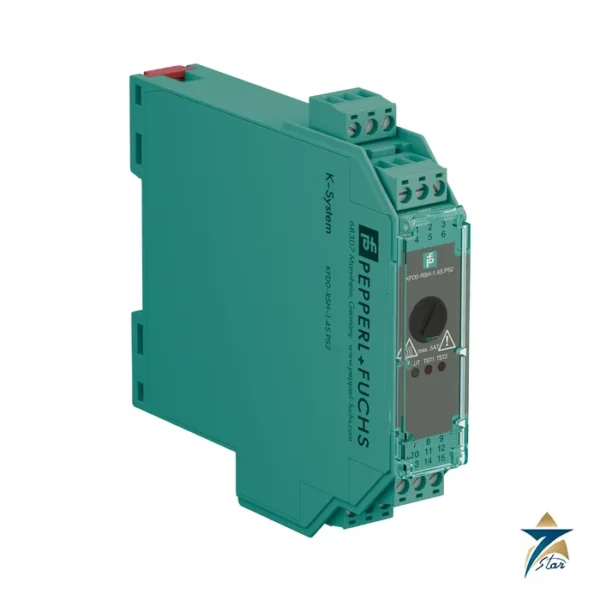
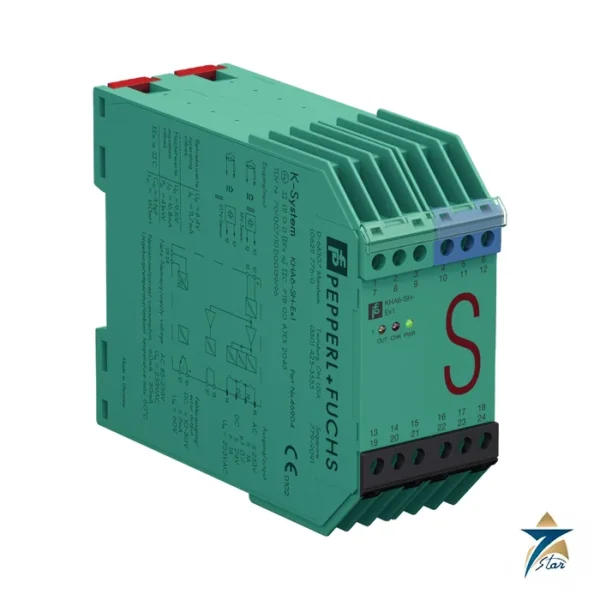
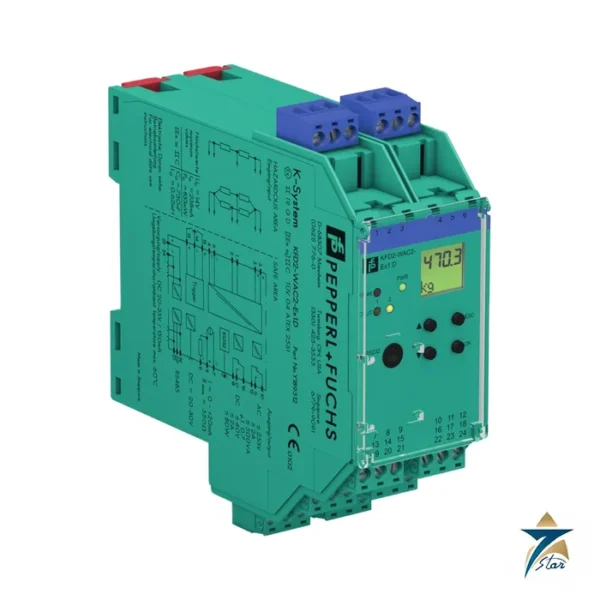
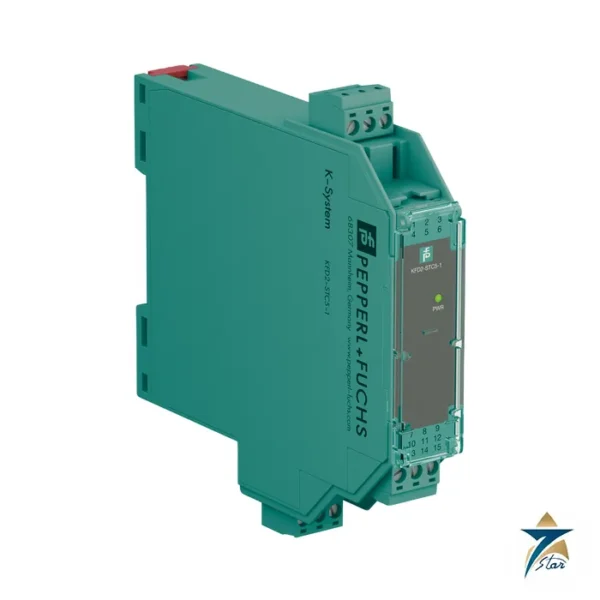
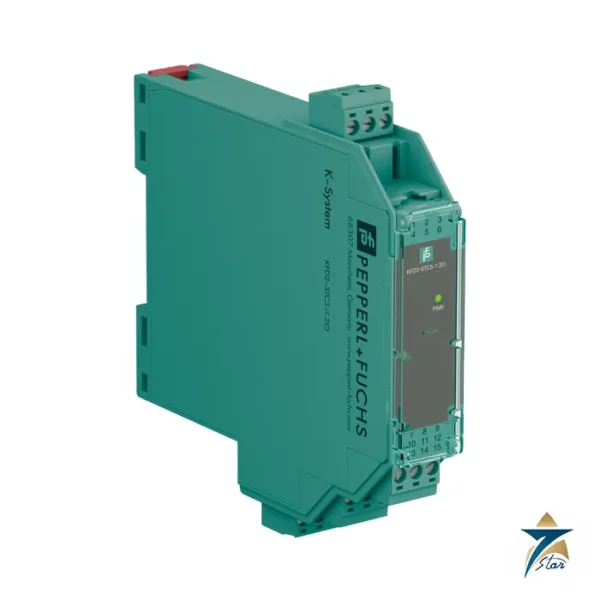
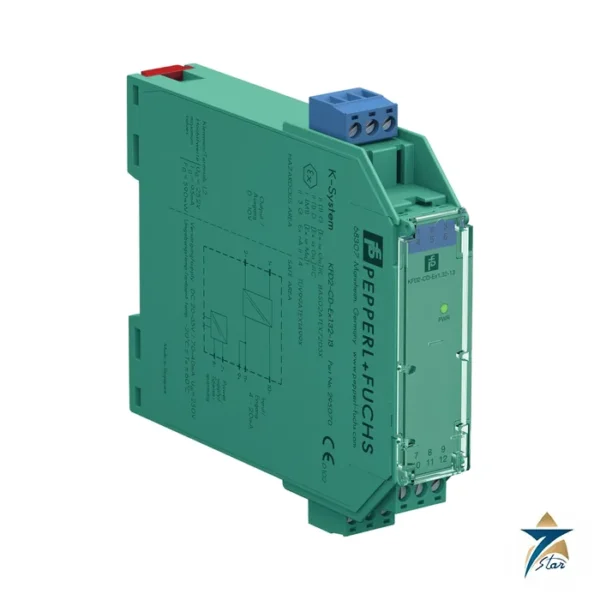
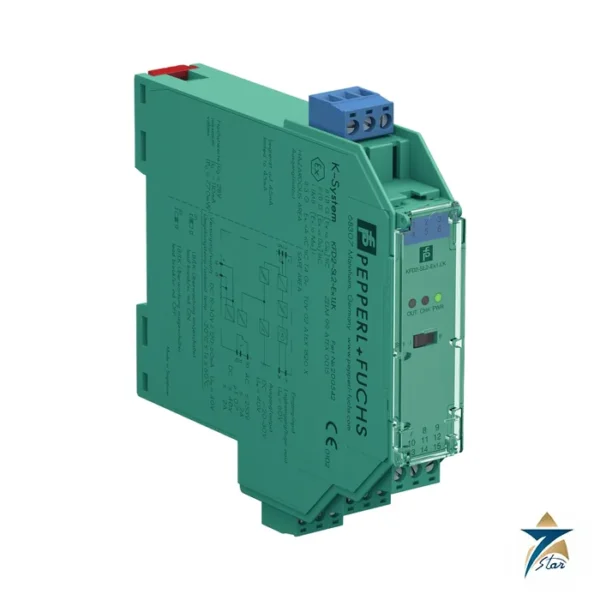
Pepperl+Fuchs KFD2-UT2-1-1 Temperature Signal Conditioner

Description

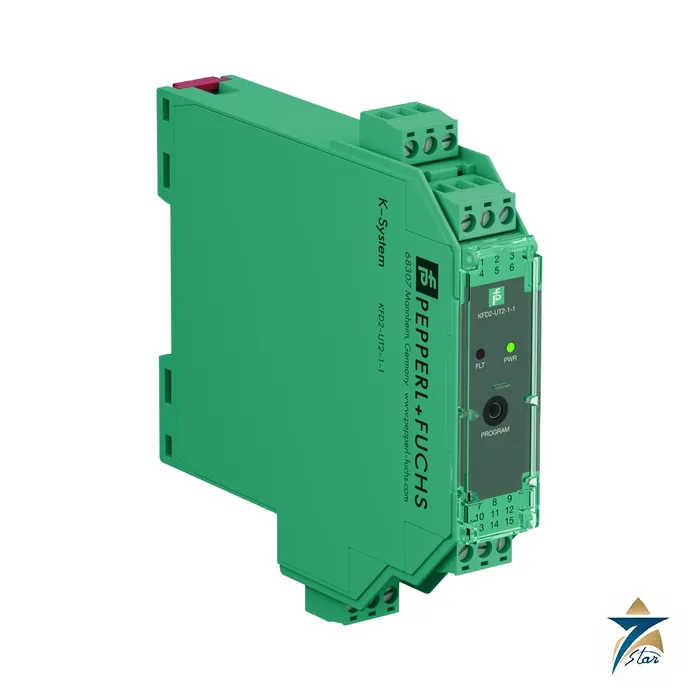
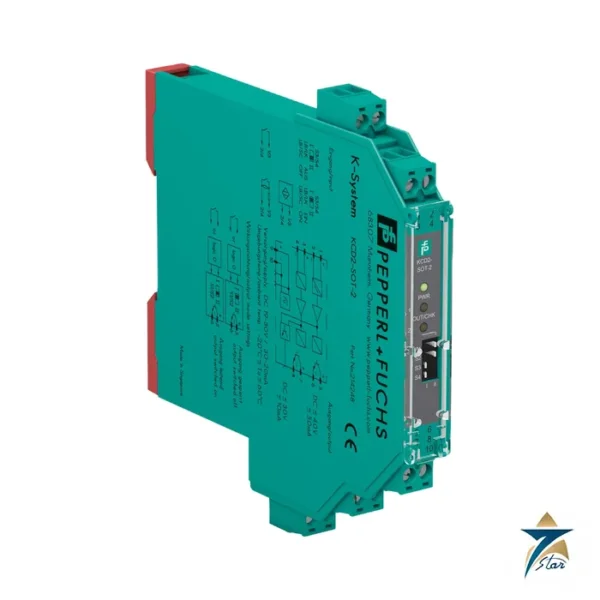
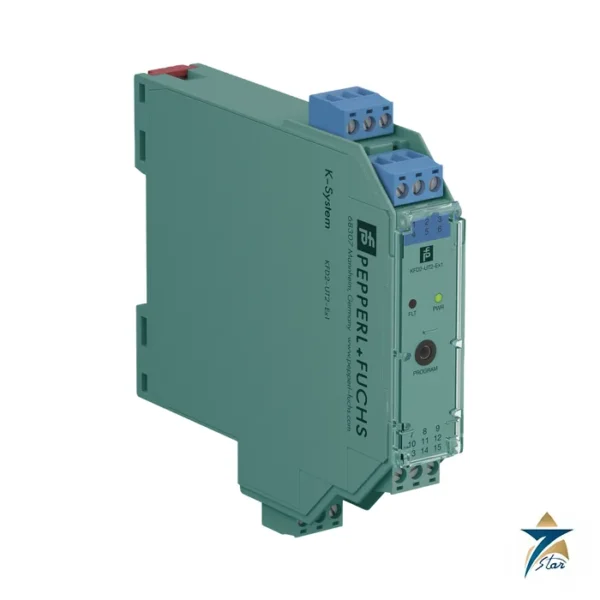
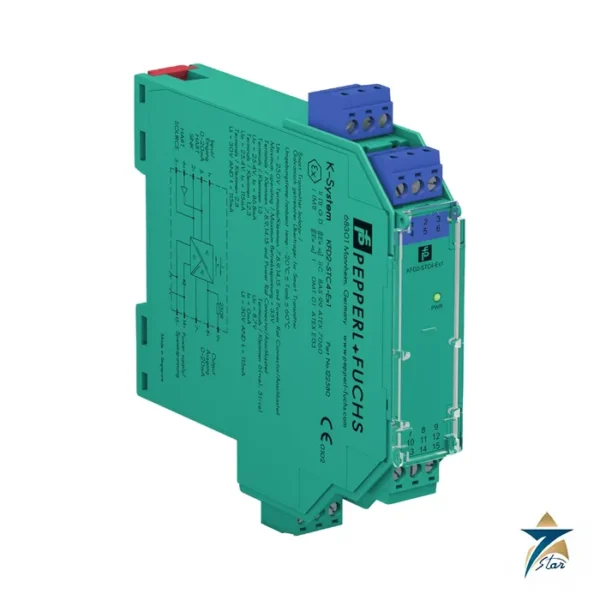
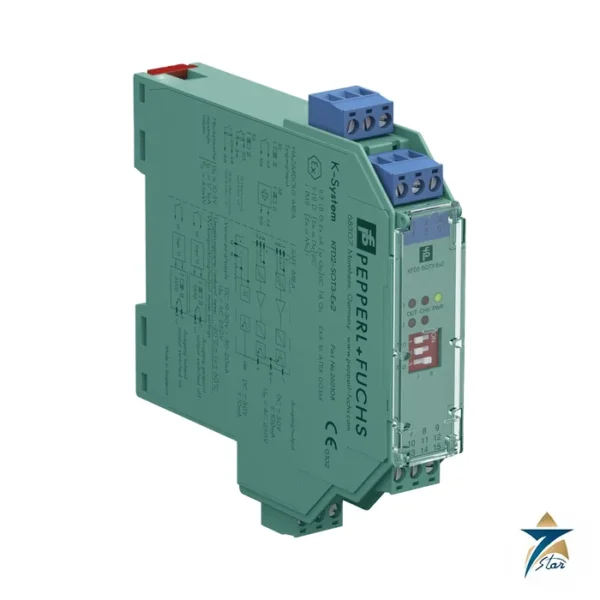
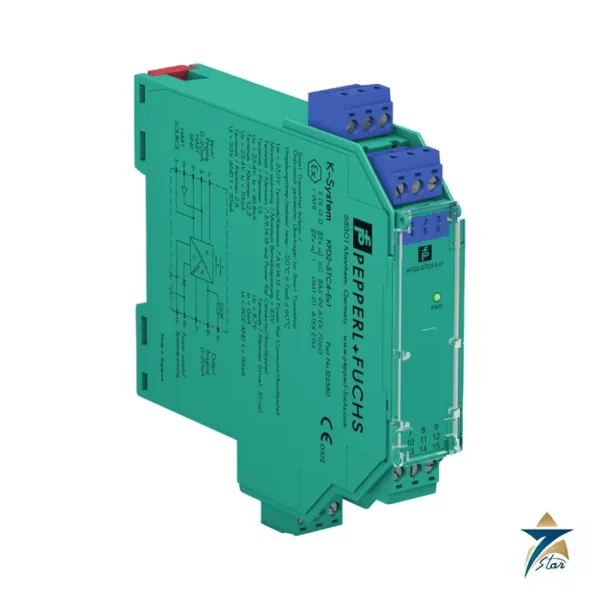
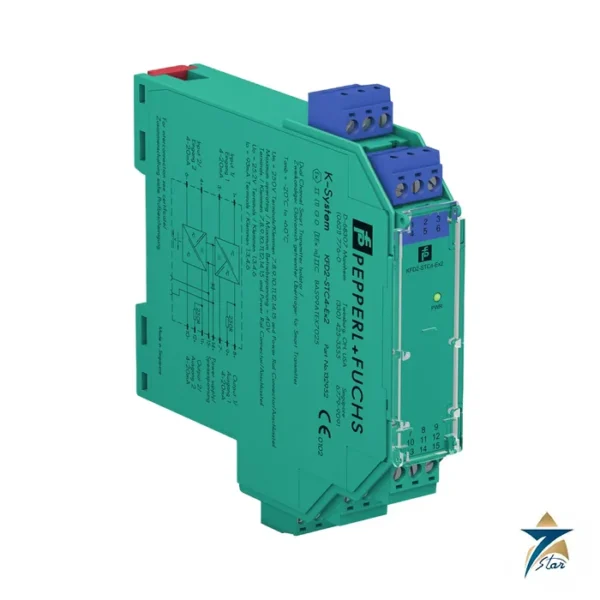
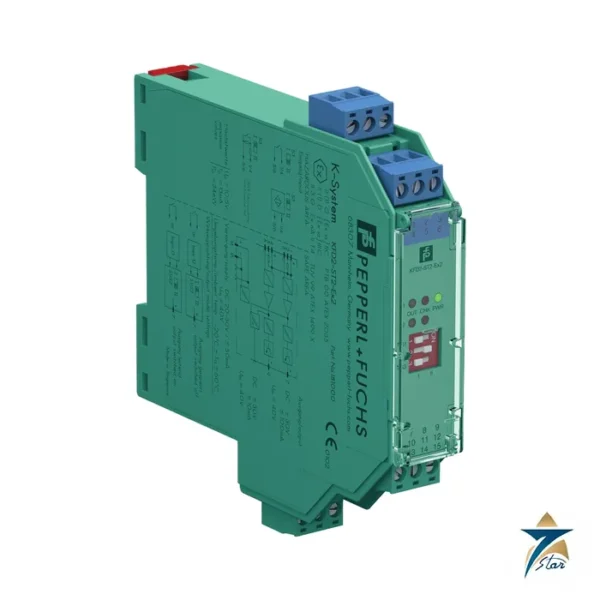
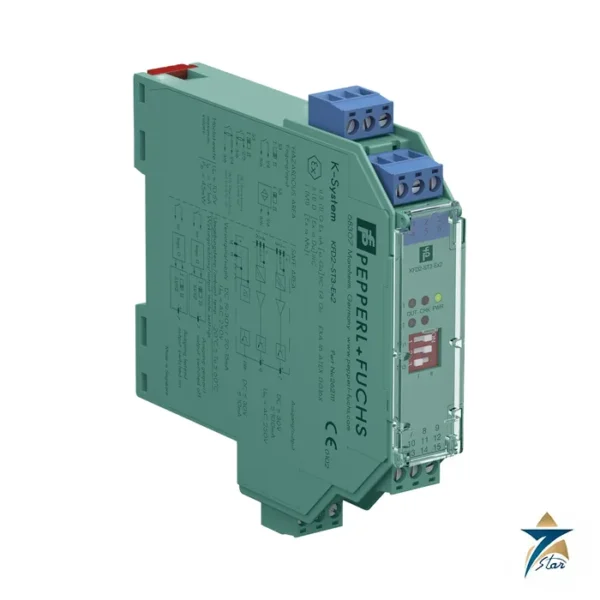
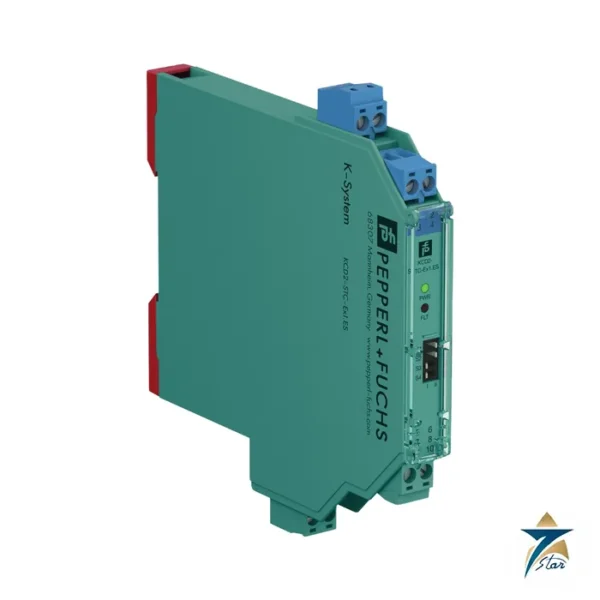
KFD2-UT2-1-1 universal temperature converter, safe-area version

The Pepperl+Fuchs KFD2-UT2-1-1 is the compact, single-channel conditioner of the UT2 line for sensors that are not in a hazardous area. A resistance thermometer, thermocouple, potentiometer or millivolt source connects to terminals 1 to 4, and the module returns a voltage of 0 to 5 V or 1 to 5 V on terminals 7- and 8+, galvanically separated from the field circuit and from the supply.

Housing width is 20 mm, so a row of ten converters occupies only 200 mm of DIN rail.

Capabilities

  • Inputs: RTD on two, three or four wires, thermocouple, potentiometer, voltage in the range minus 100 to plus 100 mV
  • RTD types include Pt10 through Pt1000, GOST versions, Cu10, Cu50, Cu100 and Ni100
  • Fault signal downscale 0 V or 0.5 V, upscale 5.375 V
  • Line-fault and sensor-burnout detection, SIL 2 capable according to IEC/EN 61508 and 61511
  • Configuration via PACTware

Specification of KFD2-UT2-1-1

Parameter Value
Type 1-channel signal conditioner
Supply 20 to 30 V DC on terminals 14+ and 15- or Power Rail
Power dissipation 0.64 W maximum
Input terminals 1, 2, 3, 4
RTD measuring current about 200 microamps
Output 0 to 5 V or 1 to 5 V, 5 ohm or less output resistance, load 10 kilohm or more
Pt100 deviation 0.06 percent of reading in K plus 0.1 K (4-wire)
Thermocouple deviation 0.05 percent of reading plus 1 K (1.2 K for R and S)
Reaction time stated as worst case with burnout and short-circuit detection enabled
Ambient temperature -20 to 60 degrees C
Dimensions 20 x 119 x 115 mm, housing B2
Mass about 130 g

Placement in the plant

Because there is no intrinsically safe input rating, locate the sensor in a safe area. Typical uses are HVAC chilled-water loops, motor winding Pt100s in non-classified halls, boiler-house skin thermocouples and test-bench measurements. The 4-wire RTD option is useful where lead-resistance error matters, such as short, precise laboratory loops.

Comparing KFD2-UT2-1-1 with the Ex versions

  • KFD2-UT2-1-1 has one channel and 0.64 W dissipation, against two channels and 0.8 W for KFD2-UT2-Ex2-1.
  • Only the Ex2 variants carry the CESI 04 ATEX 143 certificate for intrinsically safe inputs.
  • Only this one-channel unit lists four input terminals and a four-wire RTD connection on terminals 1 to 4.

Rail mounting and supply

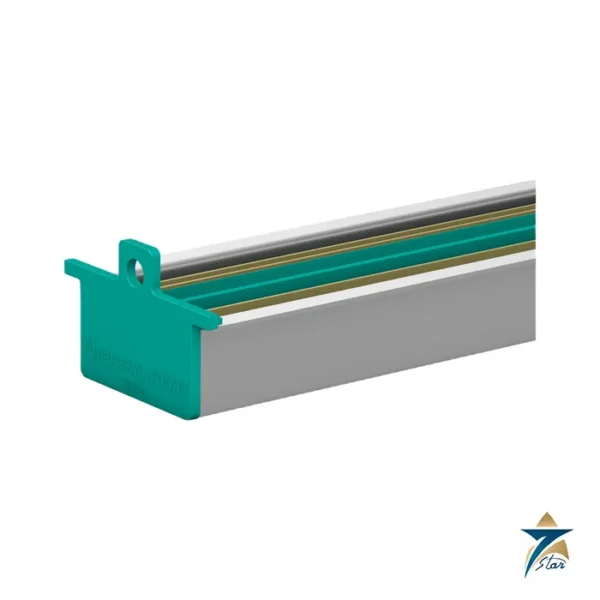
The module clips onto a 35 mm rail and takes power from a Power Rail fed by a KFD2-EB2 module with UPR-03 rail sections of 2 m, 1.6 m or 0.8 m. The compact 0.64 W dissipation makes this unit one of the coolest-running in the K-System.

Calibration and service

Apply a decade box or a thermocouple simulator to check three points of the span. Confirm burnout behaviour and note the cold-junction method chosen. Keep the PACTware file as a backup.

Ordering note

State whether the receiver expects 0 to 5 V or 1 to 5 V, since the range is software selectable but should be agreed beforehand.

Why a single-channel conditioner is still popular

Many plants wire one temperature sensor to one dedicated card channel and want each loop replaceable on its own. A one-channel module isolates the failure domain: pulling a faulty unit affects only one measurement and leaves neighbouring loops running. The 20 mm width and the low 0.64 W dissipation mean cabinets of fifty loops stay manageable. Where the input is a three-wire RTD in a long cable, the module compensates the lead resistance; a four-wire connection removes the lead error almost entirely. Technicians appreciate that sensor burnout produces a defined voltage of either 0 V or 0.5 V downscale, or 5.375 V upscale, instead of a floating value that the DCS might misread as a valid temperature.

Signal path and isolation of KFD2-UT2-1-1

Inside the module the sensor signal passes an input stage, an analogue-to-digital converter, a processor that linearises the RTD or thermocouple curve and applies the cold-junction correction, and a converter that creates the 0 to 5 V or 1 to 5 V output. Galvanic isolation between input, output and supply stops ground loops from distorting readings, which is a frequent source of unexplained offsets when thermocouples are grounded at the process. Programming happens through an interface that is isolated by the programming cable. Influence of supply voltage on the output stays under 0.01 percent of span, so ordinary variations in the 24 V bus do not show up in the measurement.

A thermocouple with an external cold junction is also supported; in that case a reference temperature is fixed in the configuration, a method sometimes used where a thermostatted junction box is already part of the installation.

Questions buyers ask about KFD2-UT2-1-1

How many channels does KFD2-UT2-1-1 have? It is a one-channel signal conditioner housed in a 20 mm wide B2 housing.

What output does KFD2-UT2-1-1 give? A voltage of 0 to 5 V or 1 to 5 V on terminals 7- and 8+, with output resistance of 5 ohm or less and load of 10 kilohm or more.

Can KFD2-UT2-1-1 be used for a sensor in Zone 1? The datasheet describes it as a signal conditioner, not an isolated barrier, so it is intended for sensors in non-hazardous areas.

Which RTD connections does KFD2-UT2-1-1 support? It supports two-, three- and four-wire RTD connections using terminals 1 to 4.

What is the power dissipation of KFD2-UT2-1-1? Both power dissipation and consumption are listed as a maximum of 0.64 W at 20 to 30 V DC.

Documents and quotation

The manufacturer datasheet for KFD2-UT2-1-1 accompanies this listing as a PDF so your engineers can verify terminals, ratings and approvals before purchase. Give the sensor type and range in your enquiry. To request a quotation, send the RFQ with the exact part number KFD2-UT2-1-1, the quantity, the delivery location in Oman or the GCC and any project reference. Seven Star LLC is an independent supplier serving Oman and the GCC and is not affiliated with the manufacturer.

Datasheets & Documents
  • PDF Datasheet Pepperl+Fuchs KFD2-UT2-1-1 Temperature Signal Conditioner Datasheet Download
Reviews (0)

Reviews

There are no reviews yet.

How would you rate this product?

It takes about 10 seconds — just tap a star. Your email is never published.

About brand

Pepperl+Fuchs is a German manufacturer of industrial sensors and explosion protection equipment, founded in 1945 in Mannheim by Walter Pepperl and Ludwig Fuchs as a radio repair shop. Defective transformers led them into manufacturing, and the company developed its first proximity switch in the late 1950s. Pepperl+Fuchs is headquartered in Mannheim and is a pioneer of intrinsically safe electrical equipment for hazardous areas.

Seven Star LLC lists Pepperl+Fuchs sensors, isolated barriers, power supplies and hazardous-area mobile devices, and supplies them to instrument and automation teams in Oman by exact model designation.

Pepperl+Fuchs company profile

Founded 1945, Mannheim-Sandhofen, Germany, by Walter Pepperl and Ludwig Fuchs
Headquarters Mannheim, Germany
Ownership Privately owned (Pepperl+Fuchs SE)
Origins Radio repair workshop that began making replacement transformers
Product families Inductive, capacitive, ultrasonic and photoelectric sensors, rotary encoders, R2000 LiDAR scanners, KFD and HiC isolated barriers, Zener barriers, remote I/O, purge and pressurization systems, Ex-rated enclosures

Milestones

  • 1945: Walter Pepperl and Ludwig Fuchs open their radio repair shop in Mannheim.
  • 1958: The first proximity switch is developed (some company sources say 1959).

Pepperl+Fuchs product families on this page

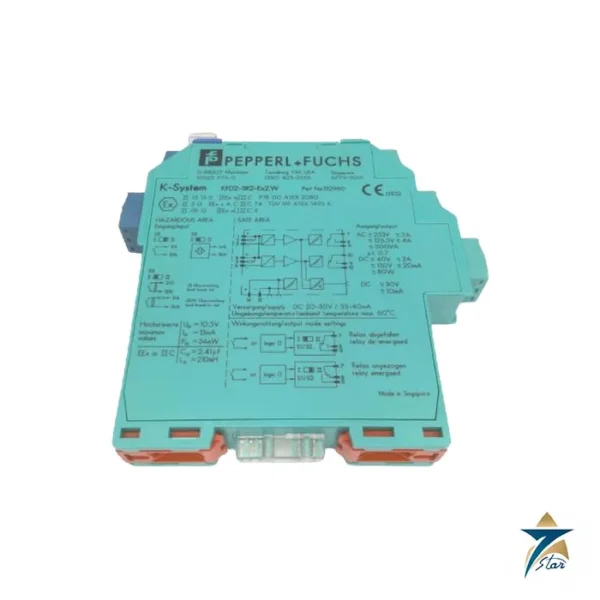
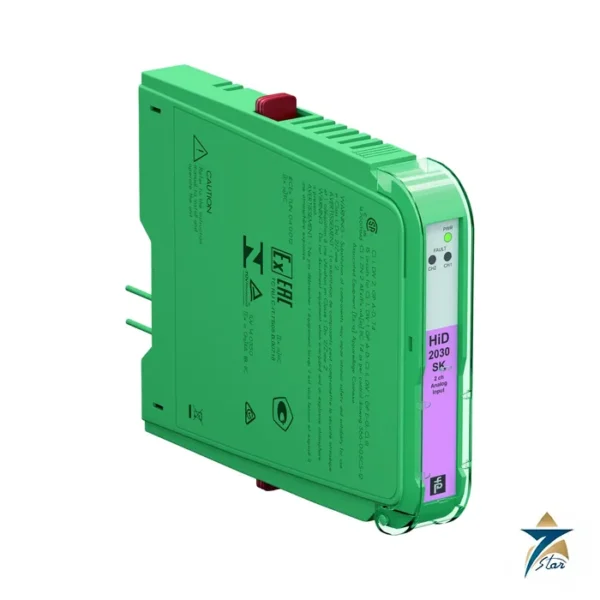
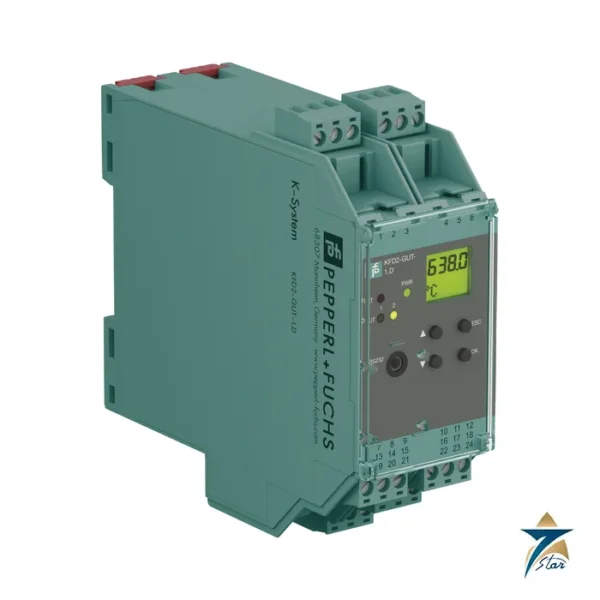
On the interface side there are two systems. The K-System mounts on DIN rail and is represented here by the KFD2-UT2-Ex2 universal temperature converter. The H-System plugs into termination boards and is represented by the HiD2030 SMART transmitter power supply with HART. The PS1000-A6-24.20 is a 24 VDC, 20 A power supply for cabinets. Sensors listed include the NJ2-12GK-SN NAMUR inductive sensor, the R101 retro-reflective photoelectric sensor and the R2000 2-D LiDAR scanner. For field staff there are the Tab-Ex 05 DZ1 tablet for Zone 1/21 areas and the Smart-Ex 03 DZ2 smartphone for Zone 2/22 and Division 2 areas.

Where Pepperl+Fuchs equipment is used

Isolated barriers sit between field instruments in Zone 0 or Zone 1 and the DCS or safety system in refineries, gas plants and chemical works. NAMUR sensors report valve position and machine states in classified areas. Photoelectric sensors and LiDAR scanners work in conveying, packaging, warehousing and vehicle guidance. Ex-rated tablets and phones are carried on operator rounds and maintenance jobs.

Pepperl+Fuchs products we list

Family Examples
Isolator & Barrier HiD2030 SMART Transmitter Power Supply w…, KFD2-SR2-Ex2.W K-System Isolated Switch…, KFD2-UT2-Ex2 Universal Temperature Conve…
Industrial Computers Tab-Ex 05 DZ1 WWAN Hazardous Area Tablet, Smart-Ex® 03 DZ2 smartphone for Zone 2/2…
Inductive Proximity Sensors NJ2-12GK-SN NAMUR Inductive Sensor
Power Modules PS1000-A6-24.20 Power Supply 24 VDC 20 A
Photoelectric Sensors R101 Retro-Reflective Photoelectric Sensor
Laser Distance, LiDAR & Radar Sensors R2000 2-D LiDAR Laser Scanner

Ordering Pepperl+Fuchs parts: what we need

Send the complete model designation as printed on the device, including every suffix; a single letter can change the supply voltage or the output type. Add the part number if the label shows one. For barriers, tell us the field device and signal type, the number of channels and whether the safety loop needs a SIL-assessed module. For mobile devices, state the zone or division and the regional radio version.

Facts checked against Pepperl+Fuchs's own chronicle pages, October 2026.

FAQ

Questions about the Pepperl+Fuchs KFD2-UT2-1-1 Temperature Signal

Answers from our engineering team on installation, compatibility and integration.

01How many channels does KFD2-UT2-1-1 have?
It is a one-channel signal conditioner housed in a 20 mm wide B2 housing.
02What output does KFD2-UT2-1-1 give?
A voltage of 0 to 5 V or 1 to 5 V on terminals 7- and 8+, with output resistance of 5 ohm or less and load of 10 kilohm or more.
03Can KFD2-UT2-1-1 be used for a sensor in Zone 1?
The datasheet describes it as a signal conditioner, not an isolated barrier, so it is intended for sensors in non-hazardous areas.
04Which RTD connections does KFD2-UT2-1-1 support?
It supports two-, three- and four-wire RTD connections using terminals 1 to 4.
05What is the power dissipation of KFD2-UT2-1-1?
Both power dissipation and consumption are listed as a maximum of 0.64 W at 20 to 30 V DC.