Automatic Cleveland open-cup testing of flash and fire point
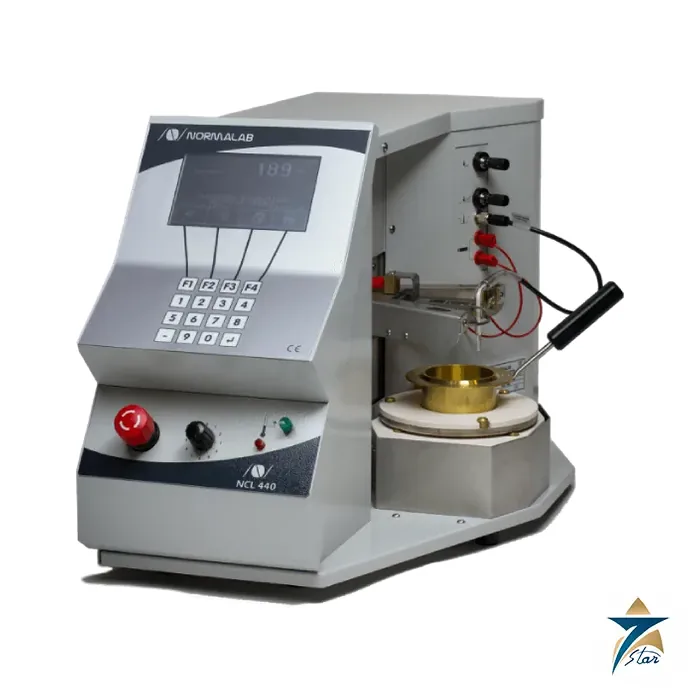
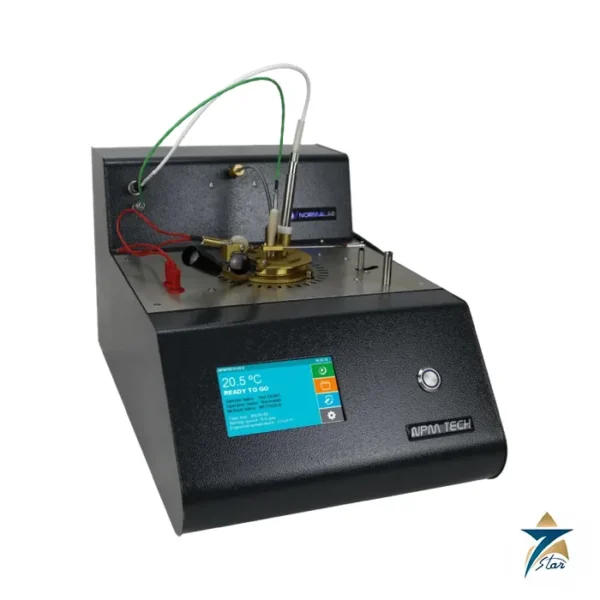
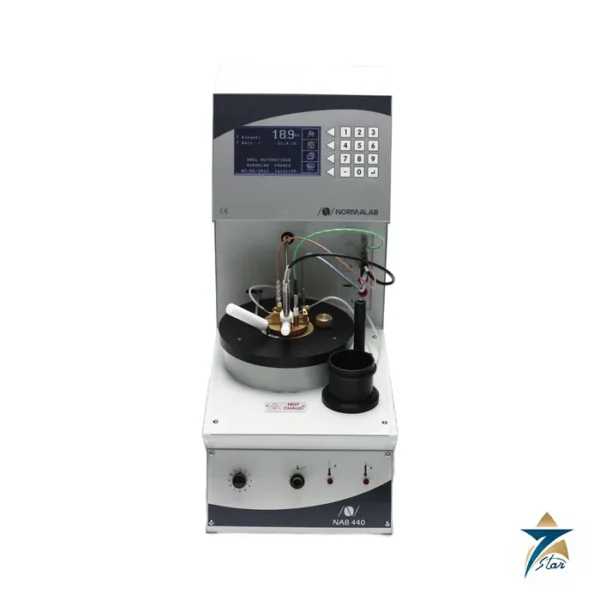
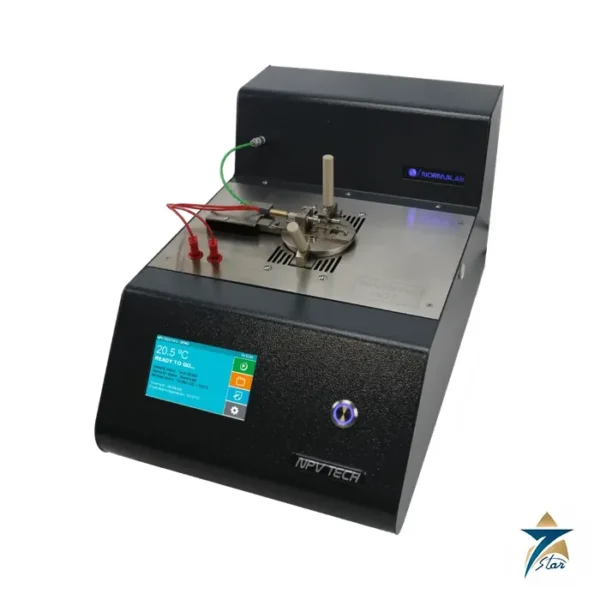
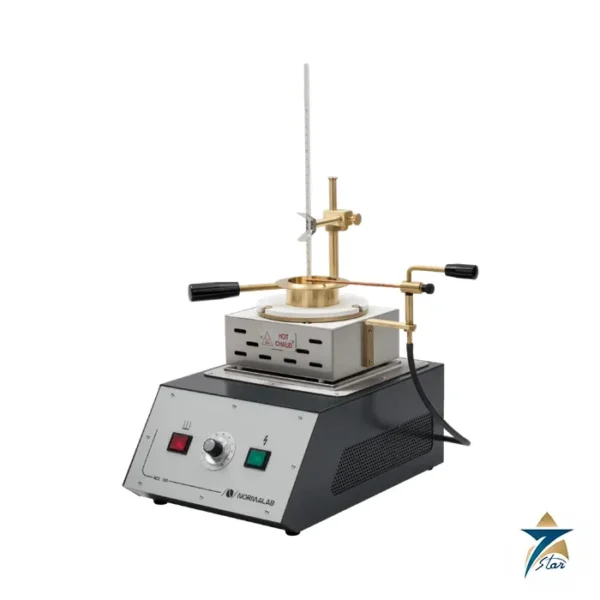
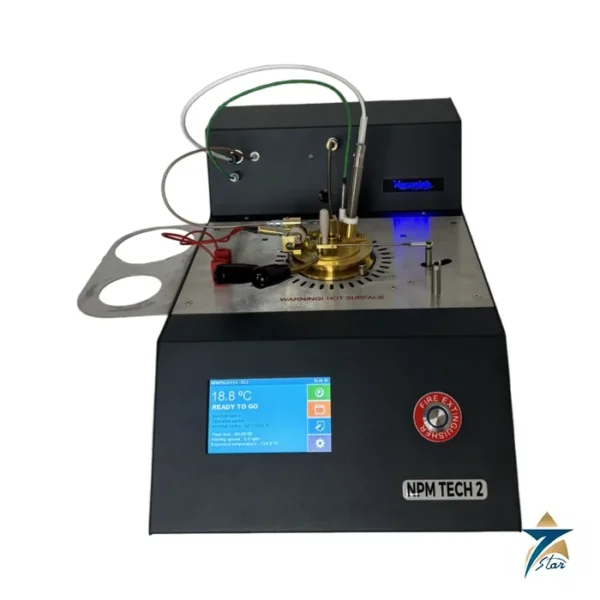
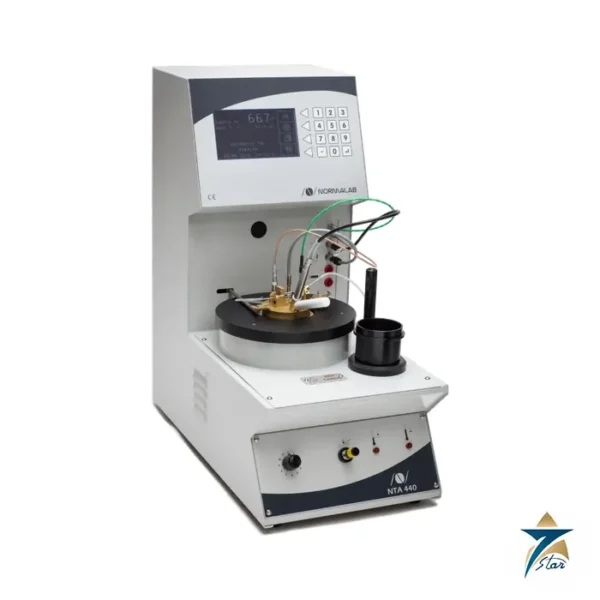
The Normalab NCL 440 is an automatic Cleveland open-cup tester that determines both the flash point and the fire point of petroleum products. Normalab positions it as a unit that offers good repeatability. A gas flame is applied automatically, an angled glass Pt 100 class B probe measures the sample, and ionisation rings detect the flash and fire, with results stored in a 200-result memory. Four software programmes cover automatic, bitumen, manual and research (unknown flash point) tests.
Technical specifications
| Parameter |
Specification |
| Manufacturer / model |
Normalab NCL 440 |
| Order numbers |
40400; 40480 (NCL 440 with surface skin skimmer; cannot be ordered separately from the instrument) |
| Test temperature range |
0 to 400 °C |
| Temperature resolution |
0.1 °C |
| Sample temperature sensor |
Angled glass Pt 100, class B |
| Ignition |
Gas (propane/butane, 50 mbar); electric ignitor delivered |
| Flash and fire detection |
Ionisation rings |
| Data storage |
200 results |
| Gas cut-off |
Automatic at end of test |
| Power |
230 V, 50/60 Hz, 1000 W |
| Dimensions and weight |
330 x 400 x 640 mm; 20 kg |
Standards, programmes and safety
The brochure lists ASTM D92, IP 36 and ISO 2592; the product page adds ASTM D8254. The test applies to petroleum products with flash points above 79 °C (175 °F) and below 400 °C (752 °F), except fuel oils. The four programmes include a bitumen mode, and the optional surface skimmer removes the skin that forms on bituminous samples during heating. Applications named are the petroleum industry, research, bitumen, lubricants and paint.
Safety features comprise automatic flame lighting, an emergency safety switch, a safety thermocouple, gas detection with audible alarm, automatic gas cut-off at the end of the test, a thermal fuse that cuts the gas supply on overheating, and a shutter lid that smothers the flame after the test. Calibration and service parameters can be password protected.
Scope of delivery and accessories
Delivered with: cup (P/N 40417), Pt 100 probe (40441), electric ignitor (40380), insulated mobile upper plate (40439), insulated fixed intermediate plate (40437) and a metal plate. Accessories: surface skin skimmer (40480), gas cartridge kit (40483), protective screen (40454), stainless steel Pt 100 probe delivered with the skimmer option (40467), anti-overflow cup (40422) and thermal ticket printer (40490).
Open-cup testing exposes the sample to room air, so draughts affect the result. The protective screen accessory reduces external disturbances around the cup, and the fixed and mobile insulating plates keep the heat in the cup region. Fire point is found by continuing to heat after the flash point until the vapour sustains burning for at least five seconds, after which the shutter lid snuffs the flame. Laboratories working with bitumen should choose the skimmer version, since a skin on the surface otherwise holds vapour back and delays the flash.
Before the first run, level the instrument, check the gas regulator and confirm that the cup is filled to the fill line with the insulating plates fitted as in the manual. Because calibration and service parameters sit behind a password, only qualified staff can change them, which keeps results consistent between operators and shifts.
Selection checks for the laboratory
Begin with the samples. The Cleveland open-cup method covers the products and flash point window described above, so list the materials the laboratory actually tests, such as lubricating oils, bitumen grades or other heavy petroleum products, and confirm that each falls within the scope of the standard your customers specify. Laboratories that also receive fuel oils or low flash point products will need a different method for those samples. Decide whether bitumen work justifies the skimmer version, since it has to be chosen with the instrument rather than added later.
Check the services at the bench: a 230 V supply able to carry the 1000 W load, a regulated propane or butane gas supply at the stated pressure, and a fume hood or extraction position where combustion products can be removed without creating draughts across the cup. Bench space must take the footprint and 20 kg weight listed in the table, with room for the operator to load and clean the cup safely.
Installation and first verification
Place the tester in a draught-free location away from doors and air-conditioning outlets, connect the gas line with suitable fittings and leak-test every joint before the first ignition. Configure the date, operator settings and test programme, and set the password for calibration parameters. Then run a certified reference material with a known flash point and compare the result with the stated value and the repeatability limits of the standard before releasing the instrument for routine work.
Laboratory conditions in Oman and the Gulf
Many oil, refinery and bitumen laboratories in the region operate in hot climates with heavily air-conditioned rooms. Strong airflow from cooling units is a common source of error in open-cup testing, so position the instrument and its extraction carefully and use the protective screen if air movement cannot be avoided. Fine dust from outside can settle in the cup and on the ionisation rings, which should be kept clean between tests. Store gas cartridges or cylinders in a shaded, ventilated area that complies with local safety rules, since storage areas in summer can become very hot.
Routine care
Clean the cup, ionisation rings and probe after each test so residues do not carry over to the next sample. Check the gas line and regulator for leaks at regular intervals, inspect the Pt 100 probe for damage, and verify the instrument periodically with reference materials, keeping the records for audits. Test the safety functions, including the gas detection alarm and emergency switch, as part of the laboratory’s safety inspections. Train each new operator on gas handling and the safety features before they run samples unsupervised, and record that training alongside the instrument logbook.
Documents and quotation
The brochure is linked here. Seven Star LLC, an independent supplier in Muscat, includes the NCL 440 among its liquid analytical systems. Confirm the gas supply, the skimmer option for bitumen samples and the protective screen when requesting a quotation.







Reviews
There are no reviews yet.