Twin-station aniline point tester using a dry bath
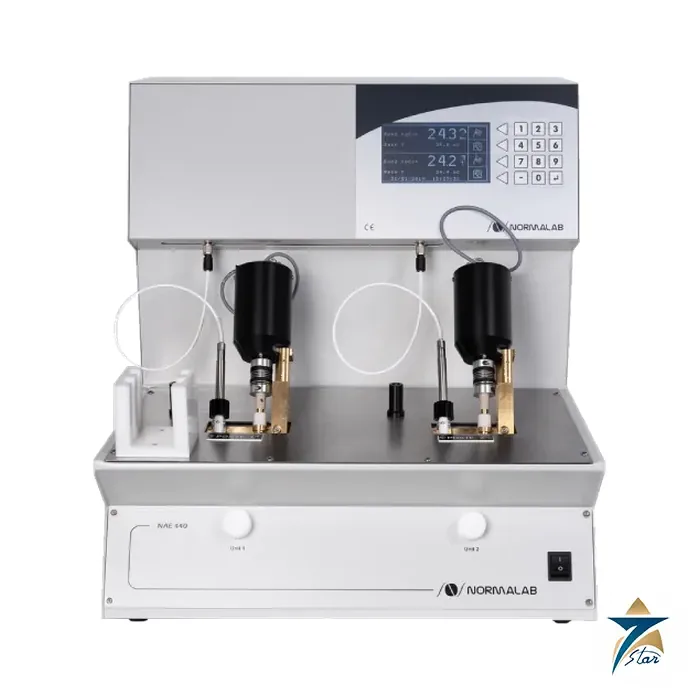
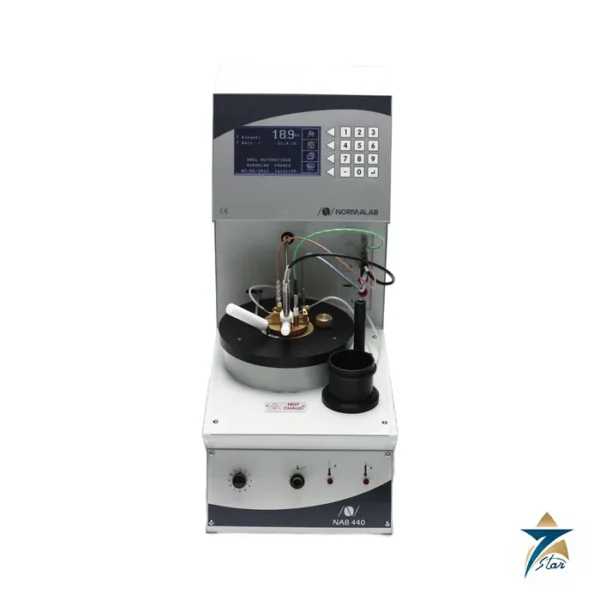
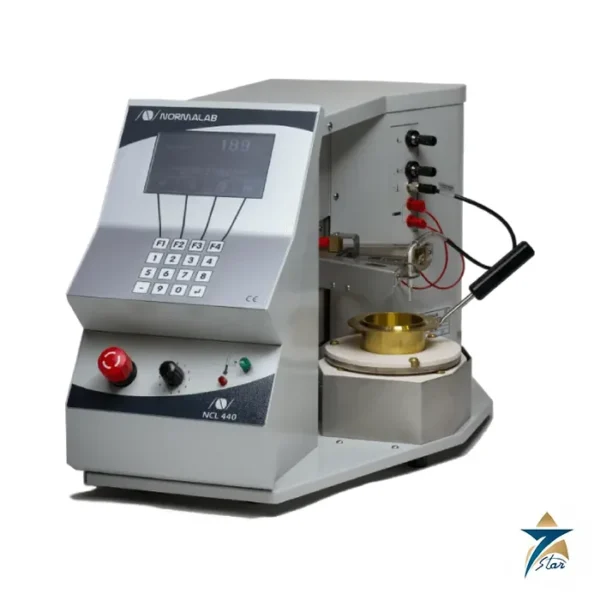
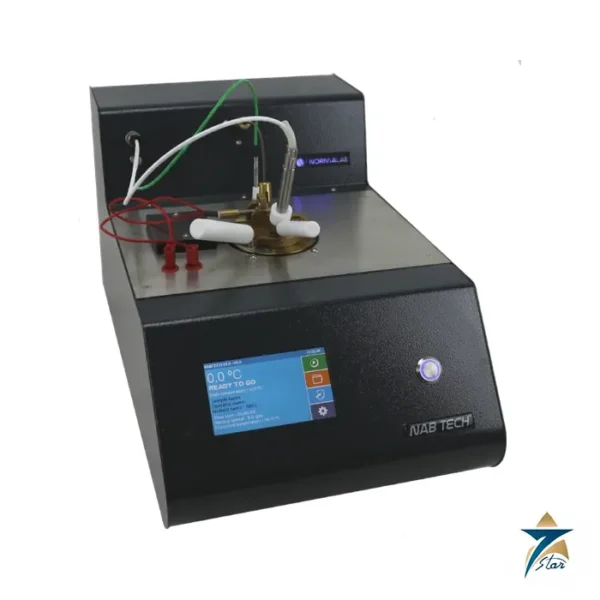
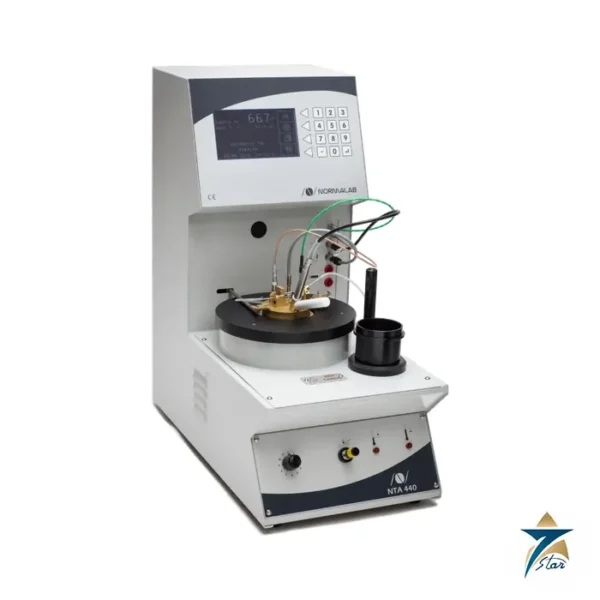
The Normalab NAE 440 is an automatic aniline point tester with two independent, self-contained stations. Normalab describes it as the unique twin tester on the market using the dry bath concept, so no liquid heating bath is needed, and the heating element is protected if a tube breaks. Each station detects the aniline point automatically in clear, coloured and dark products, and visual checking remains possible.
Technical specifications
| Parameter |
Specification |
| Manufacturer / model |
Normalab NAE 440 |
| Order number |
40500 |
| Stations |
2 independent |
| Test temperature range |
-10 to 150 °C (brochure); an external cooler or cryostat is needed below ambient |
| Heating |
Dry bath |
| Product detection |
Clear, coloured and dark products up to 8 on the ASTM colour scale |
| Data storage |
200 results |
| Self-checks |
Autodiagnostic |
| Output |
RS232 for printer or LIMS |
| Power |
230 V, 50/60 Hz, 1.5 A |
| Dimensions and weight |
520 x 490 x 540 mm; 30 kg |
Standards and what the test tells you
The brochure lists ASTM D611, ISO 2977 method 5, ISO 21493:2019 and IP 2 and related methods. They cover the aniline point of petroleum products and hydrocarbon solvents, and the mixed aniline point for products whose aniline point lies below the temperature at which aniline crystallizes from the mixture. The aniline point is the lowest temperature at which equal volumes of aniline and sample are fully miscible; it indicates the aromatic content of a hydrocarbon, with a low value meaning more aromatics. It is used for diesel ignition quality estimates (aniline gravity product) and for solvent and rubber oil selection.
Two independent stations let a laboratory run two samples at different times without waiting for each other, which suits mixed routine work.
Scope of delivery and options
Delivered ready to use with two U-tubes (P/N 40546) and two probes (40536). Options on the product page: a cryostat from -15 to 60 °C with a 5 L volume and lid, an insulated tubing set for the cryostat, a Dispensette S Organic digital dispenser 1 to 10 mL with 0.05 mL resolution and a valve, a thermal printer, a printer cable and a 10-spool pack of 440-range printer paper.
Compared with a conventional manual aniline point apparatus, an automatic tester removes the need to judge the cloud point by eye, which is difficult with dark or coloured oils. The sample and aniline are mixed in the U-tube, heated until the mixture becomes clear and then cooled until the turbidity returns, and the instrument records the temperature at which this occurs. The memory keeps 200 results, and the RS232 output lets a laboratory print each run or send it to a LIMS, which supports routine solvent and diesel testing.
Typical uses are the aromatic content check of solvents and kerosene, diesel quality screening and the control of rubber process oils. Keep the aniline in a closed, labelled container, use a dispenser for repeatable volumes and follow the hazard instructions of your site for handling and waste. Clean the U-tubes thoroughly between samples to avoid carry-over.
Who benefits from an automatic twin tester
The NAE 440 suits petroleum and petrochemical laboratories that run aniline point tests as part of routine product control, for example refinery quality control rooms, solvent producers, blending plants and independent testing laboratories. Where the test is performed several times per shift, two independent stations reduce waiting time and allow one sample to be prepared while the other is running. Laboratories that handle a mix of clear distillates and darker products gain most from automatic detection, because the visual judgement of the cloud point becomes less reliable as the sample colour deepens.
Selecting the configuration for your laboratory
The first decision is the temperature range you actually need. Products with aniline points above ambient can be tested with the dry bath alone, while samples whose aniline point lies below ambient need the external cooler or cryostat listed among the options. Review the products in your test schedule and the methods you follow, including whether the mixed aniline point method is required, before deciding which options to include. The dispenser option is worth considering when operators need repeatable volumes of aniline and sample without handling the reagent with open glassware.
Installation and laboratory set-up considerations
Place the instrument on a stable bench with adequate space around it, close to a suitable power outlet and, if a cryostat is used, with room for the cooling unit and its tubing. Because aniline is a hazardous reagent, the workstation should be located in an area with appropriate ventilation and close to the facilities your site requires for chemical handling. Plan where the reagent, samples and waste will be stored so that the workflow from sample preparation to cleaning is short and safe. During commissioning, run reference samples on both stations to confirm that results agree with your previous method and with each other.
Data handling and quality records
Stored results and the RS232 output support traceable records. Decide early whether results will be transferred to a LIMS, so that the connection and data format can be arranged with your IT or laboratory systems team. Combine the instrument records with your own sample identification so that each result can be traced to its batch.
Routine operation and cleaning
Consistent results depend as much on routine as on the instrument. Use the same sample and aniline volumes for every run, keep the U-tubes and probes clean and dry before each test, and allow each station to complete its cycle before removing the tube. Cleaning thoroughly between samples prevents carry-over, which is especially important when switching from a dark product to a clear one. Record any deviations from the normal procedure so that unusual results can be investigated later.
How to request a quotation
Quote the model NAE 440 and order number 40500, the quantity, and list the options you require from those shown above. Mention the standards you work to and the typical products you test, so that the configuration can be checked before the offer is prepared.
Documents and quotation
The brochure is linked here. Seven Star LLC, an independent supplier in Muscat, quotes the tester within its liquid analytical systems range. Aniline is a hazardous reagent, so confirm local handling and supply, the cryostat and the dispenser before ordering.




Reviews
There are no reviews yet.