- Automation & ControlView all 3,068 products
- Automation Accessories
- AC Drives
- PLC & I/O Cards
- Industrial Communications
- Vibration Monitoring
- Isolator & Barrier
- Controllers & Data Acquisition
- Safety Switches & Guard Locking
- Motor Soft Starters
- Encoders
- CCTV & Security
- Pneumatic Cylinders
- HMI Displays
- Servo Drives
- Industrial Computers
- Machine Vision
- Automation Software
- Robotics
Brand: MSA Safety
MSA Senscient ELDS Open Path Laser Gas Detector
Description
MSA Senscient ELDS open path laser gas detector explained
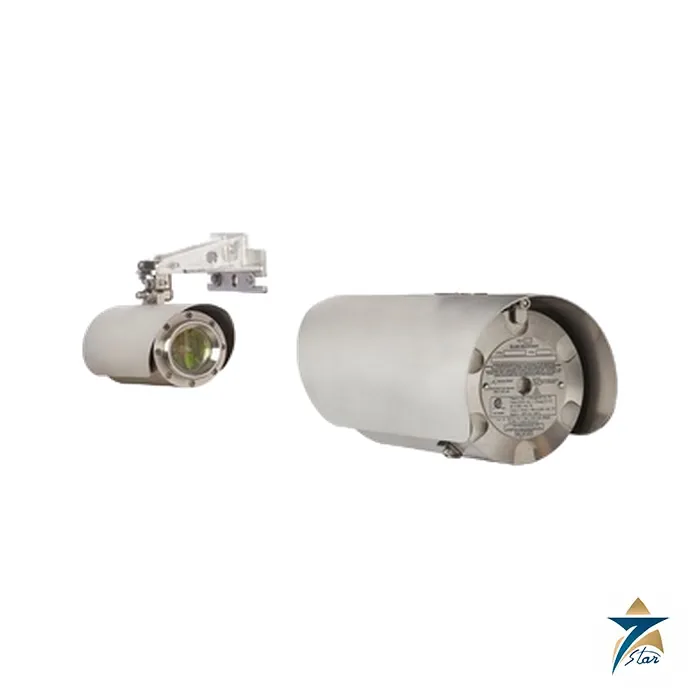
The MSA Senscient ELDS is a laser-based open path gas detector made of a separate transmitter and receiver that look at each other across a plant area, a duct or a ventilation zone. Instead of sampling gas at one point, it measures the total gas along the beam, so a leak crossing the path is detected even if it never touches a single sensor. It covers toxic and flammable gases: hydrogen sulfide, sour gas (H2S with methane), methane, ethylene, ammonia, carbon dioxide and hydrogen chloride. Seven Star LLC is an independent supplier in Muscat and supplies MSA detection equipment in Oman and the GCC; we are not affiliated with the manufacturer.
This page explains the three MSA Senscient ELDS arrangements, the self-test features, the physical data from the manufacturer drawings and the information that must be fixed before ordering.
Senscient ELDS technical specifications
| Parameter | Specification |
|---|---|
| Manufacturer / part number | MSA / Senscient ELDS open path gas detector (Series 2000 transmitter and receiver) |
| Gases | H2S, sour gas (H2S/CH4), CH4, C2H4, NH3, CO2, HCl |
| Technology | Tunable laser with gas-specific Harmonic Fingerprint processing |
| Self-test | SimuGas automated function checks recorded daily |
| Laser safety | Class 1 eye-safe designation |
| Housing | 316L stainless steel enclosures and brackets |
| Operating temperature | -40 to +60°C (-40 to +140°F) |
| Size | About 140 mm diameter x 300 mm (5.5 in x 11.8 in) |
| Weight | About 12 kg (26.5 lb) each, including bracket |
| Power | 24 VDC nominal, 18-32 VDC range; transmitter 12 W |
| Cable entry | M25 or 3/4 NPT |
| Set-up and diagnostics | Bluetooth wireless with SITE software; HART device description files available |
Senscient ELDS arrangements and path lengths
| Arrangement | Path length | Typical use |
|---|---|---|
| Open path | 5 to 200 m, depending on the gas | Perimeter and area monitoring across process units, tank farms and pipe racks |
| Cross duct (XD) | 0.5 to 5.0 m maximum | Transmitter and receiver on opposite sides of a duct for fast detection in air handling or exhaust ducts |
| Ventilation zone (VZ) | 0.5 to 5 m maximum | Safety-critical ventilation openings and enclosures where fast response matters |
The manufacturer offers separate installation outline drawings for each arrangement. Open path units are pole mounted and the drawing notes support for 4 to 6 inch poles.
How the Senscient ELDS works
A tunable laser scans a narrow portion of the spectrum where the target gas absorbs. Because only a slim slice of the spectrum is used, water interference from fog, rain and humidity is reduced. The Harmonic Fingerprint method then checks the shape of the absorption signal, which is specific to the gas, so that false alarms from interferents are suppressed and plant shutdowns are avoided. The laser sits within a Class 1 eye-safe designation, so it is not a hazard to people crossing the beam.
SimuGas performs automatic function checks every day and records the results, which removes the need to send people into the hazardous area for manual gas checks. No communication cable is needed between transmitter and receiver, which cuts cable cost for long paths.
Senscient ELDS selection checklist
- Target gas: H2S, sour gas, CH4, C2H4, NH3, CO2 or HCl.
- Arrangement: open path, cross duct or ventilation zone, and the path length measured on site.
- Mounting: pole or duct mounting plate, with a stable structure for both ends of the beam.
- Cable entries and glands: M25 or 3/4 NPT, and a 24 VDC supply with enough capacity for 12 W per transmitter.
- Control system interface: 4-20 mA with HART, and optional cloud connectivity through a FieldServer gateway.
- Hazardous-area approval required for the site; check the approval label for the exact model.
- Whether Bluetooth commissioning and SITE software will be used by the maintenance team.
Installation and alignment of the Senscient ELDS
Install transmitter and receiver on rigid supports so that vibration or sway does not move the beam, then align them using the alignment features on the mounting. Keep the line of sight clear of scaffolding, vegetation and temporary structures. After alignment, use the Bluetooth link and SITE software to read signal strength and diagnostics, set alarms, and retrieve the event log. Clean the optical windows according to the manufacturer manual and record the daily SimuGas results as part of the site gas-detection inspection routine.
Typical Senscient ELDS applications in Oman and the GCC
In Oman and the GCC an open path laser detector suits sour gas wellsites, gas treatment plants, tank farms, pipe racks, loading bays, sulfur and ammonia facilities and gas turbine ventilation. Dust, heat haze and humidity are common conditions, and the narrow-band laser approach is intended to cope with fog, rain and snow; the stainless steel housing and -40 to +60°C rating cover desert summers. Cross-duct and ventilation-zone versions protect air intakes of control rooms and turbine enclosures.
Senscient ELDS compared with point detectors
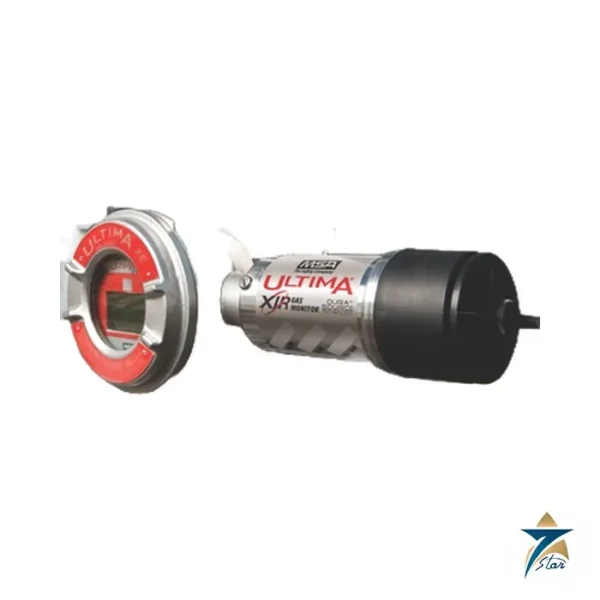
Point detectors such as the PrimaX IR or the Ultima X5000 measure gas at one location, so many are needed to cover a large area and each has to be checked in person. An open path unit can cover up to 200 m with one pair, at the cost of needing a clear line of sight and a stable structure at each end. Many plants use both: point detectors near likely leak sources and open path beams along the perimeter.
Information to send with a Senscient ELDS RFQ
- Gas and arrangement (open path, cross duct, ventilation zone)
- Measured path length and mounting details
- Approval and cable entry type
- Controller and HART or cloud gateway needs
- Quantity of transmitter and receiver pairs
- Delivery location and date
Documents and quotation
The official brochure for the MSA Senscient ELDS open path gas detector (Enhanced Laser Diode Spectroscopy, English) is attached on this page as a PDF. It describes the laser measurement principle, the target gases such as methane and hydrogen sulfide, the path lengths, the immunity to false alarms from fog and sunlight, the outputs and the hazardous-area certifications. Check the target gas, the path length between transmitter and receiver and the output signal for your fire and gas system, then send us the quantity and the delivery location for a quotation.
Seven Star LLC prepares quotations for MSA open path detectors in Oman and the GCC as an independent supplier, with delivery arranged to your site.
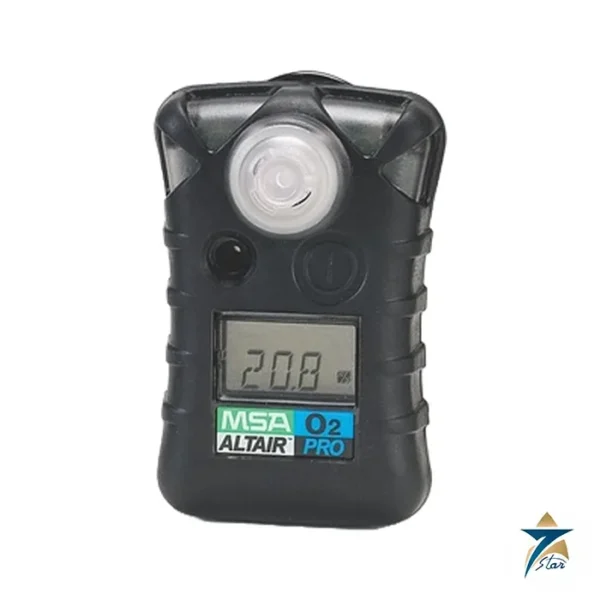
See also: MSA ALTAIR Pro Single-Gas Detector (O2, HCN, ClO2, PH3).
Datasheets & Documents
- Datasheet MSA Senscient ELDS Brochure (PDF) Download
Reviews (0)
How would you rate this product? Cancel reply
About brand
MSA Safety is an American maker of safety equipment, founded in 1914 in Pittsburgh by mining engineers John T. Ryan and George H. Deike as Mine Safety Appliances Company, after a series of deadly mine disasters. It first supplied miners with electric cap lamps and breathing apparatus. MSA is headquartered in Cranberry Township, Pennsylvania, and listed on the New York Stock Exchange.
Seven Star LLC supplies MSA gas detectors and accessories in Oman, covering both sides of the product line: ALTAIR portable detectors worn by technicians, and fixed gas monitors such as the ULTIMA X5000 and General Monitors S5000 that feed a fire and gas system.
MSA Safety company profile
| Founded | 1914, Pittsburgh, Pennsylvania, USA |
|---|---|
| Founders | John T. Ryan and George H. Deike |
| Original name | Mine Safety Appliances Company |
| Headquarters | Cranberry Township, Pennsylvania |
| Listing | New York Stock Exchange (MSA) |
| Product families | ALTAIR 4XR and ALTAIR io portable gas detectors, ULTIMA X5000 and General Monitors fixed gas and flame detection, G1 SCBA, V-Gard helmets, V-Series and V-FORM fall protection harnesses and lifelines |
MSA gas detection families listed here
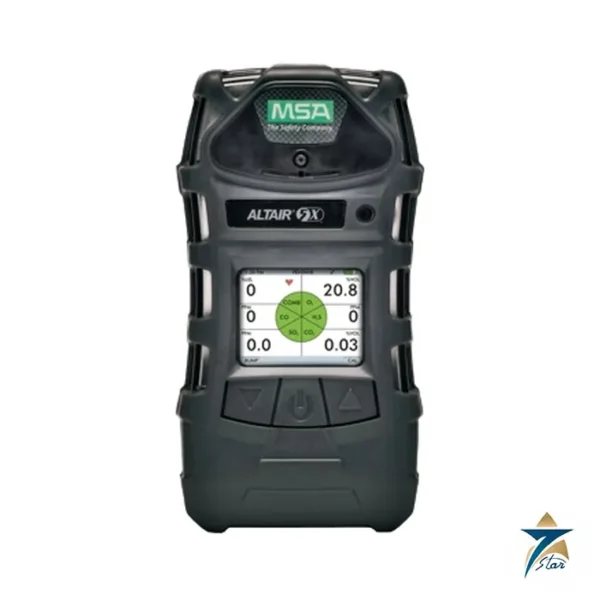
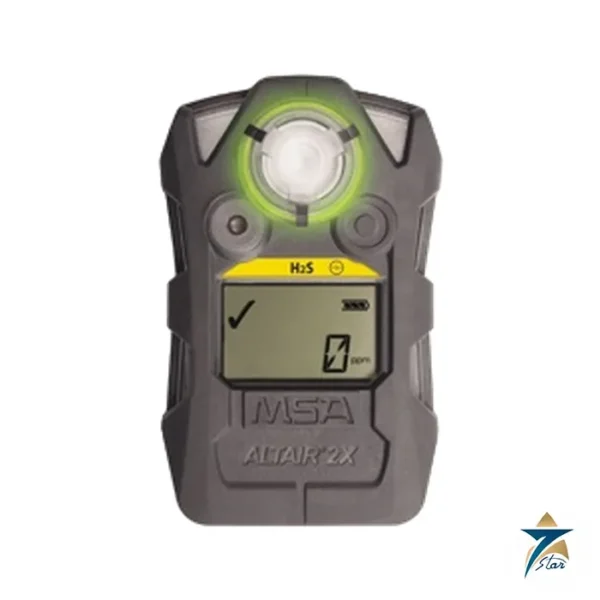
On the portable side, the ALTAIR 4XR is the four-gas detector for combustible gas, oxygen, carbon monoxide and hydrogen sulfide, and the ALTAIR io4 is the connected version that reports readings to a cloud platform. The GALAXY GX2 automated test system handles bump tests and calibration records for ALTAIR instruments.
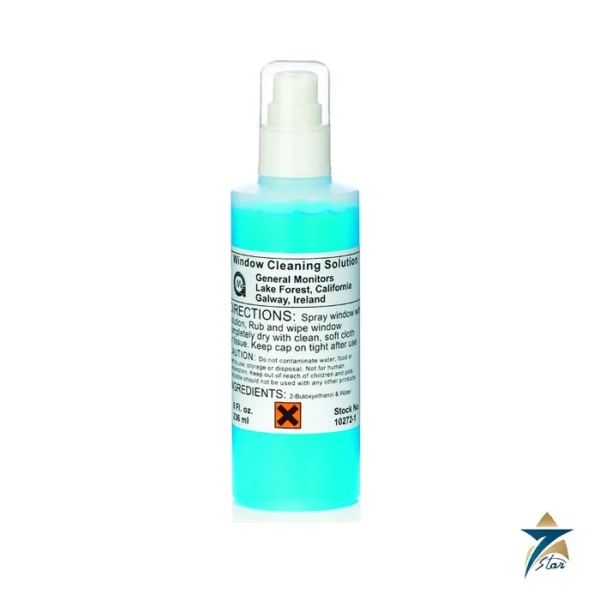
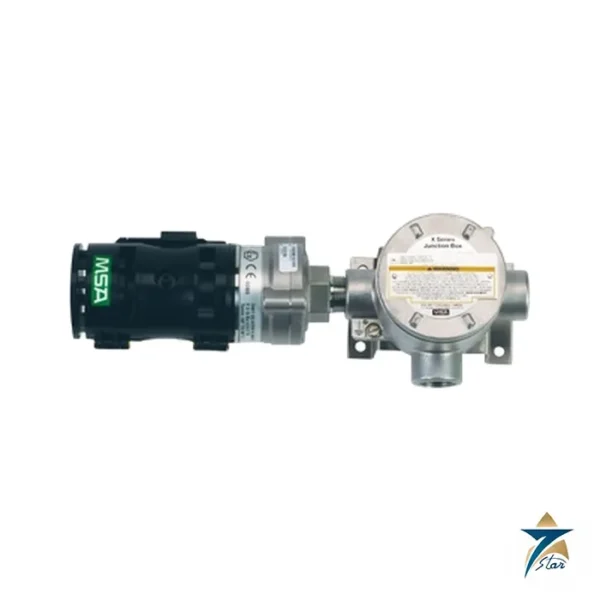
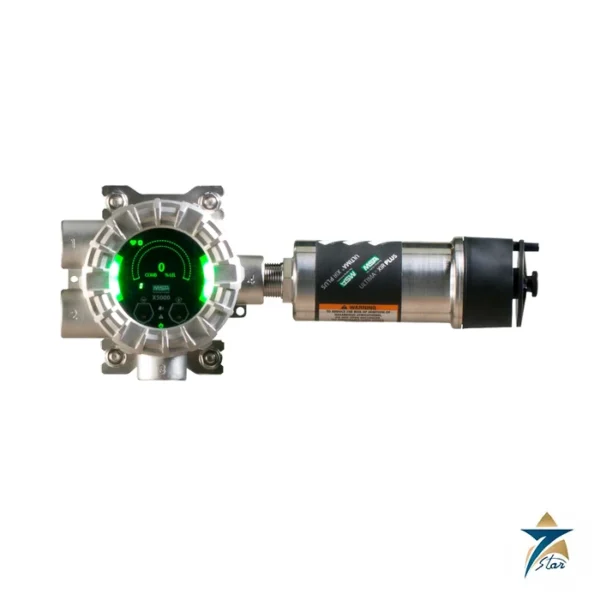
On the fixed side, the ULTIMA X5000 and General Monitors S5000 are transmitters for combustible, toxic and oxygen sensors. Many installed units still carry the General Monitors name on the nameplate. The Chillgard 5000 is a refrigerant leak monitor for machinery rooms. Small consumables are listed too, such as window cleaning solution 10272-1.
Where MSA gas monitors are used
Fixed MSA gas monitors are found on wellheads, gas plants, refineries, tank farms, LNG and petrochemical units, wherever hydrocarbon or H2S leaks must be alarmed early. Portable ALTAIR detectors go with crews into confined spaces and on hot work permits. Chillgard monitors serve chiller plant rooms in district cooling and large buildings, a common application in the GCC.
MSA Safety products we list
Ordering MSA detectors and sensors: what we need
Fixed gas monitors are configured items. Send the full part number or the configuration code from the nameplate, the target gas and range, the sensor technology (catalytic, infrared, electrochemical), the housing material, the output (4-20 mA with HART, optional relays) and the hazardous area approval required. For portables, state the sensor combination, charger type and regional version. For replacement sensors, a nameplate photo of the transmitter avoids mistakes. We check each code against MSA documentation and propose the manufacturer's current model when an older one is no longer made.
Facts checked against MSA Safety's corporate history and investor materials, October 2026.
Browse MSA Safety products by category: Fire & Gas Detector, Gas Analyzer Accessories, Fire & Gas Systems, Gas Analyzer Systems.
FAQ
Questions about the MSA Senscient ELDS Open Path Laser Gas Detector
Answers from our engineering team on installation, compatibility and integration.
01What gases can the Senscient ELDS detect?
It detects hydrogen sulfide, sour gas (H2S with methane), methane, ethylene, ammonia, carbon dioxide and hydrogen chloride. Each system is built for a specific gas, so the target gas is fixed when ordering.
02What path length does the Senscient ELDS cover?
The open path version covers 5 to 200 m depending on the gas. Cross-duct and ventilation-zone versions are intended for short paths of 0.5 to 5 m.
03What is SimuGas?
SimuGas is the automated function check of the Senscient ELDS. It tests the detector daily and records the results, so staff do not have to enter hazardous areas to run manual gas checks.
04How does the Senscient ELDS avoid false alarms?
Its tunable laser scans a narrow part of the spectrum, which reduces water interference, and the Harmonic Fingerprint processing recognises the gas-specific signal so that interferents do not trigger alarms.
05What power does the Senscient ELDS need?
The drawings give a nominal 24 VDC supply with an 18 to 32 VDC range, and 12 W consumption for the transmitter. No communication cable is needed between transmitter and receiver.


Reviews
There are no reviews yet.