Brand:

Meinberg GPS183DHS DIN Rail GPS Clock with IRIG Time Code

Description

Overview

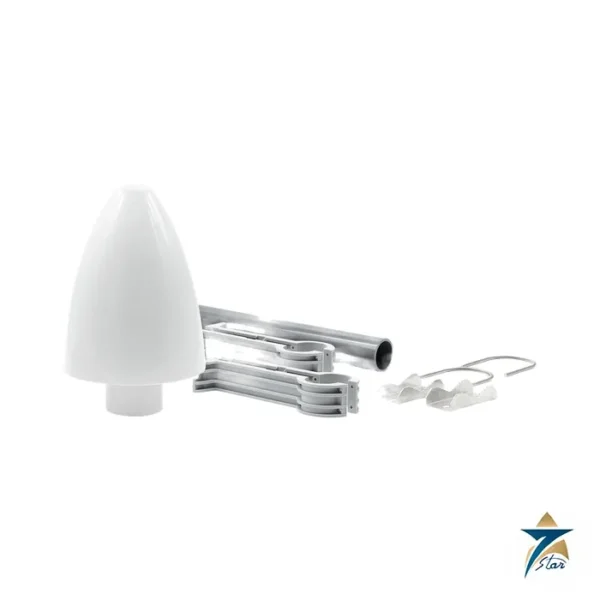
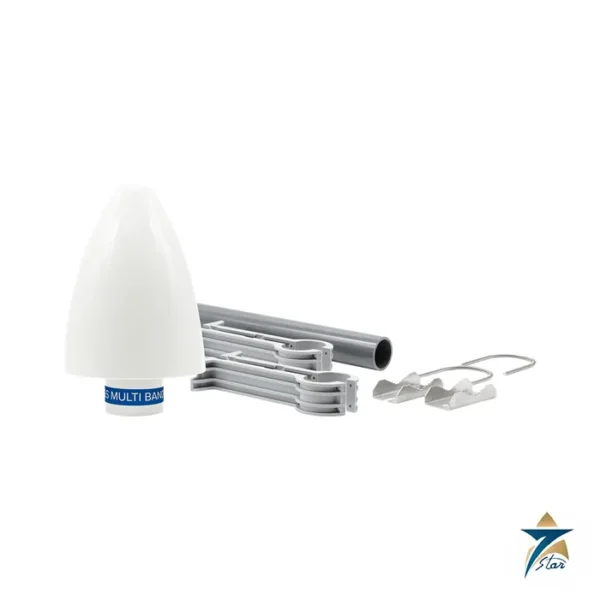
Meinberg GPS183DHS is a satellite-controlled clock in an aluminium chassis made for 35 mm DIN rail mounting. It receives GPS through the Meinberg GPSANTv2 antenna and turns the signal into things that substations, plant control rooms and test benches can use directly: programmable pulses through optocoupler outputs, an amplitude-modulated IRIG-B or AFNOR time code, a simulated DCF77 signal and several serial time strings.

A rail-mount form factor suits the cabinets that already hold relays, gateways and data loggers, because the clock sits beside them and takes its supply from the same panel rail. Seven Star LLC is an independent supplier serving Oman and the GCC. This page follows the manufacturer data sheet for the GPS183DHS, which the manufacturer marks as a preliminary data sheet, so confirm the final configuration in your RFQ.

What the Meinberg GPS183DHS provides on its front panel

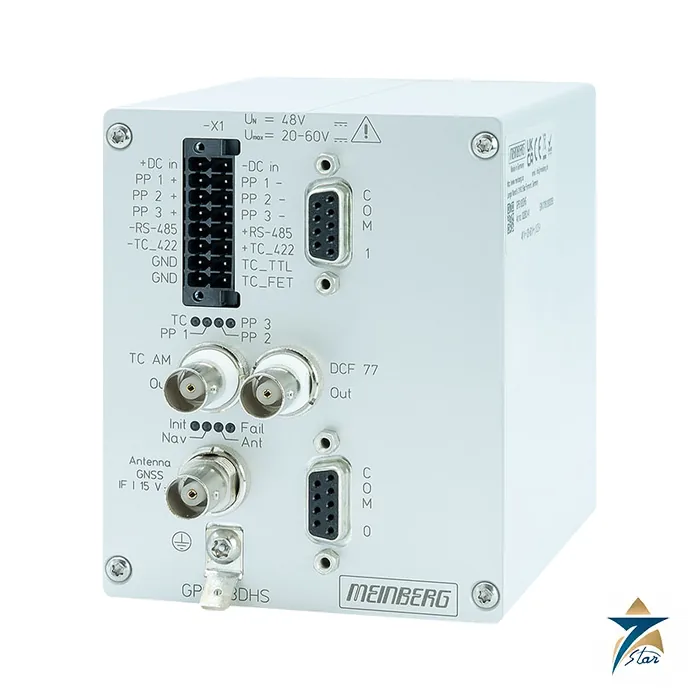
The front panel carries eight control LEDs, a 16-pin DMC terminal block, two 9-pin D-Sub connectors and three BNC sockets. Management is by serial connection, using COM 0 with the free Meinberg Device Manager software, which also installs firmware updates from a connected PC.

  • Two RS-232 interfaces and one RS-485 interface for time strings.
  • DCF77 simulation output on a BNC socket at 77.5 kHz and about minus 62 dBm.
  • AM time code output on a BNC socket, sine wave carrier of 1 kHz, 3 Vpp for mark and 1 Vpp for space into 50 ohm.
  • Time code formats IRIG-B B122, B123, B126 and B127, AFNOR NF S87-500, IEEE 1344 and C37.118.
  • Three programmable pulse outputs on optocouplers, plus DCLS time code at RS-422, TTL and FET levels on the terminal block.

Meinberg GPS183DHS technical data

Parameter Value
Receiver type GPS receiver, with the Meinberg GPSANTv2 antenna
Form factor TS35 / IEC 60715 rail-mounted compact chassis
Chassis size 85 mm wide, 105 mm high, 104 mm deep
Material and protection Aluminium, IP20
Terminal block DMC 16-pin male
Antenna input BNC, 50 ohm, 35.4 MHz intermediate frequency, 15 V and 100 mA to the antenna
Cable length Maximum 300 m RG58, 700 m RG213, 1100 m H2010 Ultraflex
Optocoupler outputs UCE max 55 V, IC max 50 mA, Ptot 150 mW, isolation 5000 V
Optional PhotoMOS outputs Up to 250 V AC or DC peak, 150 mA, isolation 1500 V
Pulse width 10 ms to 10 s in steps of 10 ms
Serial output Baud rates 300 to 19200, default 19200, framing 8N1 default
Conformity CE and UKCA, RoHS compliant
Support Free lifetime support with firmware updates, three-year warranty

Pulse outputs on the Meinberg GPS183DHS

Each of the three programmable pulse channels can be set to cyclic or fixed pulses, to a timer mode with three on-times and three off-times per day, to a receiver state indicator, to DCF77 emulation, to DCLS time code or to a time string copy of COM 1. The switching state can be inverted, and the pulse duration is adjustable from 10 ms up to 10 s. The outputs can be enabled immediately after reset or only once the receiver is GPS-synchronised.

Typical wiring sends a one-pulse-per-second signal to a recorder input, a minute pulse to a fault recorder and a state output to an alarm lamp. If the control cabinet needs galvanic separation from the field, the optional PhotoMOS outputs provide a different isolation rating from the standard optocouplers, as the data sheet lists.

How Meinberg GPS183DHS differs from the GNSS version

A sister product, the GNS183DHS, uses the same chassis and connector layout but houses a GNS-type multi-constellation receiver for GPS, Galileo, BeiDou and GLONASS. The GPS183DHS keeps to a GPS-type receiver and the GPSANTv2 antenna with a BNC connection, where the GNS version uses an SMA antenna connection.

The practical difference is the antenna system. The GPSANTv2 route supports very long cable runs, up to 1100 m with Ultraflex cable, whereas the multi-GNSS route is limited to 70 m of its recommended cable without amplification. For a large plant where the antenna must be far from the equipment room, the GPS version is often easier to design.

Planning the antenna route for Meinberg GPS183DHS

The cable allowances in the data sheet depend on the cable type, which is a trade-off between cost and length. RG58 is thin and easy to pull but is limited to 300 m. RG213 is thicker and stiffer yet reaches 700 m, and H2010 Ultraflex reaches 1100 m. The antenna receives its supply of 15 V at up to 100 mA through the same cable, and the signal travels to the receiver at an intermediate frequency of 35.4 MHz, which is the reason the long runs work without an additional amplifier.

Plan the route so that the cable avoids high-voltage conductors and drum-wound spare lengths, fit lightning protection where the antenna stands tall above surrounding structures and label both ends of the cable. Where the cable crosses between buildings, keep the protective earth connection of the clock and of the antenna mast bonded to the same earthing system.

Use cases in Oman and the GCC

Rail-mounted GPS clocks are used in substations and switchyards for time stamping of protection events, in gas plants for distributed control system time, in utilities for SCADA clocks and in laboratories for test benches. The IRIG-B output feeds relays and recorders directly, and the serial strings feed servers and gateways that do not support IRIG.

Installation and commissioning

  • Mount the chassis on a 35 mm rail in a cabinet with access to the antenna cable.
  • Connect the device to the protective earth terminal, as the data sheet requires for safe operation to IEC 62368-1.
  • Install the antenna with a clear sky view and connect it to the BNC input.
  • Configure the outputs with Meinberg Device Manager over COM 0.
  • Check that the receiver state shows synchronisation before enabling outputs that depend on it.

Maintenance

Inspect the antenna cable and connectors after storms, review the LEDs on routine rounds and update firmware when the manufacturer releases a version relevant to your configuration. Keep a record of the oscillator option and cable length with the asset file.

Ordering Meinberg GPS183DHS

Please state the oscillator option, the number of PhotoMOS outputs if required, the antenna cable length and the supply voltage available in the cabinet. Add the site location in Oman or the GCC so lead time can be planned.

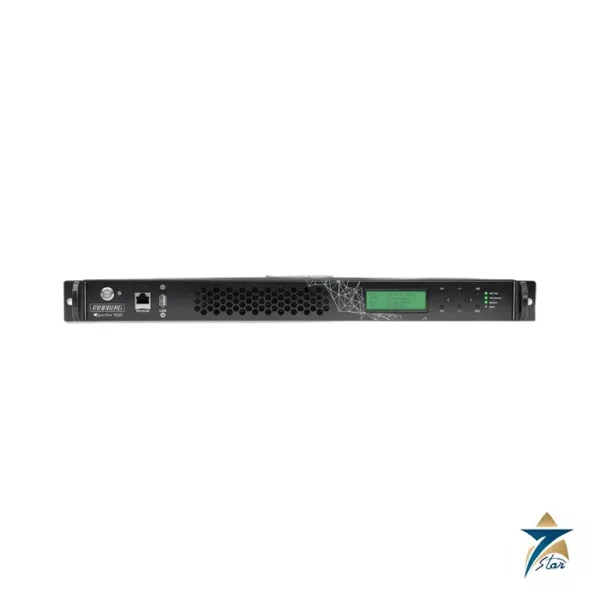
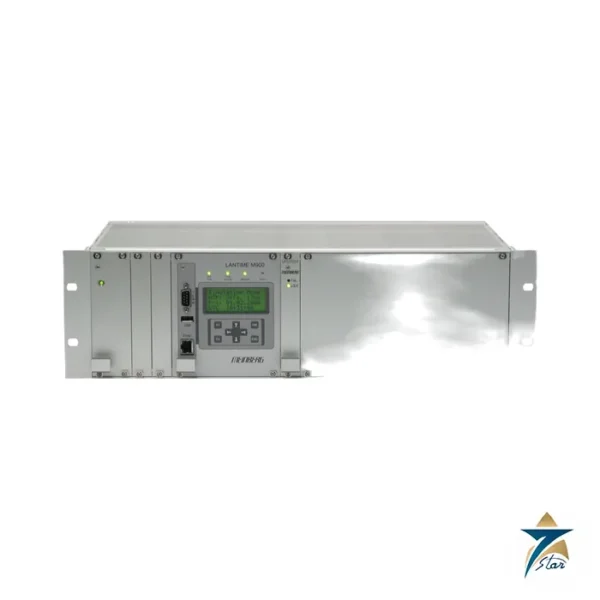
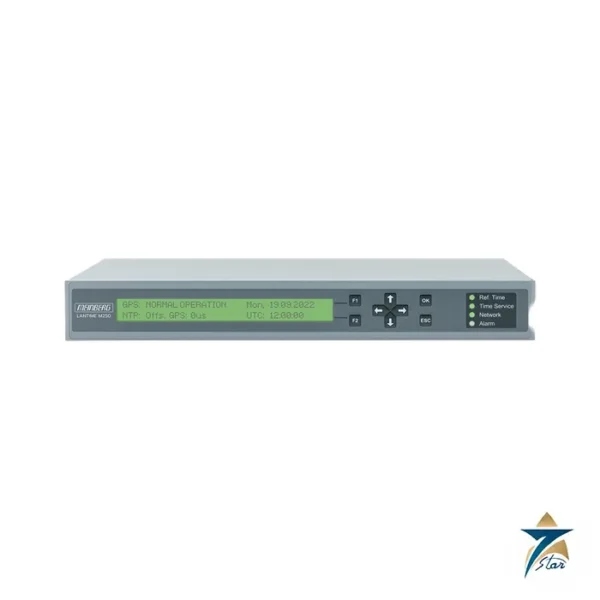
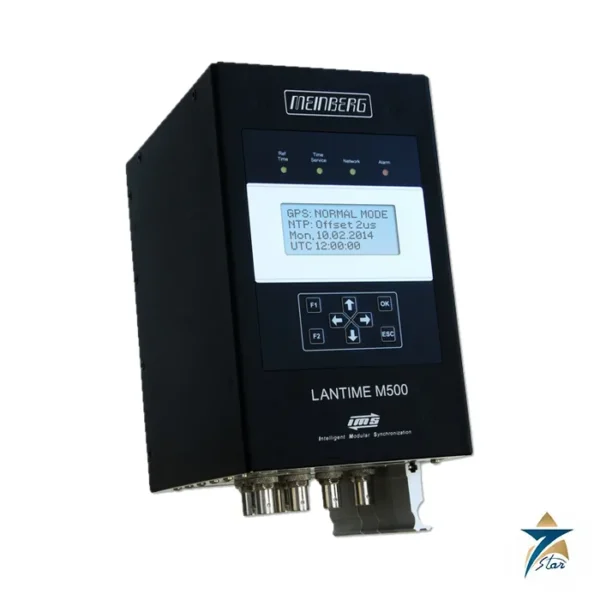
Related items you may also need: Meinberg LANTIME M150 DIN-Rail NTP Time Server | Meinberg LANTIME M500 Modular DIN-Rail Time Server | Meinberg LANTIME M320/GPS/AD10 NTP Time Server | All Meinberg products.

Documents and quotation

The manufacturer data sheet for the GPS183DHS is attached to this page. Send an RFQ with the part number, options and quantity through the enquiry form and our team will reply with availability.

Datasheets & Documents
  • PDF Datasheet Meinberg GPS183DHS DIN Rail GPS Clock with IRIG Time Code Datasheet Download
Reviews (0)

Reviews

There are no reviews yet.

How would you rate this product?

It takes about 10 seconds — just tap a star. Your email is never published.

About brand

Meinberg is a German maker of time and frequency synchronisation products, founded in 1979 by the brothers Werner and Günter Meinberg in Bad Pyrmont. It began with DCF77 longwave radio clock receivers and now makes GPS and GNSS-referenced NTP and PTP time servers. Meinberg is family-owned and designs and manufactures its products in Bad Pyrmont.

Seven Star LLC sources and supplies Meinberg LANTIME time servers for utilities and networks in Oman, including the M1000 and M320 listed here.

Meinberg company profile

Founded 1979, Bad Pyrmont, Germany
Founders Werner and Günter Meinberg
Ownership Family-owned
Manufacturing Bad Pyrmont, Germany
Product families LANTIME M150, M250, M320, M500 and M1000 NTP/PTP time servers, IMS modular systems, GNSS and DCF77 receivers, PTP grandmaster clocks

Meinberg LANTIME models listed here

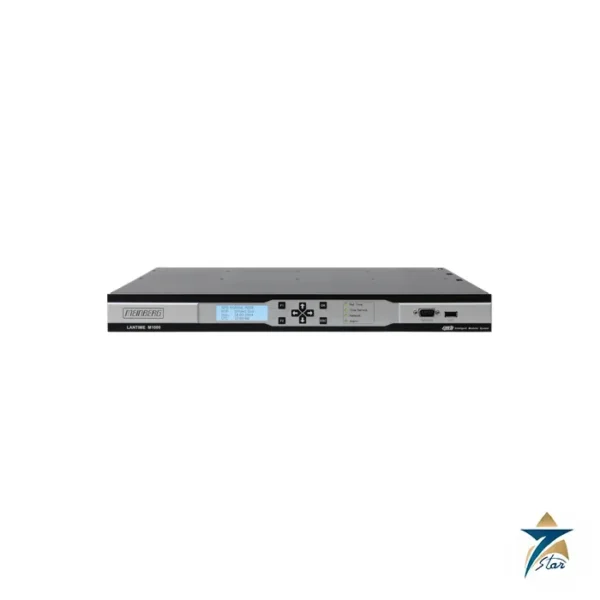
The LANTIME M320 is a 1U rackmount NTP time server. It works as a stratum 1 source with its own reference receiver, and Meinberg offers it with GPS, combined GNSS, DCF77 (PZF), MSF and IRIG time code references. The LANTIME M1000 is a 1U platform on the modular IMS system, with slots for up to two reference clocks, two power supplies and hot-pluggable I/O modules, plus PTP (IEEE 1588) and IEC 61850 time synchronization.

Meinberg products we list

Family Examples
Industrial Communications LANTIME M1000 Modular NTP/PTP Time Serve…, LANTIME M150 DIN-Rail NTP Time Server, LANTIME M250 Compact NTP Time Server, LANTIME M320/GPS/AD10 NTP Time Server, LANTIME M500 Modular DIN-Rail Time Server

Ordering a Meinberg time server: what we need

A Meinberg order code describes the build. In M320/GPS/AD10, GPS is the receiver and AD10 is the wide-range AC/DC power supply. Send the full code or serial number, the reference source, oscillator option, supply voltage, the outputs you need (PPS, 10 MHz, IRIG, extra LAN ports) and the antenna cable length. GCC utility projects often require redundant supplies.

Facts checked against Meinberg's own company history (meinbergglobal.com), October 2026.

FAQ

Questions about the Meinberg GPS183DHS DIN Rail GPS Clock with IRIG

Answers from our engineering team on installation, compatibility and integration.

01What is the Meinberg GPS183DHS?
It is a GPS satellite receiver clock with an integrated time code generator in an aluminium chassis for 35 mm DIN rail mounting, with pulse, IRIG-B, AFNOR and DCF77 simulation outputs.
02Which antenna and cable lengths does the GPS183DHS support?
It uses the Meinberg GPSANTv2 antenna on a BNC input, with a maximum of 300 m RG58, 700 m RG213 or 1100 m H2010 Ultraflex cable.
03What oscillator options does the GPS183DHS offer?
TCXO is standard, and OCXO SQ or OCXO HQ are available on request, with one-year holdover of 16 seconds, 4.7 seconds and 788 milliseconds respectively.
04What chassis size and protection does the GPS183DHS have?
The aluminium rail chassis measures 85 mm by 105 mm by 104 mm and has an IP20 rating, with a 16-pin DMC terminal block.
05How is the GPS183DHS configured?
It is configured and monitored through the COM 0 serial port with the free Meinberg Device Manager software, which also installs firmware updates.