9040 phase rotation indicator explained
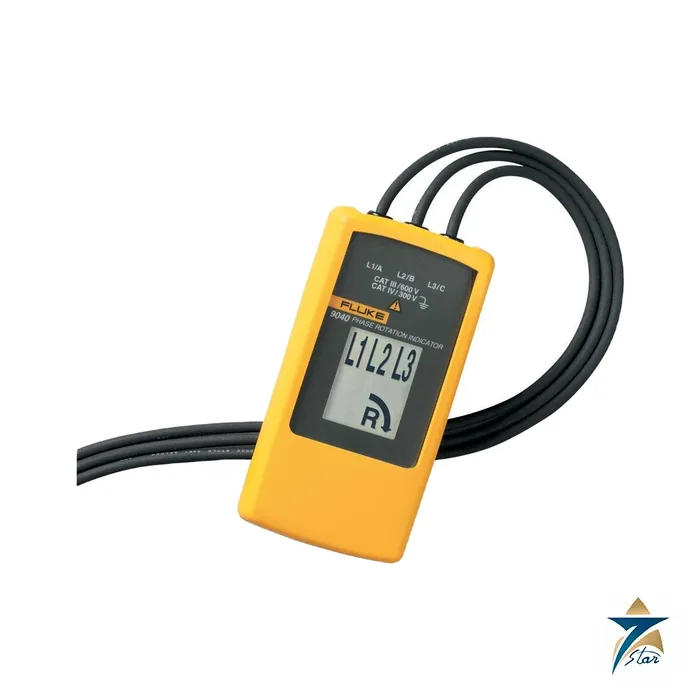
The Fluke 9040 Phase Rotation Indicator (9040) is a rotary field indicator for three-phase supplies. It shows the three phases on an LCD and the rotation direction, covering 40 V to 700 V and 15 Hz to 400 Hz. Seven Star LLC supplies 9040 in Oman and the GCC as an independent supplier in Muscat, not affiliated with the manufacturer.
The 9040 does one job well. The table decodes the identifiers.
| Element |
Value |
Meaning |
| 9040 |
Model |
Phase rotation indicator |
| 40-700 V |
Voltage range |
Phase to phase |
| 15-400 Hz |
Frequency range |
Industrial and special supplies |
| CAT III 600 V / CAT IV 300 V |
Category |
EN 61010 and EN 61557-7 |
9040 technical specifications
| Parameter |
Specification |
| Manufacturer / part number |
Fluke / 9040 |
| Voltage range |
40 to 700 V |
| Frequency range |
15 to 400 Hz |
| Operating timer |
Continuous |
| Operating temperature |
0 °C to 40 °C |
| Ingress protection |
IP 40 |
| Electrical safety |
EN 61010, EN 61557-7 |
| Overvoltage category |
CAT III 600 V, CAT IV 300 V |
| Size / weight |
124 x 61 x 27 mm / 200 g |
| Power supply |
From the unit under test |
| Warranty |
2 years |
Data come from the manufacturer product page for the Fluke 9040.
How the Fluke 9040 Phase Rotation Indicator works
The indicator is connected to the three phases using its three leads with variable-clamping probes. It senses the rotating field and displays which phase sequence is present, with an LCD indicating the three phases and the rotation direction.
Because it is powered by the circuit under test, no battery is needed, but it can only be used on live supplies. Correct sequence matters when connecting motors, drives and generators.
Key features
- Phase and rotation display on LCD
- Variable-clamping probes
- No battery needed
- Continuous operation
- Compact 200 g body
Where 9040 fits and related Fluke models
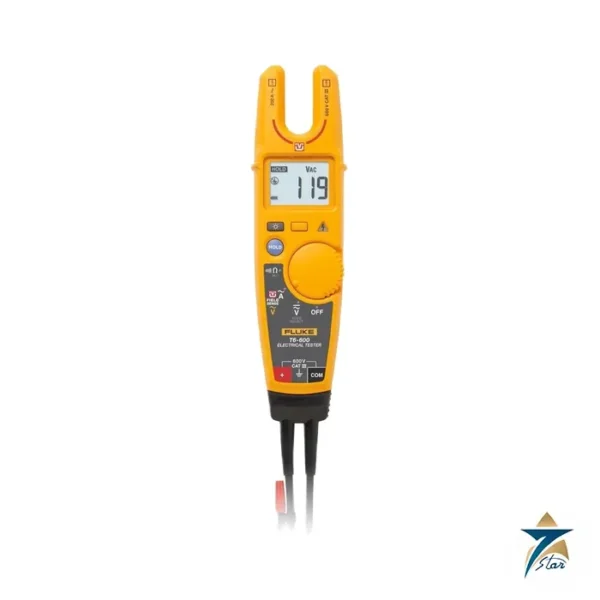
The 9040 is a dedicated tool, unlike a multimeter. Use it before starting a motor or paralleling a generator to confirm the sequence. The T5 and T6 testers do not measure phase rotation.
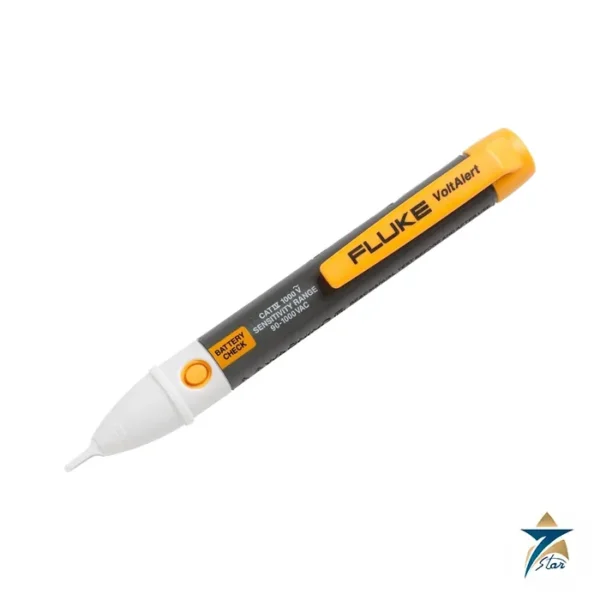
The 1AC and 2AC detect presence of voltage only.
Selection checklist for 9040
Confirm the following points before ordering, so that the instrument matches the work and the safety rules of your site.
- Voltage 40 to 700 V.
- Frequency 15 to 400 Hz.
- Indoor use at 0 to 40 °C.
- Probes included.
Safe use, care and maintenance of 9040
- Check the instrument and its leads or tip before every use. Damaged insulation, a cracked housing or a weak battery are reasons to stop using the tester until it is repaired or replaced.
- Follow the proving routine your site requires: test on a known live source, test the target, then test on the known source again.
- Replace batteries when the display or indicator dims and do not mix old and new cells.
- Keep the tester clean and dry and store it in its holster or case so the tip, probes or jaw are not damaged.
- A tester is a safety tool. Do not use it outside its rated voltage and category.
- Train every user on the limits of the tool. A tester that shows no voltage proves nothing until it has been proven on a known source, and a low battery or damaged probe can produce a false negative.
- Keep a record of issue and return for tools held in a crib, and withdraw any unit that has been dropped hard, exposed to liquid or used beyond its rating until it has been checked.
- In hot Gulf conditions avoid leaving the tester in direct sun on a vehicle dashboard, because heat shortens battery life and can damage the housing and display.
Typical applications of 9040 in Oman and the GCC
Electrical testers are part of every maintenance technician’s personal kit. In Oman they are used in substations, motor control centres, plant distribution boards and building services across oil and gas, utilities and industry. Safety rules at most major Omani operators require voltage to be proven absent before work begins, so a reliable, correctly rated tester is a basic item of personal equipment and is checked regularly. Choosing a model with the right category rating and the right way of detecting voltage reduces the temptation to improvise with unsuitable tools on live panels.
Phase sequence checks are essential for pumps, compressors and fans in Oman plants, where wrong rotation can damage equipment. Installers also use the 9040 on generator sets and temporary supplies at construction camps.
9040 compared with nearby models
| Tool |
Purpose |
Phase rotation |
Voltage detect |
| 9040 |
Phase sequence |
Yes |
Yes (40-700 V) |
| 2AC |
Voltage presence |
No |
Yes |
| T5-1000 |
Voltage, current |
No |
Yes |
Use each tool for its intended purpose.
Information to send with an RFQ for 9040
To prepare an accurate quotation, please send:
- Exact model 9040 and the quantity required.
- Voltage range and category of the installations where it will be used.
- Accessory needs such as a holster, spare probes or a proving unit.
- Whether the tester is for individual technicians or a tool crib.
- Delivery point in Oman or elsewhere in the GCC and the required date.
Storage, handling and spares for the Fluke 9040
Store the Fluke 9040 in its case or holster with the test leads disconnected. Remove the batteries if the meter will not be used for several weeks, because leaking cells can damage the battery contacts. In Oman and the GCC, do not leave the instrument in a parked vehicle during summer, where cabin temperature can go well above the storage limit in the user manual.
- Inspect test leads, probes and clamps before each use and replace any lead with damaged insulation or exposed metal.
- Use only leads and accessories rated for the same or a higher measurement category than the work you do.
- Keep spare fuses of the exact type given in the manual; a wrong fuse removes the protection the meter is built with.
- Plan a regular calibration interval, often twelve months, and keep the certificate with the instrument records.
If your team uses several units of the Fluke 9040, it is useful to order spare test leads and batteries in the same RFQ, so that a meter is not taken out of service for a simple accessory.
Documents and quotation
Send the part number 9040 and we will confirm which manufacturer documents are available for this model.
For a quotation, send the part number 9040, the quantity and your delivery location in Oman or the GCC through the RFQ button on this page. Availability and lead time are confirmed per request.





















Reviews
There are no reviews yet.