1555 10 kV insulation tester explained
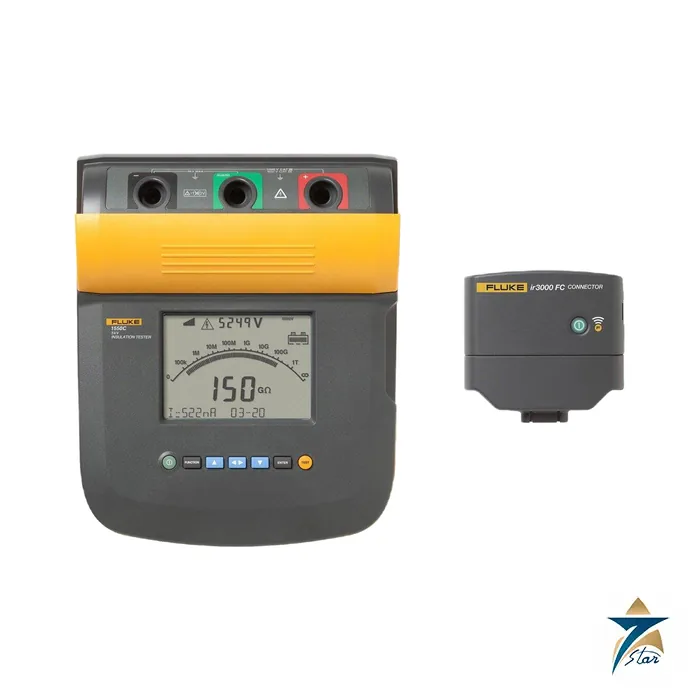
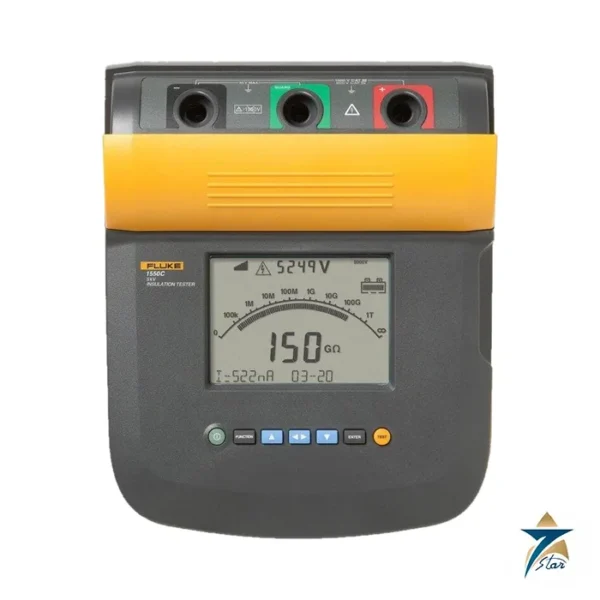
The Fluke 1555 FC 10 kV Insulation Tester (1555) is a high-voltage digital insulation tester that tests from 250 V up to 10 kV and measures up to 2 TΩ. It calculates dielectric absorption ratio (DAR) and polarization index (PI) automatically and sends data wirelessly via Fluke Connect. Seven Star LLC supplies 1555 in Oman and the GCC as an independent supplier in Muscat, not affiliated with the manufacturer.
The 1555 shares a datasheet with the 1550C. The table decodes the identifiers.
| Element |
Value |
Meaning |
| 1555 |
Model |
10 kV model with 2 TΩ bar graph range |
| FC |
Fluke Connect |
Wireless data collection |
| PI / DAR |
Automatic ratios |
No additional setup |
| CAT IV 600 V / CAT III 1000 V |
Category |
IEC 61010-2-030 |
1555 technical specifications
| Parameter |
Specification |
| Manufacturer / part number |
Fluke / 1555 |
| Test voltages |
250 V to 1000 V in 50 V steps; above 1000 V in 100 V steps, up to 10 kV |
| Resistance range at 10 kV |
10 MΩ to 200 GΩ (5%); to 2 TΩ (20%) |
| Leakage current |
1 nA to 2 mA, ±(5% + 2 nA) |
| Capacitance |
0.01 µF to 15.00 µF |
| Timer |
0 to 99 minutes |
| Live circuit warning |
30 V to 660 V AC/DC |
| Memory |
99 locations with labels |
| Power |
12 V lead-acid rechargeable battery, 750+ tests |
| Dimensions / weight |
269 x 277 x 160 mm / 3.7 kg |
| Operating temperature |
-20 °C to 50 °C |
| Warranty |
Three years |
Values are from the manufacturer product page and the 1555/1550C datasheet.
How the Fluke 1555 FC 10 kV Insulation Tester works
The 1555 produces a stabilised DC test voltage selected by the user and measures the current through and across the insulation. Resistance is displayed on a digital and analog bar graph, and a guard terminal diverts surface leakage so that it does not distort a high-resistance reading.
Automatic PI and DAR calculation compares readings over time and gives a quick indicator of insulation condition. A ramp function supports breakdown testing, and timed tests run up to 99 minutes. The entire range of voltages in IEEE 43-2000 is covered.
Key features
- 10 kV maximum test voltage
- Automatic PI and DAR
- Guard terminal
- Ramp function
- Wireless Fluke Connect reporting
Where 1555 fits and related Fluke models
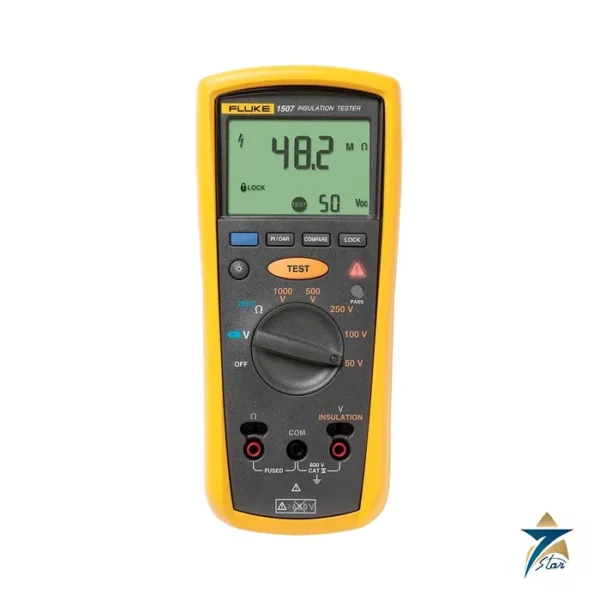
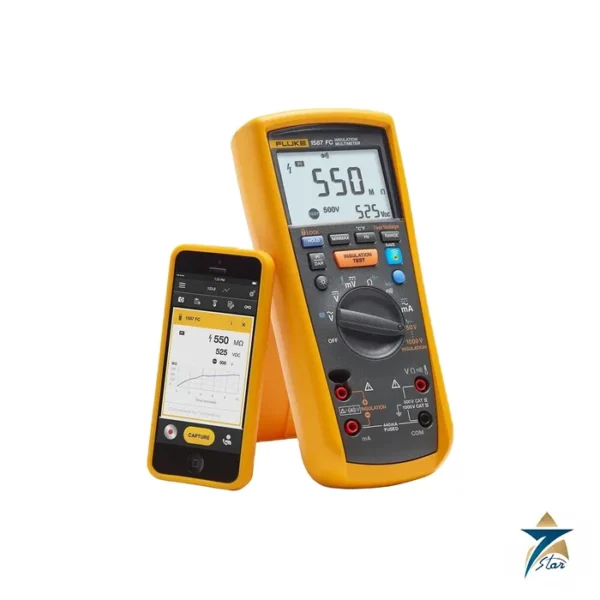
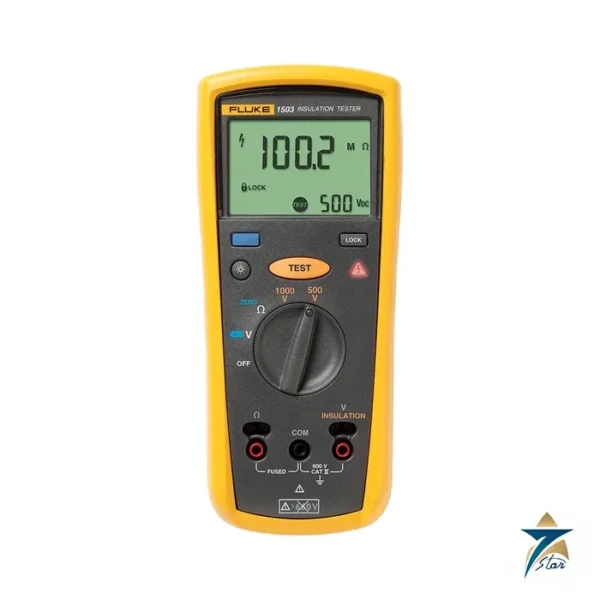
The 1555 is intended for switchgear, large motors, generators and high-voltage cables. The 1550C is the sibling with a 1 TΩ bar graph range and without FC wireless. For 500 V and 1000 V routine testing the 1503 or 1507 is lighter and less costly.
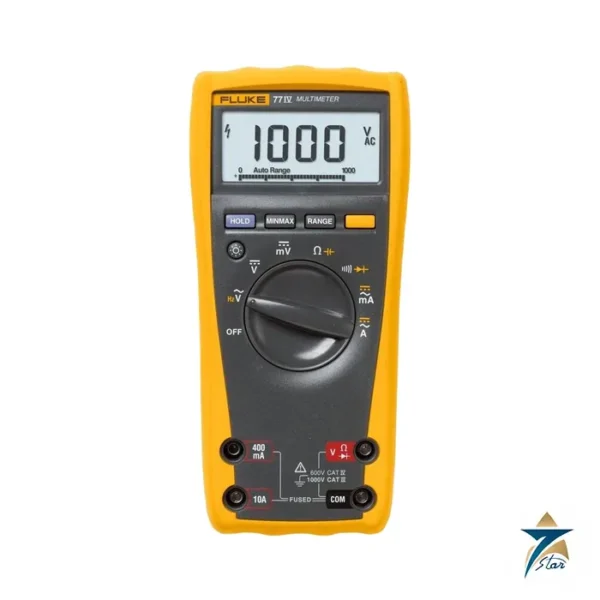
The 1587 FC adds multimeter functions at low test voltages.
Selection checklist for 1555
Confirm the following points before ordering, so that the instrument matches the work and the safety rules of your site.
- Test voltages required up to 10 kV.
- Weight 3.7 kg; consider transport case.
- Wireless reporting.
- Guard leads needed for high resistance.
Safe use, care and maintenance of 1555
- De-energise and isolate the circuit under test, prove it dead with a voltage tester, and discharge it after the test before touching the conductors.
- Test leads are part of the measurement. Inspect them before each campaign, because leakage across damaged leads shows up as a falsely low insulation reading.
- Record the temperature and humidity with each result. Insulation resistance falls as temperature rises, so trend readings only on a comparable basis.
- Replace or recharge the battery according to the manual and check it before a long test campaign, because a high-voltage test draws noticeably more power than a voltage reading.
- Keep the instrument and its accessories clean and dry, and arrange periodic calibration in line with your quality system.
- Use the guard terminal where the instrument provides one, so that surface leakage across terminals or insulators does not distort a high-resistance reading.
- Allow the equipment under test to cool and dry where possible; a motor that has just stopped and is still hot will read lower than the same motor at ambient temperature, which can mislead a trend.
Typical applications of 1555 in Oman and the GCC
Insulation testing is a core predictive-maintenance task. In Oman, high ambient temperature, humidity on the coast and dust accelerate insulation ageing, so motors, cables and switchgear at oil and gas, power and water sites are tested on a schedule.
High-voltage insulation testing is common in Oman power stations, desalination plants, substations and large motor workshops. The 1555 FC is used for acceptance testing of cables, generator and motor windings and switchgear during commissioning and shutdowns.
1555 compared with nearby models
| Model |
Max voltage |
Max range |
Weight |
| 1503 |
1000 V |
2000 MΩ |
550 g |
| 1550C |
5 kV |
Up to 1 TΩ bar graph |
See datasheet |
| 1555 |
10 kV |
Up to 2 TΩ |
3.7 kg |
The 1550C has its own page on this site.
Information to send with an RFQ for 1555
To prepare an accurate quotation, please send:
- Exact model 1555 and the quantity required.
- Test voltages needed and the equipment under test, such as motors, cables or switchgear.
- Accessory needs such as extra leads, guard leads or a remote probe.
- Whether a case, software or reporting tools are required.
- Calibration traceability paperwork if required on delivery.
- Delivery point in Oman or elsewhere in the GCC and the required date.
Storage, handling and spares for the Fluke 1555
Store the Fluke 1555 in its case or holster with the test leads disconnected. Remove the batteries if the meter will not be used for several weeks, because leaking cells can damage the battery contacts. In Oman and the GCC, do not leave the instrument in a parked vehicle during summer, where cabin temperature can go well above the storage limit in the user manual.
- Inspect test leads, probes and clamps before each use and replace any lead with damaged insulation or exposed metal.
- Use only leads and accessories rated for the same or a higher measurement category than the work you do.
- Keep spare fuses of the exact type given in the manual; a wrong fuse removes the protection the meter is built with.
- Plan a regular calibration interval, often twelve months, and keep the certificate with the instrument records.
If your team uses several units of the Fluke 1555, it is useful to order spare test leads and batteries in the same RFQ, so that a meter is not taken out of service for a simple accessory.
Documents and quotation
A manufacturer datasheet for the Fluke 1555 FC 10 kV Insulation Tester is attached on this page so that you can check the full specification before ordering. Please review it against your site requirements.
For a quotation, send the part number 1555, the quantity and your delivery location in Oman or the GCC through the RFQ button on this page. Availability and lead time are confirmed per request.





















Reviews
There are no reviews yet.