365 detachable-jaw clamp meter explained
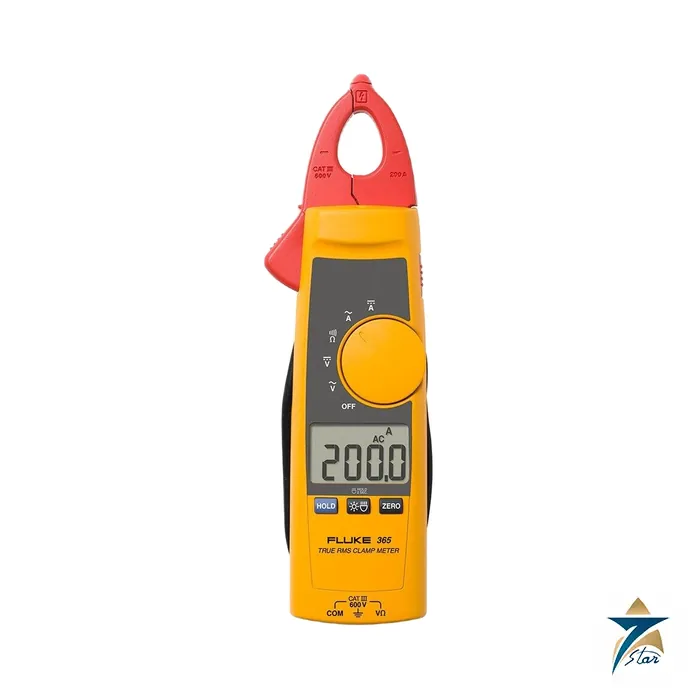
The Fluke 365 Detachable Jaw Clamp Meter (365) is a true-RMS AC/DC clamp meter whose thin jaw can be detached on a flexible lead, so that the display can be read while the jaw sits in a position that is hard to reach. Seven Star LLC supplies 365 in Oman and the GCC as an independent supplier in Muscat, not affiliated with the manufacturer.
The detachable jaw is the defining feature; the table decodes it with the main figures.
| Element |
Value |
Meaning |
| 365 |
Model |
Detachable-jaw model |
| 200 A |
Current range |
AC and DC |
| 18 mm jaw / 900 mm lead |
Jaw opening and cable |
Reach into tight panels |
| CAT III 600 V |
Category |
600 V |
365 technical specifications
| Parameter |
Specification |
| Manufacturer / part number |
Fluke / 365 |
| AC current |
200.0 A, 2% ± 5 digits (45 Hz to 65 Hz) |
| DC current |
200.0 A, 2% ± 5 digits |
| AC voltage |
600.0 V, 1.5% ± 5 digits |
| DC voltage |
600.0 V, 1% ± 5 digits |
| Resistance |
600.0 Ω / 6000 Ω, 1% ± 5 digits |
| Jaw opening |
18 mm |
| Detachable cable length |
900 mm |
| Size / weight |
225 x 65 x 46 mm / 275 g |
| Operating temperature |
-10 °C to +50 °C |
| Batteries |
AA cells, magnetic hanging strap included |
Data are from the manufacturer product page for the Fluke 365.
How the Fluke 365 Detachable Jaw Clamp Meter works
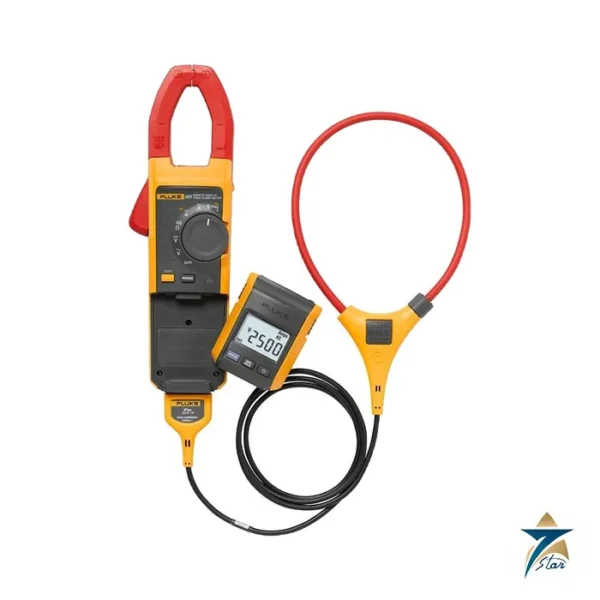
The jaw contains the current sensor and is connected to the body by a 900 mm cable. Detached, it can be slipped around a wire in a crowded cabinet while the body stays outside, where it can be read or hung from the supplied magnetic strap.
AC and DC currents are read without breaking the circuit; voltage and resistance use the test leads. True-RMS processing covers distorted AC loads.
Key features
- Detachable jaw on flexible lead
- True-RMS AC/DC current to 200 A
- Magnetic hanging strap included
- Soft carrying case
- Thin jaw 18 mm
Where 365 fits and related Fluke models
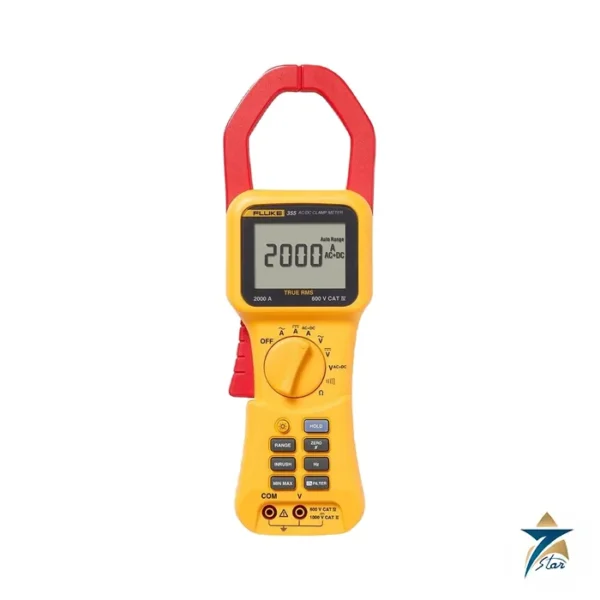
The 365 is chosen when access is the main problem: dense terminal rails, drive cabinets and control panels with small conductors. For higher currents or larger cables, the 355 or 375 FC is better.
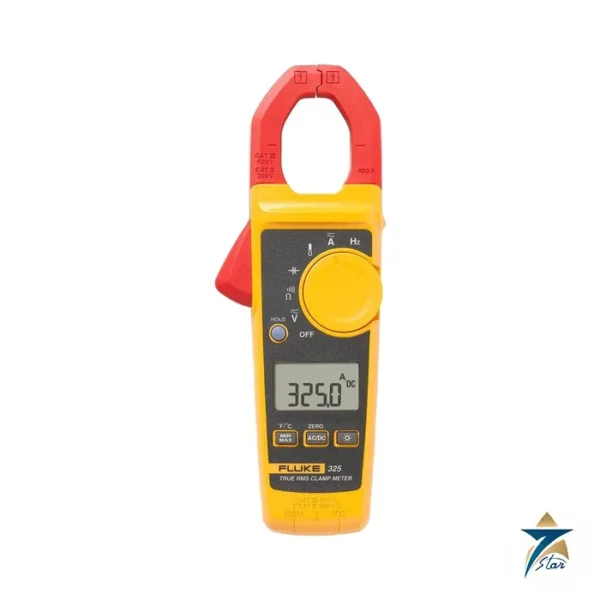
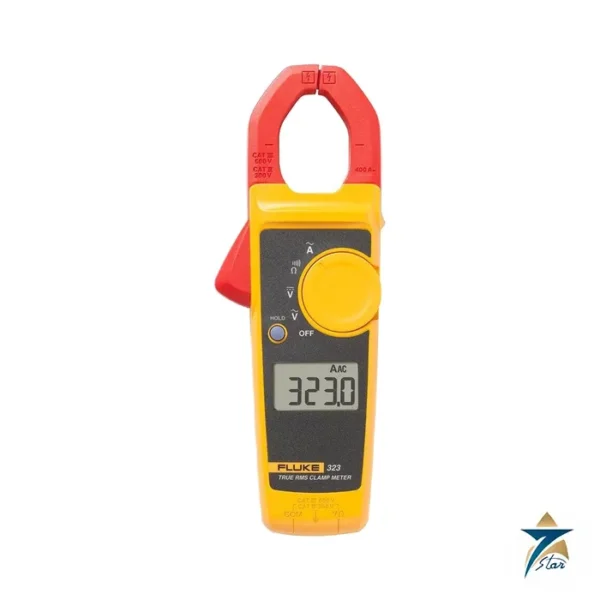
The 323 and 325 are fixed-jaw alternatives with 400 A range.
Selection checklist for 365
Confirm the following points before ordering, so that the instrument matches the work and the safety rules of your site.
- Maximum current 200 A only.
- Conductor size limited by the 18 mm jaw.
- CAT III 600 V rating.
- Magnetic strap helps hands-free viewing.
Safe use, care and maintenance of 365
- Close the jaw fully and check that the faces are clean. Dirt or rust on the jaw faces causes reading errors, and a jaw that does not close completely should be taken out of service.
- Clamp only one conductor at a time. Two conductors of a single-phase pair or a three-phase set cancel each other and the 365 will show a value close to zero.
- Verify the clamp on a known live circuit before and after any test that decides whether equipment is safe to touch.
- Replace batteries when the low-battery indicator appears and remove them for long storage. Inspect the test leads for damage before each use of the voltage and resistance functions.
- Keep the jaw and display free of dust. In dusty Gulf sites, use the supplied case and wipe the instrument after switchgear room work.
- Respect the maximum conductor size and never clamp bare busbars unless the rating and your site procedure allow it. Treat the clamp as a measuring tool, not a switch or an isolator.
- Allow the instrument to reach ambient temperature after moving it from an air-conditioned vehicle into a hot plant area, so that condensation does not form inside the housing and the display settles.
- Schedule periodic calibration through your quality system, and keep the certificate with the instrument record so that readings used for reports remain traceable.
Typical applications of 365 in Oman and the GCC
Clamp meters are used for load checks on motors, feeders, chillers and pump drives. In Oman, maintenance teams at oil and gas plants, power and water utilities, desalination units and petrochemical sites use them for current surveys without opening circuits. A clamp reading showing a motor drawing more than its nameplate current points to a mechanical overload, a supply imbalance or a failing winding, while a reading near zero on a running pump suggests a lost phase or dry running. Because the circuit stays intact, these checks can be done on live equipment under a permit, which keeps downtime low during the hot summer months when cooling and pumping loads peak.
Maintenance teams in Oman use the 365 in packed control panels, drive cabinets and telecom or data rooms where a conventional clamp cannot fit. It is useful for confirming load current on small feeders without disturbing wiring.
365 compared with nearby models
| Model |
Current |
Jaw |
Special |
| 323 |
400 A AC |
30 mm fixed |
Basic |
| 365 |
200 A AC/DC |
18 mm detachable |
Detachable jaw |
| 355 |
2000 A DC |
58 mm fixed |
High current |
Choose by access and range.
Information to send with an RFQ for 365
To prepare an accurate quotation, please send:
- Exact model 365 and the quantity required.
- Maximum conductor size and expected current, so the jaw or flexible probe option can be confirmed.
- Whether wireless or smartphone use is needed on site.
- Any extra accessories such as a hanging strap, leads or a case.
- Calibration traceability paperwork if required on delivery.
- Delivery point in Oman or elsewhere in the GCC and the required date.
Storage, handling and spares for the Fluke 365
Store the Fluke 365 in its case or holster with the test leads disconnected. Remove the batteries if the meter will not be used for several weeks, because leaking cells can damage the battery contacts. In Oman and the GCC, do not leave the instrument in a parked vehicle during summer, where cabin temperature can go well above the storage limit in the user manual.
- Inspect test leads, probes and clamps before each use and replace any lead with damaged insulation or exposed metal.
- Use only leads and accessories rated for the same or a higher measurement category than the work you do.
- Keep spare fuses of the exact type given in the manual; a wrong fuse removes the protection the meter is built with.
- Plan a regular calibration interval, often twelve months, and keep the certificate with the instrument records.
If your team uses several units of the Fluke 365, it is useful to order spare test leads and batteries in the same RFQ, so that a meter is not taken out of service for a simple accessory.
Documents and quotation
Send the part number 365 and we will confirm which manufacturer documents are available for this model.
For a quotation, send the part number 365, the quantity and your delivery location in Oman or the GCC through the RFQ button on this page. Availability and lead time are confirmed per request.





















Reviews
There are no reviews yet.