A beam clamp for a quick suspension point, up to 20 tonnes
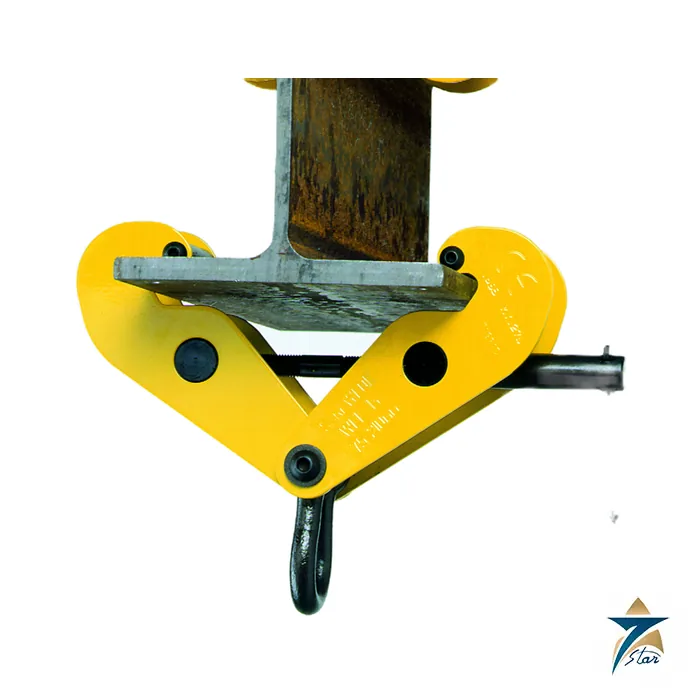
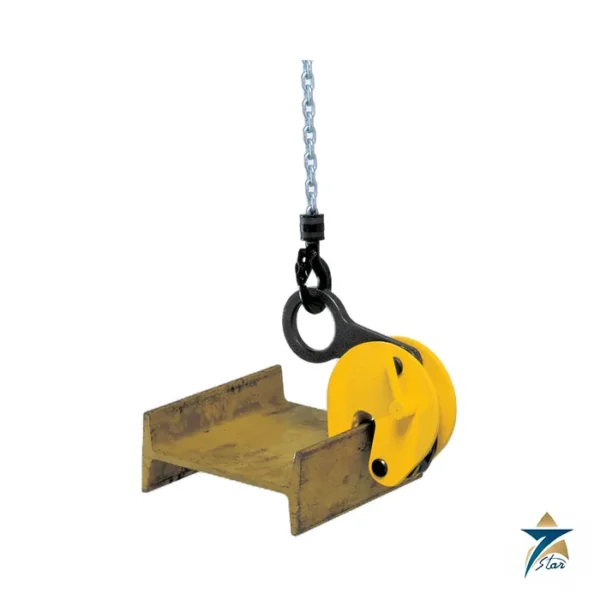
The Camlok SC92 beam clamp with shackle gives a quick and versatile rigging point for hoisting equipment, pulley blocks or loads. A wide adjustment range suits many beam sizes, and the shackle suspension makes it easy to attach lifting devices; the clamp grips the beam flange securely. Opening and closing is by a threaded spindle with a tommy bar handle.
Nine models are listed from the SC92-1 at 1000 kg to the SC92-20 at 20000 kg. The product page and manual state clearly that this model must not be used for lifting: it is a suspension point. That distinction defines how it is used on site, since the load hangs from the beam rather than being picked up by the clamp.
Characteristics from the datasheet
- Shackle suspension for easy attachment of hoists and pulley blocks
- Wide adjustment range for different flange widths
- Spindle with tommy bar for opening and closing
- Models from 1000 to 20000 kg; L versions for wider flanges
- Suspension point only; not for lifting
- Product group C4
Technical specification
SC92 models
| Model |
Art.-No. |
WLL, kg |
Beam flange width, mm |
Weight, kg |
| SC92-1 |
N05400002 |
1000 |
75 – 210 |
5.0 |
| SC92-2 |
N05400003 |
2000 |
75 – 210 |
6.0 |
| SC92-3 |
N05400004 |
3000 |
100 – 270 |
8.0 |
| SC92-3/L |
N4300000237 |
3000 |
75 – 305 |
9.0 |
| SC92-5 |
N05400005 |
5000 |
100 – 270 |
10.0 |
| SC92-5/L |
N4300000241 |
5000 |
75 – 305 |
12.0 |
| SC92-10 |
N05400001 |
10000 |
75 – 305 |
19.0 |
| SC92-15 |
N4300000232 |
15000 |
75 – 305 |
35.0 |
| SC92-20 |
192027171 |
20000 |
300 – 410 |
87.0 |
Related YC models listed in the same manual
| Model |
WLL, kg |
Beam flange width, mm |
Weight, kg |
| YC1 |
1000 |
75 – 230 |
3.8 |
| YC2 |
2000 |
75 – 230 |
4.6 |
| YC3 |
3000 |
80 – 320 |
9.2 |
| YC5 |
5000 |
90 – 320 |
11.0 |
| YC10 |
10000 |
90 – 320 |
17.2 |
Rules of use
| Parameter |
Specification |
| Function |
Suspension point only; not for lifting |
| Load direction |
Use from below to pull down only; never to lift a beam below |
| Cone angle |
Maximum WLL acceptable within a 15 degree cone from the clamp centre line |
| Flange fit |
Flange width must be within the range marked on the clamp |
| Load position |
At the centre of the groove in the suspension bar; avoid side pulling |
| Flange contact |
Edge of the flanges must contact the back of the recesses |
Choosing by flange width and capacity
Start with the beam flange width, because each model has its own range: 75 to 210 mm for the SC92-1 and SC92-2, 100 to 270 for the SC92-3 and SC92-5, 75 to 305 for the L versions and the 10 and 15 tonne models, and 300 to 410 mm for the SC92-20. The L versions of the 3 and 5 tonne clamps trade 1 and 2 kg of extra weight for a wider flange range.
Note that the catalogue sheet lists the SC92-20 at 87 kg, much heavier than anything else in the range (derived: 87 kg against 35 kg for the SC92-15), which matters for installation at height. State the flange width, thickness profile and required hanging load with the enquiry.
Fitting to the beam and using it
First confirm the flange is clean of grease, standing water, oil, scale and coating and that its width is within the range marked on the clamp. Turn the threaded bar with the tommy bar to open the clamp, position it on the beam and reverse the turn to close. The flange edges should touch the back of the recesses with the load points resting on top of the flange.
Load the centre of the groove in the suspension bar and avoid side pull; the manual accepts loads up to the WLL inside a 15 degree cone from the clamp centre line. Pull down only, never lift a beam from below. Take the weight slowly, keep the sling vertical and stay clear of the area below. The inspection table asks for smooth adjustment screw action, shell plate distortion, obvious damage and fastener tightness, and the manual includes a screw replacement procedure.
Temporary rigging points in plants and workshops
Beam clamps give a quick hanging point for chain blocks on steel beams during maintenance and shutdown work, machinery handling and pipe or equipment installation, without a permanent lifting lug. Because this model is a suspension point only, the lifting plan must show the beam is adequate, and that is the user’s responsibility. On coastal GCC plants the manual says to consult the supplier for high humidity, salty or caustic conditions.
Selection and installation notes
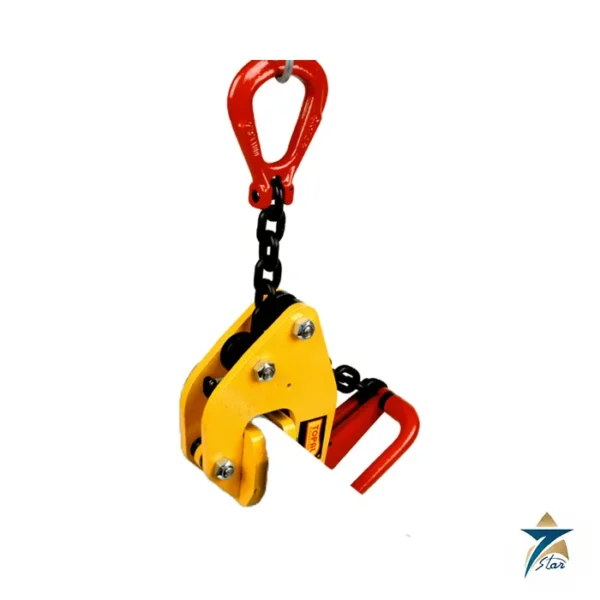
Lifting clamps and grabs must be selected from the working load limit, the thickness and size of the load and the lifting angle, and used only by trained people under the site lifting procedure. Check the working load limit and the range on the marking, inspect the clamp before each use, never exceed the rated load or the stated angle, keep people away from the load and follow the periodic examination rules of the country where it is used. Damaged or worn clamps are taken out of service.
Information needed for a quotation
Send the full model code, the quantity, the delivery location in Oman or the GCC, the intended use and any accessories needed, so that the complete package can be quoted together.
Documents and supply information
The manufacturer data sheet is attached to this page and should be read together with the project specification and the site risk assessment before a purchase is confirmed. Ratings, standards and dimensions are quoted as printed on that sheet. Lead time, stock position and certificates available with the shipment are confirmed in the quotation, and we supply to Oman and the wider GCC region for industrial, utility and building services projects.
Related items
The manual also lists the YC series beam clamps with similar flange ranges, and the catalogue page includes BA bulb bar anchors for ship profiles. Shackle, chain block or pulley block, and slings should be chosen to match the SC92 WLL.
Frequently asked questions
Can the SC92 be used to lift a beam?
No. The product page and manual say this model must not be used for lifting; it is a suspension point.
What flange widths are covered?
From 75 mm to 410 mm across the range, with each model having its own range.
How is it adjusted?
By turning the threaded spindle with the tommy bar handle.
What is the heaviest model?
The SC92-20 at 87 kg, rated 20000 kg for flanges 300 to 410 mm.
Which cone angle is allowed?
Loads up to the WLL are acceptable within a 15 degree cone from the centre line of the clamp.
Documents and quotation
The catalogue sheet and the YC/SC92 manual are provided for download. Send the flange width and hanging load with the enquiry; stock and lead time are confirmed by Seven Star LLC, an independent supplier in Muscat, before ordering.



Reviews
There are no reviews yet.