Carrying and stacking girders in the H position
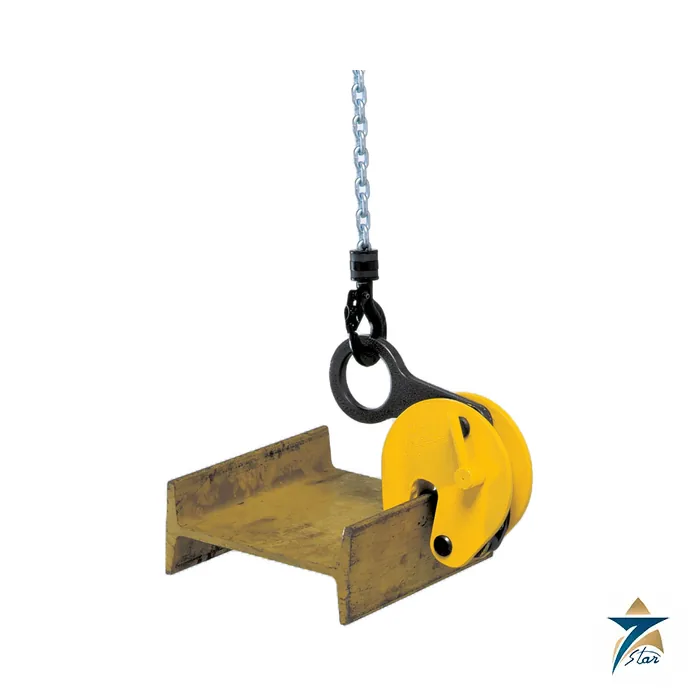
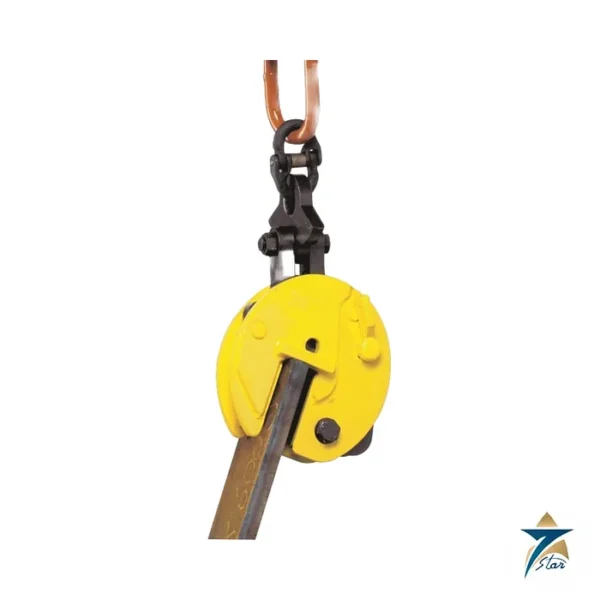
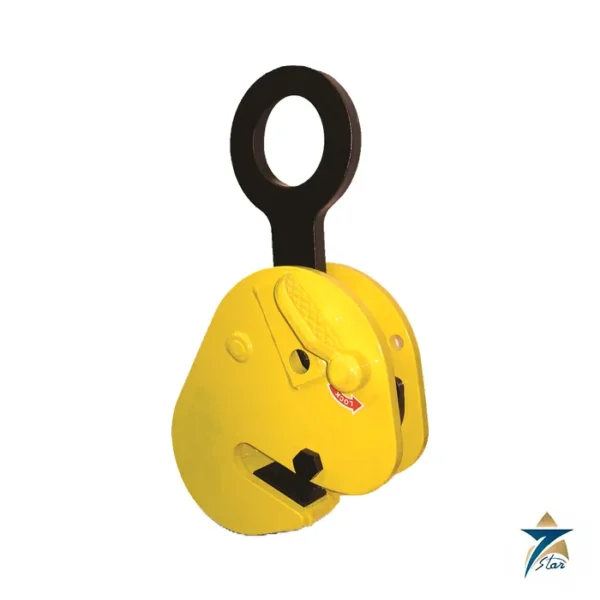
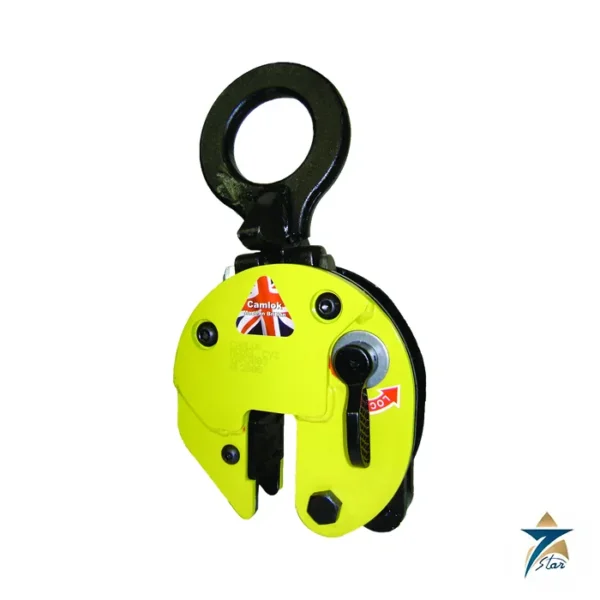
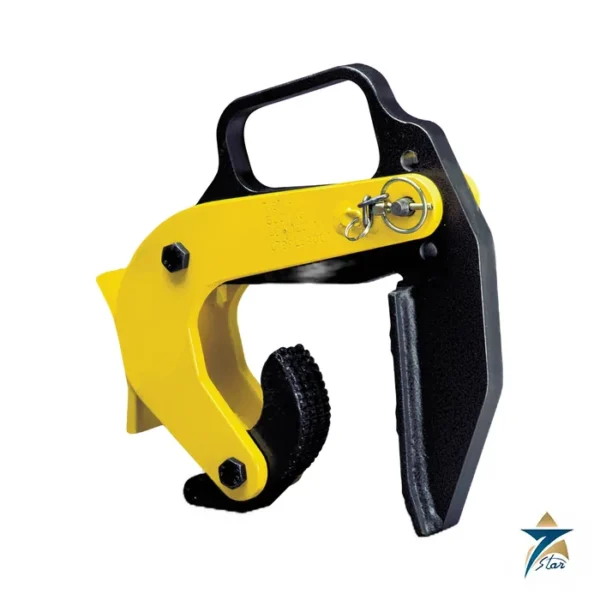
The Camlok TTR is a girder grab for vertical transport of beams and for stacking them flat, in the H formation. It is offered up to the vertical flange of the girder and locked with the jaw locking lever. The offset suspension lug keeps the girder virtually horizontal in transport, which helps place it into saw vices and hole punches.
Three sizes are listed, TTR750, TTR1500 and TTR3000, with working load limits from 50 to 750 kg, 150 to 1500 kg and 300 to 3000 kg and flange capacities of 5 to 16, 5 to 25 and 5 to 28 mm. Camlok describes them as ideal for steel stockholders and steel fabricators.
Features from the product page and manual
- Offset suspension lug that keeps the girder nearly horizontal
- Locks onto the vertical flange with the jaw locking lever
- Used singly, or in pairs with a spreader beam for long girders
- Fixed hook ring that must face the centre of the beam
- Exchangeable parts; repairs by trained personnel only
- Product group I2
Technical specification
TTR ratings
| Model |
Art.-No. |
WLL, kg |
Jaw capacity Z, mm |
Weight, kg |
| TTR 750 |
N51702551 |
50 – 750 |
5 – 16 |
3.5 |
| TTR 1500 |
N51702552 |
150 – 1500 |
5 – 25 |
10 |
| TTR 3000 |
N51702553 |
300 – 3000 |
5 – 28 |
12 |
TTR dimensions, mm
| Dimension |
TTR750 |
TTR1500 |
TTR3000 |
| A |
24 |
33 |
37 |
| B |
40 |
53 |
56 |
| C |
132 |
176 |
194 |
| D |
62 |
76 |
78 |
| E |
145 |
190 |
208 |
| F |
118 |
152 |
163 |
| G (diameter) |
50 |
70 |
80 |
| H |
12 |
15 |
20 |
| I |
12 |
17 |
23 |
| K |
53 |
69 |
85 |
Manual limits
| Parameter |
Specification |
| Hook ring |
Must always face the centre of the beam |
| Lateral angle, long girders |
Select attachment so the lateral inclination does not exceed 15 degrees |
| Large hook |
Use master link and drop chain on a clamp with a chain link |
| Teeth wear limit |
TTR750 and TTR1500 0.6 – 0.8 mm; TTR3000 0.8 – 1.0 mm |
| Thread locking |
Loctite 270 unless a nylon nut is used; heat up to the manual limit to loosen |
| Test before sale |
Proof load of twice the working load limit before sale |
Choosing a size by flange thickness
Match the clamp to the girder flange. All three open from 5 mm, but the upper limits of 16, 25 and 28 mm decide which clamp fits a given section. The TTR750 weighs 3.5 kg, easy for one person, whereas the TTR1500 at 10 kg and the TTR3000 at 12 kg are close in weight, so the larger WLL costs little extra weight (derived from the table). The WLL ranges each have a minimum, for example 300 kg for the TTR3000, so do not pick the largest size for light beams.
Order two clamps and select a spreader beam separately when handling long girders. Because the hook ring is fixed, set it facing the middle of the beam so the lift happens near the centre of gravity, and check that the girder hangs near horizontal before moving.
Fitting and moving a girder
The girder must be clean of grease, standing water, oil, scale and coating, and the sling slack. Turn the lever clockwise to hold the jaws open, offer the clamp to the vertical flange at the centre of gravity and right to the back of the mouth, place the fixed jaw and turn the lever anticlockwise to LOCK, then check position.
Move one girder at a time, slowly and with vertical slings; for longer sections use two clamps on a lifting beam and choose the sling so the sideways angle stays within 15 degrees. Keep the area underneath clear, carry the load low and stop it swinging. To remove the clamp, put the girder down, confirm the lever is in LOCK until unloaded, give slack so the hook ring can withdraw, push it into the shell and turn the lever. Scheduled checks in the manual include welds, shell plates, tooth cleaning, lubrication, fasteners, jaw bolt, internal links, jaw and pad wear, the cam handle and spring tension.
Steel stores, cutting lines and fabrication shops
TTR clamps suit girder stores that stack beams flat in layers, beam lines with saws and punches that need the section to arrive level, and structural fabricators. Flanges must be within the stated range; thicker flanges need another clamp. The manual limits material hardness to 300 Brinell and says to consult the maker for salty, caustic, alkaline, hot or cold conditions.
Selection and installation notes
Lifting clamps and grabs must be selected from the working load limit, the thickness and size of the load and the lifting angle, and used only by trained people under the site lifting procedure. Check the working load limit and the range on the marking, inspect the clamp before each use, never exceed the rated load or the stated angle, keep people away from the load and follow the periodic examination rules of the country where it is used. Damaged or worn clamps are taken out of service.
Information needed for a quotation
Send the full model code, the quantity, the delivery location in Oman or the GCC, the intended use and any accessories needed, so that the complete package can be quoted together.
Documents and supply information
The manufacturer data sheet is attached to this page and should be read together with the project specification and the site risk assessment before a purchase is confirmed. Ratings, standards and dimensions are quoted as printed on that sheet. Lead time, stock position and certificates available with the shipment are confirmed in the quotation, and we supply to Oman and the wider GCC region for industrial, utility and building services projects.
Related clamps
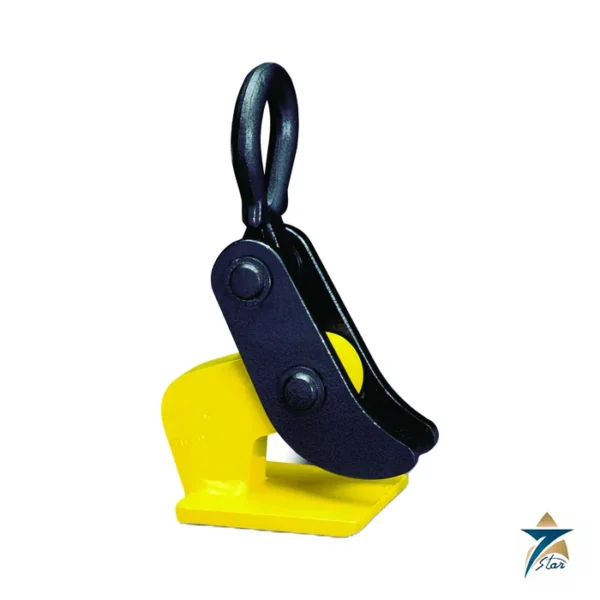
Camlok also lists the TTG girder stacking clamp, which uses a suspension ring to keep the beam horizontal, and the CG girder turning clamp for turning beams. A lifting beam, shackles and chain sling are bought separately.
Frequently asked questions
What does the offset lug do?
It keeps the girder virtually horizontal during transport, according to the product page.
What flange thickness do the TTR models fit?
5 to 16 mm for the TTR750, 5 to 25 mm for the TTR1500 and 5 to 28 mm for the TTR3000.
Which way should the hook ring face?
The manual says it must always face toward the centre of the beam.
Can I lift a long girder with one TTR?
For longer girders the manual says to use a pair of clamps with a spreader beam.
What is the TTR3000 weight?
12 kg per clamp, with a 300 to 3000 kg working load limit.
Documents and quotation
The catalogue sheet and the TTR manual can be downloaded from this page. Give the girder section and flange thickness when you ask for a price, and we will confirm stock; Seven Star LLC is an independent supplier based in Muscat.



Reviews
There are no reviews yet.