Brand:

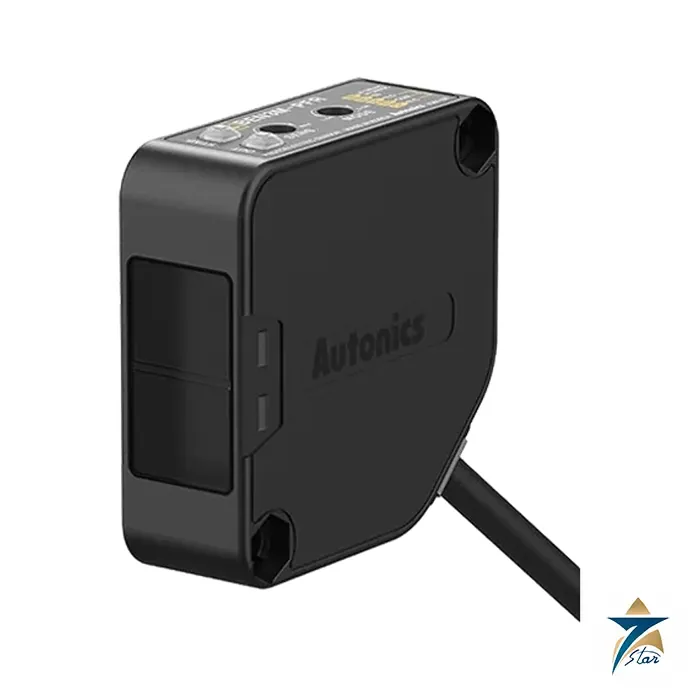
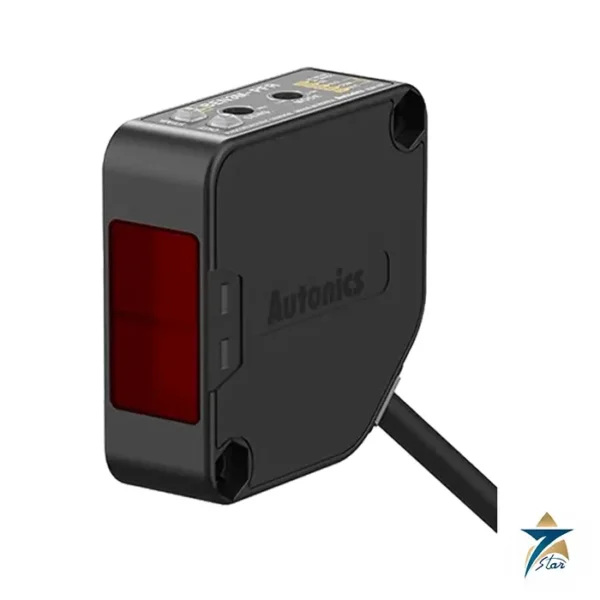
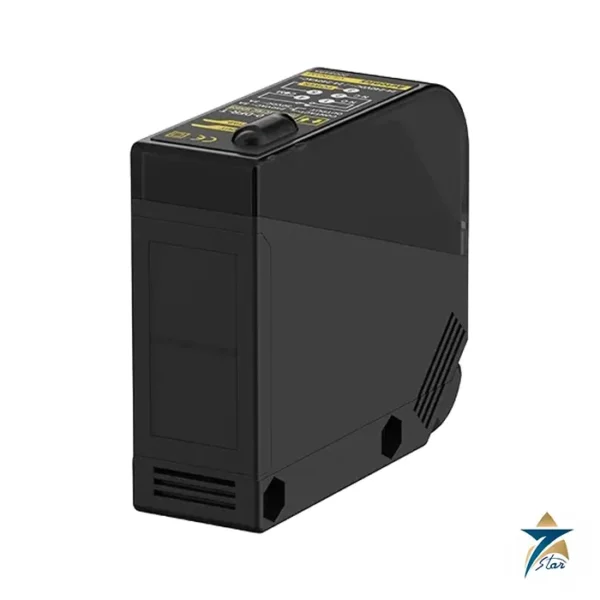
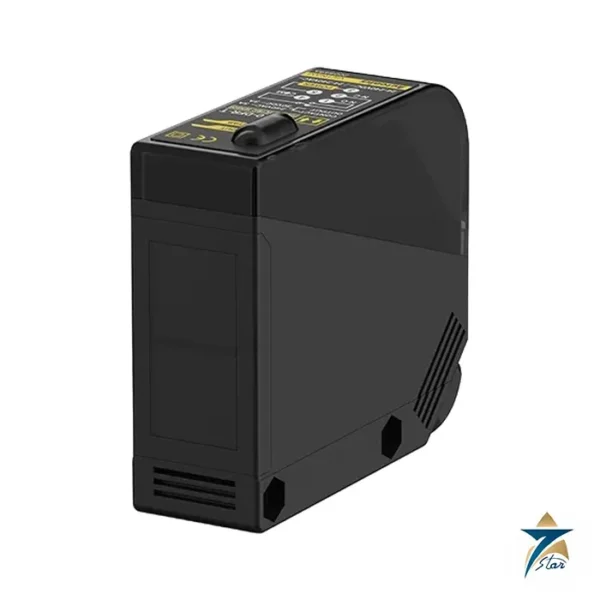
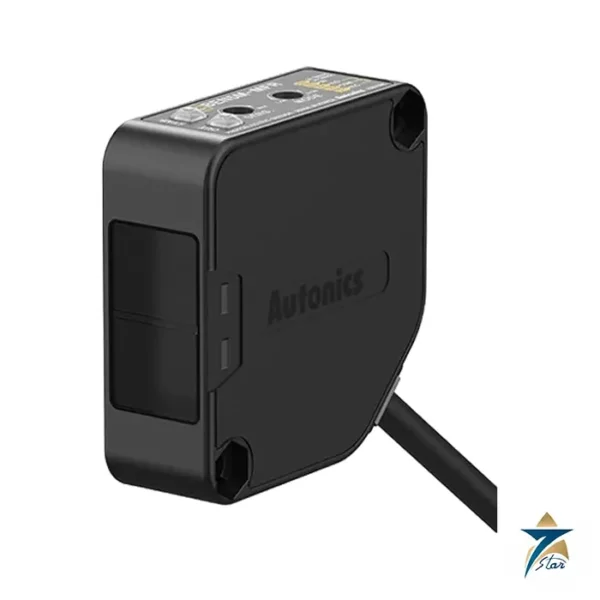
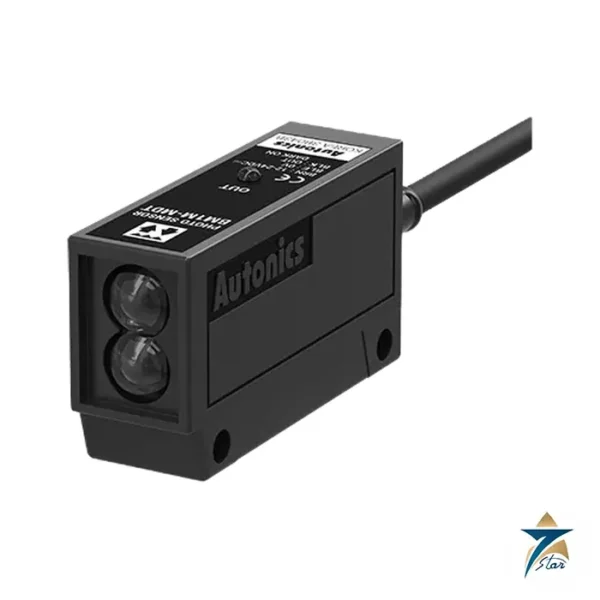
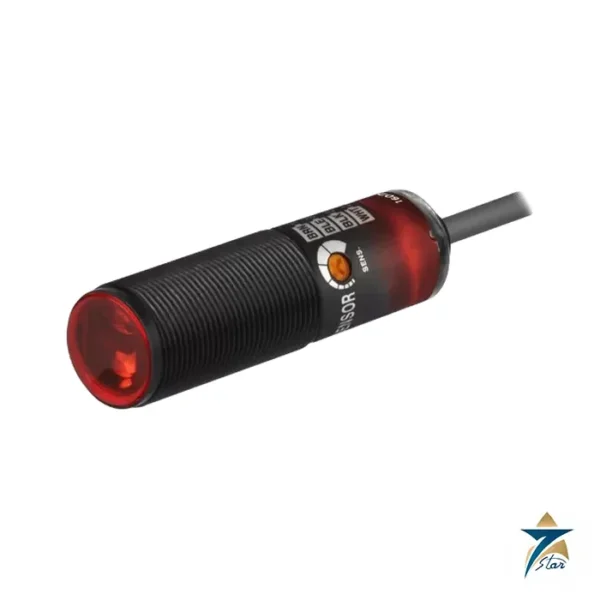
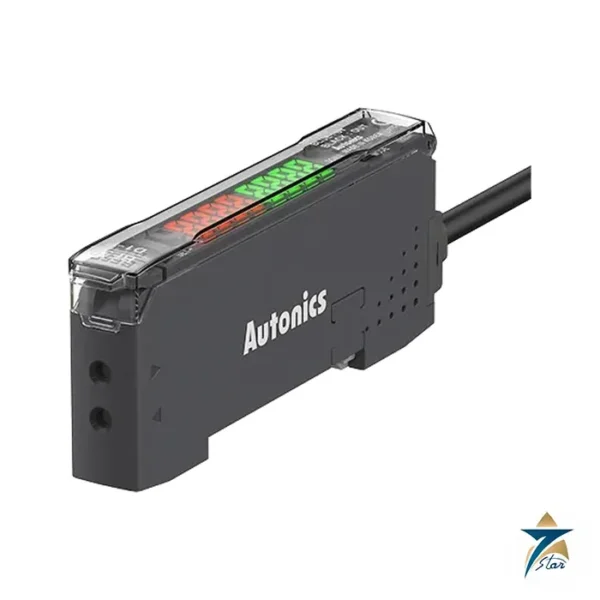
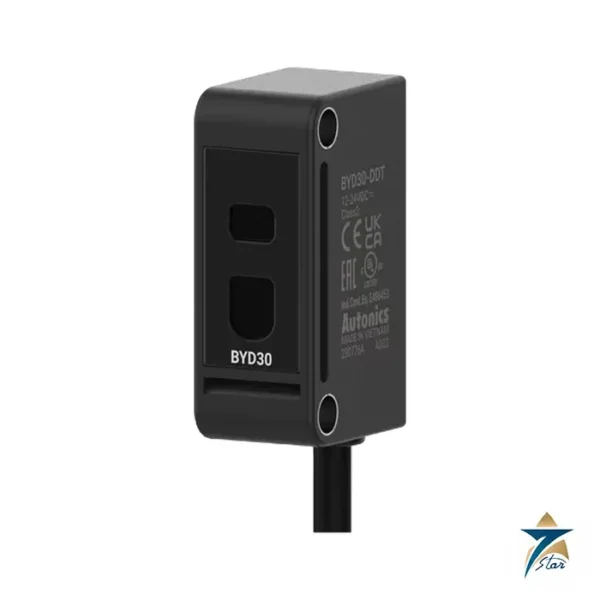
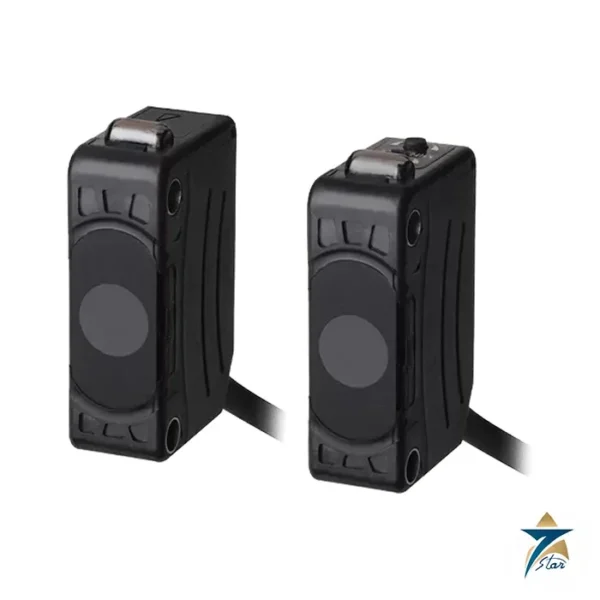
Autonics BEN300-DFR Universal AC/DC Diffuse Photoelectric Sensor

Description

Overview

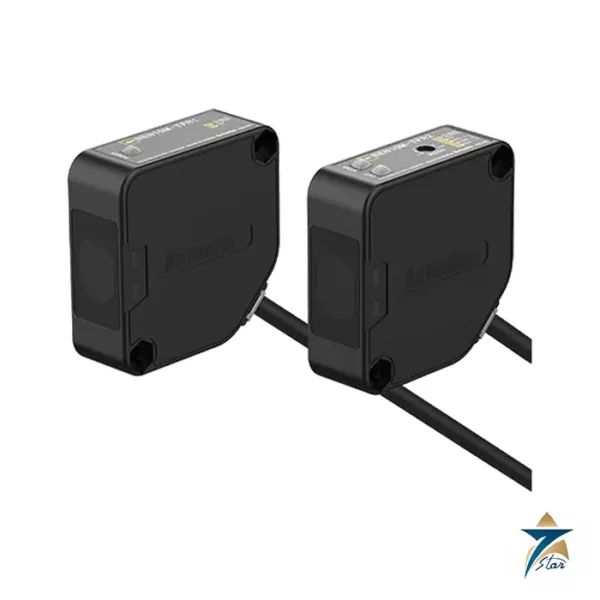
Universal supply and a relay output set the Autonics BEN300-DFR apart from the usual 24 V DC photoelectric sensors. It is a diffuse reflective sensor with a 300 mm range that runs on any supply from 24 to 240 V AC or DC and switches its load through a 1c relay contact rated 250 V AC 3 A. Seven Star LLC is an independent supplier serving Oman and the GCC. The values below come from the BEN series instruction manual and apply to this code.

A sensor with its own relay can switch a small contactor, a lamp, a solenoid or a PLC input directly, without a separate 24 V DC supply or an interposing relay. For maintenance teams this is attractive on older panels and mixed AC and DC installations, since one sensor type can be fitted at 24 V DC, 110 V AC or 230 V AC.

Specification table for Autonics BEN300-DFR

Item Data
Sensing type Diffuse reflective
Sensing distance 300 mm on non-glossy white paper 100 x 100 mm
Targets Opaque and translucent materials
Hysteresis 20 percent of sensing distance or less
Light source Infrared, peak wavelength 940 nm
Supply 24 to 240 V AC 50/60 Hz or 24 to 240 V DC, plus or minus 10 percent
Power consumption 4 VA or less
Output Relay contact 1c, 250 V AC 3 A or 30 V DC 3 A, resistive load
Relay life 50,000,000 mechanical; 100,000 electrical
Response time 20 ms or less
Sensitivity Adjuster on the housing
Operation mode Light ON or Dark ON by adjuster
Indicators Operation red, stability green
Ambient light Sunlight 11,000 lx, incandescent 3,000 lx
Ambient temperature -20 to 65 C
Protection IP50
Cable 5 mm, 5-wire, 2 m
Weight About 195 g

Decoding the order code

BEN is the universal series. 300 is the sensing distance in millimetres; without an M it is millimetres, whereas 10M would mean 10 metres. D is the diffuse reflective type, while T is through-beam, M retroreflective and P polarised retroreflective. FR means AC/DC power with a relay contact output, while DT would be DC power with a solid-state transistor output. So the Autonics BEN300-DFR is a diffuse reflective sensor with relay output for the universal supply.

How BEN300-DFR differs from the DT version and other BEN sensors

The BEN300-DDT version has the same 300 mm distance but runs on 12 to 24 V DC and gives NPN and PNP transistor outputs with 1 ms response, whereas this relay version responds in 20 ms or less. The BEN10M-T through-beam reaches 10 m and weighs about 354 g in the AC/DC version, the BEN5M-M retroreflective reaches 5 m and the BEN3M-P polarised retroreflective reaches 3 m. Only the diffuse reflective type responds to both opaque and translucent targets and needs no reflector.

Wiring the Autonics BEN300-DFR

The Autonics BEN300-DFR receiver has five wires. Brown and blue are the supply, black is the relay contact Ta, white is Tc and gray is Tb, forming a 1c changeover. Use the supply sized for the relay load, and wire an inductive load with a diode or varistor to remove surge. Wait 0.5 seconds after power-up before relying on the output, and wire the sensor first if load and sensor use separate supplies.

Set the mode before switching on. The manual warns against forcing the adjuster, and the supplied adjustment screwdriver should be used.

When to choose a relay output

The Autonics BEN300-DFR is the natural choice when the load is mains-powered and modest: a contactor coil, a signal lamp, an electromagnetic counter or a small solenoid valve up to 3 A resistive. The relay gives galvanic isolation between the sensor circuit and the load, and the changeover contact lets one wire pair be used for normally open logic and another for normally closed, which saves a separate inverter relay. Because the contact is mechanical, its electrical life of 100,000 operations at full load must be kept in mind: at one operation every second it would be used up in little more than a day, so do not use a relay sensor for fast counting.

For high speed or high cycle rates the transistor version is the better product, since its solid-state output has no wearing contact and responds in 1 ms or less. For occasional events such as a door opening, a pallet arriving or a hopper being empty, the relay version is simple and robust. The response time of 20 ms or less is also fine for these applications.

Inductive loads shorten contact life, so use a diode on DC coils and a varistor or RC network on AC coils, as the manual advises, and never exceed the contact rating given for resistive loads.

Setting the sensitivity

Turn the adjuster from minimum to maximum and note position A, where the operation indicator comes on with the target present. Remove the target, continue to maximum and note position B, where the indicator comes on again with the background; if it does not come on at maximum, then maximum is B. Set the adjuster at the mid position between A and B. Shiny or highly reflective targets should be tilted by 30 to 45 degrees where the manual describes this for retroreflective types, and the background behind a diffuse sensor should be kept clear, dark or far.

Mounting

Fix the sensor with the M4 bolts and nuts supplied, using a tightening torque of 1.2 N m and mounting the bracket so that the optical axis is not twisted. If several sensors are installed close together mutual interference may occur. Do not strike the housing or bend the cable excessively, as this can reduce the water resistance, and note that the IP50 rating is for dust only.

Applications in Oman and the GCC

Typical uses are carton and bottle detection on conveyors, door and gate presence on old AC-wired machines, level of stacked sheets and small parts feeding. Where the supply is 230 V AC the sensor can be connected without a transformer. Keep it out of direct sun and away from corrosive gas, as the safety notes of the manual advise, and do not use it as a safety device.

Related items you may also need: Autonics E40S6-2500-6-L-5 Rotary Encoder Incremental | Autonics PR18-8DN M18 Inductive Proximity Sensor 8 mm | ifm O6H700 Diffuse Sensor with Background Suppression, 100 mm | All Autonics products.

Autonics BEN300-DFR ordering checklist

  • When the Autonics BEN300-DFR replaces an installed unit, check the existing nameplate against the code on this page before ordering.
  • Every enquiry for the Autonics BEN300-DFR is answered with a written confirmation of the code, condition and expected lead time.
  • Use the attached datasheet to check the Autonics BEN300-DFR ratings, dimensions and connection details against your drawings.
  • We supply the Autonics BEN300-DFR as part of our photoelectric sensors range to plants in Oman and the GCC.

Documents and quotation

The BEN series instruction manual is attached as a datasheet. Send an RFQ for Autonics BEN300-DFR to Seven Star LLC with quantity and delivery location and we will confirm availability and lead time for Oman and the GCC.

Other Models in the BEN Range

Seven Star LLC supplies models from the BEN range in Oman and the GCC. Compare the related models below and request a quote for the one that matches your application.

ModelCategory
Autonics BEN5M-MFR Retroreflective Photoelectric Sensor 5 mPhotoelectric SensorsView details
Autonics BEN10M-TFR 10 m Through-Beam Photoelectric SensorPhotoelectric SensorsView details
Autonics BEN3M-PFR 3 m Polarized Retroreflective SensorPhotoelectric SensorsView details
Autonics BEN300-DFR Universal AC/DC Diffuse Photoelectric SensorPhotoelectric SensorsYou are viewing this model
Datasheets & Documents
  • PDF Datasheet Autonics BEN300-DFR Universal AC/DC Diffuse Photoelectric Sensor Datasheet Download
Reviews (0)

Reviews

There are no reviews yet.

How would you rate this product?

It takes about 10 seconds — just tap a star. Your email is never published.

About brand

Autonics is a South Korean maker of sensors and controllers, founded in 1977 as a small engineering business making controllers for looms. It took the Autonics name in 1988 and opened a new corporate headquarters in Busan in 2014. Autonics makes proximity and photoelectric sensors, rotary encoders, temperature controllers, counters, timers and stepper motor systems, with factories in Busan and Yangsan.

Seven Star LLC lists the Autonics E40S6-2500-6-L-5 incremental rotary encoder and supplies Autonics sensors and control devices in Oman and the GCC.

Autonics company profile

Founded 1977, South Korea
Current name Autonics, since 1988
Headquarters Busan, South Korea
Factories Busan and Yangsan
Product families E40 and E50 rotary encoders, PR proximity sensors, BJ photoelectric sensors, TK temperature controllers

Milestones

  • 1977: The company is founded.
  • 1988: Renamed Autonics Corporation.
  • 2014: Opens its Busan headquarters.

Reading the Autonics E40S encoder code

E40S is the 40 mm diameter shaft-type incremental encoder, and the 6 that follows is the 6 mm shaft. 2500 is the resolution in pulses per revolution. The next 6 means six output signals: A, B and Z with their inverted signals. L is a line driver output and the final 5 is a 5 V DC supply. The same 40 mm body is made in hollow shaft form as the E40H and E40HB series.

Where Autonics encoders are used

Servo and spindle feedback, conveyor length measurement, packaging and printing machines.

Ordering Autonics encoders: what we need

Send the complete model string from the label. If it is worn off, give the body and shaft diameter, pulses per revolution, output type, supply voltage and cable or connector style.

Facts checked against Autonics corporate profiles, October 2026.

FAQ

Questions about the Autonics BEN300-DFR Universal AC/DC Diffuse

Answers from our engineering team on installation, compatibility and integration.

01What supply does Autonics BEN300-DFR use?
It accepts 24 to 240 V AC at 50/60 Hz or 24 to 240 V DC with a tolerance of plus or minus 10 percent, drawing 4 VA or less.
02What is the output of BEN300-DFR?
A relay contact 1c rated 250 V AC 3 A or 30 V DC 3 A on resistive load, with 100,000 electrical operations.
03What is the sensing distance of BEN300-DFR?
300 mm on non-glossy white paper of 100 x 100 mm; it is a diffuse reflective type for opaque and translucent targets.
04How fast is the BEN300-DFR relay version?
Response time is 20 ms or less; the DC transistor version responds in 1 ms or less.
05Can BEN300-DFR work in Light ON and Dark ON?
Yes, the operation mode is selectable with the adjuster, and the mode must be set before power-on.