Overview
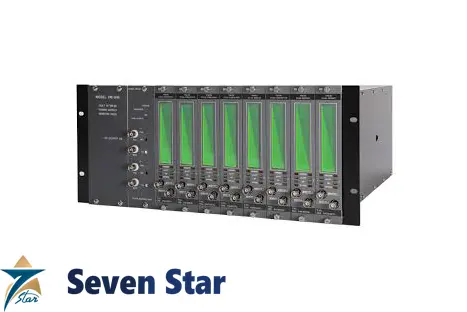
The Shinkawa 2M04-500 Converter System is part of SHINKAWA’s vibration/condition-monitoring lineup. It accepts inputs from SHINKAWA accelerometers and eddy-current displacement probes, conditions the signals, and delivers standard process outputs to control and protection systems. Typical deployments include integration with VM-series machinery protection racks and plant PLC/DCS for trending, interlocks, and trips. In brownfield revamps it serves as a drop-in interface between existing transducers and modern controls, simplifying lifecycle support and spares.
Key Features & Specs
• Multi-channel aggregation for plant assets (converter “main” plus function modules)
• Inputs: accelerometers (velocity/accel) and eddy-current displacement probes
• Outputs: isolated 4–20 mA (and/or 1–5 V) for DCS/PLC trending and alarm setpoints
• Industrial power (rack supply / AC mains variant) with dedicated power module
• Machine-protection topology: route to shutdown relays in the monitor rack (API 670 style architectures)
• Panel/rack mounting; field-replaceable modules; front diagnostics/LEDs (variant-dependent)
I/O & Module Variants (guide)
• 2M04-500 (Main/Converter): system backbone for channels and outputs
• 2M04-500-V: vibration/velocity/acceleration input module (with scaling to 4–20 mA)
• 2M04-500-T: transducer interface for proximity/displacement chains
• 2M04-500-S: power-supply/converter supply module for the rack
(Exact channel counts, ranges, and module mix depend on the build; confirm with your datasheet/BOM.)
Applications
• Turbine/compressor protection (radial vibration, thrust position via prox probes)
• Pump and fan condition monitoring in utilities and process units
• Boiler-feed–pump and balance-of-plant assets where multi-channel aggregation is needed
• Brownfield DCS migrations—retain probes, modernize signals to 4–20 mA/1–5 V
Installation & Commissioning Notes
• Verify transducer types, cabling and polarity; keep probe/accelerometer cables within specified lengths.
• Calibrate scaling (mm/s, µm, g) to match control-system ranges; document trip setpoints separately in the monitor.
• Provide segregated 24 VDC/AC (per variant) and cabinet grounding; observe EMC best practices.
• After I/O loop-checks, run a controlled bump test or probe-gap check to validate channels.
What’s Included / Options
• Converter main unit (2M04-500) with ordered function modules (-V/-T/-S, etc.)
• Rack hardware and terminal accessories (per order)
• Optional: spare power module, I/O module, and verified transducer cables
Request a Quote for Shinkawa 2M04-500 Converter system
Request a quote—share your part code (e.g., 2M04-500-V/-T/-S), channel plan (vibration/displacement), output format (4–20 mA / 1–5 V), and rack/VM model. We’ll confirm compatibility, availability, and provide a formal quotation with documentation support.
Identifying the Correct 2M04-500 Unit
Before ordering a replacement, take the identification details directly from the installed equipment rather than from drawings, which are often out of date on older plants. Useful information includes:
- The full model code and any suffix printed on the nameplate or module label, including the letters that follow the base number
- The serial number and, where shown, the manufacturing date or revision code
- The type of transducer connected to each channel (proximity probe, velocity or acceleration sensor) and the probe system it belongs to
- The output signal wired to the control system and the scaling configured for each channel
- The supply voltage available in the cabinet
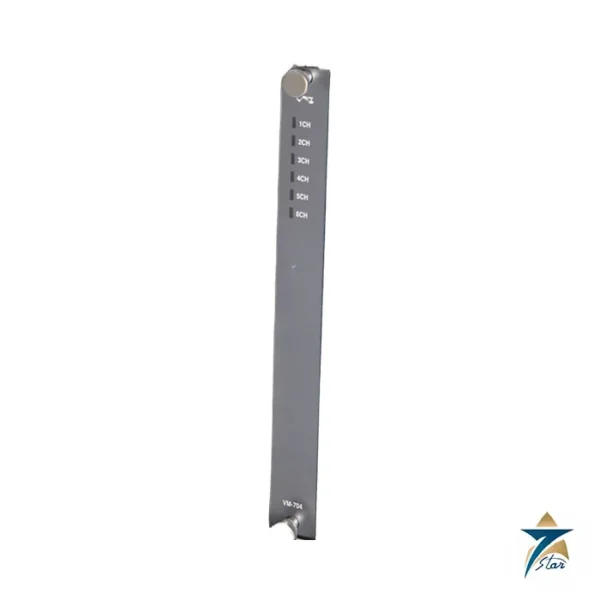
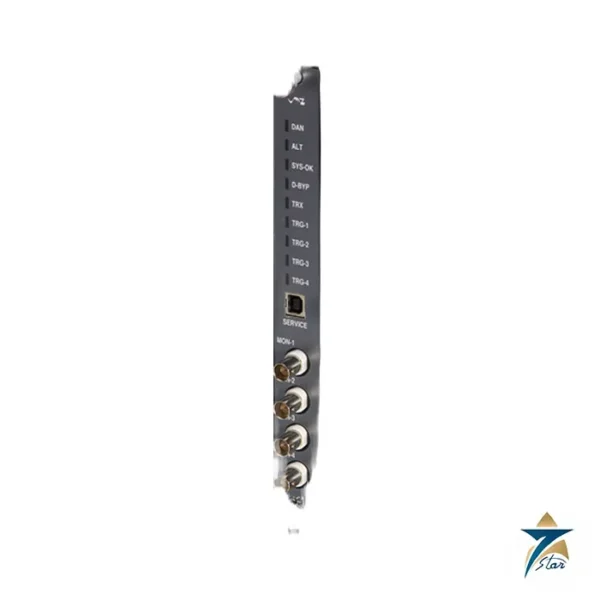
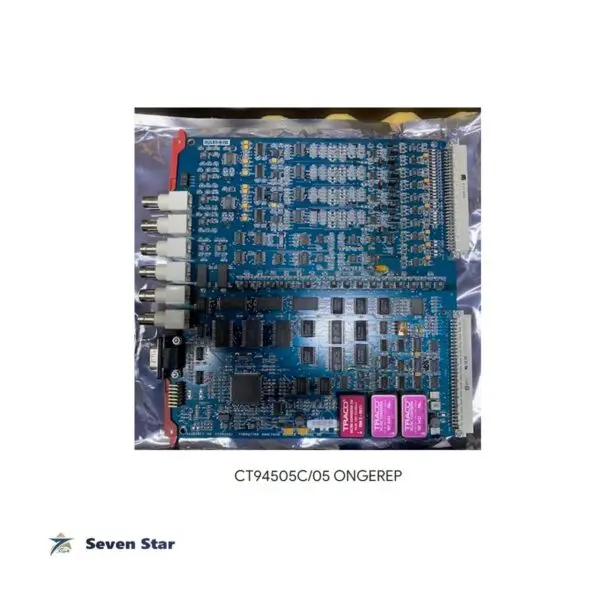
- Photographs of the front panel, the label and the terminal wiring
With this data the replacement can be checked against the existing installation, so the new unit fits the same position and wiring without surprises.
Technical Specifications
| Parameter |
Value |
| Manufacturer |
SHINKAWA |
| Model |
2M04-500 Converter System |
| Product Type |
Converter / signal-conditioning system for machinery vibration monitoring and protection |
| Inputs |
Accelerometers (velocity/accel) and eddy-current displacement probes |
| Outputs |
Isolated 4–20 mA (and/or 1–5 V) for DCS/PLC |
| Module Variants |
2M04-500-V (vibration input), 2M04-500-T (transducer interface), 2M04-500-S (power supply) |
| Mounting |
Panel/rack mounting; field-replaceable modules |
| Compatible Systems |
SHINKAWA VM-series machinery protection racks, plant PLC/DCS |
Installation and Commissioning Practice
When a converter is replaced, treat the job as a small loop-commissioning task. Isolate the channel in the protection system or place trips in bypass under the site permit procedure, record the existing settings and scaling, and label every wire before it is removed. After fitting the new unit, check the supply voltage and earthing, restore the field wiring, and confirm each channel with a known input, for example a probe gap check or a signal from a calibrated source. Compare the reading in the DCS or PLC with the local value before returning the channel to service and removing any bypass.
Maintenance and Troubleshooting
Most problems on converter channels come from the field side rather than the electronics. Typical checks are:
- Loose, corroded or damaged connectors and extension cables between the transducer and the converter
- Incorrect probe gap or damaged probe tips on proximity channels
- Poor shield and earth practice causing noise or erratic readings
- Supply voltage outside the expected range at the terminals
- Output loop faults such as open circuits or incorrect loop resistance at the receiving card
Keeping a record of normal readings for each channel makes it much easier to recognise a developing fault. A spare Shinkawa 2M04-500 unit held in the store allows a faulty channel to be restored quickly while the removed unit is assessed.
Applications in Oman and the GCC
Vibration and position monitoring systems of this type are found on turbines, compressors, pumps and fans in oil and gas facilities, power and desalination plants and petrochemical sites across Oman and the GCC. Many of these installations have run for years, and keeping exact-fit spares available is often the simplest way to maintain protection coverage until a planned system upgrade.
Sourcing from Seven Star LLC
Seven Star LLC supplies Shinkawa vibration monitoring spares to plants in Oman and the GCC. Send us the nameplate details and photographs of your unit, and our team will check the part code against the information you provide before quoting.
Related Products
























Reviews
There are no reviews yet.