- Automation & ControlView all 3,068 products
- Automation Accessories
- AC Drives
- PLC & I/O Cards
- Industrial Communications
- Vibration Monitoring
- Isolator & Barrier
- Controllers & Data Acquisition
- Safety Switches & Guard Locking
- Motor Soft Starters
- Encoders
- CCTV & Security
- Pneumatic Cylinders
- HMI Displays
- Servo Drives
- Industrial Computers
- Machine Vision
- Automation Software
- Robotics
Brand: Pepperl+Fuchs
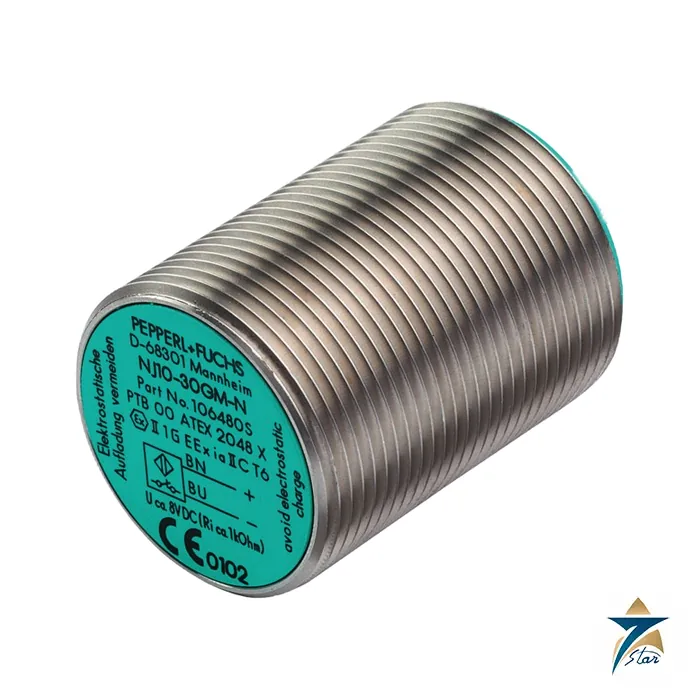
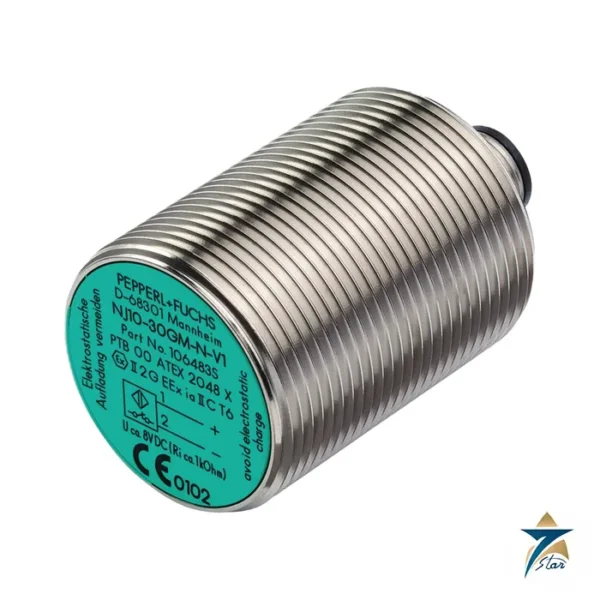
Pepperl+Fuchs NJ10-30GM-N M30 NAMUR Inductive Sensor 10 mm
Description
Pepperl+Fuchs NJ10-30GM-N at a glance
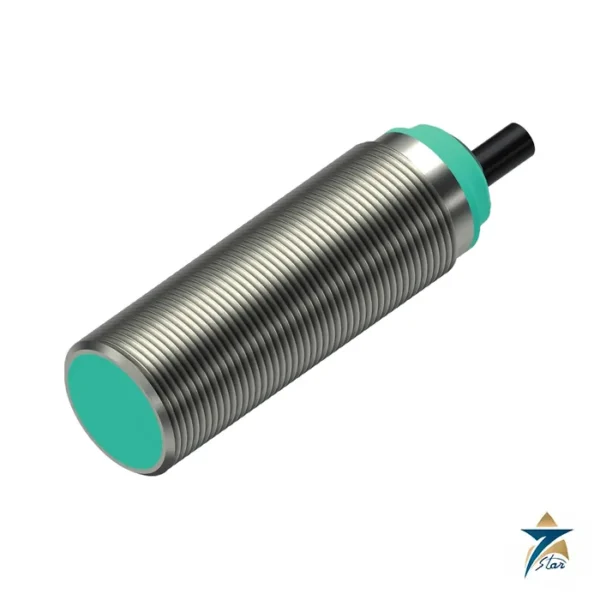
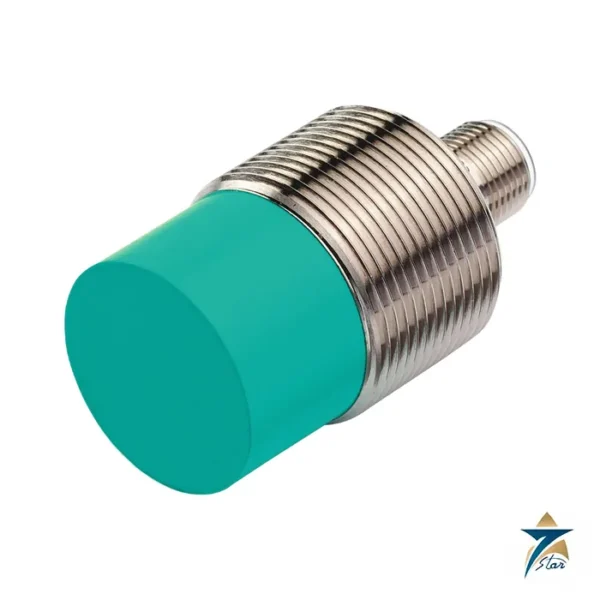
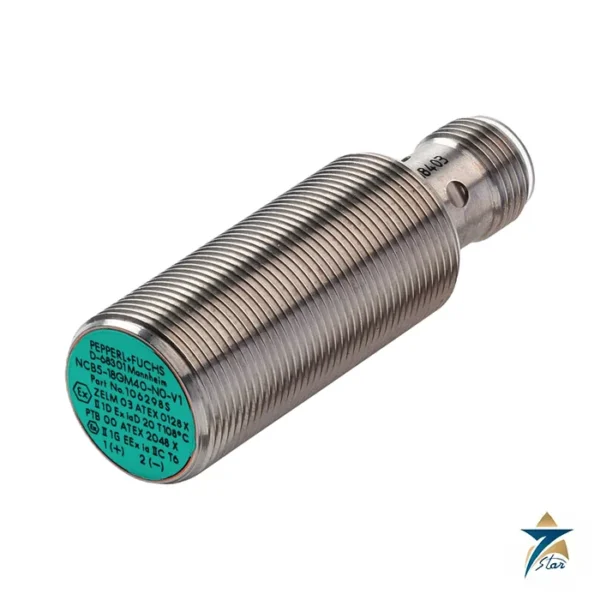
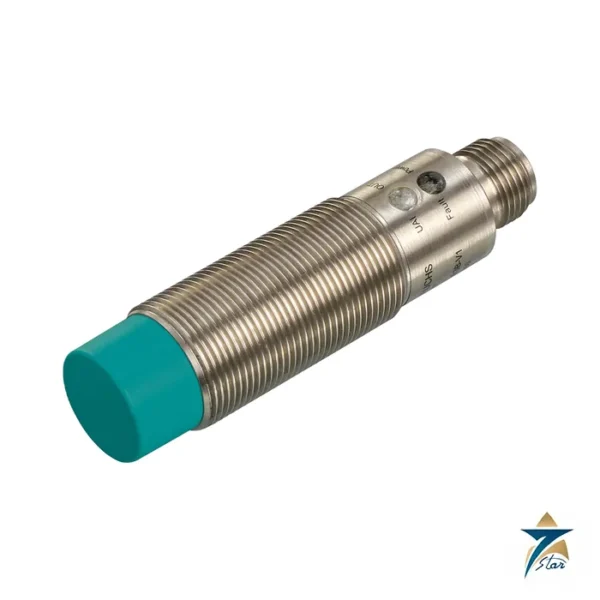
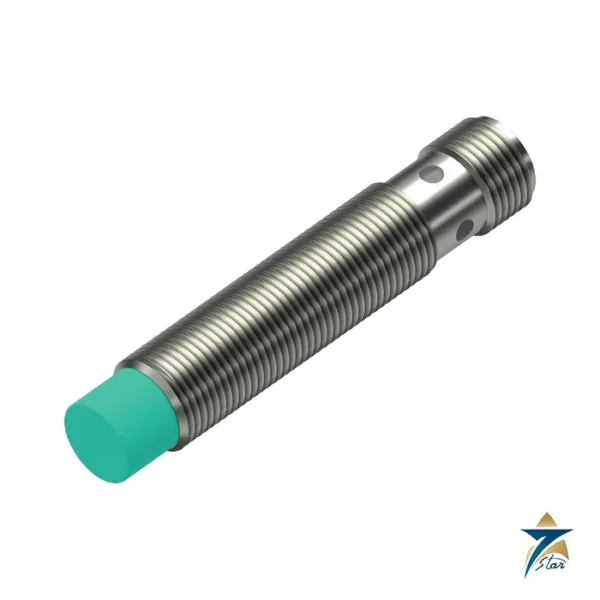
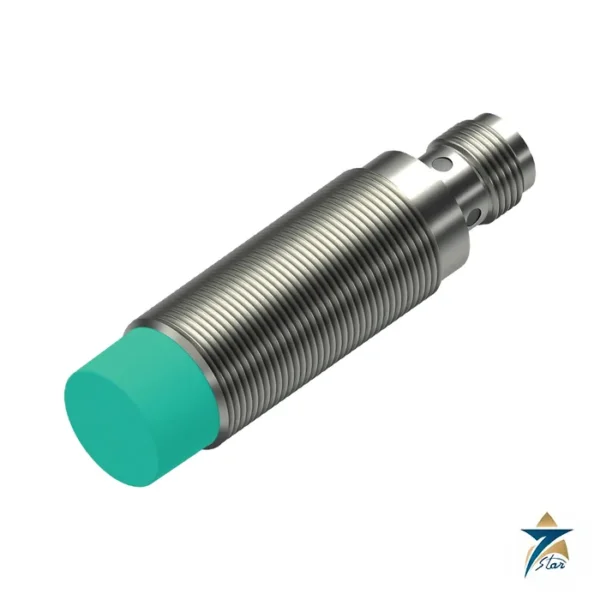
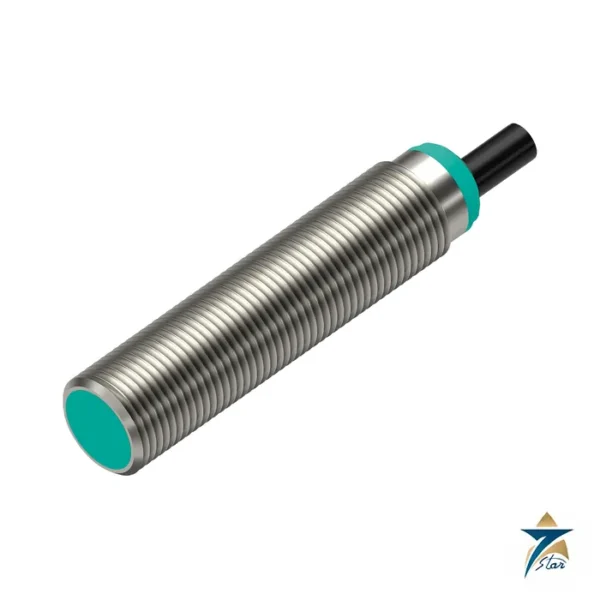
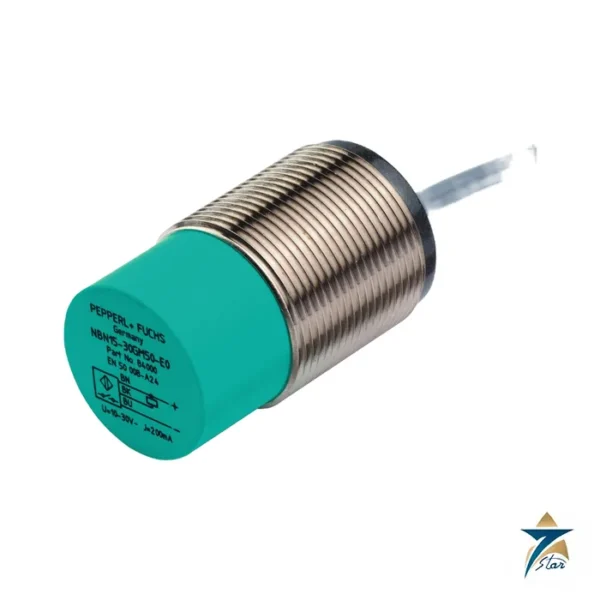
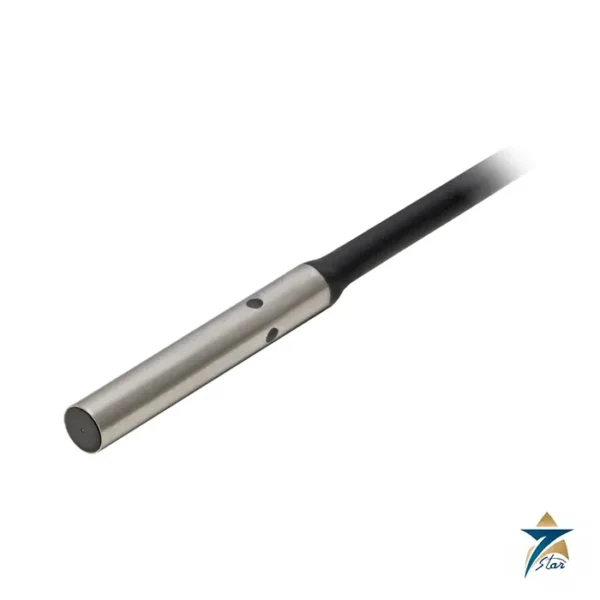
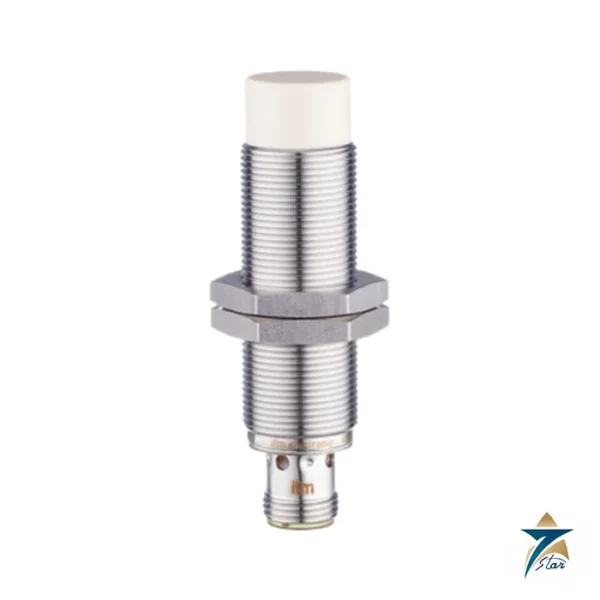
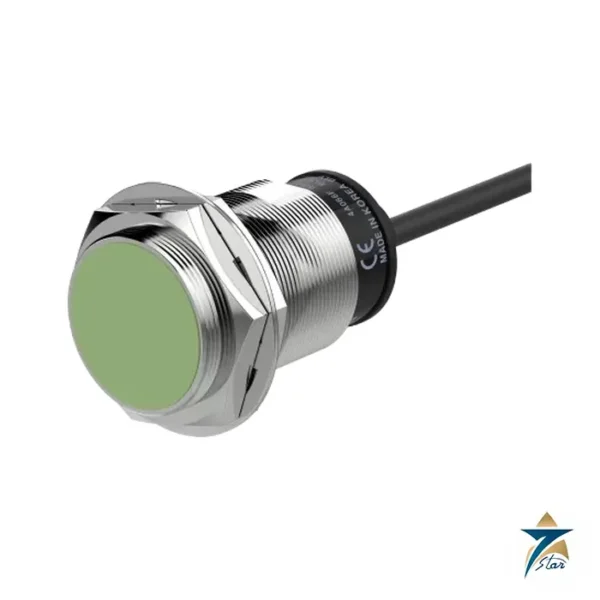
The Pepperl+Fuchs NJ10-30GM-N is a large-format NAMUR proximity sensor with a 10 mm flush rated operating distance. It uses an M30 x 1.5 stainless steel 1.4305 barrel that is 40 mm long and 30 mm in diameter, finished with a PBT sensing face and a 2 m PVC cable.
The extra range is the reason plants choose the NJ10-30GM-N: the assured operating distance runs from 0 to 8.1 mm, giving the installer a generous window for targets that move, wobble or sit behind a guard. The electrical side is the familiar two-wire NAMUR interface, with 8.2 V nominal voltage and an internal resistance of approximately 1 kOhm.
Datasheet values for the NJ10-30GM-N
| Parameter | Value |
|---|---|
| Part number | NJ10-30GM-N |
| Switching function | Normally closed (NC) |
| Output | NAMUR, 2-wire |
| Rated operating distance | 10 mm flush |
| Assured operating distance | 0 to 8.1 mm |
| Reduction factors | rAl 0.4, rCu 0.3, r304 0.85 |
| Nominal voltage | 8.2 V (Ri approx. 1 kOhm) |
| Operating voltage range | 5 to 25 V |
| Switching frequency | 0 to 300 Hz |
| Hysteresis | 3 percent |
| Current, plate not detected | 3 mA or more at nominal voltage |
| Current, plate detected | 1 mA or less at nominal voltage |
| Functional safety | SIL 2 |
| Ambient temperature | -25 to 100 degrees C |
| Housing / sensing face | Stainless steel 1.4305 / AISI 303, PBT |
| Protection | IP66 / IP67 |
| Cable | 2 m PVC, 6 mm diameter, 0.75 mm2 |
| Cable bending radius | over 10 times diameter |
| Dimensions | 40 mm long, 30 mm diameter |
| Delivery | 2 self-locking nuts included |
Approvals listed for NJ10-30GM-N
For hazardous areas the datasheet cites IECEx PTB 11.0037X covering Ga, Gb, Da and Mb, and ATEX PTB 00 ATEX 2048 X covering Ga, Gb and Da. Further entries include cULus listing with control drawing 116-0452, CCC, ANZEx 18.3018X, KCC and marine approval DNVGL TAA00001A5, with CML approval on request.
These approvals apply only when the sensor is connected through a suitable associated apparatus; the instruction manuals referenced on the datasheet define the permitted parameters. Treat the list as a prompt for your engineer to check the zone, gas group and temperature class of the installation.
Use cases in oil, gas, water and heavy industry
The M30 barrel and 10 mm range are common on large valve actuators, gearbox covers and heavy rotating couplings, where a bracket has to tolerate rough alignment. Refinery turbo-machinery trains use similar sensors for overspeed and key-phasor type pulses; pumping stations use them to confirm gate positions.
Because the stainless steel body resists corrosion, it is also used outdoors on coastal plants and in desalination units. The switching frequency of 300 Hz is more than enough for slow mechanical motion but is lower than the smaller NCB variants, so do not choose it for high pulse rates.
How NJ10-30GM-N differs from other NJ and NCB sensors
- Versus NJ10-30GM-N-V1: same electrical data except hysteresis is a fixed 3 percent here and the lead is a 2 m cable rather than a 4-pin M12 plug.
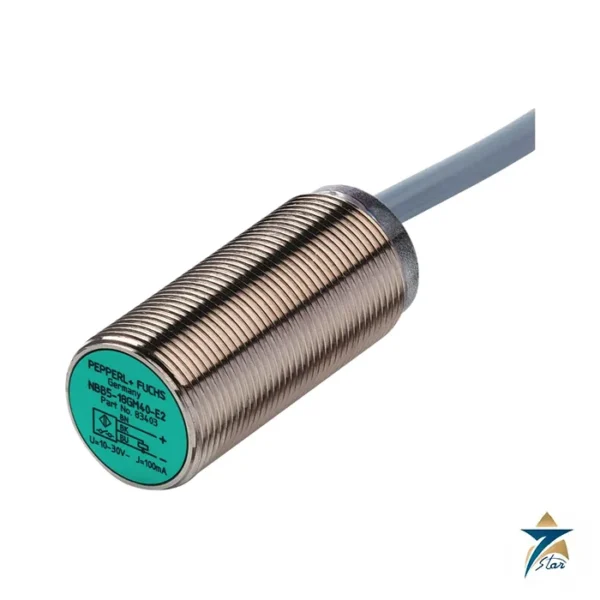
- Versus NCB5-18GM40-N0: range doubles from 5 mm to 10 mm and the body grows from M18 to M30, while frequency falls from 400 Hz to 300 Hz.
- Reduction factor for stainless 304 is 0.85, the best among these, so stainless targets are detected at 8.5 mm.
Selecting and wiring the NJ10-30GM-N
Match the sensor to a NAMUR switch amplifier or isolator. A supply of 5 to 25 V is allowed, but most NAMUR channels apply 8.2 V. Use the blue-jacketed cable colours specified by your drawing and verify polarity before power. The datasheet notes the 6 mm cable has a 0.75 mm2 core cross-section, which suits larger terminal blocks.
Mounting and commissioning notes for NJ10-30GM-N
Fit the barrel in a 30 mm threaded hole and lock it with the two self-locking nuts. Keep a gap of roughly half the assured distance, about 4 mm, between face and target for margin. Move the target past the sensing face and confirm the LED and barrier output react; then repeat at the extremes of mechanical play.
Maintenance outlook
Look at the face for scratches and the nuts for loosening whenever the machine is open. The sensor is sealed to IP66 / IP67, so cleaning with a cloth is enough. If the cable is damaged, replace the sensor rather than splicing it in a hazardous area.
Understanding the reduction factors of the NJ10-30GM-N
The 10 mm rated distance is measured on a standard mild steel plate. For other materials the datasheet gives reduction factors: aluminium 0.4, copper 0.3 and stainless steel 304 0.85. The effective distance on a copper bracket is therefore close to 3 mm, while a 304 stainless target is detected at roughly 8.5 mm. When the target material is uncertain, mock it up on the bench with the actual part and a NAMUR amplifier before drilling the bracket.
Hysteresis of 3 percent means the release point sits about 0.3 mm beyond the operating point at the rated distance, which keeps the output stable against light vibration without making the switching point imprecise.
Safety integrity and the NJ10-30GM-N
The datasheet marks the sensor as usable up to SIL 2 according to IEC 61508. Whether a loop reaches that level depends on the entire chain: sensor, barrier, logic solver and final element. The sensor figures are a contribution to the loop calculation, and the engineer should use the manual with its proof-test recommendations rather than the headline SIL claim alone.
Related products
The plug version, the M18 and M12 NAMUR sensors and NAMUR isolators complete a typical loop. Include the suffix in the RFQ so the NJ10-30GM-N cable version is supplied. Seven Star LLC is an independent supplier serving Oman and the GCC and is not affiliated with the manufacturer.
Documents and quotation
A datasheet for the NJ10-30GM-N is attached with the exact data. Send an RFQ to Seven Star LLC with part number NJ10-30GM-N, quantity and delivery location in Oman or the GCC.
Other Models in the Nj Namur Range
Seven Star LLC supplies models from the Nj Namur range in Oman and the GCC. Compare the related models below and request a quote for the one that matches your application.
| Model | Category | |
|---|---|---|
| Pepperl+Fuchs NJ10-30GM-N-V1 M30 NAMUR Sensor with M12 Plug | Inductive Proximity Sensors | View details |
| Pepperl+Fuchs NJ10-30GM-N M30 NAMUR Inductive Sensor 10 mm | Inductive Proximity Sensors | You are viewing this model |
Datasheets & Documents
- Datasheet Pepperl+Fuchs NJ10-30GM-N M30 NAMUR Inductive Sensor 10 mm Datasheet Download
Reviews (0)
How would you rate this product? Cancel reply
About brand
Pepperl+Fuchs is a German manufacturer of industrial sensors and explosion protection equipment, founded in 1945 in Mannheim by Walter Pepperl and Ludwig Fuchs as a radio repair shop. Defective transformers led them into manufacturing, and the company developed its first proximity switch in the late 1950s. Pepperl+Fuchs is headquartered in Mannheim and is a pioneer of intrinsically safe electrical equipment for hazardous areas.
Seven Star LLC lists Pepperl+Fuchs sensors, isolated barriers, power supplies and hazardous-area mobile devices, and supplies them to instrument and automation teams in Oman by exact model designation.
Pepperl+Fuchs company profile
| Founded | 1945, Mannheim-Sandhofen, Germany, by Walter Pepperl and Ludwig Fuchs |
|---|---|
| Headquarters | Mannheim, Germany |
| Ownership | Privately owned (Pepperl+Fuchs SE) |
| Origins | Radio repair workshop that began making replacement transformers |
| Product families | Inductive, capacitive, ultrasonic and photoelectric sensors, rotary encoders, R2000 LiDAR scanners, KFD and HiC isolated barriers, Zener barriers, remote I/O, purge and pressurization systems, Ex-rated enclosures |
Milestones
- 1945: Walter Pepperl and Ludwig Fuchs open their radio repair shop in Mannheim.
- 1958: The first proximity switch is developed (some company sources say 1959).
Pepperl+Fuchs product families on this page
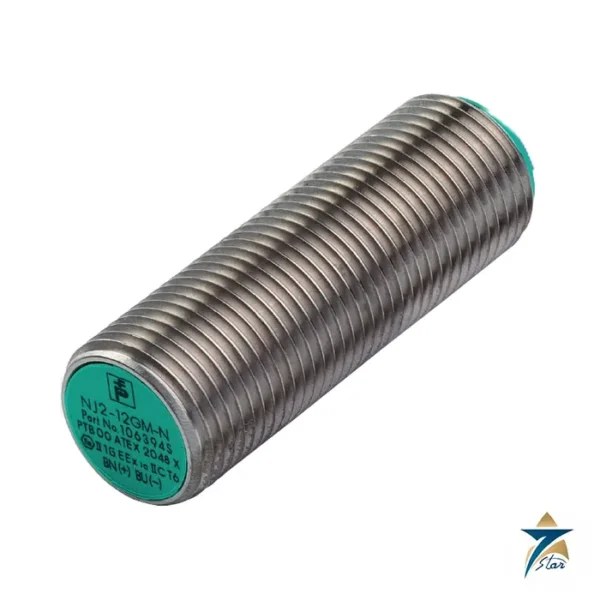
On the interface side there are two systems. The K-System mounts on DIN rail and is represented here by the KFD2-UT2-Ex2 universal temperature converter. The H-System plugs into termination boards and is represented by the HiD2030 SMART transmitter power supply with HART. The PS1000-A6-24.20 is a 24 VDC, 20 A power supply for cabinets. Sensors listed include the NJ2-12GK-SN NAMUR inductive sensor, the R101 retro-reflective photoelectric sensor and the R2000 2-D LiDAR scanner. For field staff there are the Tab-Ex 05 DZ1 tablet for Zone 1/21 areas and the Smart-Ex 03 DZ2 smartphone for Zone 2/22 and Division 2 areas.
Where Pepperl+Fuchs equipment is used
Isolated barriers sit between field instruments in Zone 0 or Zone 1 and the DCS or safety system in refineries, gas plants and chemical works. NAMUR sensors report valve position and machine states in classified areas. Photoelectric sensors and LiDAR scanners work in conveying, packaging, warehousing and vehicle guidance. Ex-rated tablets and phones are carried on operator rounds and maintenance jobs.
Pepperl+Fuchs products we list
Ordering Pepperl+Fuchs parts: what we need
Send the complete model designation as printed on the device, including every suffix; a single letter can change the supply voltage or the output type. Add the part number if the label shows one. For barriers, tell us the field device and signal type, the number of channels and whether the safety loop needs a SIL-assessed module. For mobile devices, state the zone or division and the regional radio version.
Facts checked against Pepperl+Fuchs's own chronicle pages, October 2026.
Browse Pepperl+Fuchs products by category: Sensors & Transmitters, Industrial Computer, Isolator & Barrier, Power Modules.
FAQ
Questions about the Pepperl+Fuchs NJ10-30GM-N M30 NAMUR Inductive
Answers from our engineering team on installation, compatibility and integration.
01What is the sensing range of the NJ10-30GM-N?
Rated operating distance is 10 mm flush; the assured operating distance is 0 to 8.1 mm.
02What interface does it use?
A 2-wire NAMUR interface per EN 60947-5-6 with 8.2 V nominal voltage and about 1 kOhm internal resistance.
03What is it made of?
Stainless steel 1.4305 / AISI 303 housing with a PBT sensing face, rated IP66 / IP67.
04Is it intended for hazardous areas?
The datasheet lists IECEx and ATEX approvals and says to see the instruction manuals; it is used with an associated apparatus.
05How do I order the NJ10-30GM-N in Oman?
Send an RFQ to Seven Star LLC with the part number, quantity and delivery location.


Reviews
There are no reviews yet.