WIKA IV1 needle valve and multiport needle valve series
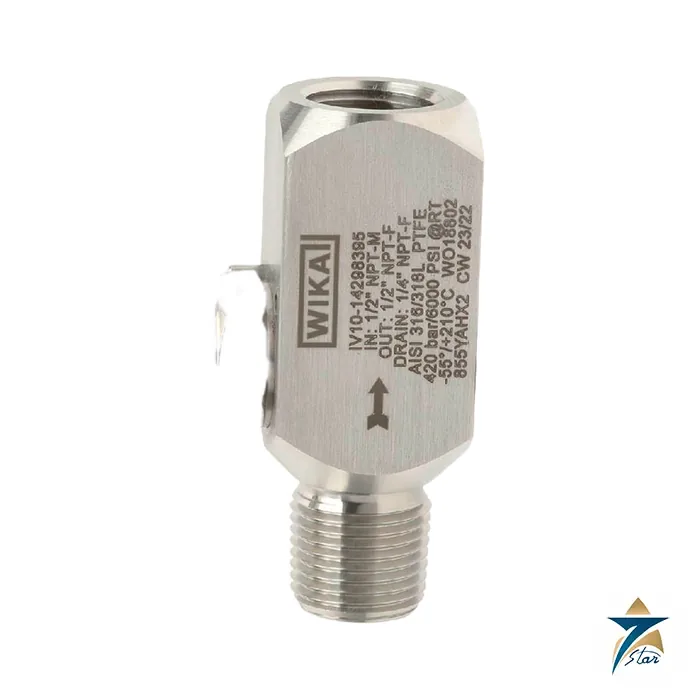
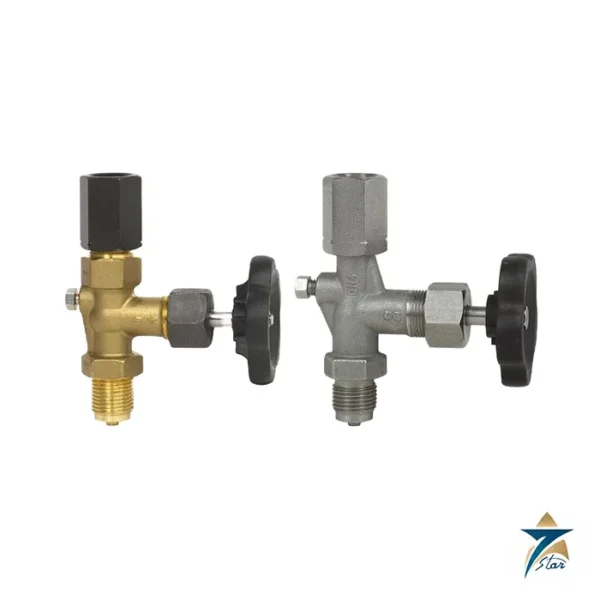
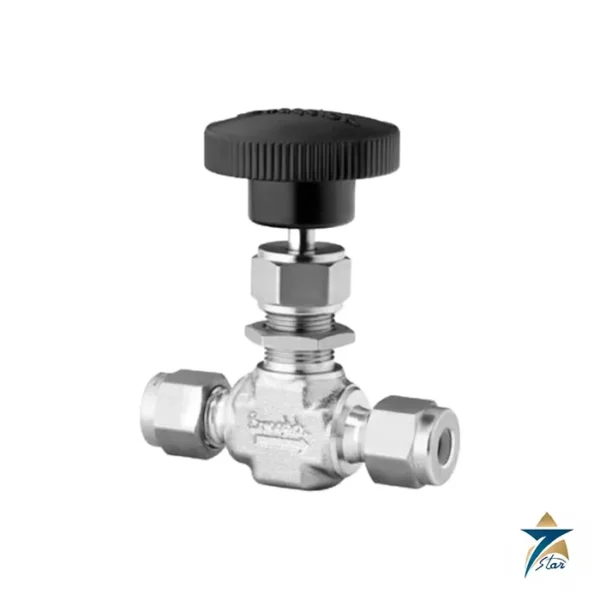
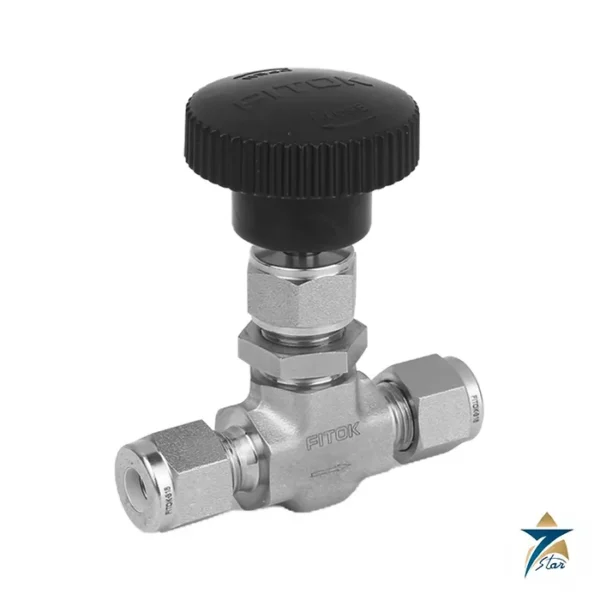
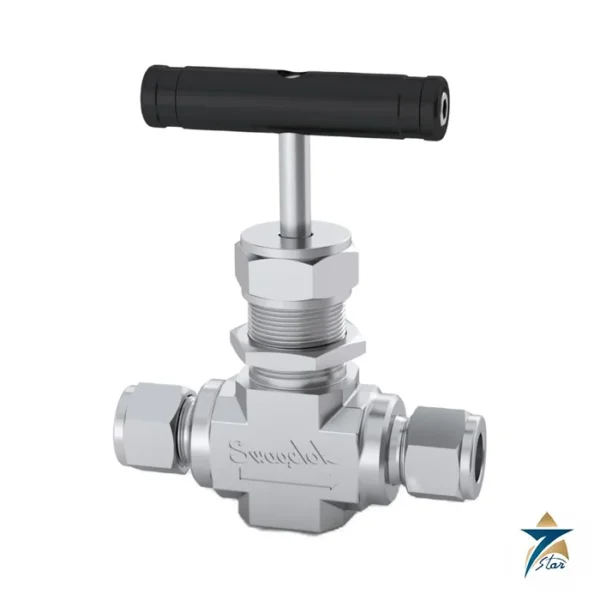
The WIKA IV1 series is a family of instrument needle valves used to shut off and vent pressure measuring instruments such as gauges, switches and transmitters. Closing the valve lets the instrument be removed safely for calibration or replacement, and versions with a vent connection can also relieve the instrument to atmosphere. The data sheet AC 09.22 covers six models, IV10, IV11, IV19, IV1A, IV1B and IV1N, which differ in body shape and function. Seven Star LLC supplies the WIKA IV1 range in Oman and the GCC as an independent supplier in Muscat, and this page explains how to read the model letters and what must be specified to order the right valve.
Decoding the IV1 models
| Model |
Description |
| IV10 |
Needle valve, standard straight pattern |
| IV11 |
Multiport needle valve with two extra connections for venting or additional instruments |
| IV19 |
Needle valve with angled connections at 90° |
| IV1A |
Needle valve with extended valve body, 75 mm (2.95 in) |
| IV1B |
Needle valve with extended valve body, 100 mm (3.94 in) |
| IV1N |
Needle valve in natural gas design with a metering valve for shut-off and flow control |
The extended bodies of the IV1A and IV1B hold the handle further from the process pipe, which helps where the line is insulated or traced. The IV1N is for natural gas service, can be equipped with a metering bonnet of 9.5 mm (0.375 in) bore, and is the only model in the family offered with flange connections per IEC 61518 Form A or B and with a dielectric design.
Technical specifications of the IV1 series
| Parameter |
Specification |
| Manufacturer / part number |
WIKA / IV1 (IV10, IV11, IV19, IV1A, IV1B, IV1N) |
| Type |
Needle valve and multiport needle valve for instrument isolation |
| Operating pressure |
≤ 3,000 psi (206 bar), ≤ 6,000 psi (420 bar) or ≤ 10,000 psi (690 bar); 10,000 psi only with PTFE packing and no flange |
| Sizes |
¼, ⅜, ½, ¾ NPT; G ¼, G ⅜, G ½, G ¾ |
| Connections |
NPT (ANSI B1.20.1), G (ISO 228-1), swivel, weld-in, compression fitting, flange (IV1N only), EMICOgauge connection |
| Bonnet bore |
4 mm (screwed, extended handle, miniature, cryogenic, panel); 6 mm OS&Y; 8 or 10 mm bolted; 9.5 mm metering for natural gas |
| Body and bonnet materials |
316/316L, 321, Monel 400, Hastelloy C276, 6Mo, Duplex F51, Super Duplex F55, Inconel 625, Incoloy 825 |
| Spindle tip |
316/316L, Monel 400, Hastelloy C276, Duplex F51, Inconel 625, or hardfaced with Stellite 6 |
| Sealing packing |
PTFE -55 … +210 °C; Polar PTFE -70 … +210 °C; graphite -55 … +538 °C; FKM -29 … +180 °C; FKM AED -46 … +180 °C; RTFE -55 … +180 °C |
| Seat |
Metal-to-metal, back seat; non-rotating spindle tip; blow-out proof spindle |
| Leak tightness |
Seat tested to ISO 5208 / BS 6755 leak rate A |
| Design standards |
MSS SP-99, MSS SP-105, ASME B16.34, ASME B31.3, ASME BPVC VIII Div. 1 |
| Material requirement |
NACE MR0175 / ISO 15156 for H₂S service |
| Minimum design temperature |
-55 °C (-67 °F); polar design needed below that |
| Optional approvals |
EAC, PED, DNV, Bureau Veritas, CRN |
Pressure and temperature behaviour by sealing packing
The pressure that a needle valve may carry falls as temperature rises, and the packing material sets the envelope.
| Packing |
Rating at 0 to 20 °C |
Rating at upper limit |
| PTFE and polar PTFE |
690 bar (10,000 psi) |
276 bar at 210 °C |
| Graphite / SIGRAFLEX® ZX |
420 bar (6,000 psi) |
206 bar at 538 °C |
| FKM and FKM AED |
206 bar (2,987 psi) |
206 bar at 180 °C |
| RTFE |
420 bar (6,000 psi) |
276 bar at 180 °C |
The manufacturer recommends not running the valve continuously at its temperature limit, in order to extend service life.
How the bonnet and spindle design protect the valve
The spindle tip does not rotate against the seat, so seat and tip wear less during frequent operation and the torque stays low and smooth even at high pressure. A blow-out proof bonnet keeps the spindle in place if the gland is loosened under pressure. The bonnet range is wide: screwed, extended-handle, miniature, cryogenic bonnets for -196 °C, bolted bonnets, an OS&Y bonnet that is type tested for fire safety per ISO 10497, API 6FA and API 607, and a panel-mounting bonnet. Anti-tamper variants with or without a padlock and T-handles in 316L are available for locked-open or locked-shut duty.
Special designs, tests and options
- Oxygen service: oil and grease free, with the packing and lubricants required by BAM.
- ASME B31.1 power piping, available with graphite packing only.
- Fire safety type tests per ISO 10497, API 6FA and API 607.
- Fugitive emissions type tests per TA-Luft (VDI 2440) and ISO 15848-1, using RTFE packing.
- Special tests per API 598 and ISO 5208, and NORSOK M-630 material requirements.
- Vent connections: bleeder screw, ¼ NPT, ½ NPT, G ¼ or G ½, with plug screws; test flange of 40 mm.
Related valves: IV2, IV3, IV5 and IVM
For two-valve block-and-bleed duty, WIKA lists the IV2 in its own data sheet. Differential pressure instruments use the IV3 three-valve and IV5 five-valve manifolds, and direct flange mounting to the process uses the IVM monoflange. The IV1 is the choice for single-port gauge and transmitter isolation.
Selection and ordering checklist for the IV1
- Model: IV10, IV11, IV19, IV1A, IV1B or IV1N.
- Bonnet design and variant (anti-tamper, handle type).
- Process and instrument connection, thread and size.
- Vent connection and test connection.
- Body and spindle tip materials against the medium and NACE needs.
- Sealing packing for temperature and pressure.
- Special design: oxygen, fire-safe, fugitive emissions, power piping.
- Pressure class: 3,000, 6,000 or 10,000 psi.
Installation and maintenance of the IV1
Install the valve with the instrument connection on the instrument side and observe the colour-coded dust cap (blue means shut-off). Use thread sealant suited to the medium, tighten with the correct spanner and never exceed the pressure and temperature limits of the packing. Follow the operating instruction supplied with the valve for any packing adjustment or replacement. For ready-to-install hook-ups the manufacturer can assemble valves and instruments and leak test the complete unit.
Typical applications in Oman and the GCC
Gauge and transmitter isolation on oil and gas wellheads and gathering lines, petrochemical and chemical plants, power generation (steam and feedwater, using graphite packing), water and wastewater and desalination plants are typical. Heat and dust at site favour a stainless body with a graphite or PTFE packing and a protected spindle.
Information to send with an RFQ for the IV1
- Model, size, thread and bonnet.
- Materials, packing and pressure class.
- Process medium, pressure and temperature.
- Special designs and certificates.
- Quantity and delivery location.
Documents and quotation
The WIKA data sheet AC 09.22 for the IV1 family is attached on this page. Send your valve specification and Seven Star LLC will respond as an independent supplier in Muscat, with no claim of an official WIKA role.




















Reviews
There are no reviews yet.