WIKA 910.10 stopcock for pressure gauges, brass, steel or stainless steel
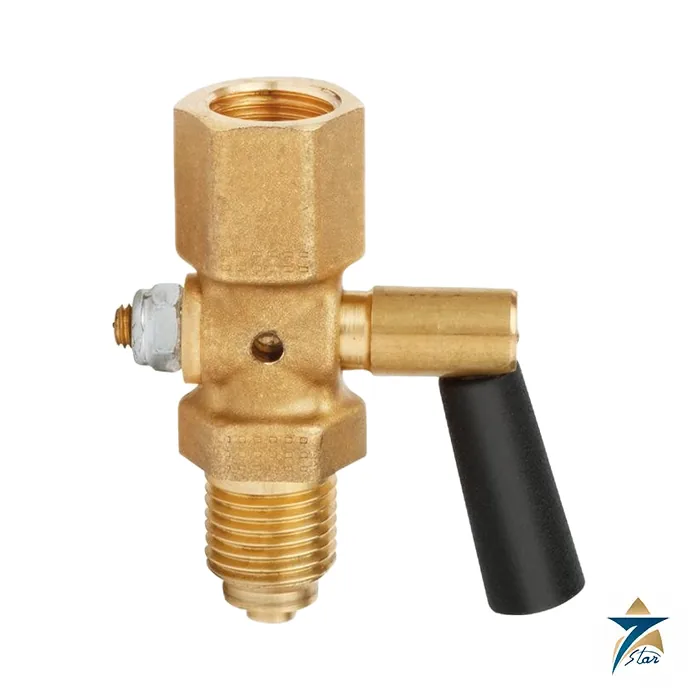
The WIKA 910.10 is a three-way stopcock that sits between a pressure line and a pressure gauge. By turning the handle, the operator can put the gauge into operating position, vent it to relieve its pressure, or blow the line out to the outside. The data sheet lists the design to DIN 16261, DIN 16262 and DIN 16263, nominal pressures up to 25 bar and an operating temperature up to 50 °C. Seven Star LLC supplies the 910.10 in Oman and the GCC as an independent supplier in Muscat, and this page explains the versions so the RFQ can name the correct connection and material.
What the 910.10 does in the measuring line
A pressure gauge connected permanently to a line cannot be removed or zero-checked without shutting the process down. The 910.10 solves that with one handle and three positions. In the operating position the line is connected to the gauge. In the venting position the gauge is isolated and its pressure is released to atmosphere, so it can be inspected, replaced or zero-checked. In the blow position the medium can escape from the line side, which is useful for clearing a clogged impulse connection. Because it is a cock and not a needle valve, it is quick to operate but is not meant to throttle flow.
A test connection version uses the third route, which leads outside on the standard design, as the connection for a test pressure gauge. A fourth handle position then connects the operating gauge and the test gauge to the pressure line at the same time, so the plant gauge can be checked against a calibrated reference without taking it off.
Technical specifications of the 910.10
| Parameter |
Specification |
| Manufacturer / part number |
WIKA / 910.10 |
| Design standards |
DIN 16261, DIN 16262, DIN 16263 |
| Nominal pressure |
PN 6 (G 1/4), PN 16 (G 3/8), PN 25 (G 1/2) depending on version; up to 25 bar |
| Operating temperature |
Up to 50 °C; 80 °C with gland packing and no venting bore |
| Wetted parts |
Brass CW614N chrome plated (standard); steel; stainless steel 1.4571 |
| Handle |
Brass, bright; installed in the case with silicone-free grease |
| Connections |
Female/female, female/male, union nut/female, union nut/male, LH-RH adjusting nut/male |
| Thread sizes |
G 1/4, G 3/8 and G 1/2 per EN 837 |
| Test connection |
Test pivot M20 x 1.5, or test flange 40 x 5 mm or 60 x 25 x 10 mm |
| Options |
Gland packing, no venting bore (standard version only), special threads |
| Weight |
0.06 kg (G 1/4) to 0.40 kg (G 1/2 LH-RH adjusting nut/male) |
Connection designs and sizes of the 910.10
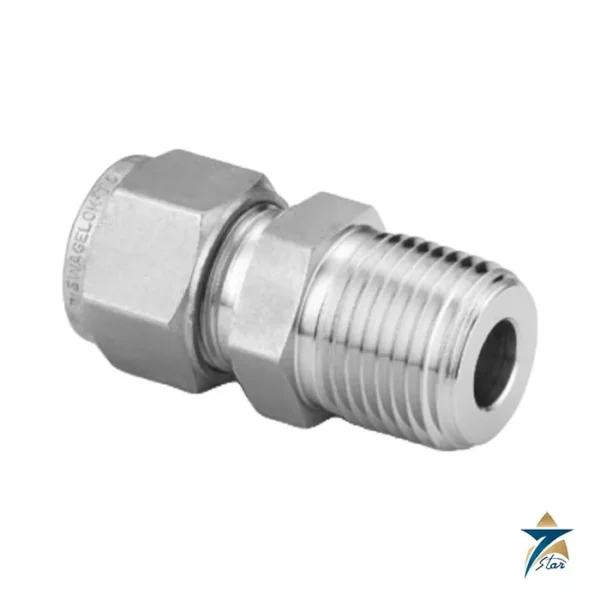
The 910.10 is sold in a family of connection layouts that differ in how the instrument and the line are attached. The data sheet shows the following groups, all in G 1/2 with PN 25 unless noted: female/female, female/male, union nut/female, union nut/male and LH-RH adjusting nut/male. Smaller G 1/4 versions are rated PN 6, and G 3/8 versions PN 16. The female/female G 1/4 stopcock weighs about 0.06 kg and measures 48 mm in length, while the G 1/2 female/male is 78.5 mm long and weighs about 0.28 kg. These size differences matter when you replace an old stopcock on a crowded panel, because the length of the stopcock changes the position of the gauge.
- Female/female: screws between a male line fitting and a male gauge thread.
- Female/male: the male side threads into the line tapping and the female side takes the gauge.
- Union nut versions: a union nut on the line side makes the stopcock easy to remove for service.
- LH-RH adjusting nut/male: an adjusting nut that allows the gauge to be aligned to the reading direction after tightening.
- With gland packing: suitable up to 80 °C, but without the venting bore.
Where the 910.10 fits and the alternatives
The data sheet directs users to shut-off valves, the model 910.11, for pressures higher than the stopcock rating, because cocks are limited to PN 25 at most. For pulsation, add a snubber such as the 910.12 between the stopcock and the gauge or a 910.13 overpressure protector. For hot media, a syphon 910.15 or cooling element 910.32 belongs between the line and the stopcock. Sealings per 910.17 suit the parallel threads. The gauges that normally sit on a 910.10 are the Bourdon tube models 111.10, 131.11, 213.53 and 232.50, all with G 1/2 or G 1/4 connections.
Selection and ordering checklist for the 910.10
- Pressure and temperature: confirm PN 25 and 50 °C are not exceeded.
- Connection layout: female/female, female/male, union or LH-RH adjusting nut.
- Thread size G 1/4, G 3/8 or G 1/2, and any special thread.
- Material: brass, steel or stainless steel 1.4571, matched to medium.
- Test connection: none, M20 x 1.5 pivot, or flange 40 or 60 mm.
- Gland packing (and the resulting loss of the venting bore).
- Whether the medium contains oxygen, requires oil-free handling or another special preparation.
Installation and maintenance of the 910.10
Fit a flat sealing ring, for example model 910.17, in each parallel thread joint and tighten on the spanner flats (SW 17 for G 1/4 and SW 27 for G 1/2 according to the dimension tables). Do not use the handle as a lever. Move the handle slowly from the venting position to the operating position so that the Bourdon tube is not hit by a sudden pressure rise. Mark the handle positions on site so operators know which is operating, venting and blow. At each shutdown, check for weeping at the handle and replace the cock if the handle becomes stiff or leaks, because these cocks are wear parts.
Typical applications in Oman and the GCC
In oil and gas, power and desalination plants a stopcock lets the technician remove a pressure gauge from a live utility line, for example compressed air, cooling water, fuel gas pilot lines and service water. The chrome-plated brass version suits indoor utility panels; where salt air or chemicals are present, the stainless steel 1.4571 version is the usual choice. The test connection versions help during commissioning, when many gauges must be checked against a reference quickly.
Standard connection versions at a glance
| Design |
Thread |
PN (bar) |
Typical wetted material |
| Female/female |
G 1/4 |
6 |
Brass |
| Female/female |
G 3/8 |
16 |
Brass |
| Female/female |
G 1/2 |
25 |
Brass |
| Female/male |
G 1/2 |
25 |
Brass |
| LH-RH adjusting nut/male |
G 1/2 |
25 |
Brass or 1.4571 |
| With test connection M20 x 1.5 |
G 1/2 |
16 |
Brass or 1.4571 |
Information to send with an RFQ
- Model 910.10 and thread size
- Connection layout and material
- Test connection option
- Pressure, temperature and medium
- Quantity, delivery site and certificates
Documents and quotation
The WIKA data sheet for the 910.10 is attached on this page. It includes dimension tables and the order-number list for each version.
Send the thread, layout and material and Seven Star LLC will confirm availability and a quotation.




















Reviews
There are no reviews yet.