Brand:

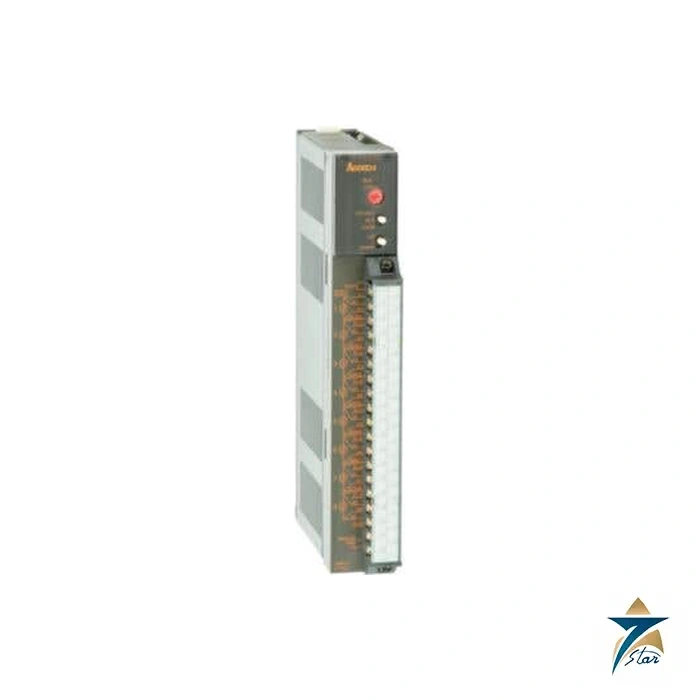
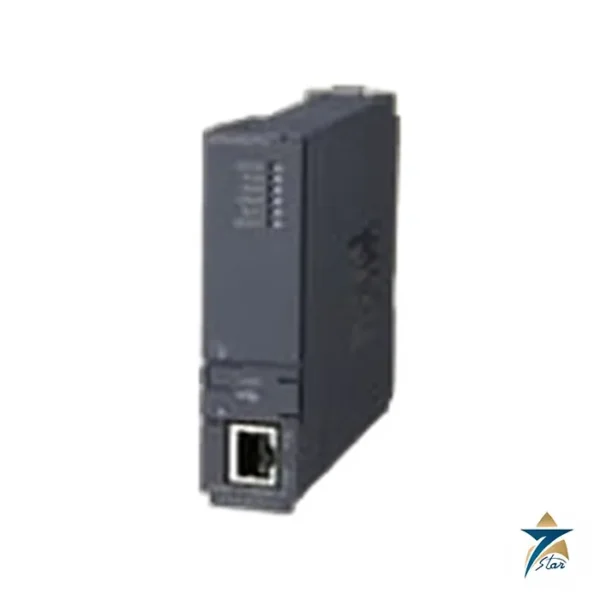
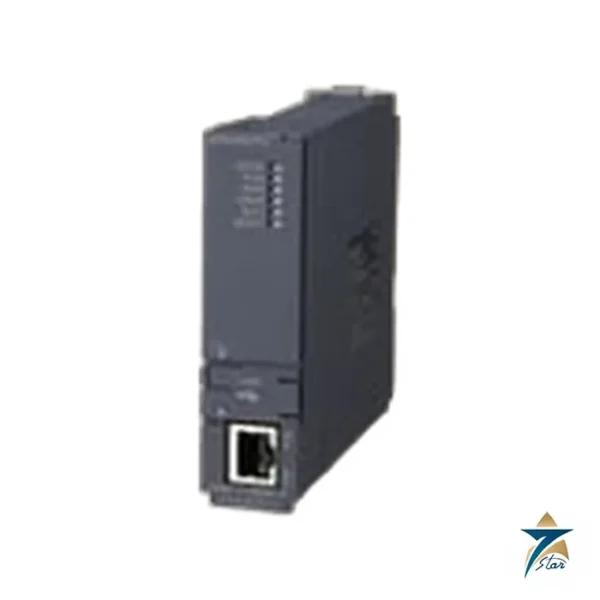
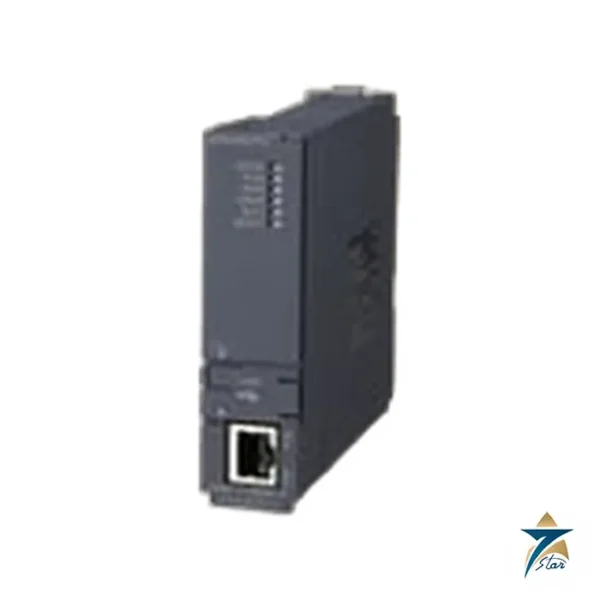
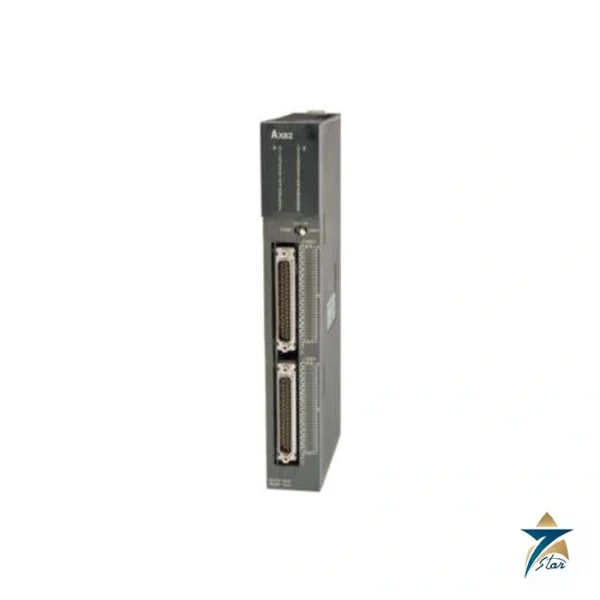
Mitsubishi A68RD4 Temperature Input Module

Description

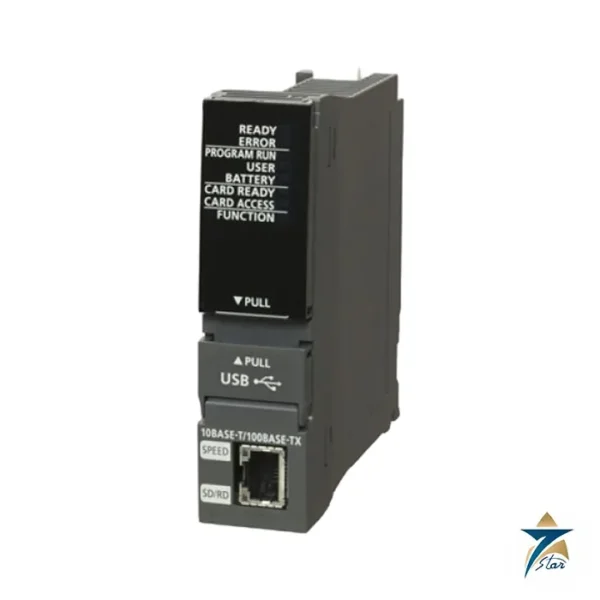
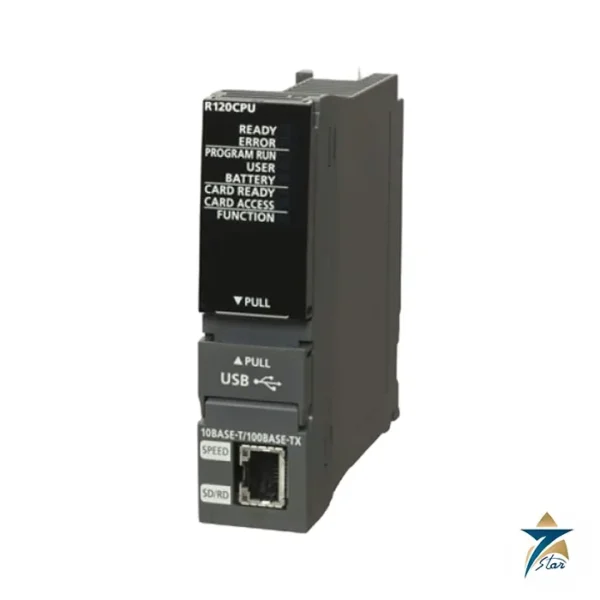
Mitsubishi A68RD4 RTD temperature input module overview

The Mitsubishi A68RD4 is a platinum resistance temperature detector (RTD) input module for MELSEC-A large-type PLCs, designed for four-wire sensor connection. It converts the resistance of Pt100 or JPt100 elements into temperature data that the A-series CPU reads from the module buffer memory. Seven Star LLC supplies the Mitsubishi A68RD4 on request for users in Oman and the GCC who maintain installed A-series temperature monitoring and control systems.

Mitsubishi produced two closely related modules. The A68RD3 is for three-wire RTDs, and the Mitsubishi A68RD4 is for four-wire RTDs. Mitsubishi technical bulletin T17-0002, which supplements the A68RD3/A68RD4 user’s manual (IB-66308), states this split directly. Ordering the wrong one changes the wiring method and the measurement accuracy, so the wire count of the installed sensors is the first point to check.

Key features

  • Four-wire RTD measurement, which removes the effect of lead-wire resistance from the reading.
  • Pt100 and JPt100 sensor support, covering both the IEC/DIN-style and the older Japanese platinum characteristic.
  • Constant-current excitation of 4.2 – 4.7 mA for temperature detection, as stated in the bulletin.
  • Multi-channel design: the A68 module naming and distributor data indicate eight channels; confirm the channel count against the manufacturer manual for the exact version.
  • Buffer-memory data exchange with the CPU, in the same way as other MELSEC-A special function modules.

Technical specifications

Parameter Specification
Model A68RD4
PLC family MELSEC-A large type
Sensor connection Four-wire RTD (the A68RD3 is the three-wire version)
Connectable sensors Pt100 (JIS C1604-1989, DIN 43760-1980); JPt100 (JIS C1604-1981)
Output current for temperature detection 4.2 mA minimum, 4.7 mA maximum
Reference manual A68RD3/A68RD4 user’s manual IB-66308, supplemented by bulletin T17-0002
Operating ambient temperature 0 – 55 °C (distributor data)
Storage temperature −20 – 75 °C (distributor data)
Operating humidity 10 – 95% RH, non-condensing (distributor data)
Measurement range and accuracy Confirm against the manufacturer datasheet
Lifecycle status MELSEC-A large type discontinued; production ended in September 2006

Operating principle

In a four-wire circuit, two wires carry the constant excitation current through the platinum element and the other two wires sense the voltage directly across the element. Because almost no current flows in the sensing pair, the resistance of the long cable does not add to the measured value. The module converts the voltage to resistance and then to temperature using the selected Pt100 or JPt100 characteristic. The CPU reads the result from buffer memory with FROM instructions and writes settings with TO instructions. A three-wire module, by contrast, compensates for lead resistance by assuming that the cores are equal, which is why three-wire and four-wire sensors are not interchangeable on these modules.

Typical applications

  • Bearing, winding and oil temperature monitoring on motors, pumps and compressors controlled by A-series PLCs.
  • Furnace, oven and dryer zone measurement where the RTD is a long distance from the panel.
  • Process tank, heat exchanger and chilled water temperatures in utility plants.
  • Laboratory and test stands that were built with four-wire RTDs for accuracy.

Selection notes for the Mitsubishi A68RD4

  • Wire count: count the cores at each sensor. Four cores per sensor call for the A68RD4; three cores call for the A68RD3.
  • Sensor standard: Pt100 and JPt100 have different resistance curves. Check the sensor tags and the module settings in the program.
  • Version letter: later N versions (A68RD4N) also exist. Distributor data for the A68RD4N lists a 40 ms per-channel conversion time and 32 occupied I/O points; confirm whether the program and I/O allocation of the installed rack match the exact version before replacing one with the other.
  • Base and CPU: confirm that the base slot and the I/O allocation of the existing rack will accept the module without changes.

Mitsubishi A68RD4 installation and commissioning

Use shielded cable for each sensor and earth the shield at one end, as described in the module manual. Keep the RTD cables away from motor and drive power cables. Terminate the four conductors on the correct excitation and sense terminals for each channel. Disable or short any unused channels in line with the manual, so that they do not raise alarms. After power-up, compare each reading with a calibrated reference thermometer or a decade resistance box set to known Pt100 values. Then confirm that the program scales and alarms the values correctly.

Mitsubishi A68RD4 maintenance and troubleshooting

  • Reading at the top or bottom of the scale: usually an open sensor or a broken wire. Measure the element resistance at the module terminals with the cable disconnected.
  • Offset on one channel: check for a swapped sense and excitation pair, or a three-wire sensor connected to a four-wire input.
  • Noisy readings: check the shield earthing and the cable routing, and look for moisture in sensor heads, which is common in humid coastal plants.
  • All channels wrong: check the sensor type setting (Pt100 or JPt100) in the program and the module error codes in buffer memory.

Mitsubishi A68RD4 legacy and replacement notes

Mitsubishi Electric bulletin T99-0050 records that production of MELSEC-A/QnA large-type products ended in September 2006, and repair support ended in September 2013. Units of the Mitsubishi A68RD4 available today are surplus or refurbished, and their condition must be agreed per order.

For the later A68RD3N and A68RD4N, the same bulletin lists the Q64RD as the MELSEC-Q migration module, with the following changes:

  • Two Q64RD modules are needed, because each has four channels.
  • The cable size changes.
  • The occupied I/O points, I/O signals and buffer memory addresses change, so the program must be revised.

The plain A68RD4 is not named separately in that table. Treat this path as guidance and confirm it for the installed version.

Quotation enquiries for Oman and the GCC

Seven Star LLC supplies the Mitsubishi A68RD4 on request. Availability, condition and lead time are confirmed at quotation. Please send:

  • The exact reference and version letter from the module label (A68RD4 or A68RD4N, for example).
  • The quantity required.
  • A photograph of the nameplate and of the terminal wiring.
  • The sensor type and wire count, the CPU and base references, and the measured process.

Technical support with selection and cross-checking of the reference is provided, including a check of three-wire against four-wire sensors and of the N-version differences.

Datasheets & Documents
  • PDF Technical bulletin A68RD Temperature Measurement Technical Bulletin — February 2000 Download
Reviews (0)

Reviews

There are no reviews yet.

How would you rate this product?

It takes about 10 seconds — just tap a star. Your email is never published.

About brand

Mitsubishi Electric is the Japanese electrical and electronics manufacturer whose factory automation range includes MELSEC programmable controllers, GOT operator panels, MELSERVO servo systems, FR inverters and low-voltage switchgear. It was established on 15 January 1921, when the electrical machinery works of Mitsubishi Shipbuilding in Kobe became a separate company. Mitsubishi Electric Corporation is headquartered in Tokyo and listed on the Tokyo Stock Exchange.

Laboratories that run an NSX-2100 trace sulfur, nitrogen or chlorine analyzer usually know it as a Mitsubishi instrument. The nameplate reads Mitsubishi Chemical Analytech, a name later changed to Nittoseiko Analytech. Seven Star LLC lists the TN6RPC gas tube dryer set for this analyzer and sources NSX-2100 consumables for refinery and fuel-testing laboratories in Oman and the GCC.

The Mitsubishi listing also includes Mitsubishi Electric factory automation and drive products: MR-J3, MR-J5 and MR-JE servo amplifiers, GOT2000 and GOT SIMPLE HMI touch panels, FR-A800, FR-E800, FR-F800 and FR-CS80 FREQROL inverters, MELSEC iQ-F PLC modules, MELSEC A-series input and temperature modules with a memory cassette, and S-T magnetic contactors and TH-T thermal overload relays.

Mitsubishi company profile

Established 15 January 1921, from the electrical works of Mitsubishi Shipbuilding in Kobe, Japan
Headquarters Tokyo, Japan
Ownership Mitsubishi Electric Corporation, public company listed on the Tokyo Stock Exchange; a member of the Mitsubishi group of companies
Product families MELSEC iQ-R, iQ-F and Q series PLCs, GOT2000 HMIs, MELSERVO MR-J5 and MR-JE servo amplifiers and motors, FR series inverters, S-T magnetic contactors and TH-T thermal overload relays, circuit breakers
Note Laboratory analysers sold under the Mitsubishi Chemical Analytech name (now Nittoseiko Analytech) come from a different Mitsubishi company

Mitsubishi NSX-2100 parts

The NSX-2100 was built with a horizontal or a vertical furnace, and one furnace can serve several detectors. The dryer set removes water from the combustion gas before it reaches the detector. Like the connection kits, it is a consumable, and its part code changes with the analyzer variant.

Mitsubishi products we list

Family Examples
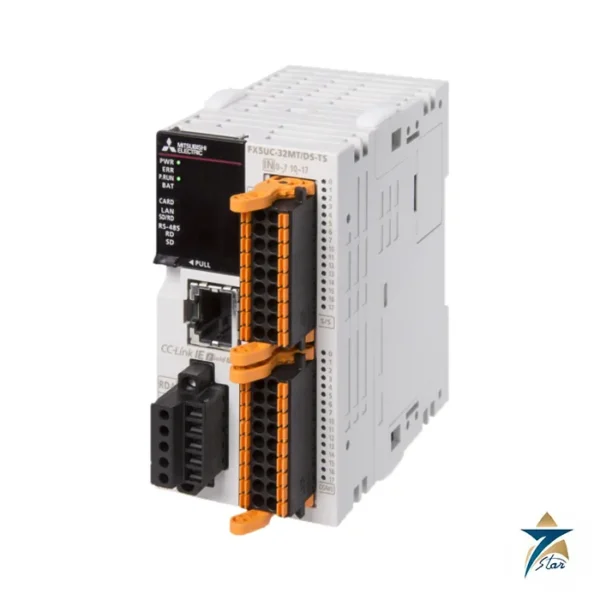
PLC & I/O Cards A68RD4 Temperature Input Module, AX81 Input Module, AX82 Input Module, FX5S-30MT/ES MELSEC iQ-F Compact PLC, FX5U MELSEC iQ-F Compact PLC CPU Module, FX5UC-32MT/DS-TS MELSEC iQ-F 32-Point PLC
Servo Drives MR-J3-100BS4 Servo Amplifier, MR-J5-G CC-Link IE TSN Servo Amplifier, MR-JE-A General-Purpose Servo Amplifier, MR-JE-B SSCNET III/H Servo Amplifier, MR-JE-C Ethernet Servo Amplifier
AC Drives FR-A840 FR-A800 Series 400 V Inverter, FR-CS80 Compact and Smart FREQROL Inverter, FR-E800 Compact FREQROL Inverter, FR-F800 Energy-Saving Fan and Pump Inverter
HMI Displays GS2110-WTBD-N 10 in GOT SIMPLE HMI, GT2510-VTBA GOT2000 10.4 Inch HMI Touch Panel, GT2712-STBA 12.1 in GOT2000 HMI Touch Panel
Contactors & Overload Relays S-T10 Magnetic Contactor, TH-T25 Thermal Overload Relay
Automation Accessories A3NMCA16 Memory Cassette
Gas Analyzer Accessories TN6RPC Gas Tube Dryer Set for NSX-2100 Sulfur

Ordering NSX-2100 consumables: what we need

Send the part code, for example TN6RPC, together with the exact analyzer model shown on the nameplate (the letters after NSX-2100 indicate furnace type and detectors), the serial number and the detectors fitted. Some original part codes have been replaced by newer ones, so we check each code against the manufacturer's current parts list before quoting.

Facts checked against Mitsubishi Electric's published corporate profile, October 2026.

FAQ

Questions about the Mitsubishi A68RD4 Temperature Input Module

Answers from our engineering team on installation, compatibility and integration.

01What is the difference between the Mitsubishi A68RD4 and the A68RD3?
The A68RD4 is for four-wire RTDs and the A68RD3 is for three-wire RTDs, as stated in Mitsubishi bulletin T17-0002.
02Which sensors can be connected to the A68RD4?
Pt100 to JIS C1604-1989 and DIN 43760-1980, and JPt100 to JIS C1604-1981.
03What excitation current does the A68RD4 use?
The bulletin lists an output current for temperature detection of 4.2 mA minimum and 4.7 mA maximum.
04Is the A68RD4 still produced?
No. MELSEC-A large-type production ended in September 2006 according to Mitsubishi bulletin T99-0050.
05What is the Q-series migration path?
For the A68RD3N and A68RD4N, the bulletin names the Q64RD. Two modules are needed because each has four channels, and the program must be revised for the new I/O and buffer memory addresses.