An economical ceramic-cell transmitter for abrasive media
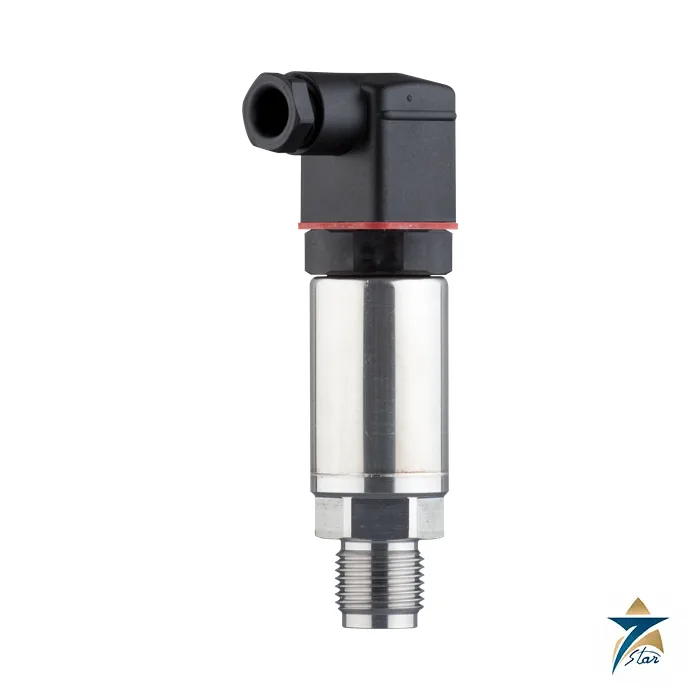
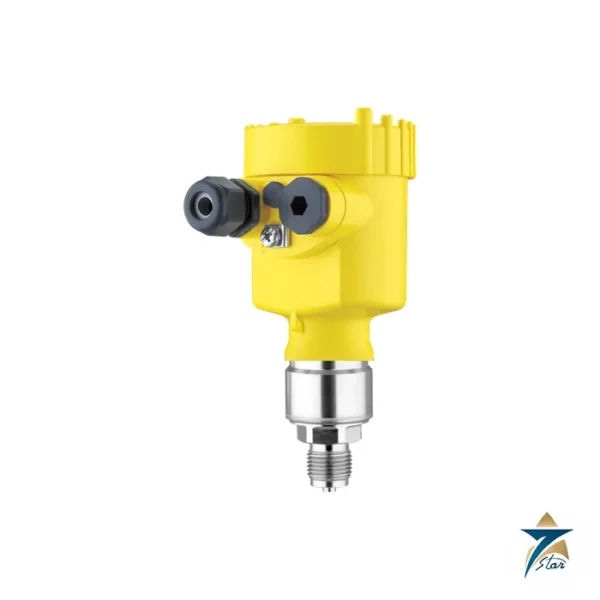
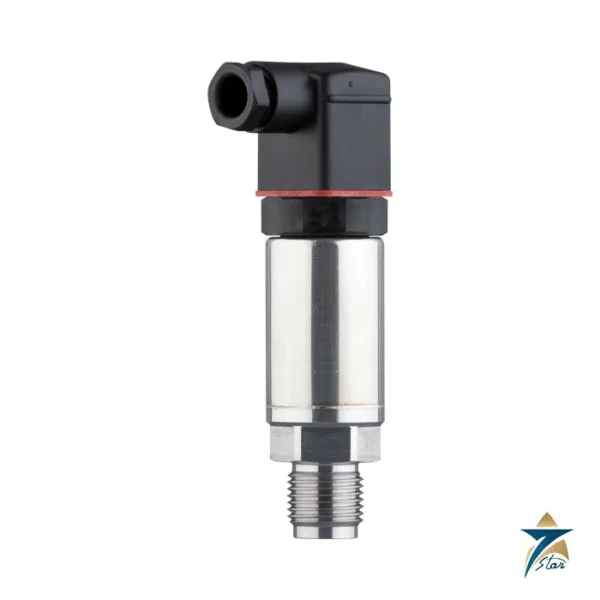
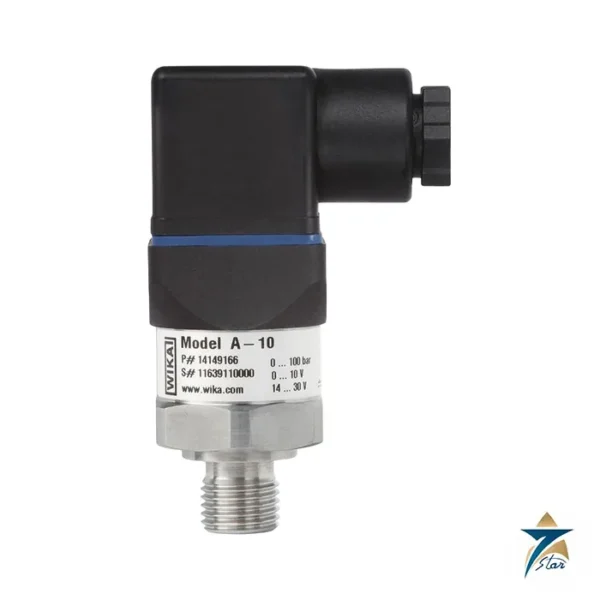
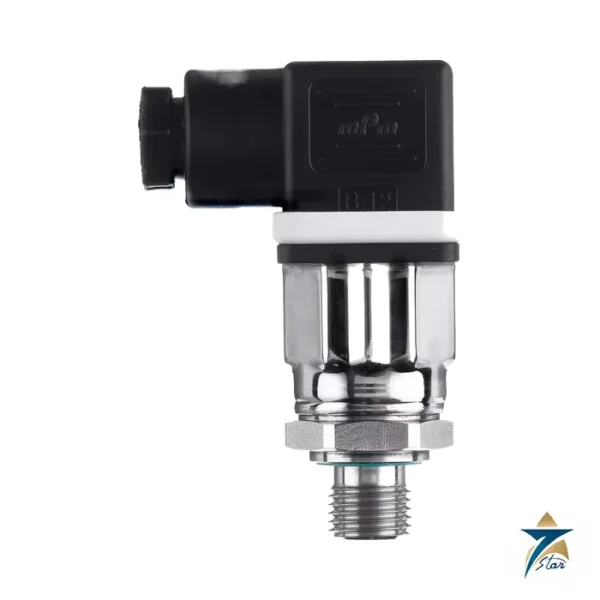
The VEGABAR 18 is the budget model of VEGA’s process-pressure transmitters, a small 4…20 mA unit with a dry ceramic CERTEC measuring cell that VEGA recommends for gases, vapours and liquids in all areas of industry, including media with abrasive particles. Its very small mounting dimensions suit machine builders and skids, and the maximum overload and vacuum resistance of the ceramic cell is cited as the reason for high plant availability. There is no display and no Bluetooth: it is a plug-and-measure sensor, wired through an ISO 4400 or M12 x 1 connector.
Technical specifications
| Parameter |
Specification |
| Type |
VEGABAR 18, two-wire 4…20 mA pressure transmitter, ceramic cell |
| Measuring range |
0…+25 bar (0…+2500 kPa); smallest span 0.1 bar (1.45 psig) |
| Deviation |
< 0.5 % |
| Output signal |
4…20 mA |
| Process fitting |
Thread from G½, ½ NPT |
| Process temperature |
-40…+100 °C (-40…+212 °F) |
| Ambient, storage, transport |
-40…+70 °C (-40…+140 °F) |
| Operating voltage |
12…35 V DC |
| Protection rating |
Up to IP66/IP67 acc. to EN 60529 / IEC 529 |
| Wetted parts, seal |
316L and sapphire-ceramic; FKM seal |
| Measuring system |
Mini-CERTEC, dry (no isolating liquid) |
| Electrical connection |
Plug connector ISO 4400 or M12 x 1 |
Why choose ceramic over metal
In VEGA’s selection table the ceramic-cell sensors (18, 28, 38) are the ones listed for abrasive products and the metallic-cell sensors (19, 29, 39) the ones for aggressive products. A dry ceramic cell has no oil fill, so there is no isolating liquid to leak. The 18 is limited to +100 °C and 25 bar, and the cell is not front-flush, which makes it unsuitable for viscous, crystallising products; for those and for hygienic connections move to the VEGABAR 28 or 38, which add hygienic fittings and front-flush versions.
Installation and wiring
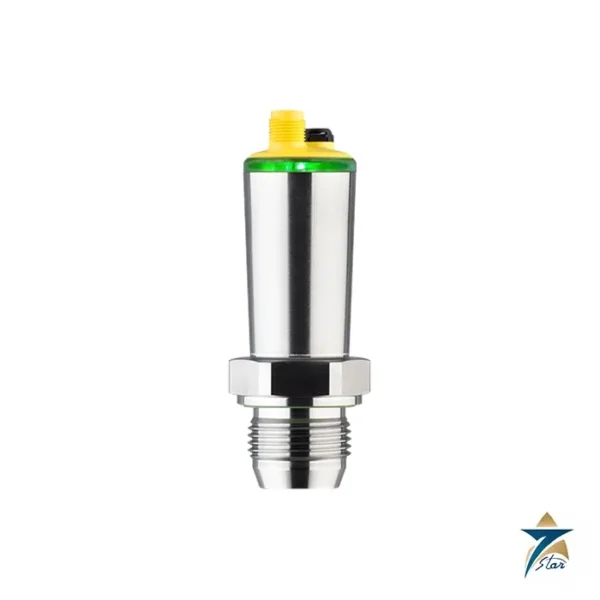
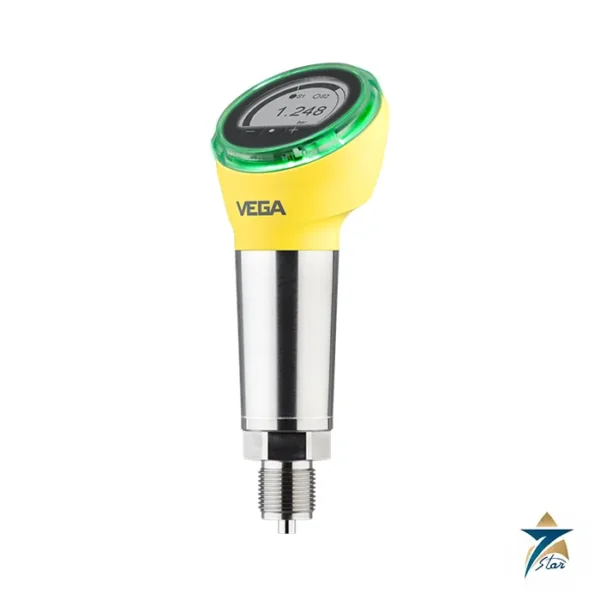
Screw the sensor into a G½ or ½ NPT port, seal with FKM, and wire the two-wire loop: with the M12 x 1 plug, pin 1 carries voltage supply and signal output and the shield is on the housing; with the ISO 4400 plug, contacts 1 and 2 carry the loop. A 12…35 V DC supply is required and the loop must meet the supply data in the sheet. Unlike the VEGABAR 28 there is no LED status ring, so use a loop display or the controller to indicate faults.
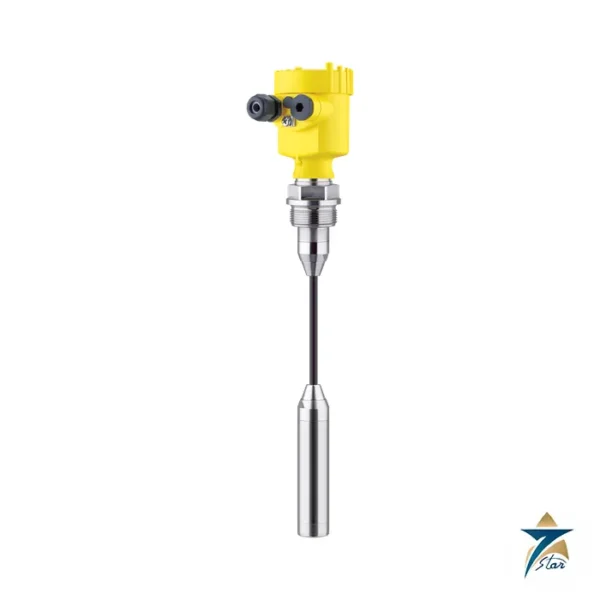
The product information also shows the sensor in a hydrostatic level application: a pressure transmitter near the bottom of an open or closed tank converts hydrostatic pressure to a level signal, so the VEGABAR 18 can serve as a low-cost level sensor in clean water, additive and wash-down tanks when the controller scales the loop. For that use the 0.5 % deviation and the 0.1 bar smallest span matter more than the 25 bar ceiling, and the dry ceramic cell keeps the sensor free of oil that could contaminate the medium.
Selection checks before specifying the VEGABAR 18
The VEGABAR 18 is deliberately simple, so the main risk in selection is asking it to do a job that belongs to a more capable sensor. Work through a short checklist for each tag. Is the maximum process pressure, including pressure surges, comfortably within the 25 bar range? Will the process temperature stay inside the stated limits at all times, including during cleaning or start-up? Is the medium compatible with the 316L, ceramic and FKM wetted materials listed in the table? Does the product tend to build up, crystallise or set in a recessed port?
If any of these answers is uncertain, raise it with the process owner before ordering. It is also worth confirming which plug connector the existing cable set or junction box uses, so that the ISO 4400 or M12 x 1 choice matches the plant standard and spares are interchangeable.
Commissioning the loop
After installation, power the loop and check the current at zero pressure, either with a loop meter or on the controller input. Then apply a known pressure, or fill the tank to a known level in a hydrostatic application, and compare the controller value with the expected figure. For level duty, the controller needs the density of the liquid and the mounting height of the sensor relative to the tank bottom; record both on the commissioning sheet so that later checks use the same basis.
Because the sensor has no display, label each transmitter clearly with its tag number and range at the installation point. This saves time during fault-finding, especially on skids where several identical transmitters are mounted close together.
Operating environment in Oman and the Gulf
Water treatment plants, desalination skids and utility tanks in Oman frequently place small transmitters outdoors, where they face strong sun, blowing dust and, near the coast, humid air. Compare the ambient limits in the specification table with the conditions at the actual mounting point; metal surfaces and enclosures in direct sunlight can become much hotter than the shaded air temperature reported by weather services. A simple shade or a mounting position on the shaded side of a vessel or frame can help keep the sensor within its limits.
Dust and humidity mostly affect the electrical connection. Make sure the plug connector is fully seated and assembled as described in the VEGA documentation so that the protection rating is maintained, and route cables so that water runs away from the connector rather than into it.
Routine checks and maintenance
The dry ceramic cell needs no refilling or adjustment, so maintenance is limited to periodic inspection. At planned shutdowns, look for deposits at the process connection, check the seal condition when the sensor is removed, and compare the reading with a reference at zero and at a known point. For abrasive media, inspect the port for wear or blockage. If the reading becomes unstable, check supply voltage, wiring and connector condition before concluding that the sensor itself has failed.
Documents and quotation
The official VEGA VEGABAR 18 (two-wire 4…20 mA) specification sheet (55577-EN, version 230327) is attached to this page for download and covers the technical data, dimensions and wiring summarised above.
Send Seven Star LLC your tag list, process medium, vessel geometry, required approvals and quantity and we will prepare a quotation from our Muscat office. We are an independent supplier; more level instrumentation is listed on our site. Confirm the final order code and approval marking with the manufacturer before ordering.












Reviews
There are no reviews yet.