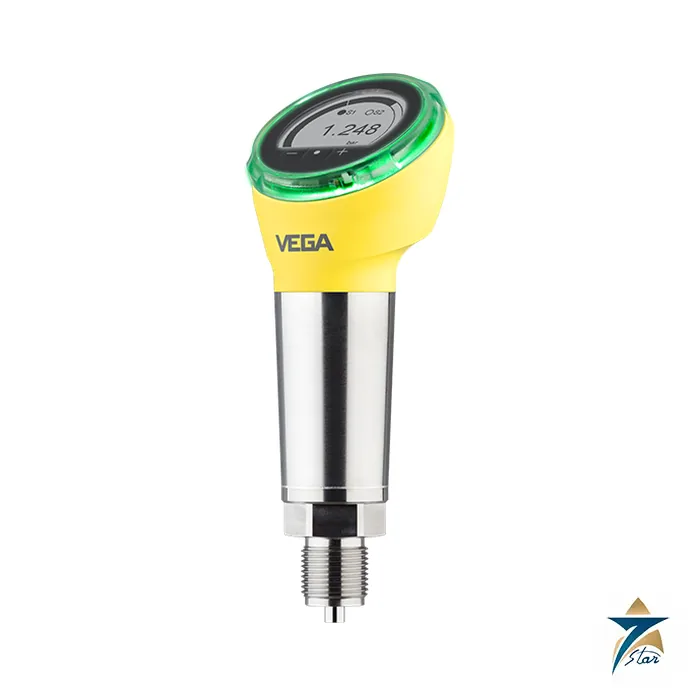
A ceramic-cell transmitter with integrated display and status ring
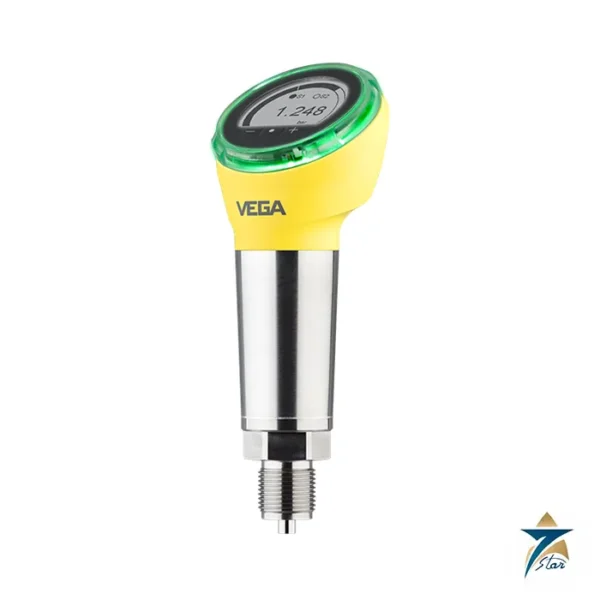
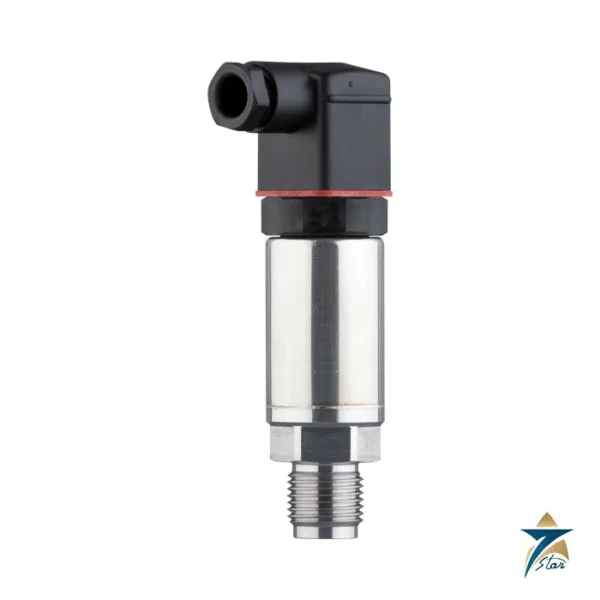
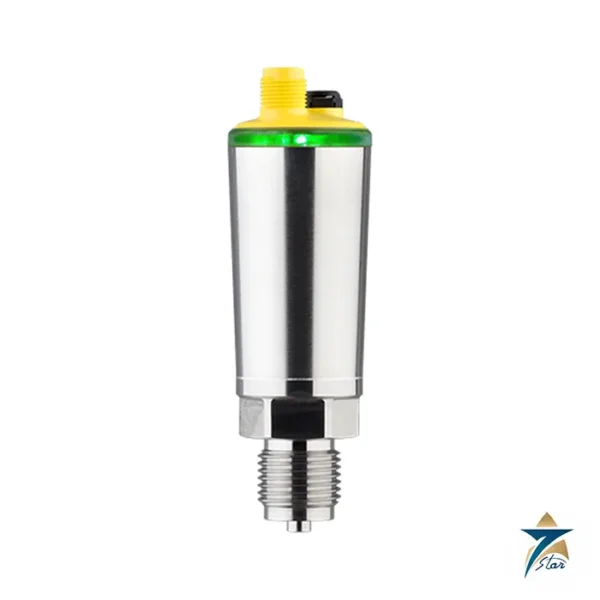
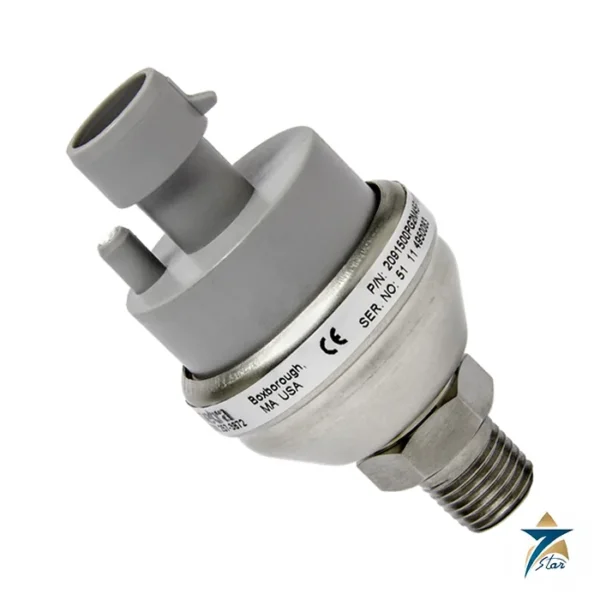
The VEGABAR 38 is the ceramic-cell model of the 30 series, adding a built-in display with on-site adjustment following the VDMA menu structure to the coloured 360° status ring and Bluetooth setup of the 20 series. It measures -1 to +60 bar in gases, vapours and liquids, is stated to handle abrasive substances thanks to the dry ceramic cell, and resists overload and vacuum. The housing is stainless steel 316L with plastic PBT parts and offers protection up to IP66/IP67 (Type 6P), with a hygienic universal adapter option.
Technical specifications
| Parameter |
Specification |
| Type |
VEGABAR 38, pressure sensor with ceramic cell, display and switching function |
| Measuring range |
-1…+60 bar (-100…+6000 kPa); smallest span 0.1 bar |
| Deviation |
< 0.3 % |
| Output signal |
Two-wire 4…20 mA; three-wire IO-Link, 4…20 mA and transistor versions |
| Process fitting |
Thread from G¼, ¼ NPT; hygienic fittings |
| Process temperature |
-40…+130 °C; SIP +150 °C with brief vapour stratification |
| Ambient, storage, transport |
-40…+70 °C |
| Bluetooth |
Bluetooth 5.0, typically 25 m |
| Operating voltage |
12…35 V DC |
| Protection rating |
Up to IP66/IP67; up to Type 6P NEMA/UL 50E |
| Wetted parts |
316L, PVDF, duplex steel, PEEK or sapphire-ceramic; FKM, EPDM or FFKM seals |
| Housing |
Stainless steel 316L and plastic PBT |
On-site display and VDMA menu
The integrated display of the VEGABAR 38 and 39 is what distinguishes them from the VEGABAR 28 and 29. Menu entries follow the VDMA structure used by many switching sensors, so technicians familiar with pressure switches can set span and switching points without a laptop. The coloured ring doubles as a status indicator of the switching state, and the Bluetooth link allows readout from a phone. For flow-through pumps in water and process lines the display saves a gauge, which reduces the number of tapping points.
Ceramic or metallic
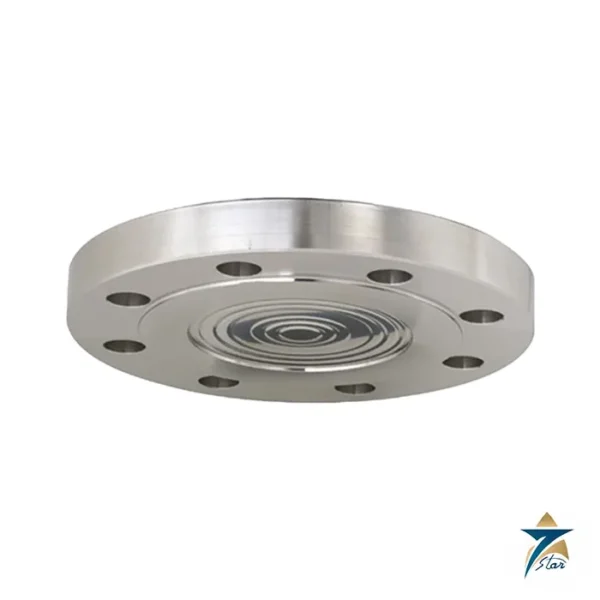
VEGA’s selection table puts the 38 with abrasive products and the 39 with aggressive ones; the 38’s dry ceramic system carries no isolating oil, and the process fitting can be flush-diaphragm or hygienic. The ceramic range stops at 60 bar, whereas the VEGABAR 39 reaches 1000 bar. Confirm the seal (FKM, EPDM or FFKM) and the wetted material against the medium, and give the fitting and electrical connector when you quote.
The housing material split matters for corrosive plants: the sheet gives stainless steel 316L with plastic PBT parts and protection up to IP66/IP67, and wetted material choices of 316L, PVDF, duplex steel, PEEK and sapphire-ceramic depending on fitting, which lets a chemical plant match the wetted surface to the medium. Where the signal has to reach a PLC over IO-Link rather than a 4…20 mA loop, specify the three-wire version at the time of ordering and confirm the electronics option with the manufacturer.
Selecting the VEGABAR 38 for a measuring point
Start with the medium and the pressure range. The ceramic cell suits abrasive liquids, slurries and gases within the stated -1 to +60 bar window, and its overload and vacuum resistance helps on lines that see pressure surges or suction during pump start and stop. Choose a measuring range close to the real operating band rather than the maximum available, because a span matched to the process gives better resolution on the display and on the analogue signal. Then check the process temperature against the stated limits, including any steam-in-place cycle, and pick the seal material that is compatible with both the product and the cleaning chemicals.
Output choice follows the control system. A two-wire 4…20 mA loop is the simplest option for existing DCS or PLC analogue cards, while the three-wire IO-Link and transistor versions fit machines where the sensor also has to act as a pressure switch. Write the chosen output and supply voltage into the instrument datasheet so that the loop design and the order agree.
Installation and commissioning practice
Mount the transmitter where it can be read and reached for adjustment, and keep it away from strong vibration or direct heating sources where possible. On liquid lines, a tapping on the side of the pipe avoids trapped gas at the top and sediment at the bottom; on gas lines, a tapping on the top lets condensate drain back to the process. Tighten the process fitting with a suitable tool on the fitting itself, never by turning the housing, and make sure the cable entry is sealed and oriented so that water cannot run into it.
At commissioning, check the zero with the line vented, confirm the span and switching points through the on-site menu or the Bluetooth app, and record the settings in the loop file. The coloured status ring gives operators a quick visual confirmation that the switching state matches what the control room sees.
Operation and maintenance
A dry ceramic cell has no fill fluid to leak, so routine care is mostly external: inspect the housing, cable gland and seal at each planned shutdown, clean deposits from flush-diaphragm fittings with a method that does not scratch the ceramic, and compare the reading against a reference gauge at the calibration interval set by your site procedures. Keep a record of each check so that drift trends can be spotted early.
Using the transmitter in GCC plants
Water treatment, desalination, food and chemical plants across Oman and the wider GCC operate in high ambient heat, fine dust and coastal humidity. The stainless steel 316L housing and the stated IP66/IP67 protection are a good basis, but outdoor installations still benefit from shading by the surrounding structure so that housing temperature stays inside the stated ambient limits and the display remains readable. Keep cable entries closed, use suitable glands, and check seals after washdowns or sandstorms. When you send an RFQ, list the medium, measuring range, process fitting, wetted and seal materials, output version, electrical connection and any hygienic or hazardous-area requirement, so the configuration can be checked against the manufacturer’s data in one pass.
Documents and quotation
The official VEGA VEGABAR 38 (two-wire 4…20 mA) specification sheet (57098-EN, version 230314) is attached to this page for download and covers the technical data, dimensions and wiring summarised above.
RFQs are welcome with the tag number, medium, process conditions and electrical requirements. Seven Star LLC is an independent supplier based in Muscat and will answer with a quotation; compare alternatives in our level instrumentation section. Ordering details such as configuration, approvals and connection should be confirmed with the manufacturer before purchase.











Reviews
There are no reviews yet.