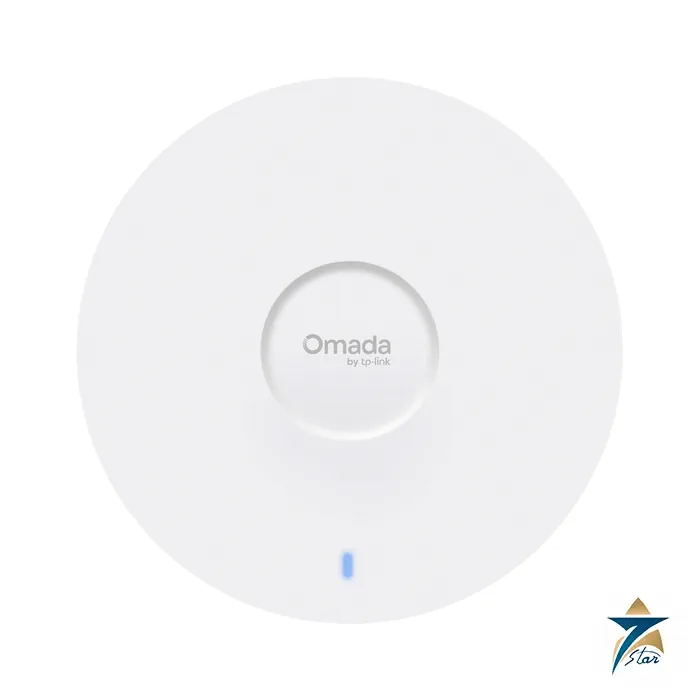
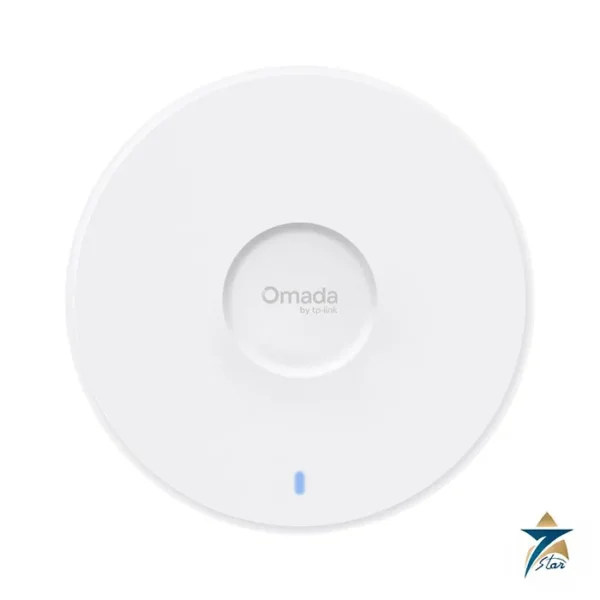
A six-stream Wi-Fi 6 ceiling access point with a 2.5G port
The EAP670 is an Omada AX5400 ceiling-mount access point with six spatial streams: four on 5 GHz at up to 4804 Mbps and two on 2.4 GHz at up to 574 Mbps. A single 2.5G Ethernet port carries data and 802.3at PoE+, and a 12 V DC input with a supplied adapter is the alternative.
The datasheet lists 160 MHz channels, uplink and downlink MU-MIMO, OFDMA and 1024-QAM, support for more than 250 concurrent clients and coverage of up to 1500 sq ft (140 sq m). It is managed through Omada SDN controllers, the cloud or standalone, with mesh and seamless roaming.
Technical specifications
The EAP670 datasheet lists the following radio, interface and power values.
| Parameter |
Specification |
| Radio |
| Wi-Fi standards |
5 GHz: IEEE 802.11a/n/ac/ax; 2.4 GHz: IEEE 802.11b/g/n/ax |
| Spatial streams |
2.4 GHz: 2×2 MU-MIMO (2 streams); 5 GHz: 4×4 MU-MIMO (4 streams) |
| Channel bandwidth |
2.4 GHz: 20/40 MHz; 5 GHz: 20/40/80/160 MHz |
| 802.11ax data rate |
2.4 GHz: up to 574 Mbps; 5 GHz: up to 4804 Mbps |
| 802.11ac data rate |
5 GHz: up to 4333.3 Mbps |
| 802.11n data rate |
2.4 GHz: up to 300 Mbps; 5 GHz: up to 600 Mbps |
| Modulation |
1024-QAM, 256-QAM, 64-QAM, 16-QAM, QPSK, BPSK; OFDMA |
| Antenna (peak gain, internal) |
2.4 GHz: 2 x 4 dBi; 5 GHz: 4 x 5.5 dBi |
| Maximum transmit power (CE EIRP) |
2.4 GHz: 20 dBm; 5 GHz: 23 dBm U-NII-1 and 2A, 30 dBm U-NII-2C |
| Maximum transmit power (FCC conducted) |
2.4 GHz: 25 dBm; 5 GHz: 28 dBm in each U-NII band |
| Bluetooth |
BLE 5.2, 1 Mbps |
| Interface |
| Ethernet |
1 x 10/100/1000/2500 Mbps RJ45 with PoE in; 1 x 12 V DC input |
| Memory |
Flash 1 Gbit; DRAM 4 Gbit |
| Power |
| Input |
802.3at PoE+ 42.5-57 V, 0.5 A; or 12 V / 2 A DC |
| Consumption |
22.3 W (US) / 20.8 W (EU) under PoE; idle 6.7 W (PoE), 6.5 W (DC) |
| Surge protection |
Ethernet ports 1 kV; DC ports 2 kV |
| ESD protection |
Air 8 kV, contact 4 kV |
| Environment |
| Operating / storage temperature |
0 to 40 C / -40 to 70 C |
| Humidity |
10-90% operating, 5-90% storage, non-condensing |
| Altitude |
Up to 2000 m |
| Dimensions (main unit) |
220 x 220 x 32.5 mm |
| Weight (main unit) |
0.68 kg |
| Mounting |
Ceiling, wall, junction box and T-bar (kits included) |
| MTBF |
EU 430,225 h; US 369,421 h at 25 C |
| Software |
| BSSIDs |
16 (8 per band) |
| Concurrent clients |
250+ |
| Coverage (datasheet) |
Up to 1500 sq ft (140 sq m) |
Reading the numbers: the 4804 Mbps figure is a physical-layer maximum for four streams on a 160 MHz channel, and the 574 Mbps figure is the 2.4 GHz maximum with two streams. Real client throughput is lower and is shared by every device on the radio. The 2.5G uplink port is needed because the 5 GHz radio can exceed 1 Gbps of aggregate traffic. Power is 22.3 W (US) or 20.8 W (EU) under PoE+, so a 24-port PoE switch with a 250 W budget supports about ten of these units at full load (derived).
Radio, roaming and security features
- Dual-band Wi-Fi 6 with 4×4 on 5 GHz and 2×2 on 2.4 GHz, 160 MHz bandwidth and WPA3.
- 1 x 2.5G multigigabit RJ45 port with PoE in and a 12 V DC jack (adapter included).
- Up to 16 BSSIDs (8 per band), band steering, automatic channel selection and non-stick, ping-pong and AI roaming.
- Security: WPA/WPA2/WPA3 personal and enterprise, PPSK with or without RADIUS, captive portal with external portal server and MAC filtering.
- Standalone management, standalone mesh and Omada Controller mesh support.
Ordering notes for the EAP670
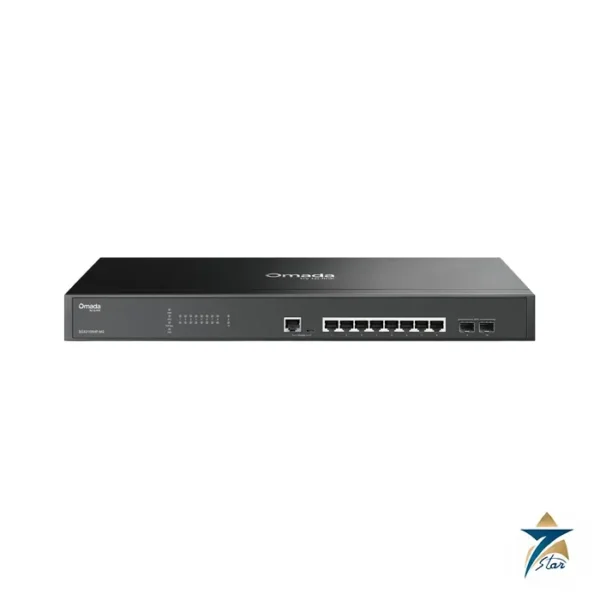
Order code EAP670; the datasheet is version 3.0 and covers both EU and US models, which differ in power consumption (20.8 W EU and 22.3 W US) and reliability figures. The box holds the access point, installation guide, power adapter and mounting kit. If the switch has only gigabit PoE ports, the 2.5G port will negotiate down; the SG3210XHP-M2 supplies matching 2.5G PoE+.
Power, mounting and temperature limits
Mount on a ceiling, wall, junction box or T-bar using the included kits. The unit draws 802.3at PoE+ at 42.5 to 57 V, so the switch port must provide at-class power. The operating range is 0 to 40 degrees C and up to 2000 m altitude; an unconditioned roof void in a hot climate can exceed the limit, so place it below the ceiling in the occupied space. Transmit power is adjustable in 1 dB steps and limited by country rules.
Offices, hotels and dense indoor areas
The six-stream radio fits open offices, hotel floors, classrooms and retail areas where many devices share a cell. Because antenna gains are internal omnidirectional with a down-tilt pattern, it is intended to hang in the ceiling above the user area, as the datasheet specifies down-tilt angles.
Information to send with an RFQ for the TP-Link EAP670 Omada AX5400 Ceiling Wi-Fi 6 AP
Wireless equipment is quoted per site and per coverage area. For the TP-Link EAP670 Omada AX5400 Ceiling Wi-Fi 6 AP, describe the space to be covered, the number of concurrent users or devices, and the building type, since concrete walls and metal structures reduce range. Note any outdoor areas, yards or warehouses that also need coverage.
- Number of units, and whether a controller or cloud management is already in place.
- Power source: PoE switch, PoE injector or local adapter, with the PoE standard required.
- Mounting: ceiling, wall or pole, and any weather protection for outdoor use.
- Licensing or SIM requirements for LTE models, and the operator band to be used.
A floor plan with the proposed positions lets coverage be estimated before the equipment is ordered.
Related items and documents
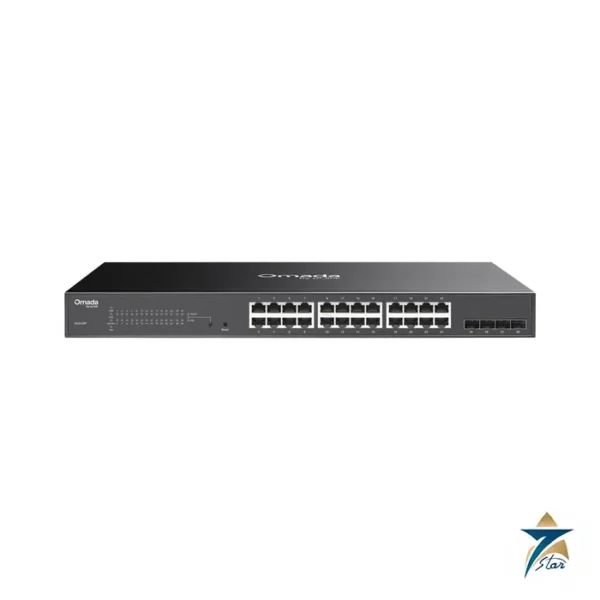
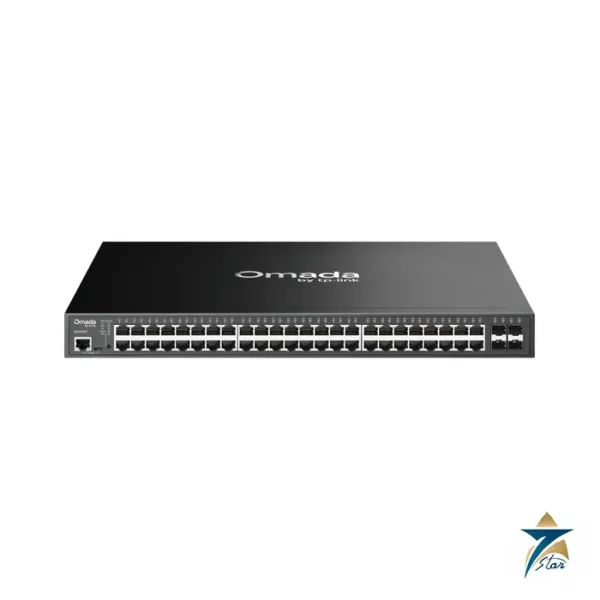
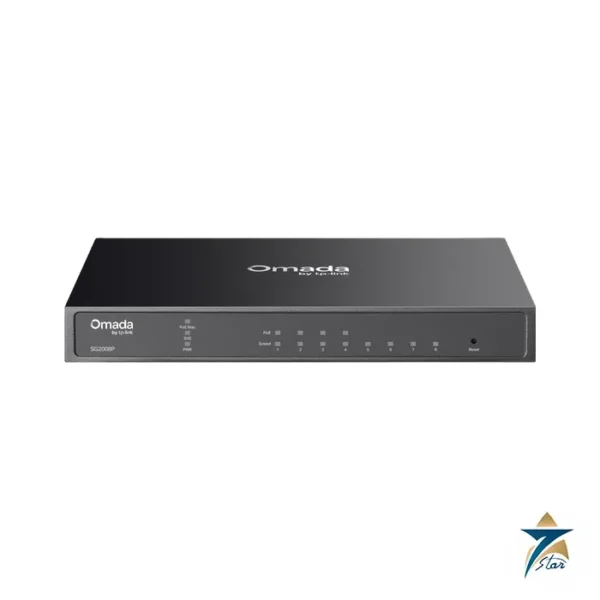
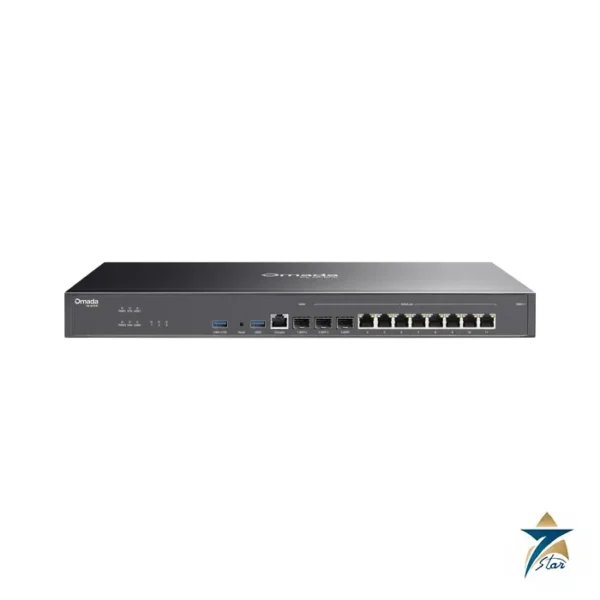
For Wi-Fi 7 and a 10G port see the EAP773; manage it with the OC200 controller and power it from the SG2428P or SG3210XHP-M2. See the industrial communications category.
You can open the datasheet here; for EAP670, send Seven Star LLC your unit count and delivery point.

























Reviews
There are no reviews yet.