Hydrazine and carbohydrazide monitoring in power plant feedwater
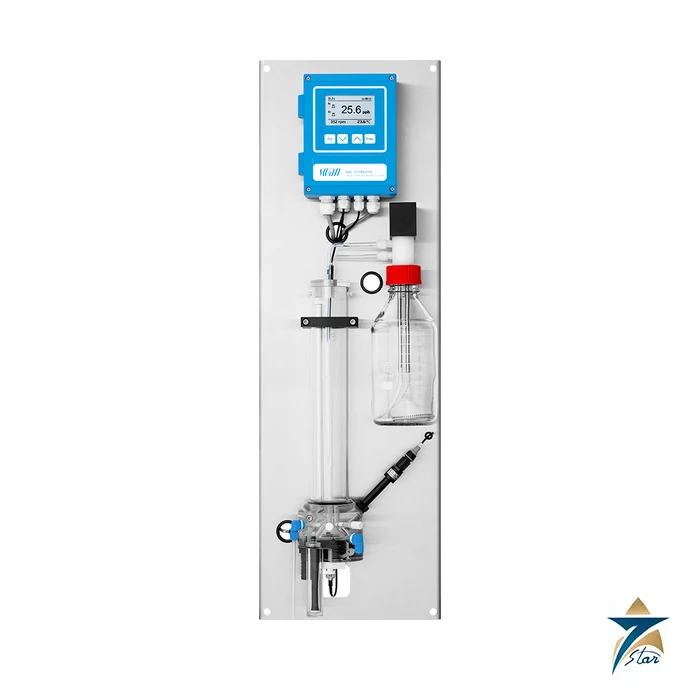
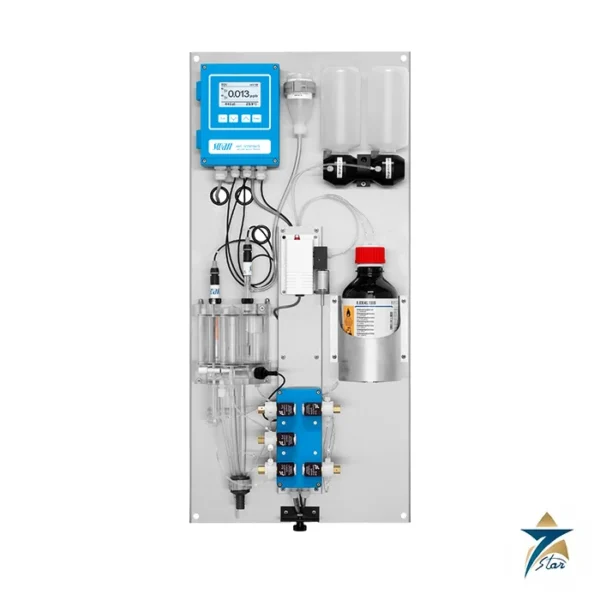
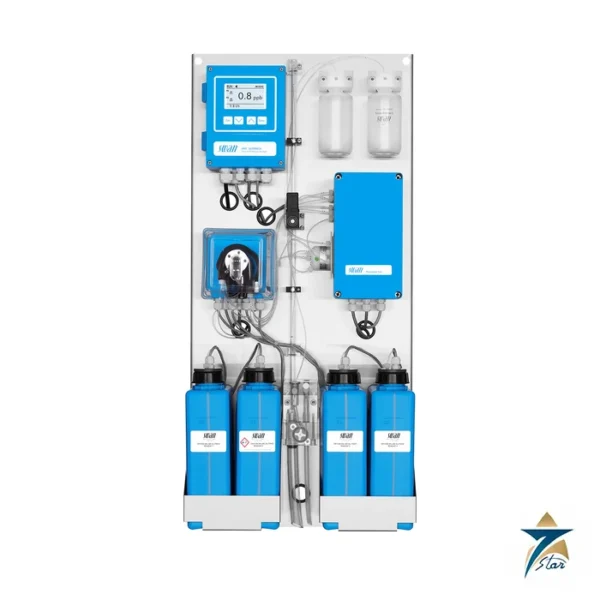
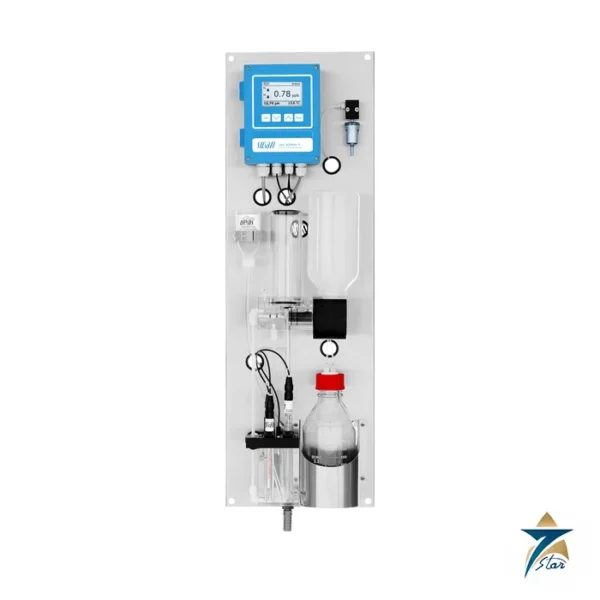
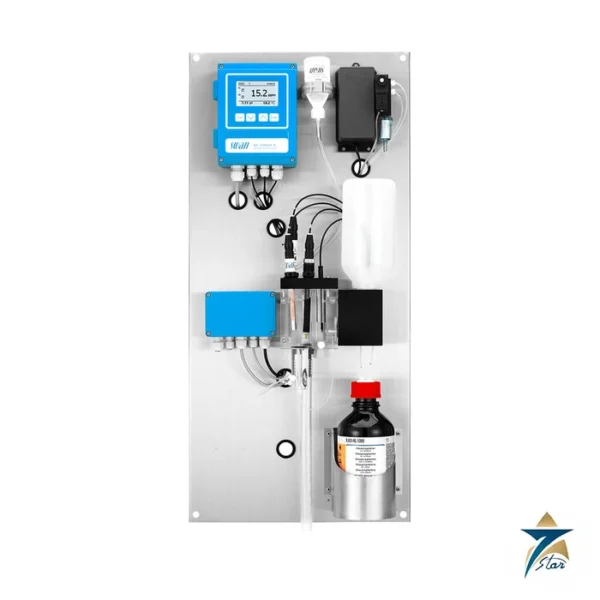
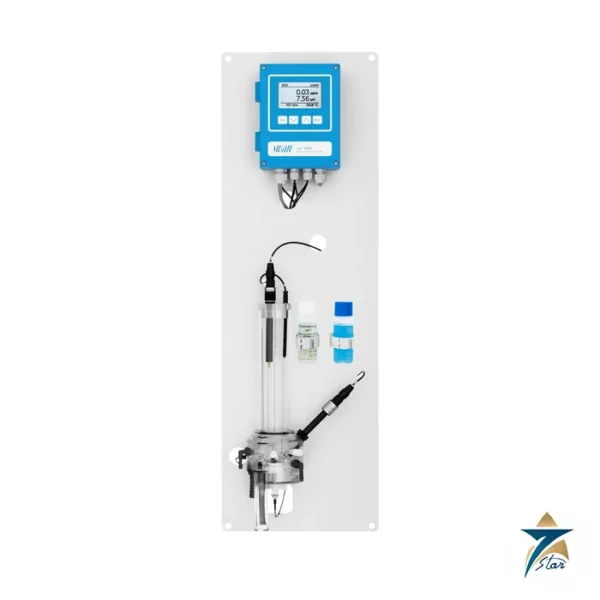
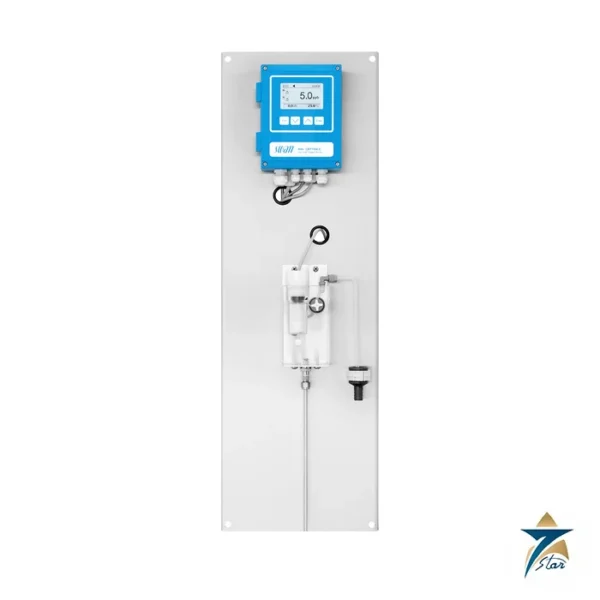
The Swan AMI Hydrazine is a microprocessor-controlled system for the determination and control of hydrazine or carbohydrazide used as boiler feedwater oxygen scavengers. In power plants hydrazine removes oxygen that could cause corrosion, and the reaction of hydrazine with oxygen produces nitrogen and water. The swan.ch page lists the product as AMI Hydrazin and describes a membrane-free, amperometric instrument.
The sensor uses three-electrode amperometry. A voltage is applied to two platinum electrodes and held at an optimum level by the reference electrode. Hydrazine in the sample generates a small current at the platinum pin electrode that is proportional to its concentration. A rotor cleans the electrode surfaces hydrodynamically and a Hall sensor on the rotor triggers a flow alarm if its speed drops.
Technical specifications
Values are from the Operator’s Manual A-96.250.501, section 2.2.
| Parameter |
Specification |
| Measuring range |
0.1 to 600 ppb hydrazine |
| Accuracy |
5% of reading up to 200 ppb; +/-15% up to 600 ppb, or +/-2 ppb, whichever is greater |
| Stability |
+/-5% of reading per month, or +/-2 ppb per month |
| Response time |
90% of a change within 60 seconds after the sample enters the flow cell |
| Temperature measurement |
Up to 60 C, resolution 0.1 C |
| Sample flow |
About 15 l/h |
| Sample temperature and pressure |
15 to 45 C; inlet 0.15 to 2 bar; outlet pressure-free |
| Sample pH |
Equal to or higher than 7.0 |
| Reagent consumption |
Less than 1 l of diisopropylamine per month at 25 C |
| Connections |
Sample inlet Serto 4 x 6 mm; outlet tube adapter 15 x 20 mm |
| Power supply |
100-240 VAC (+/-10%), 50/60 Hz, or 10-36 VDC; maximum 35 VA |
| Transmitter |
Aluminum, IP 66 / NEMA 4X; -10 to +50 C; backlit LCD 75 x 45 mm |
| Panel |
Stainless steel, 280 x 850 x 180 mm, 12.0 kg; mounting hole distance 254 x 824 mm |
Fluidics and pH buffering
Hydrazine measurement requires a high pH. The AMI Hydrazine buffers the sample to above pH 10.5 by adding diisopropylamine, which dissolves into the water as it flows through a diffusion tube in the reagent bottle. The sample enters, passes a filter and the flow regulating valve, takes up the amine, and flows through the hydrazine sensor to the outlet.
Excess sample overflows from the short overflow tube into the constant head and fills it until it spills into a longer overflow tube. The sample must always overflow into the longer tube to keep flow and pressure constant at the sensor, because the signal of amperometric systems depends on flow rate. Temperature compensation is automatic.
Practical notes before ordering
A grab sample valve and outlet allow comparison with laboratory results. The product page lists sample flow monitoring with alarms for insufficient flow, a self-cleaning three-electrode system and a backlit display for measurement, temperature, flow and status. It specifies a 0.1 to 600 ppb measuring range and AC or DC supply.
Specify the supply type, communication option and the carbohydrazide or hydrazine duty when asking for a quotation. The diisopropylamine bottle is a consumable. The sample must be at pH 7 or above before conditioning, and the outlet must run to a pressure-free drain.
Choosing the sample point and installing the panel
The analyser is only as good as the sample it receives. Take the sample from a point that represents the feedwater actually entering the boiler, usually after the scavenger dosing point has had enough pipe length to mix fully. Keep the sample line as short as practical and made of a material suitable for high-purity water, so that the measured concentration is not changed on the way to the instrument. Where the sample originates at high temperature or pressure, it must be cooled and reduced to the inlet conditions listed in the specification table by an appropriate sample conditioning system before it reaches the panel.
Mount the stainless-steel panel vertically on a rigid wall or frame, at a height that allows operators to read the transmitter and reach the reagent bottle comfortably. Run the outlet to an open, pressure-free drain with a continuous fall, and leave space underneath the panel for bottle changes and for collecting grab samples.
Start-up and routine verification
At commissioning, establish the sample flow and confirm that the constant head overflows into the longer overflow tube as described above. Install the diisopropylamine bottle according to the manual, allow the sensor to stabilise, and then compare the online reading with a laboratory determination taken from the grab sample outlet. Recording this first comparison gives a baseline for future checks.
Afterwards, a regular comparison with laboratory results, a check of the flow indication and an inspection of the filter in the sample path should form part of the chemistry routine. The reagent consumption figure in the table helps the plant plan bottle replacement, but the actual interval depends on room temperature, so log each change.
Handling the reagent
Diisopropylamine is a volatile, flammable and hazardous chemical. Store spare bottles in a ventilated, cool chemical store, follow the supplier’s safety data sheet, and provide suitable personal protective equipment and ventilation in the analyser room.
Operating conditions in Oman and GCC power plants
Power stations and desalination plants along the Gulf and Arabian Sea coasts operate in high ambient heat and humidity. The transmitter has a stated operating range of -10 to +50 °C and the sample must stay within 15 to 45 °C, so an air-conditioned analyser room or shelter is strongly recommended. Warm rooms also increase reagent evaporation, which shortens the time between bottle changes.
Sample coolers that rely on cooling water may struggle to reach the required sample temperature in summer when cooling water is itself warm; check the cooled sample temperature during the hottest months and adjust the conditioning system if necessary. Dust and salt in the air call for regular cleaning of the panel and attention to cable glands and the IP 66 transmitter housing seal.
Documents and quotation
The attached Swan Operator’s Manual A-96.250.501 (version 6.20 and higher) and the swan.ch product page are the sources for this page. Seven Star LLC supplies Swan products as an independent supplier in Muscat. Send the supply type, options and quantity with your enquiry. See other liquid analytical systems.









Reviews
There are no reviews yet.