Reagent-free amperometric analyzer for chlorine, ozone and other disinfectants
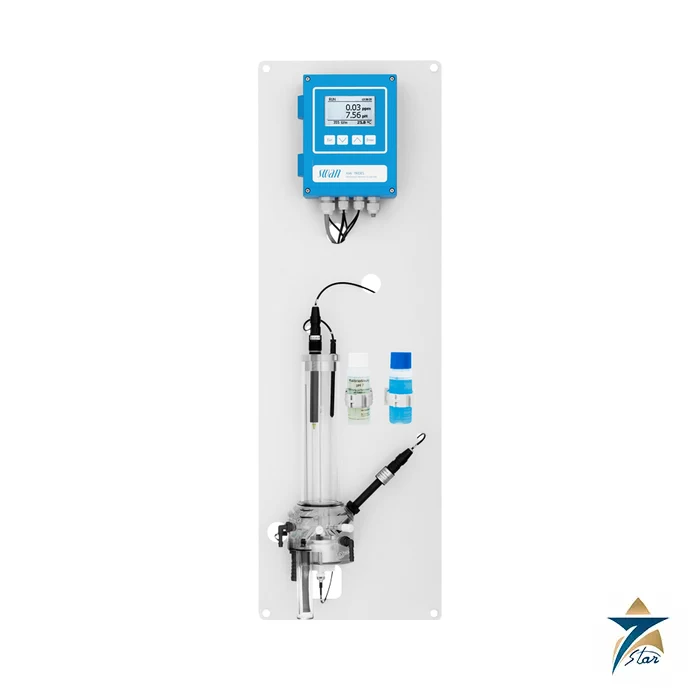
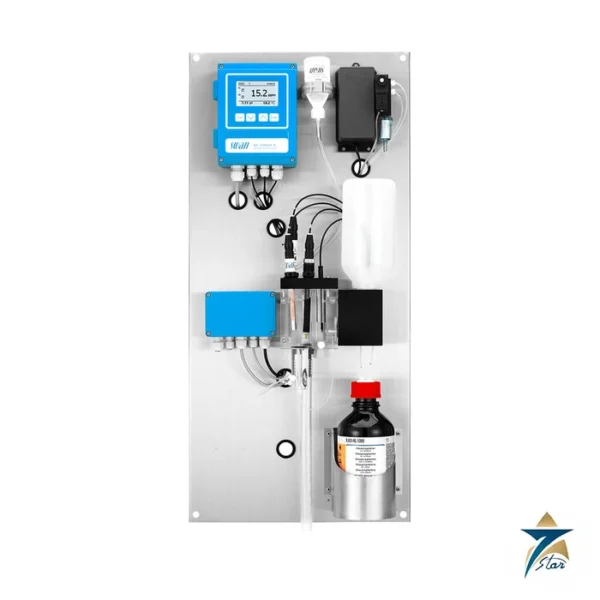
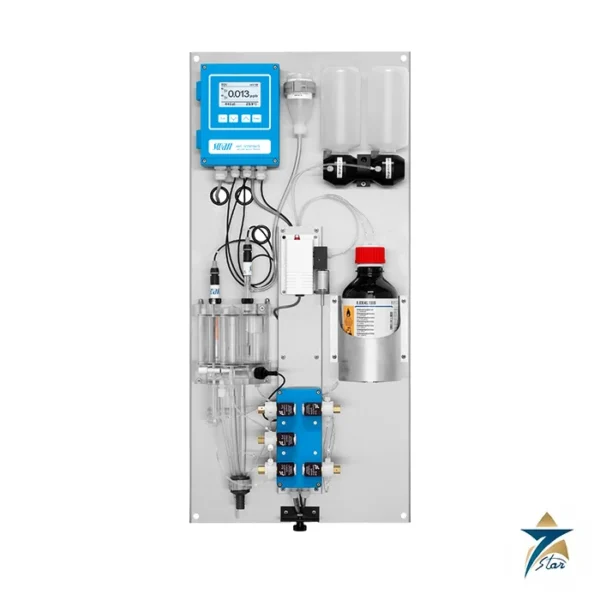
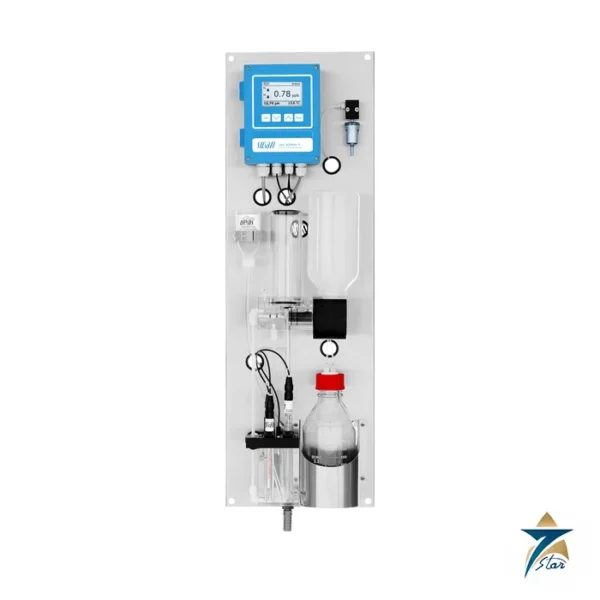
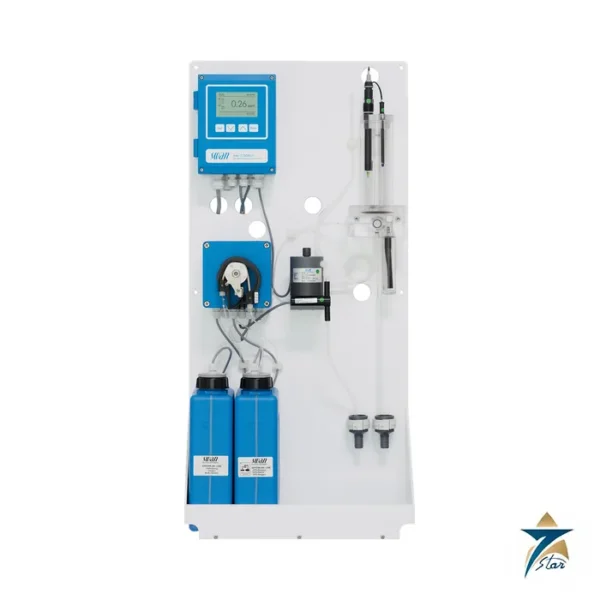
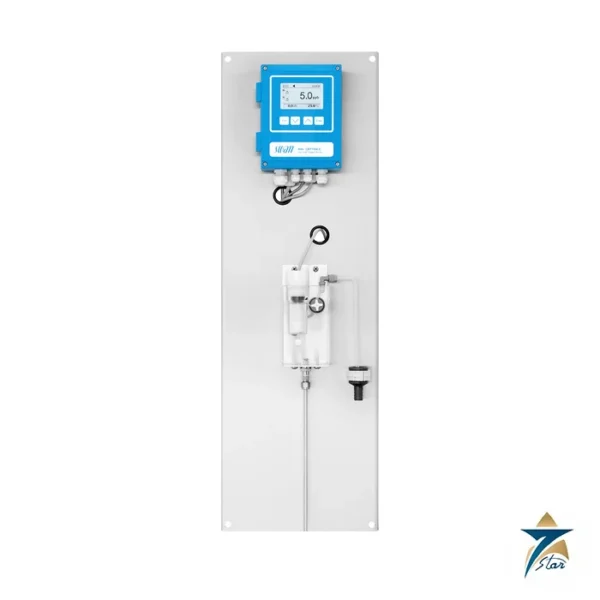
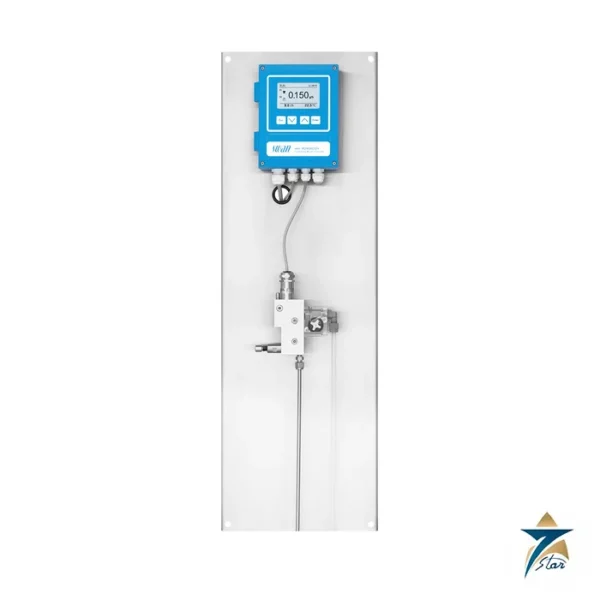
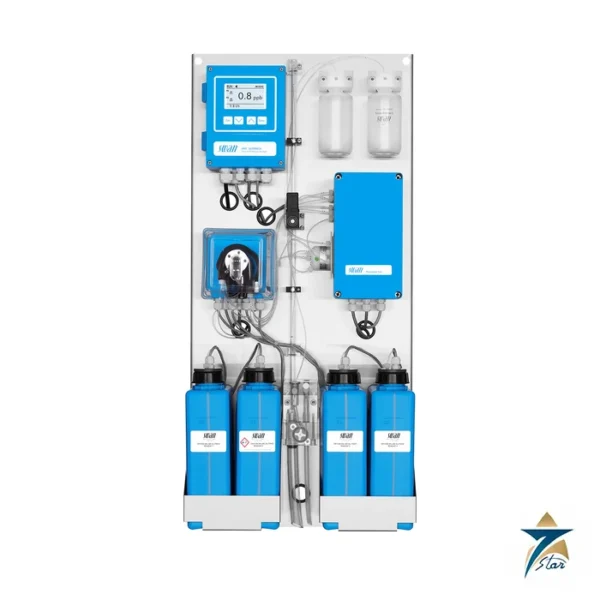
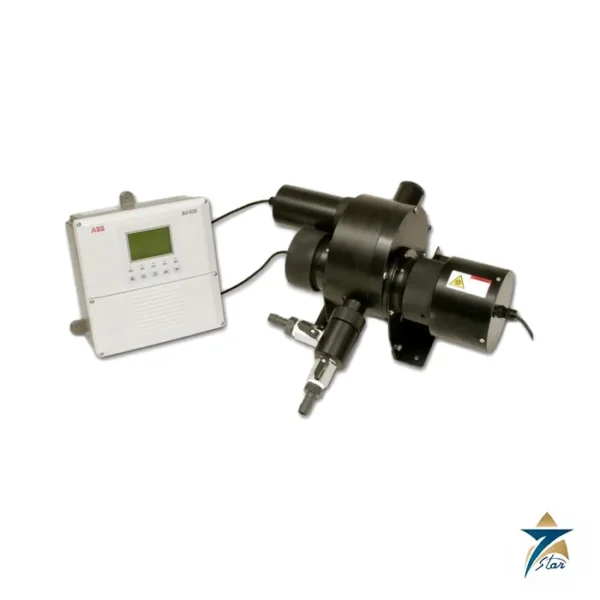
The Swan AMI Trides measures and controls disinfectants in potable water, sanitary water and swimming pools. Swan lists hypochlorous acid, free chlorine, ozone, chlorine dioxide, bromine and iodine. The product page describes a reagent-free, membrane-free sensor design that uses amperometric technology with automatic pH compensation.
Status note: swan.ch shows the AMI Trides (article A-26.111.000) as a Discontinued Product. Swan lists this product on swan.ch as a Discontinued Product that can no longer be added to a quote request, so any supply depends on remaining stock and the manual below describes the instrument as it was documented by Swan. Swan lists a newer AMI-II range as separate products.
Technical specifications
Values are from the Operator’s Manual A-96.250.111 (section 2.2) and, for measuring ranges, the swan.ch product page.
| Parameter |
Specification |
| Measuring ranges (product page) |
Ozone 0.000-1.000 mg/l; HOCl and free chlorine 0.00-5.00 mg/l; chlorine dioxide, iodine and bromine 0.00-3.00 mg/l |
| Response time (product page) |
90% of a change within 60 seconds |
| Measuring principle |
Three-electrode amperometry with two platinum electrodes and a reference electrode; rotor-based hydrodynamic cleaning |
| Power supply |
100-240 VAC (+/-10%), 50/60 Hz, or 10-36 VDC; maximum 35 VA |
| Transmitter housing |
Aluminum, IP 66 / NEMA 4X; backlit LCD 75 x 45 mm |
| Ambient temperature |
-10 to +50 C; storage -30 to +85 C; humidity 10-90%, non-condensing |
| Sample water consumption |
About 40 l/h |
| Sample temperature and pressure |
5-45 C (41-113 F); inlet 0.15-2 bar (2.2-29 PSI); outlet pressure-free |
| Minimum sample conductivity |
5 uS/cm; no oil and no grease |
| Connections |
Sample inlet R 1/4 in hose nozzle x 6 mm; outlet G 1/2 in adapter for 15 x 20 mm flexible tube |
| Signal outputs |
Two programmable 0/4-20 mA outputs (linear, bilinear or log), burden 510 Ohm; third output optional |
| Panel |
PVC, 850 x 280 x 200 mm, 6 kg |
How the sensor measures and why pH matters
A voltage is applied between the platinum measuring electrode and the counter electrode. Disinfectant in the sample creates a small current proportional to its concentration, while the reference electrode holds optimum conditions. A rotor continuously cleans the platinum surfaces, and a Hall-effect sensor counts its rotations to detect insufficient flow. A constant head with overflow removes flow effects from the amperometric signal.
Free chlorine is hypochlorous acid plus hypochlorite, and the ratio depends on pH. The manual gives about 77% hypochlorous acid at pH 7 and about 25% at pH 8. Amperometric sensors respond mainly to hypochlorous acid, so the reading falls as pH rises. The AMI Trides can therefore compensate using an optional pH or redox electrode, or a programmed pH value, to display free chlorine comparable with the DPD method.
Applications and what to check
Two applications are described. In setpoint control the disinfectant is added by a dosing unit to hold a chosen value. In dechlorination the disinfectant is removed to protect a device such as a reverse osmosis unit, and the analyzer detects the residual level and warns if it exceeds the limit. A grab sample valve lets operators compare the reading against a photometric DPD instrument.
For quotation confirm the disinfectant, supply type (AC or DC), pH option, communication interface and remaining availability, because the model is discontinued. Swan lists AMI-II Trides variants as separate products, so check whether a different model satisfies the application.
How the Swan AMI Trides works
A small voltage is applied between a platinum measuring electrode and a counter electrode. Disinfectant in the sample water creates a tiny current, and the current rises with the concentration. A reference electrode keeps the voltage stable. Rotating beads clean the electrodes, so the sensor needs no membrane and no reagent.
Where the AMI Trides is used
- Potable water treatment
- Sanitary water systems
- Swimming pools
- Ozone dosing control
- Chlorine dioxide and bromine dosing
Selection checklist for the AMI Trides
- Disinfectant to be measured
- Measuring range
- Sample temperature
- Sample pressure
- Sample conductivity
- Power supply type
- Number of current outputs
- Panel space
Installation, commissioning and maintenance notes for the AMI Trides
Mount the panel on a wall near the sampling point. Connect the sample inlet and the drain. Wire the power and the current outputs. Let the sensor settle, then calibrate it against a reference method. Check the sample flow and the electrodes at regular intervals.
Requesting a quotation for the Swan AMI Trides
Please send the disinfectant, the range and the power supply. Seven Star LLC serves industrial customers in Oman and the GCC and replies with a quotation based on the information provided.
AMI Trides measuring principle
It uses three-electrode amperometry with platinum electrodes.
AMI Trides sensor design
The sensor is reagent-free and membrane-free.
AMI Trides pH compensation
The analyzer compensates for pH automatically.
AMI Trides chlorine range
Free chlorine is measured from 0.00 to 5.00 mg/l.
AMI Trides ozone range
Ozone is measured from 0.000 to 1.000 mg/l.
AMI Trides response time
It reaches 90 percent of a change within 60 seconds.
AMI Trides sample flow
The sample consumption is about 40 l/h.
AMI Trides sample temperature
The sample may be between 5 and 45 degrees C.
AMI Trides outputs
It has two programmable 0/4-20 mA outputs.
AMI Trides housing
The transmitter housing is aluminum with IP66 protection.
AMI Trides display
A backlit LCD shows the readings.
AMI Trides power supply
It runs on 100-240 VAC or on 10-36 VDC.
Analyzer records for the AMI Trides
Record each calibration, the electrode check and the sample flow reading.
Choosing the right AMI Trides range
Choose the range from the disinfectant used and the dose level at the site.
Documents and quotation
The attached Swan Operator’s Manual A-96.250.111 (firmware V6.20 and higher) and the swan.ch product page are the sources for this page. Seven Star LLC supplies Swan products as an independent supplier in Muscat. Send the disinfectant, range, supply and quantity with your enquiry. See other liquid analytical systems.






Reviews
There are no reviews yet.