Swagelok CW series all-welded check valve for high-purity and low-cracking duty
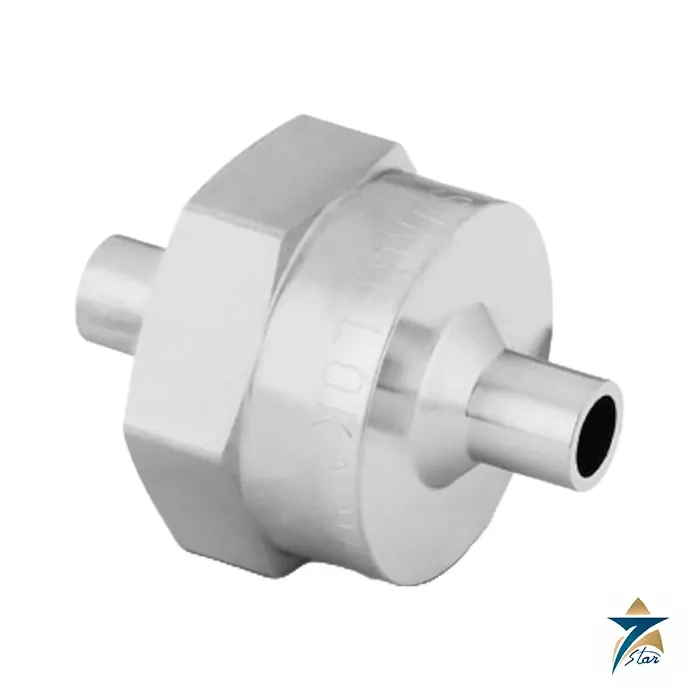
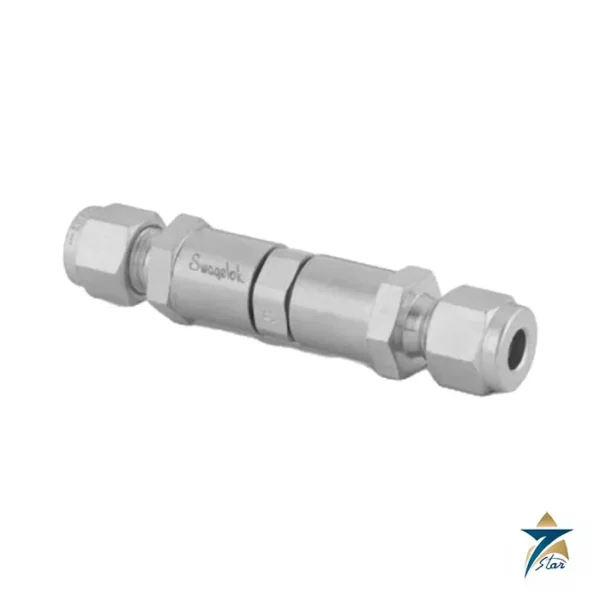
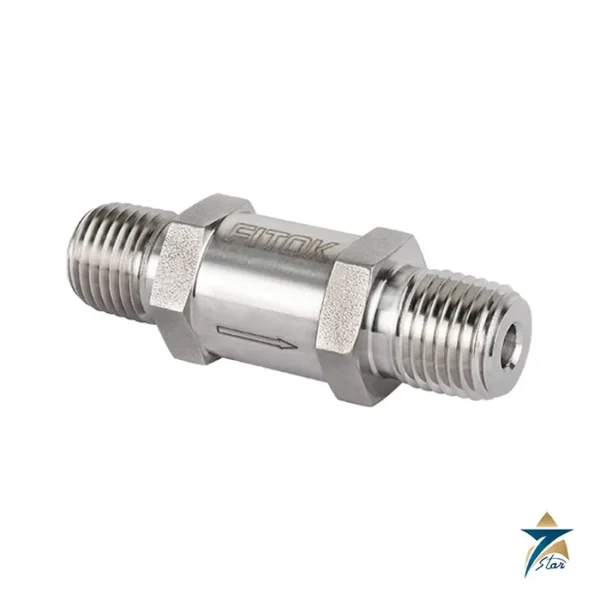
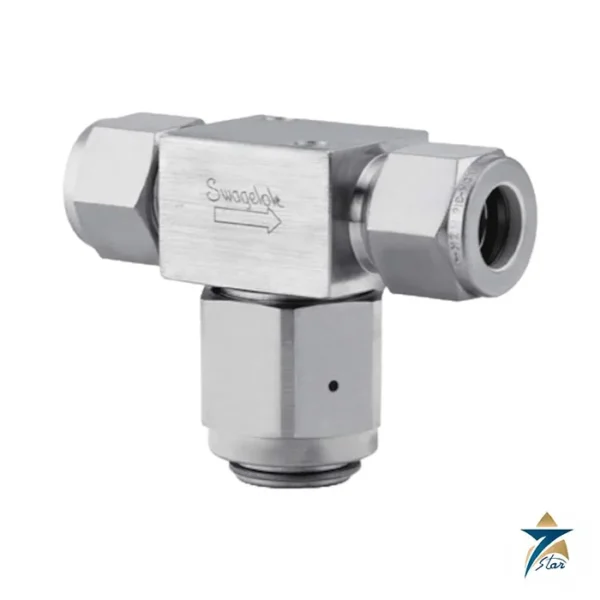
The Swagelok CW series is an all-welded poppet check valve with a 316L stainless-steel body. There are no threaded joints in the body and no body seals to leak to atmosphere, so the valve contains the system fluid completely, and it cracks open at less than 2 psi (0.14 bar). It is designed for clean, sensitive systems such as ultrahigh-purity gas panels, analytical equipment and low-pressure sample lines where a standard 1 psi or 3 psi spring check would be too stiff or too prone to leakage paths. Seven Star LLC supplies Swagelok CW series check valves in Oman and the GCC as an independent supplier in Muscat.
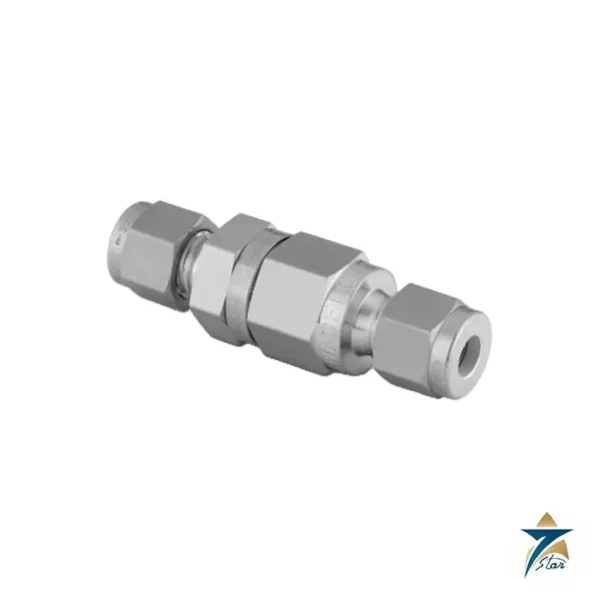
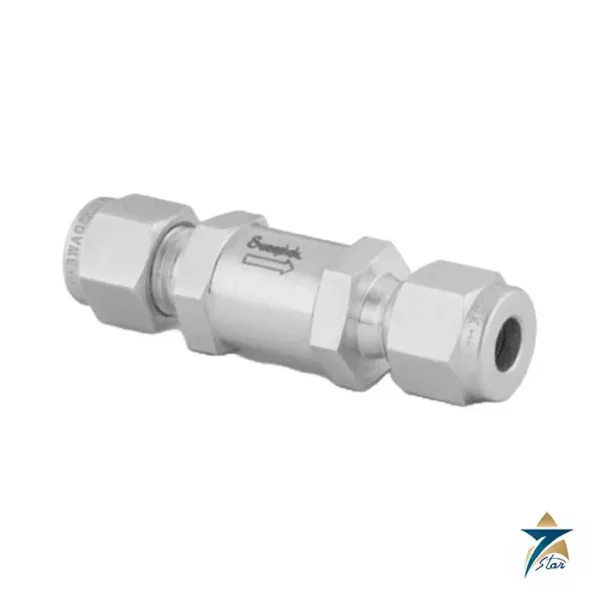
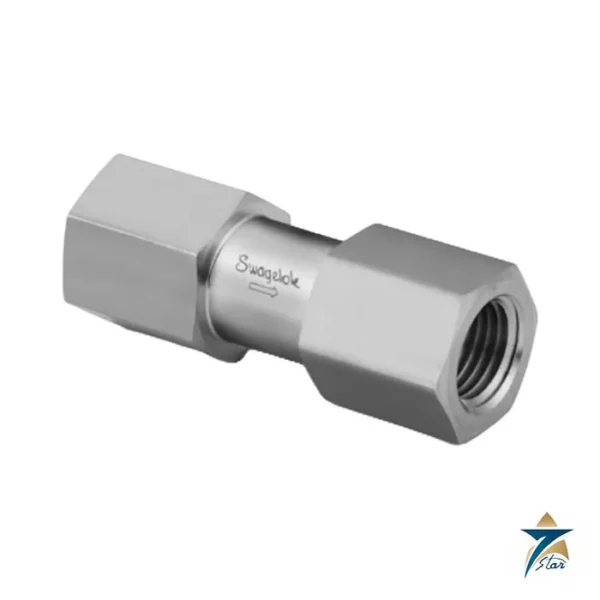
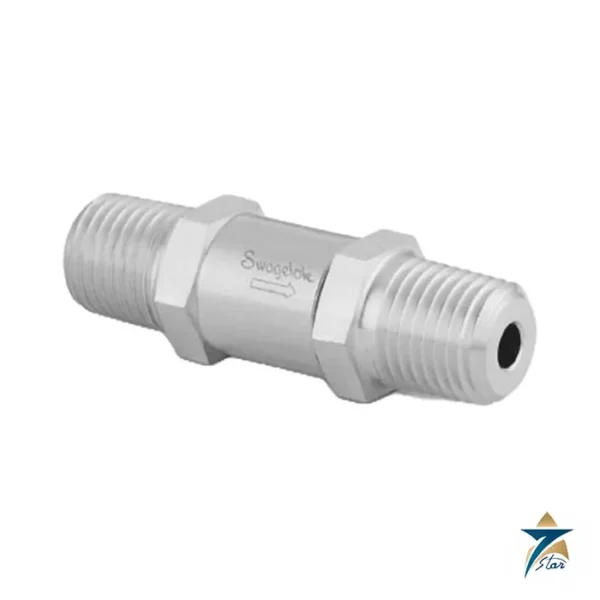
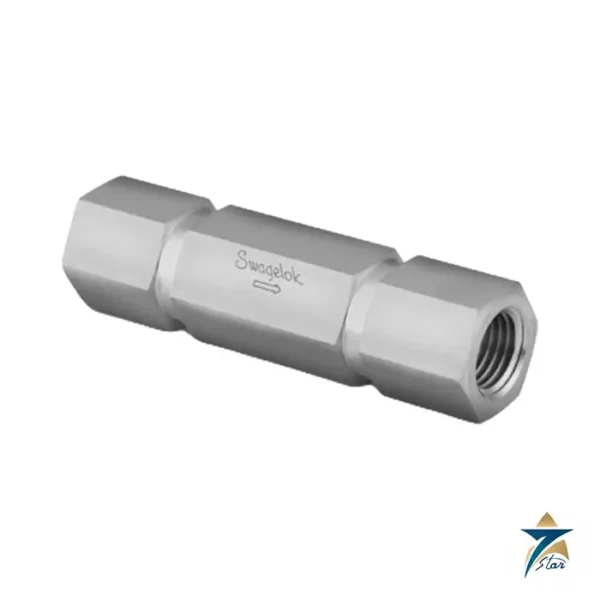
The CW series is available with tube butt weld ends, female and male VCR face-seal fittings, rotatable VCR, and Swagelok tube fitting ends, and it can be processed to the Swagelok ultrahigh-purity specification SC-01 on request.
| Parameter |
Specification |
| Manufacturer / part number |
Swagelok CW series all-welded check valve (for example 6LV-CW4BW4) |
| Cracking pressure |
Less than 2 psi (0.14 bar) |
| Maximum back pressure |
Full pressure rating of the valve |
| Reseating |
Valve closes with less than 2 psig (0.14 bar) back pressure |
| Working pressure |
3,000 psig (206 bar) at −10 to 100 °F |
| Maximum pressure drop |
145 psi (10.0 bar) |
| Minimum burst pressure |
12,000 psig (826 bar) at 70 °F |
| Flow coefficient (Cv) |
0.55 (1/4 in. and 6 mm tube fitting and tube butt weld) and 0.70 (1/4 and 1/2 in. VCR; 3/8 and 1/2 in. butt weld) |
| Body |
316L SS (ASTM A479); tube butt weld bodies in 316L VAR SS to SEMI F20 |
| Poppet |
Fluorocarbon FKM bonded to 316 SS; Aflas, Buna N, ethylene propylene and neoprene optional |
| Guidance wafer and poppet stop |
Alloy X-750 (B637) and 316L SS |
Design: why an all-welded body matters
In a conventional check valve the body halves are joined by threads and sealed with O-rings or gaskets. Each joint is a possible leak path and a place where particles can be generated. The CW valve is welded closed, so the only path to atmosphere is through the end connections, which are themselves butt welds or face-seal fittings. The poppet is a 316 stainless disc bonded with fluorocarbon FKM, guided by an Alloy X-750 wafer and limited by a 316L poppet stop; all components are wetted.
The low cracking pressure comes from this guided-poppet geometry and a light spring force. The catalog states that forward flow starts at under 2 psi differential, and the valve closes when back pressure is under 2 psig. However, the cracking pressure may be higher in a valve that has not been actuated for a period of time, and the catalog says so directly.
- Reliable containment of the system fluid by the all-welded body.
- Choice of standard or high-purity wetted surface finishes.
- Tube butt weld, female VCR, integral male VCR, rotatable male VCR and Swagelok tube fitting connections.
- Factory tested with nitrogen; seat leakage not above 0.9 std cm³/min within 10 seconds.
Ordering numbers and end connections
| End connection |
Ordering number |
Length A |
| 1/4 in. tube butt weld |
6LV-CW4BW4 |
1.24 in. (31.5 mm) |
| 3/8 in. tube butt weld |
6LV-CW4BW6 |
1.24 in. (31.5 mm) |
| 1/2 in. tube butt weld |
6LV-CW4BW8 |
1.24 in. (31.5 mm) |
| 6 mm tube butt weld |
6LV-CW4BW6M |
1.24 in. (31.5 mm) |
| 1/4 in. female VCR |
6L-CW4FR4 |
2.43 in. (61.7 mm) |
| 1/2 in. female VCR |
6L-CW4FR8 |
2.43 in. (61.7 mm) |
| 1/4 in. integral male VCR |
6L-CW4VR4 |
1.80 in. (45.7 mm) |
| 1/2 in. integral male VCR |
6L-CW4VR8 |
2.06 in. (52.3 mm) |
Seal materials are chosen by adding a designator: -AF for Aflas, -BU for Buna N, -EP for ethylene propylene and -NE for neoprene, for example 6LV-CW4BW4-AF. Adding -P requests processing to the ultrahigh-purity specification for valves with VCR or tube butt weld ends.
Pressure-temperature ratings and flow data
| Temperature |
Working pressure |
| −10 to 100 °F (−23 to 37 °C) |
3,000 psig (206 bar) |
| 200 °F (93 °C) |
2,530 psig (174 bar) |
| 300 °F (148 °C) |
2,270 psig (156 bar) |
| 400 °F (204 °C) |
2,065 psig (142 bar) |
Air flow data at 70 °F show how much the valve passes at a given pressure drop. A 0.55 Cv valve passes 6.2 std ft³/min (170 std L/min) at 10 psi drop, 16 (450) at 50 psi and 29 (820) at 100 psi. A 0.70 Cv valve passes 7.9 (220), 21 (590) and 37 (1,040) std ft³/min (std L/min) at the same drops. The elastomer sets the temperature ceiling here, so the standard FKM seal limits the valve to 400 °F.
Cleaning, surface finish and process specifications
Two process levels are offered. The standard route is Swagelok Special Cleaning and Packaging (SC-11), in which valves are cleaned with non-ozone-depleting chemicals, assembled and packed in specially cleaned areas and individually bagged, with a wetted surface roughness of 20 µin. (0.51 µm) average, machine finished. The ultrahigh-purity route (designator P, specification SC-01) uses a continuously monitored, deionized-water ultrasonic cleaning system, assembly in ISO Class 4 work areas, double bagging with vacuum sealing in cleanroom bags, and a wetted roughness of 8 µin. (0.20 µm) average, machine finished and electropolished.
Check valves are for directional flow control only. The catalog states that they should never be used as code safety relief devices.
Where the CW series fits and what to use instead
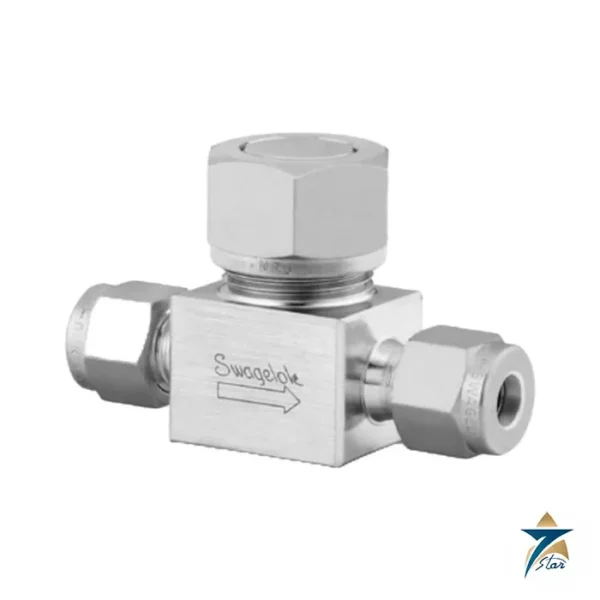
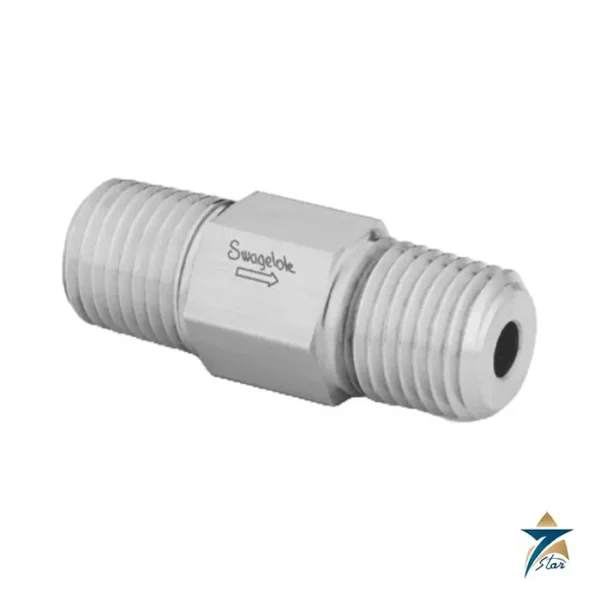
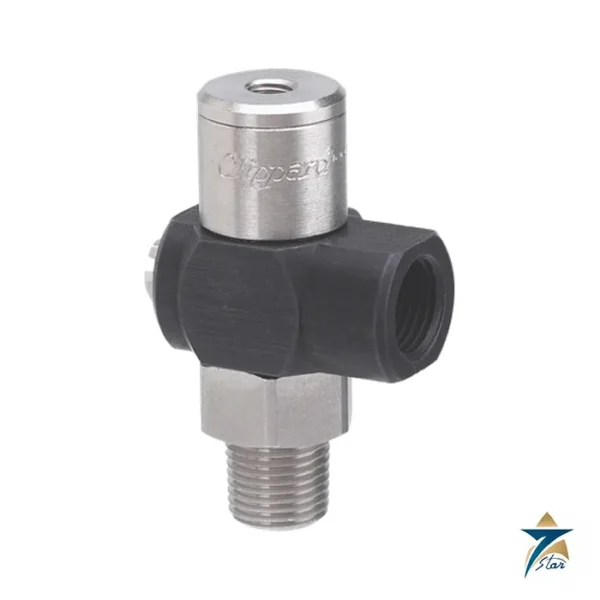
Within a gas panel, the CW is placed upstream of an analyzer, behind a regulator or in a purge line to prevent contamination from flowing back. It complements the C, CP and CA series poppet check valves already listed on this site, which come with fixed or adjustable cracking pressures from 1 psig upward and threaded body joints. For lift-type metal-seat check service at high temperature, the Swagelok 50 series is the alternative, and for extremely low cracking pressure in large bores a different design would be considered.
Applications in Oman and the GCC
Customers in the region most often meet the CW series in analytical instrumentation for oil, gas and water treatment: chromatograph carrier-gas panels, calibration-gas lines, nitrogen purge lines for analyzer shelters and clean-gas supply to laboratory instruments. It also appears in hydrogen and fuel-cell test systems and semiconductor-grade gas lines in research parks. Because it is all-welded and finished to a controlled roughness, it suits installations where contamination control matters, while the low cracking pressure makes it suitable for gas supplies that are only slightly above ambient.
Selection checklist for a CW series valve
- Fluid, temperature and pressure; remember the 3,000 psig limit and 145 psi maximum pressure drop.
- Flow requirement, to choose between the Cv 0.55 and 0.70 configurations.
- End connection and size: butt weld, VCR or tube fitting.
- Seal material for chemical compatibility.
- Cleaning and finish level: standard, SC-11 or ultrahigh-purity (-P).
- Orientation and installation space, noting the short 1.24 in. body of the butt weld type.
Information to send with a CW series RFQ
- Gas or liquid, pressure range and temperature.
- Required cracking pressure and flow rate.
- End connection and size, seal material, and cleanliness level.
- Quantity and delivery location.
Documents and quotation
The Swagelok all-welded check valve catalog for the CW series is attached to this page. Send your system data and we will confirm the correct ordering number and available documents.





















Reviews
There are no reviews yet.