Low head loss check valve for pump stations and pipelines
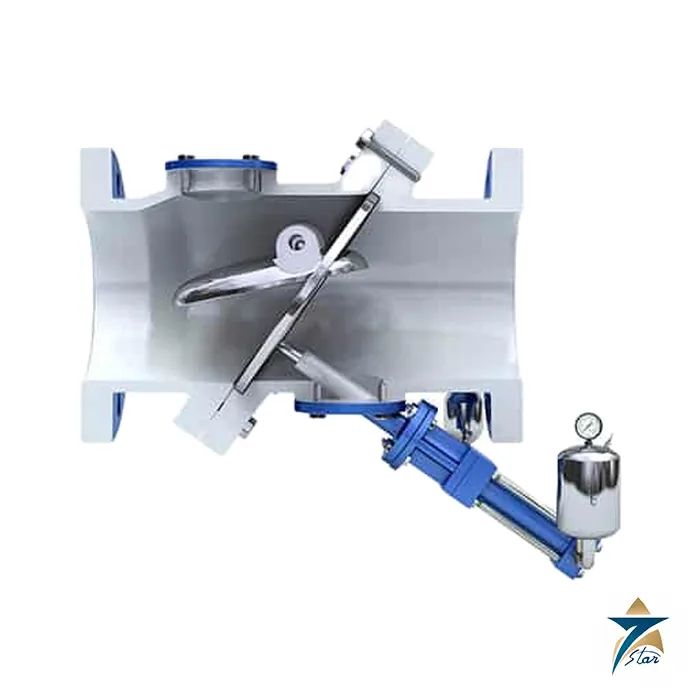
The APCO CSD slanting disc check valve is made by DeZURIK for clean municipal and industrial water and other industrial liquids. The bulletin presents it as combining superior flow characteristics, minimal head loss and maximum slam resistance, thanks to a two-piece body and a disc that sits at a slant.
The body seat is angled at 55 degrees and the offset, airfoil-shaped disc travels 40 degrees to its stable open position, 15 degrees from horizontal. The angled seat gives 40 percent more flow cross-section, which more than offsets the area taken by the disc, so water passes without turbulence, eddies or cavitation.
CSD technical specification
| Parameter |
Specification |
| Valve style code |
CSD, slanting disc check valve (model 800) |
| Sizes |
2 to 72 in (50 to 1800 mm) with ASME 125/150 flanges; 2 to 48 in (50 to 1200 mm) with ASME 250/300 |
| Body materials |
Ductile iron (standard 2 to 72 in), carbon steel, 316 stainless steel |
| Rating, ductile iron |
Class 150 250 psi (1720 kPa); Class 300 640 psi (4410 kPa) |
| Rating, carbon steel |
Class 150 285 psi (1960 kPa); Class 300 740 psi (5100 kPa) |
| Rating, stainless steel |
Class 150 275 psi (1900 kPa); Class 300 720 psi (4960 kPa) |
| Seating |
Self-centering 360 degree metal-to-metal disc ring and body seat ring, to AWWA C508 |
| Disc |
Offset pivot airfoil disc, 55 degree seat, 40 degree travel |
| Pivot pins and bushings |
Stainless steel, wear resistant |
| Access |
Two body halves with o-ring seals; access cover on each half from 6 in |
| Closure control |
Top-mounted oil dashpot or bottom-mounted buffer on 6 in and larger |
| Disc indicator |
Standard from 6 in; signal switches for closed (and optionally open) position |
| Standards |
ASME B16.34, B16.1, B16.42, B16.5; AWWA C508; MIL-V-18436F |
Why the slant disc slams less
The disc weight is unbalanced, heavier below the pivot, so the disc free falls to shutoff with minimal reverse flow and opens at a slight pressure differential. The area of the disc above the pivot must close against the reversing water column, which opposes the closing force from the area below it, and the result is no slam or minimal slam depending on how fast the flow reverses.
Precise clearance around the pivot pins keeps the disc ring concentric with the body seat ring, so the two machined rings move together or apart with minimum interference. That removes wear and leakage and virtually eliminates seat maintenance, in the bulletin words, and meets AWWA C508 leakage for metal-to-metal seated valves.
Inspection, indication and accessories
Each body half has an o-ring seal, and valves of 6 in and larger have an access cover on each half for internal inspection. The disc position indicator on the pivot pin cover gives external indication of disc position and can trip a micro switch or counting device. Electrical signal switches mounted on the indicator cover give a local or remote signal; the standard switch shows the closed position and an adjustable open-position switch is available on request. A head loss curve from actual flow tests and a velocity table by pipe size are printed in the bulletin.
Selection, ordering and installation
The printed example is CSD,6,800,F1,DI,BRZ-S2*BMB-FG*SEL30: a 6 in valve, model 800, flanged ASME 150, ductile iron body, bronze and 316 trim, bottom buffer and a proximity switch. F2 is the ASME 300 flange option for 2 to 48 in. Valve bodies from 6 in carry two accessory openings pre-machined for a top-mounted oil dashpot or a bottom-mounted buffer that can be fitted in the field.
Standard installation is horizontal; ask the supplier about vertical flow up. Good pump station design keeps at least three pipe diameters of straight pipe downstream of a check valve, and sometimes upstream as well. Field startup by factory-trained engineers is available on request.
The bottom-mounted buffer (BMB) gives free opening and controlled closing. It stops the disc at roughly 90 percent of closure and lets it close slowly without slam and with minimal pressure rise, and it is recommended where flow reverses so fast, after a hydro-pneumatic surge tank or on a critical pipeline slope, that a free-closing disc would slam first. The buffer system is self-contained and needs no auxiliary equipment.
Energy savings, applications and documents
The bulletin includes an energy cost comparison for a 24 in pipeline, showing that the low head loss of the slanting disc design reduces power consumption and can repay a higher purchase price over time. In the worked example, a conventional swing check valve loses 3 ft of head at 15,000 GPM against 0.718 ft for the slanting disc, which at US$0.18 per kWh and 72 percent pump efficiency is a first-year energy saving of US$20,249; the bulletin quotes an average service life of 30 years. Those figures are the manufacturer example, not a guarantee. As general engineering context, this matters on long Gulf water transmission lines and pump stations that run continuously.
Other check valves are listed under Check Valves. Bulletin 800 (01/2026) is attached with head loss curves, weights and ordering codes; send size, flange class, body material, trim, closure device and switches when requesting a quotation from Seven Star LLC.
Using the CSD in Oman and the GCC
Slanting disc check valves are used in the region on large pump discharge lines in water transmission, desalination plant product water stations, cooling water systems and power plants. The low head loss of the CSD reduces pumping energy on lines that run for many hours a day, which is significant for large pumping stations.
For large valves, plan lifting, access for inspection and the position indicator. Where surge is a concern, discuss the bottom buffer or top-mounted dashpot options with the pumping system data.
Where the valve replaces an existing check valve, send its face-to-face length, flange data and any drawing, so the new valve fits the existing pipework and supports without changes.
Information to send with an enquiry
- Size, pressure class and flange standard
- Fluid, flow and pump data
- Accessories: indicator, buffer or dashpot
- Quantity
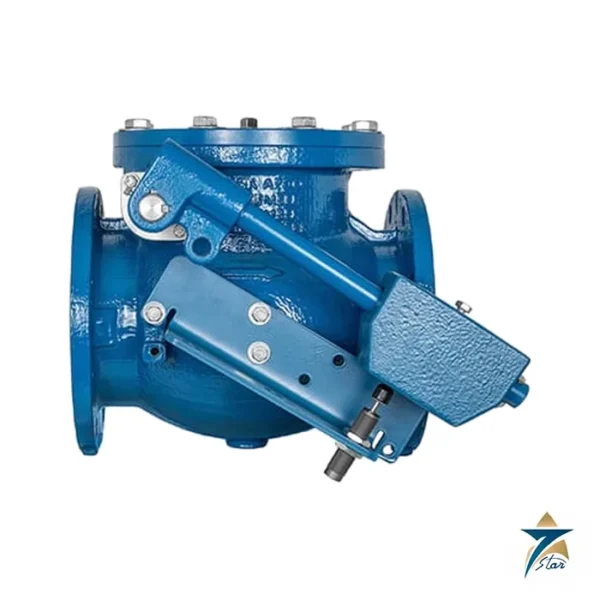
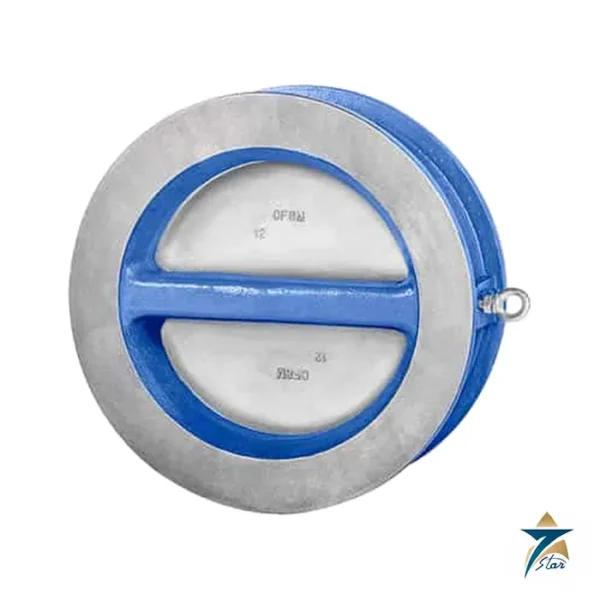
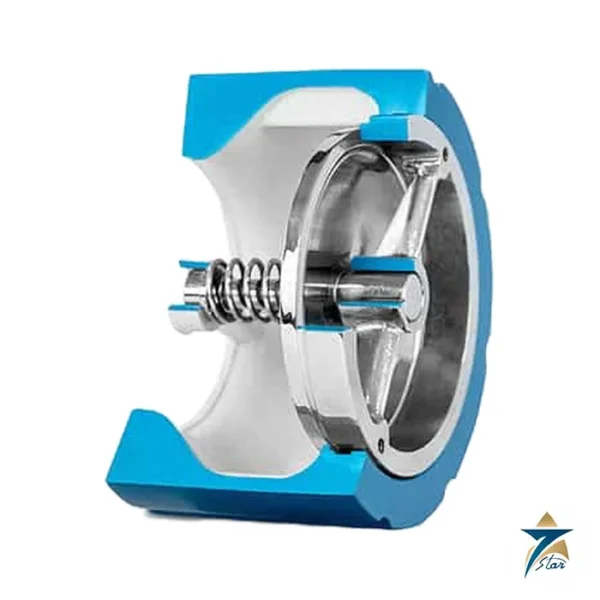
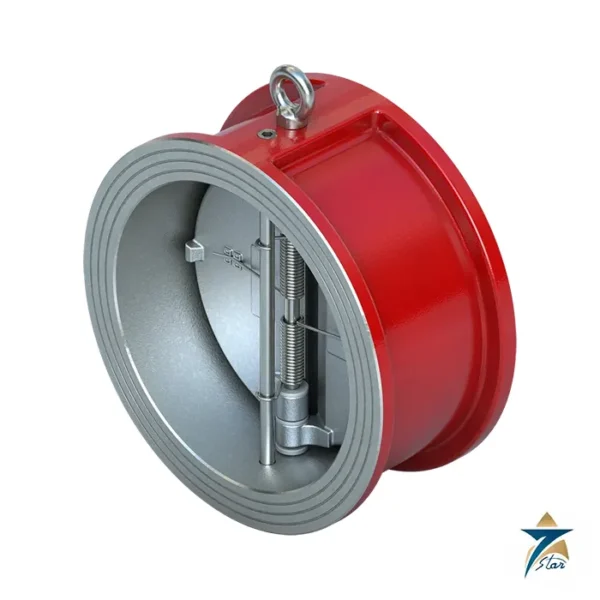
Related DeZURIK products: APCO CVS-6000 Swing Check Valve Lever and Weight, APCO CSC Silent Check Valve Wafer and Globe Style and APCO CDD Double Door Wafer Check Valve.



















Reviews
There are no reviews yet.