A workhorse handheld XRF analyzer for alloy verification and scrap sorting
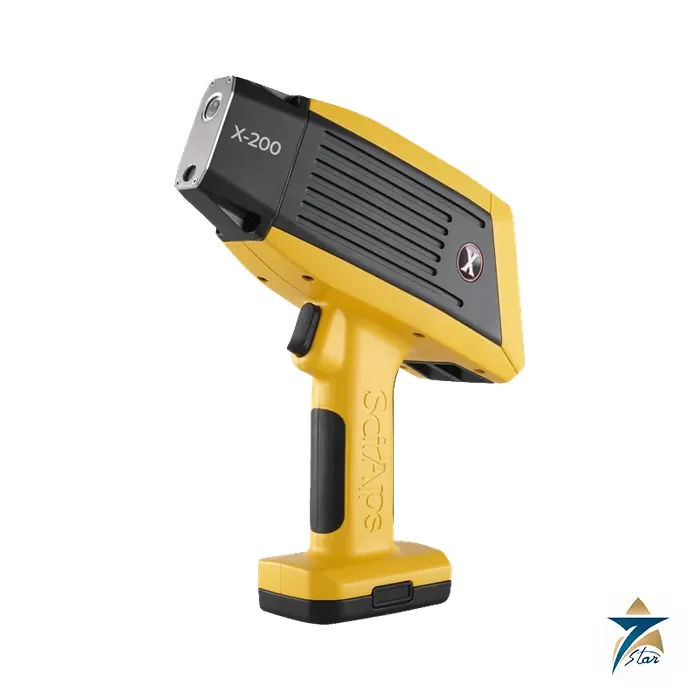
The SciAps X-200 is a handheld XRF analyzer aimed at buyers who want high speed and precision at a lower price than the top-end models. The manufacturer calls it the workhorse choice for scrap processing and non-destructive testing, and it is fast on all alloy families including aluminum.
It uses a 50 kV tube with a silicon drift detector and tests common alloys in 1 to 2 seconds or less. Factory calibrations are provided, and user-defined empirical calibrations can be added.
Technical specifications
| Parameter |
Specification |
| Technology |
Handheld energy-dispersive XRF with Android user interface |
| Weight / dimensions |
3.1 lb (1.40 kg) with battery; 9.38 x 11.15 x 3.34 in (238 x 283 x 84 mm) |
| X-ray tube |
5 W; typical 50 kV, 200 uA with Rh anode and 10 kV, 200 uA for alloy testing; 50 kV, 200 uA with Au anode for most other apps |
| Detector |
20 mm2 silicon drift detector (active area), 140 eV resolution FWHM at 5.95 Mn K-alpha |
| X-ray filtering |
Multi-position filter wheel for beam optimization |
| Analytical range |
32 elements standard (specific elements vary by app); 22 elements for the Precious Metals app |
| Test time |
Common alloys in 1 to 2 seconds or less |
| Apps available |
Alloy, Precious Metals, Car Cats, Mining, Empirical, Soil, RoHS |
| Grade library |
500+ grades standard; multiple libraries supported; grades added on the analyzer or with Profile Builder PC software |
| Calibration |
Fundamental parameters; Compton normalization and empirical calibrations for Geochem and Environmental Soil apps; external 316 stainless steel check standard |
| Pulse processor |
12 bit, 80 MSPS, 8K channel MCA; 20 ns to 24 us peaking time |
| Processor / memory |
1.2 GHz quad-core ARM Cortex-A53; 2 GB LP-DDR3 RAM; 16 GB eMMC storage |
| Display |
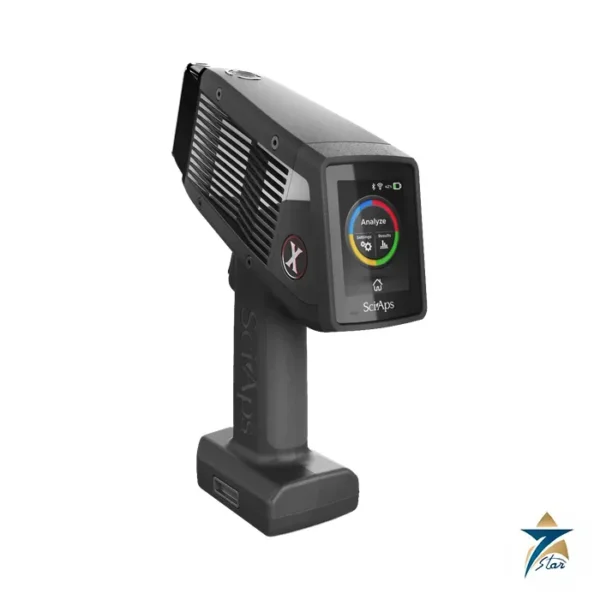
3.5 inch (88.9 mm) color capacitive touchscreen |
| Sample viewing |
Internal camera for alignment before and during analysis; second macro camera for QR and barcodes and photo documentation |
| Connectivity |
Wi-Fi, Bluetooth, USB; GPS capable; Profile Builder PC software |
| Power |
Rechargeable Li-ion battery, charged in the device or externally; AC power; hot-swap capability (60 s maximum) |
| Environmental |
10 to 130 degF (-12.2 to 54.44 degC) at 25 % duty cycle |
| Security |
Password-protected usage (user level) and internal settings (admin) |
| Regulatory |
CE, RoHS, USFDA registered, Canada RED Act |
Using it on scrap, stock and incoming material
The X-200 is positioned for yard and warehouse work where many different alloys are sorted quickly. The Alloy App verifies metals in one tap, and the analyzer uses pre-set test times to measure low concentrations of Cr, Ni and Cu and calculate their sum. SciAps notes it separates aluminum grades such as 3003, 3004, 3005, cast 356 and 357, and 2014 and 2024 that confound some other XRF guns.
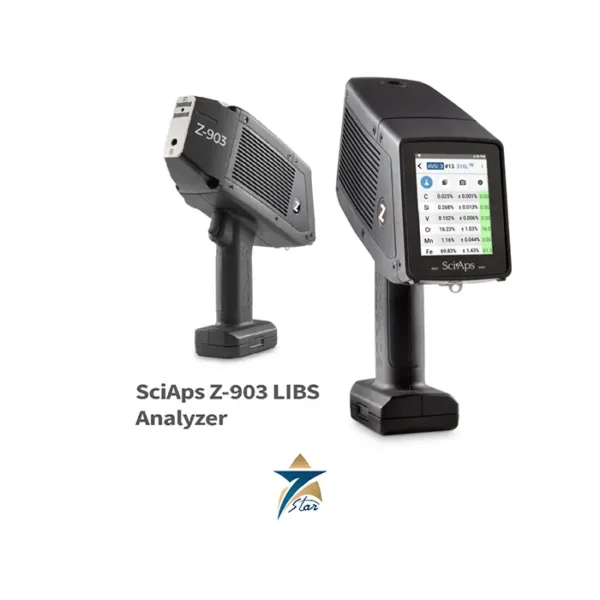
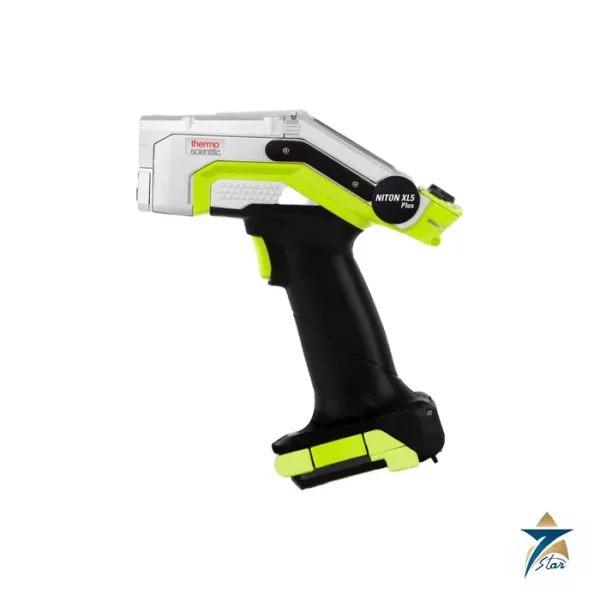
For another handheld XRF in the catalogue see the Thermo Fisher Niton XL5 Plus. XRF does not measure carbon; SciAps offers LIBS analyzers such as the Z-903 for that, and the X and Z can be packaged in a OneBox.
Before you order
The X-200 contains an X-ray tube, so confirm radiation-safety registration, operator training and import requirements for your site. Confirm the apps (Alloy, Precious Metals, Car Cats, Mining, Soil, RoHS), the library needs, and the service and calibration program. Browse portable test and measurement for related instruments. The X-200 is heavier and larger than the X-550, so consider weight if the work is at height or in confined positions.
How the SciAps X-200 works
The X-200 sends X-rays from a small tube onto the surface of a metal sample. The atoms in the metal give off their own X-rays in return, and each element does so at a known energy. A silicon drift detector counts these and the software turns the counts into element percentages. The result is matched against a library of grades, so the operator can read the alloy name on the screen within a second or two.
Where the X-200 is used
- Positive material identification of alloys
- Scrap sorting
- Incoming goods checks
- Welding and fabrication checks
- Mining, soil and RoHS screening with the matching apps
Selection checklist for the X-200
- Alloy families to be tested, including aluminum
- Apps needed, such as Alloy, Precious Metals or Soil
- Test time required
- Grade library size
- Weight and handling
- Battery and hot-swap needs
- Connectivity, Wi-Fi, Bluetooth, USB and GPS
- Local radiation safety rules for operators
Installation, commissioning and maintenance notes for the X-200
Charge the battery and run the check against the supplied stainless steel standard before work begins. Keep the measuring window clean. Hold the analyzer firmly against a clean, flat spot on the sample. Follow the radiation safety rules that apply at your site. Add grades with the Profile Builder software when needed.
Requesting a quotation for the SciAps X-200
Please send the apps you need, the alloy families, the accessories and the quantity. Seven Star LLC serves industrial customers in Oman and the GCC and replies with a quotation based on the information provided.
X-200 X-ray tube
The tube is rated 5 W, with typical settings of 50 kV and 200 uA.
X-200 detector
The silicon drift detector has an active area of 20 mm2 and a resolution of 140 eV.
X-200 weight and size
It weighs 1.40 kg with battery and measures 238 by 283 by 84 mm.
X-200 display
A 3.5 inch colour touchscreen runs the Android interface.
X-200 cameras
An internal camera helps alignment, and a second macro camera reads QR codes and barcodes.
X-200 grade library
More than 500 grades are standard, and users can add grades on the analyzer.
Analyzer records for the X-200
Record each result with the date, the operator and the sample identity.
Choosing the right X-200 apps
Choose the Alloy app for metal grading and add Precious Metals or Soil only if you test those materials.
Documents and quotation
The attached SciAps X-200 specification sheet (the X-200 Alloy sheet) is the manufacturer document for the alloy configuration.
Seven Star LLC is an independent supplier in Muscat. Send the apps required, quantity and delivery location for a quotation.











Reviews
There are no reviews yet.