Overview
The Fluke 810 vibration tester is a handheld instrument built to help maintenance technicians — not just vibration specialists — diagnose the most common mechanical problems on rotating equipment: unbalance, looseness, misalignment, and bearing failures. Rather than requiring years of vibration-analysis training to interpret a spectrum, the 810 delivers plain-text diagnosis with severity ratings directly on its screen.
Built by Fluke for field use on pumps, motors, fans, and gearboxes, the 810 fits predictive-maintenance programs where technicians need fast, actionable answers rather than raw data requiring specialist interpretation. Seven Star LLC supplies the Fluke 810 to industrial maintenance teams across Oman and the GCC.
Operating Principle
The Fluke 810 uses an accelerometer sensor to capture vibration data across a usable bandwidth of 2Hz to 20kHz, sampling at rates from 2.5kHz to 50kHz depending on the test. Built-in diagnostic software compares the captured signature against known fault patterns for the four target problem types, then reports a plain-text diagnosis, fault severity rating (slight, moderate, serious, or extreme), and repair guidance — turning what would otherwise require spectrum-analysis expertise into an actionable field readout.
Engineering Design of the Fluke 810
The 810 displays results on a 5.7-inch, 320×240 color TFT LCD with LED backlight, readable in typical plant lighting conditions. Its integrated laser tachometer measures shaft speed with accuracy of ±0.01% and ±1 digit up to 5,999.9 rpm, and ±0.05% and ±1 digit above that speed, supporting accurate order-based analysis. The lithium-ion battery provides approximately 8 hours of continuous field use with a 3-hour recharge time, and the complete unit weighs 1.9kg (4.2lb), operating across 0°C to 50°C.
Key Features
- Diagnoses unbalance, looseness, misalignment, and bearing failures
- Plain-text diagnosis with severity rating, no spectrum-analysis expertise required
- Usable bandwidth 2Hz to 20kHz, sampling 2.5–50kHz
- Integrated laser tachometer, ±0.01% accuracy up to 5,999.9 rpm
- 5.7-inch color TFT LCD with LED backlight
- ~8-hour lithium-ion battery life, 3-hour recharge
- Compact 1.9kg (4.2lb) handheld form factor
- Operating range 0°C to 50°C for field use
Industrial Applications
The Fluke 810 is used for predictive-maintenance rounds on pumps, motors, fans, and gearboxes across manufacturing, oil and gas, and power facilities in Muscat, Sohar, and Salalah, where maintenance teams need to catch developing mechanical faults before they cause unplanned downtime. Its plain-text diagnosis makes it practical for general maintenance technicians, not just dedicated vibration analysts.
Across the GCC’s industrial and process sectors, the 810 supports route-based condition monitoring programs and one-off troubleshooting alike, giving maintenance planners a fast severity assessment to prioritize repairs on rotating equipment before a bearing or coupling failure escalates into a costly breakdown.
Technical Specifications
| Parameter |
Specification |
| Model |
Fluke 810 |
| Fault Types Diagnosed |
Unbalance, looseness, misalignment, bearing failure |
| Frequency Bandwidth |
2Hz to 20kHz |
| Tachometer Accuracy |
±0.01% ±1 digit (≤5,999.9 rpm) / ±0.05% ±1 digit (above) |
| Display |
5.7-inch 320×240 color TFT LCD, LED backlight |
| Battery Life |
~8 hours, 3-hour recharge |
| Weight |
1.9kg (4.2lb) |
| Operating Temperature |
0°C to 50°C |
Setting Up a Machine for Testing
The quality of a diagnosis depends on how well the machine is described to the instrument. Before the first measurement, the technician enters the machine setup: driver type, running speed, power, coupling arrangement and the driven equipment, such as a pump, fan or compressor. Bearing, gear or belt details can be added where known. Once saved, the setup is reused on later rounds, so readings stay comparable over time.
Taking Good Measurements
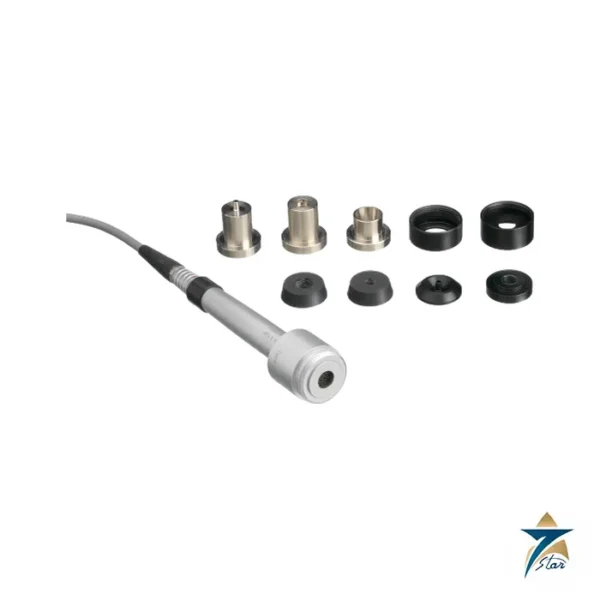
- Mount the accelerometer on a clean, flat, rigid surface as close to the bearing as possible, avoiding thin covers and fan shrouds
- Use the same locations on every round, marking them on the machine if needed
- Measure with the machine at normal operating load and temperature
- Use the laser tachometer to confirm the actual running speed rather than relying on nameplate values
- Keep cables clear of rotating parts and secure them during the measurement
Reading the Diagnosis
For each test the Fluke 810 vibration tester reports the most likely faults with a severity level and a recommended action. Slight and moderate results usually indicate a trend to follow on the next round, while serious and extreme results call for planning a repair. The spectrum data remains available for a vibration analyst when a second opinion is needed, and results can be transferred to a PC for reporting and trending.
Building a Route-Based Programme
The instrument gives the most value when used on a regular schedule. A practical approach is to start with critical pumps, motors, fans and gearboxes, set a measurement interval based on criticality, and keep results so that developing faults are visible from one round to the next. Combining vibration results with lubrication, thermography and operating data gives planners a stronger basis for deciding when to intervene.
Care of the Instrument
Charge the battery fully before a route, store the sensor and cables in the carrying case, and inspect the sensor cable and connector regularly, since a damaged cable is a common cause of odd readings. Keep the unit within its 0°C to 50°C operating range, which in Oman and the GCC means not leaving it in vehicles or direct summer sun.
Sourcing from Seven Star LLC
Seven Star LLC supplies Fluke test and condition-monitoring instruments to maintenance teams in Muscat, Sohar, Salalah and across the GCC, with support in choosing accessories and setting up an initial measurement route.
Request a Quote for Fluke 810 Handheld Vibration Tester
Contact Seven Star LLC for a quotation and availability on the Fluke 810 handheld vibration tester and the wider Fluke test-instrument range across Oman and the GCC. Our team can help fit the right condition-monitoring tools into your maintenance program.
Browse the full Fluke range or see more Portable Test & Measurement products supplied by Seven Star LLC in Oman and the GCC.












Reviews
There are no reviews yet.