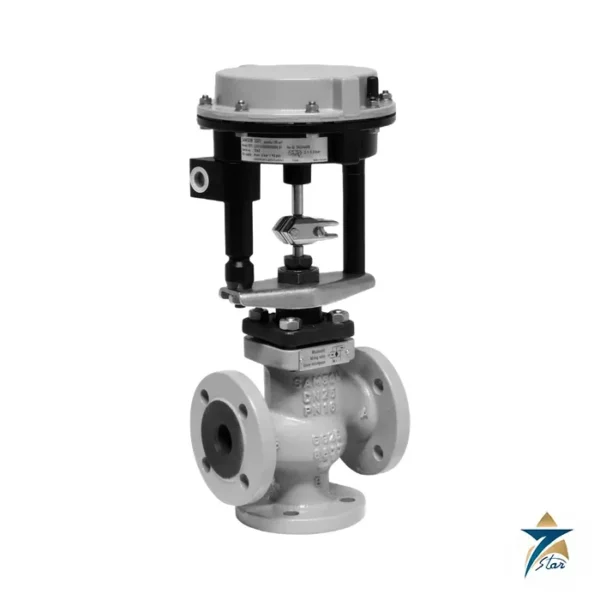
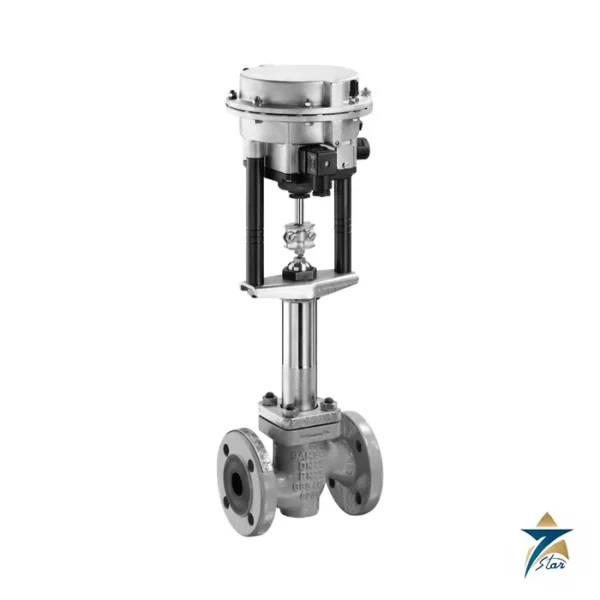
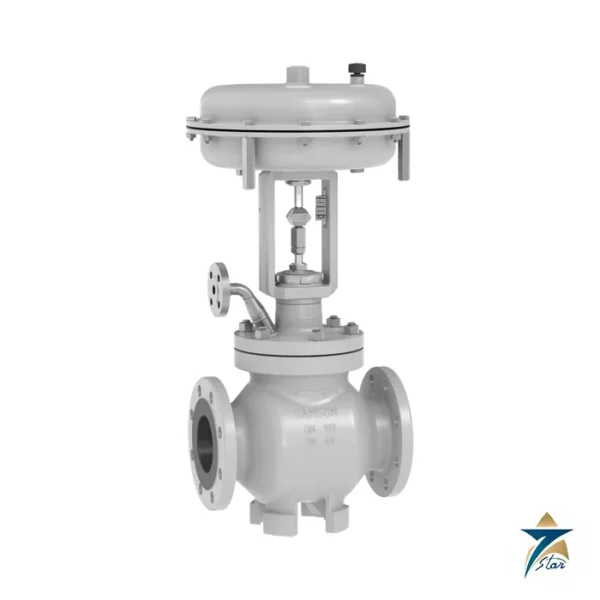
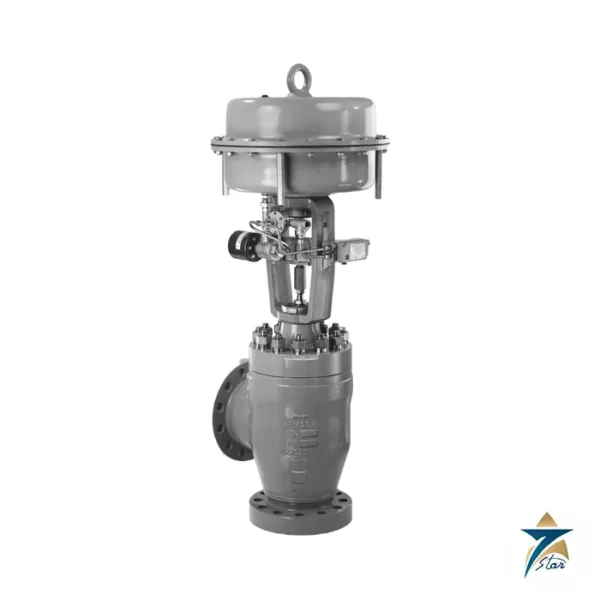
Samson Type 3226 three-way valve for heating, ventilation and air-conditioning
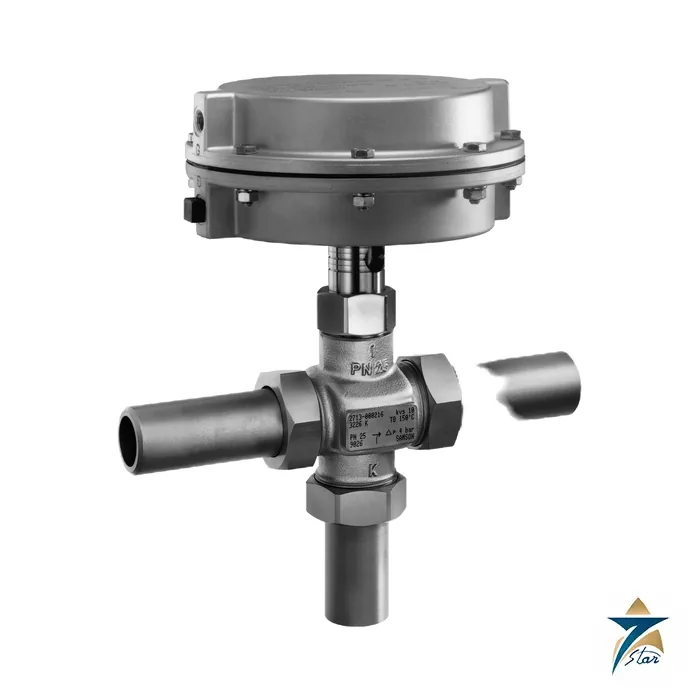
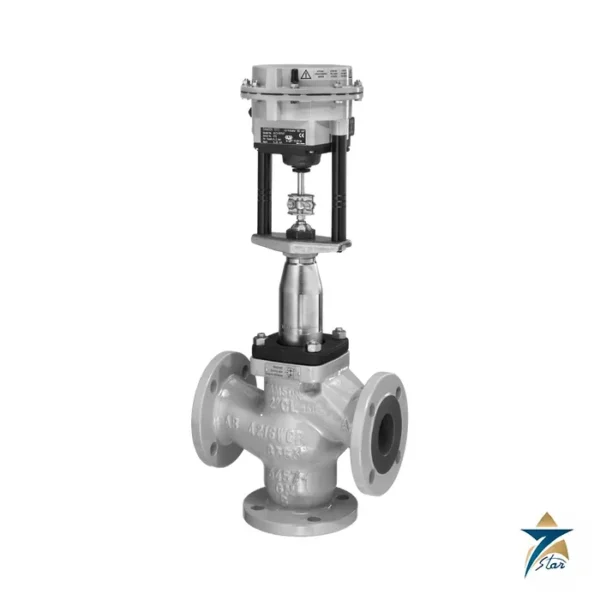
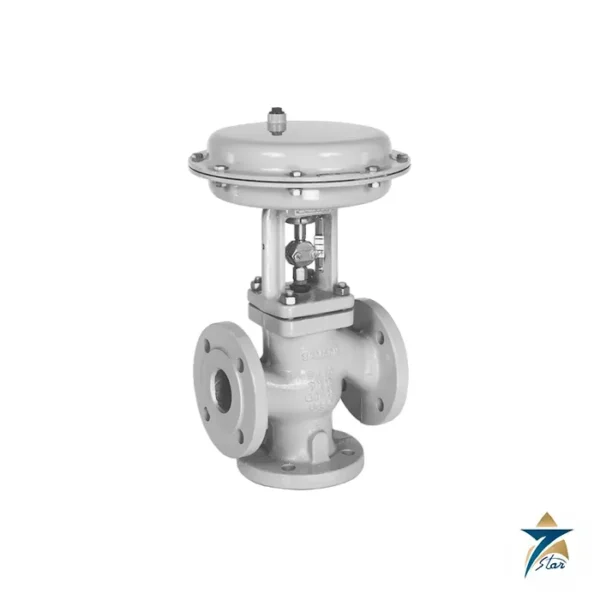
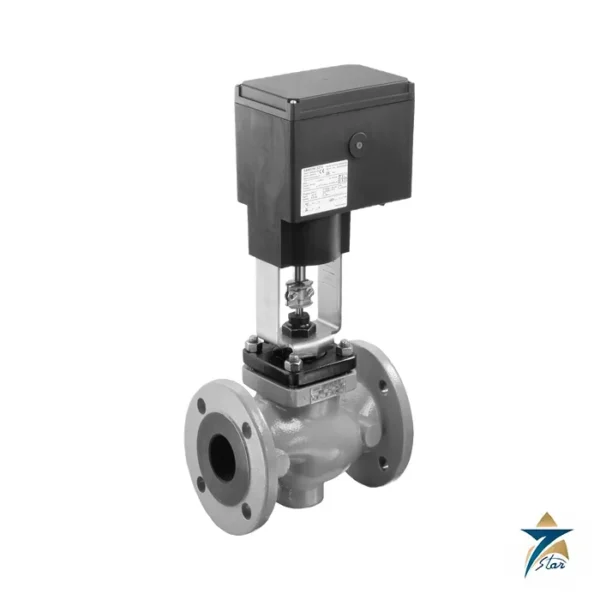
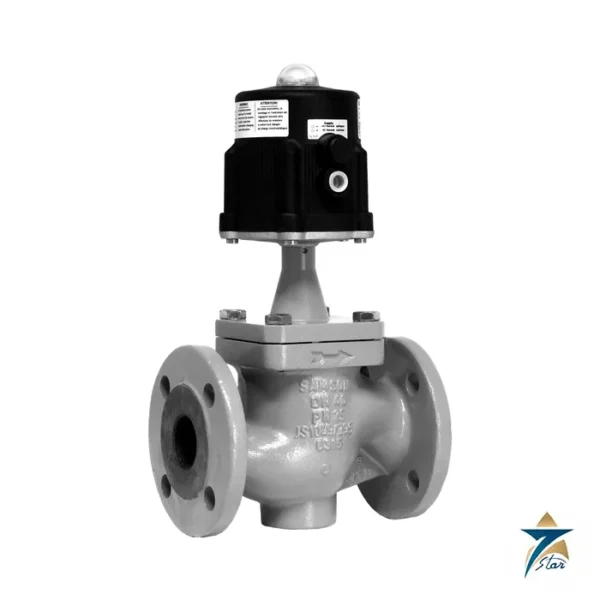
The Samson Type 3226 is a compact three-way valve that can be used as a mixing or a diverting valve in heating, ventilation and air-conditioning systems. The datasheet lists nominal sizes DN 15 to 50 (and G ½ to G 1 with female thread), a pressure rating of PN 25 and medium temperatures up to 150 °C for water and non-flammable gases. Seven Star LLC supplies the Type 3226 in Oman and the GCC as an independent supplier in Muscat. In a region where district cooling, chilled-water plants and large building services dominate the load, a small three-way valve that blends supply and return water is a basic control element, and this page explains how the 3226 combinations are specified.
Decoding Type 3226 with its actuator codes
The Type 3226 is always ordered with an actuator, and the actuator code is written after the valve number, for example 3226/5827. The datasheet lists these combinations.
| Combination |
Actuator |
Sizes and notes |
| 3226/5857 |
Type 5857 electric actuator |
DN 15 to 25 and G ½ to 1; three-step or positioner version |
| 3226/5827 |
Type 5827 electric actuator |
DN 15 to 50; some versions with fail-safe action stem extends (A) or retracts (E) |
| 3226/5757-7 |
TROVIS 5757-7 electric actuator with process controller |
DN 15 to 25; heating and cooling applications |
| 3226/5724-8 |
TROVIS 5724-8 electric actuator with process controller |
DN 15 to 50; two PID control modules, ready-wired, no fail-safe action |
| 3226/5725-8 |
TROVIS 5725-8 electric actuator with process controller |
DN 15 to 50; with fail-safe action |
| 3226/2780-1 |
Type 2780-1 pneumatic actuator |
DN 15 to 50; control signal 0.4 to 1 bar |
| 3226/2780-2 |
Type 2780-2 pneumatic actuator |
DN 15 to 50; control signal 0.4 to 2 bar; suitable for integral positioner attachment |
Type 3226 technical specifications
| Parameter |
Specification |
| Manufacturer / part number |
Samson / Type 3226 three-way valve (mixing or diverting) |
| Nominal size |
DN 15, 20, 25, 32, 40, 50 with male thread connections and welding or threaded ends; G ½, ¾, 1 with female thread (mixing only) |
| Pressure rating |
PN 25; DVGW version PN 10 |
| Medium temperature |
+5 (–15) to +150 °C; DVGW version +5 to +90 °C |
| Rated travel |
6 mm for DN 15 to 25 and G ½ to 1; 12 mm for DN 32 to 50 |
| KVS coefficients |
1.0, 1.6, 2.5, 4, 6.3, 10, 16, 25, 40 |
| Seat-plug seal |
Soft seal |
| Leakage class (DIN EN 60534-4) |
IV (0.01 % of KVS or less) |
| Valve body |
CC499K (CuSn5Zn5Pb2-C) red brass |
| Plug / packing |
CW617N (CuZn40Pb2zh) with EPDM; EPDM O-rings |
| End fittings |
Welding ends 1.0460; threaded ends red brass |
| Max. ambient temperature at actuator |
50 °C |
The permissible differential pressure depends on the actuator. With the Type 5857 or TROVIS 5757-7 it is 4 bar at DN 15, 2.6 bar at DN 20 and 1.8 bar at DN 25; with the Type 5827, TROVIS 5724-8 and 5725-8 or the Type 2780 it is 4 bar for DN 15 to 25, 1.7 bar for DN 32 and 1.1 bar for DN 40 and 50.
How the three-way valve controls mixing and diverting
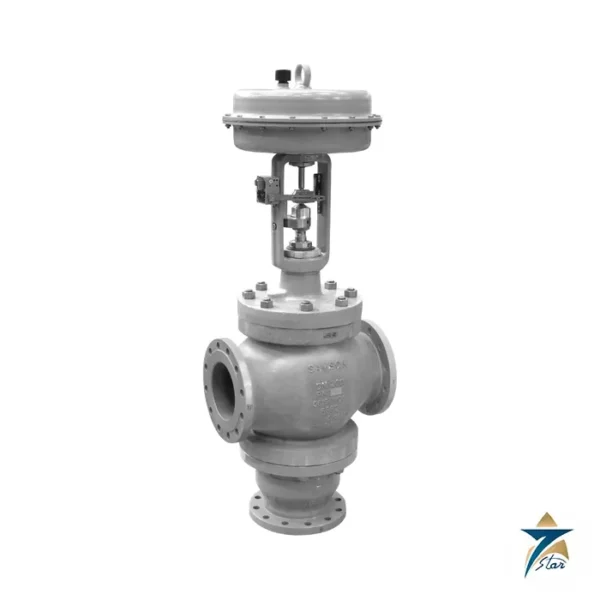
In a mixing valve, media A and B enter and the mixture leaves at AB; in a diverting valve the stream enters at AB and is split into A and B. The two functions differ in the plug arrangement, so the valve must be installed for the intended function. The female-thread version is available only as a mixing valve. The medium flows in the direction of the arrow, the plug position sets the cross-section between plug and seat and the plug follows the actuator stem against the valve spring. The valve and actuator are joined by a force-locking connection.
With an actuator that has fail-safe action, the valve goes to one of two positions on loss of signal or supply: stem extends closes port B in mixing valves and port A in diverting valves; stem retracts opens them. Valves that protect panel heating according to DIN 4747 can be combined with electric actuators with fail-safe action.
Where the 3226 fits in a plant
The 3226 is a building-services and utility valve. Typical uses are blending chilled-water supply and return for an air-handling unit coil, holding the temperature of a secondary heating loop and diverting flow between a cooler and its bypass. The related flanged Type 3260 three-way valve, and Samson accessories such as the Type 1 N strainer, are covered separately; the datasheet recommends strainers upstream of valves on fail-safe actuators. For piped steam or hot oil duty choose a different type such as the Type 3535 listed on this site.
Selection checklist for a Type 3226
- Mixing or diverting function and the port assignment for A, B and AB.
- KVS, then DN, using the flow diagram for water and the allowed differential pressure of the chosen actuator.
- Connection style: male thread with welding ends, male thread with threaded ends or female thread G.
- Medium temperature; an intermediate insulating piece is needed below +5 °C (down to –15 °C) or in constant-temperature networks above 135 °C.
- DVGW version if the system carries drinking-water relevant media.
- Actuator: electric three-step, electric with positioner, process controller version or pneumatic, with supply voltage or signal pressure.
- Fail-safe action and any panel-heating protection requirement.
Installation, commissioning and maintenance of the 3226
The valve can be mounted in any position, but an electric actuator with process controller must not be suspended downwards. Check that inlet and outlet pipes are on the correct ports A, B and AB. If the valve is insulated, do not insulate the actuator or the coupling nut, and do not insulate the intermediate piece over more than 25 mm, so the actuator stays below its 50 °C limit. Flush the pipework before commissioning and fit a strainer to protect the soft seat. Soft seats and EPDM seals are wear parts; replace them if leakage rises above class IV.
Typical applications of the Type 3226 in Oman and the GCC
Chilled-water and hot-water loops in hospitals, malls, airports and industrial office blocks, district cooling energy transfer stations, and heating and cooling of plant buildings at oil, gas and power sites all use valves of this class. High ambient temperature makes insulation and actuator ventilation important, and the electric actuators with an integrated process controller simplify wiring in plant rooms.
Information to send with your Type 3226 RFQ
- Application: chilled water, hot water, glycol or other medium and its temperature range.
- Mixing or diverting duty, required KVS and available differential pressure.
- DN or thread size and connection type.
- Actuator type, supply voltage and control signal; fail-safe requirement.
- Whether the DVGW version or an insulating piece is needed.
- Quantity, tag numbers and delivery site.
Documents and quotation
The Samson data sheet T 5863 for the Type 3226 is attached on this page. Send the duty data and your preferred actuator, and we will confirm availability and lead time. Seven Star LLC is an independent supplier and does not claim any official status with the manufacturer.





















Reviews
There are no reviews yet.