Samson 2404-1 pilot-operated tank blanketing pressure reducing valve
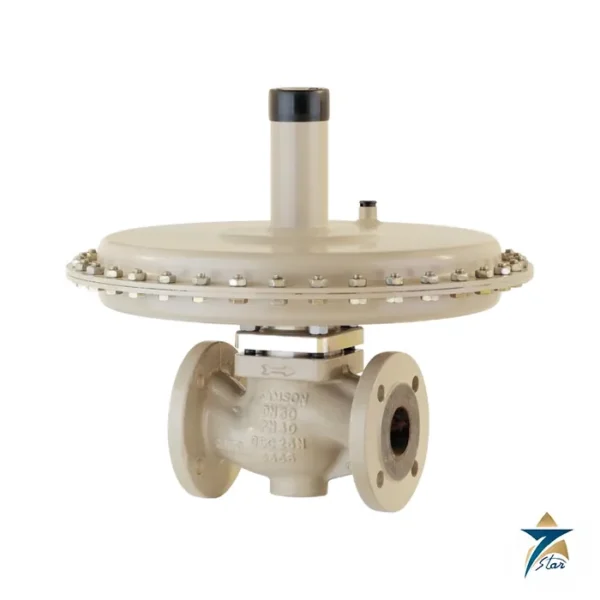
The Samson Type 2404-1 is a self-operated pressure reducing valve built to hold a very low, steady gas pressure above a storage tank. It feeds nitrogen or another inert gas into the vapour space whenever the tank pressure sinks below the adjusted set point, so oxidation-sensitive, toxic or explosive products never meet ambient air. The 2404-1 works without electricity or instrument air, which makes it a popular choice on tank farms where a simple, proportional and low-maintenance regulator is preferred. Seven Star LLC supplies Samson 2404-1 regulators in Oman and the GCC as an independent supplier in Muscat.
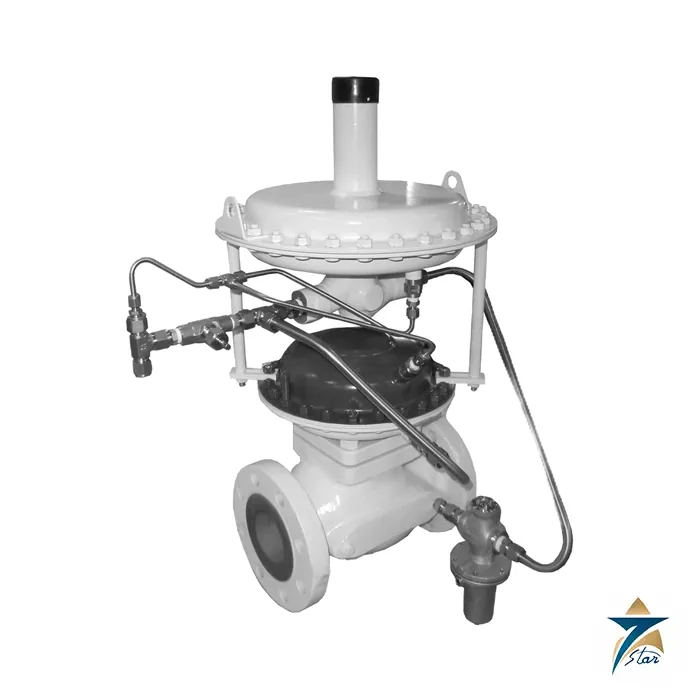
The 2404-1 is not a single casting but a regulator assembly. According to the Samson data sheet it is made up of a Type 2406 main valve (balanced by a diaphragm, NPS 1 to 6 / DN 25 to 150), a Type 2405 pilot valve with a ½ NPT female connection, a Type 44-1 B input pressure regulator, and the M2404 mounting kit with the hook-up and needle valves. The model number therefore tells you the function (pressure reducing, tank blanketing), while the nominal size, body material, elastomer and set point range are fixed when the unit is specified.
Technical specifications of the 2404-1
| Parameter |
Specification |
| Manufacturer / part number |
Samson / Type 2404-1 |
| Function |
Pilot-operated pressure reducing valve; closes when the downstream pressure rises |
| Set point range (pilot Type 2405) |
3 to 10 mbar, 5 to 30 mbar or 25 to 100 mbar (0.045 to 0.15, 0.075 to 0.45 or 0.35 to 1.5 psi) |
| Nominal size (main valve Type 2406) |
NPS 1 to 6 / DN 25 to 150; DN 32 and DN 125 on request |
| Pressure rating |
Class 125, 150 and 300 / PN 16 to 40 (DN 150: Class 125 and 150 / PN 16 to 40) |
| Max. differential pressure |
12 bar (175 psi); higher on request |
| Min. differential pressure |
1 bar (15 psi) |
| Permissible temperature |
-20 to +90 °C (-5 to +195 °F); max. 80 °C for EPDM and NBR versions |
| Leakage class |
Soft-seated, minimum Class IV to ANSI/FCI 70-2 or IEC 60534-4 |
| Pilot valve connection |
½ NPT female thread, Class 300, CV 1.2 / KVS 1.0 |
| Input pressure to pilot |
Fixed at approx. 1 bar (15 psi) by the Type 44-1 B regulator |
| Medium |
Gases, typically nitrogen or other inert gas |
How the 2404-1 regulates tank pressure
The principle is a pilot-controlled loop. The inert gas supply pressure p1 first passes through the Type 44-1 B input pressure regulator, which is delivered pre-adjusted and lowers it to roughly 1 bar for the pilot. This keeps the pilot working accurately even when the gas network pressure changes. A control line (pipe ½") brings the tank-side pressure p2 back to the pilot valve.
If the tank pressure drops slightly below the set point, for example while product is being pumped out or after a sudden cool-down, the pre-loaded set point spring opens the pilot. The control pressure on the main valve diaphragm rises, the main valve opens and inert gas flows into the tank until the blanket is restored. When the tank pressure climbs, for instance during filling, the pilot closes and the actuator springs and downstream pressure shut the main valve. A lead-sealed needle valve, set at the factory, damps the loop so that it stays stable.
Flow coefficients and sizes of the Type 2404-1
Flow capacity depends on the nominal size of the Type 2406 main valve. The table lists the full-size coefficients printed in the data sheet together with the approximate weight of the complete regulator.
| Nominal size |
CV |
KVS |
Approx. weight |
| NPS 1 / DN 25 |
9.4 |
8.0 |
25 kg |
| NPS 1½ / DN 40 |
23 |
20 |
32 kg |
| NPS 2 / DN 50 |
37 |
32 |
35 kg |
| NPS 2½ / DN 65 |
60 |
50 |
60 kg |
| NPS 3 / DN 80 |
94 |
80 |
66 kg |
| NPS 4 / DN 100 |
145 |
125 |
75 kg |
| NPS 6 / DN 150 |
450 |
380 |
140 kg |
Reduced CV and KVS values (for example 9.4 / 8.0 in NPS 1½ and 2) are available, and a flow divider can be added in selected sizes for quieter, smoother flow; these options are on request.
Materials and special versions
The main valve body is offered in A126B, A216 WCC or A351 CF8M (EN-GJL-250, 1.0619 or 1.4408), with seat, plug and internals in 1.4404 / 316L. Plug seal and diaphragms are EPDM, NBR or FKM, so the elastomer can be matched to the gas and the ambient temperature. The pilot valve body is A216 WCC or A351 CF8M, and the mounting kit tubing and fittings are stainless steel. The data sheet also lists a version with FDA-compliant materials for food and pharmaceutical storage, versions for sour gas service (NACE), and a pilot actuator with seal and leakage line connection for flammable gases. State any of these needs at the enquiry stage because they change the material combination.
Where the 2404-1 sits in a blanketing system
A complete blanketing scheme normally pairs a reducing valve with a pressure-relief or excess-pressure device so that the tank can both be fed and vented. The Samson Type 2404-2 is the excess-pressure counterpart for the same millibar range, and the 2404-1 and 2404-2 together are often specified as a matched pair for one tank. Both use the Type 2406 main valve, which simplifies spare holdings. If you are comparing, the 2404-1 acts on the downstream (tank) pressure and closes as it rises, while the 2404-2 acts on the upstream (tank) pressure and opens as it rises.
Selection and ordering checklist for the 2404-1
- Nominal size and flange standard (ASME Class 125, 150, 300 or EN PN 16 to 40), including end-to-end length limits in the pipe run.
- Required set point in mbar and the matching pilot range: 3 to 10, 5 to 30 or 25 to 100 mbar.
- Maximum gas flow in normal and standard conditions, to check CV or KVS against the pressure drop.
- Inert gas supply pressure, so that the differential pressure across the valve stays between 1 and 12 bar unless a higher value is agreed.
- Gas type and temperature range, to select EPDM, NBR or FKM and the body material.
- Special needs: FDA materials, NACE sour gas service, leakage line connection for flammable gas.
- Quantity and whether the mounting kit M2404 is included.
The ordering text in the data sheet follows the same logic: body material, diaphragm and plug stem materials, NPS or DN with CV or KVS, the set point range of the pilot valve, the input pressure regulator and the mounting kit.
Installation, commissioning and maintenance of the 2404-1
The regulator is delivered as a ready-to-install unit. Fit the main valve in a horizontal pipeline with the pilot valve pointing upward and the flow direction matching the arrow on the body. Connect the ½" control line to the tank side of the system, leave room to reach the set point adjuster with a socket wrench, and keep the regulator accessible after plant completion.
During commissioning, confirm the supply pressure, bring the tank to its working level slowly and check that the set point holds during both pump-out and filling. The needle valve is lead-sealed from the factory and should not be touched unless the manufacturer instructions are followed. As a proportional regulator without auxiliary energy it needs little routine work; planned checks mainly cover the diaphragms, the soft plug seal, the needle valve, the hook-up and the tightness of the tubing.
Typical applications in Oman and the GCC
Inert gas blanketing is used wherever stored liquids must be protected from air or moisture: solvent and chemical tanks at industrial ports and petrochemical sites, additive and condensate storage in oil and gas facilities, and tanks holding toxic or flammable products near power and desalination plants. Daily temperature swings and strong sun in the Gulf cause noticeable tank breathing, so a regulator that reacts in the millibar range helps limit nitrogen consumption and emissions. The 2404-1 fits these duties when a self-powered solution is wanted, for example on remote tank farms.
Information to send with your RFQ for the 2404-1
Please send the tank design and operating pressure, required set point, gas and flow data, line size and flange rating, ambient and gas temperature, elastomer preference and any special requirement such as NACE or FDA materials. Add the quantity and target delivery location so that the offer can be prepared in one round.
Documents and quotation
A Samson datasheet for the 2404-1 (T 2538 EN) is attached on this page for download. It contains the set point ranges, CV and KVS values, materials and dimension tables referred to above.
Send your tank and gas data together with the part number 2404-1 and our team will prepare a quotation for Oman and the GCC.
Other Models in the Samson Tank Blanketing Range
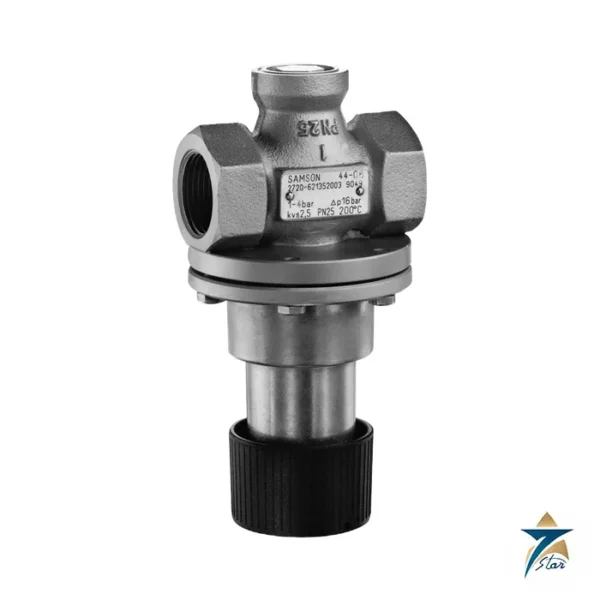
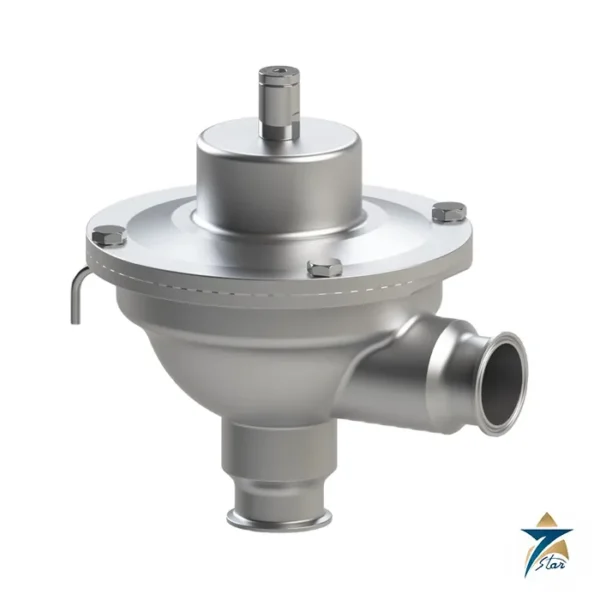
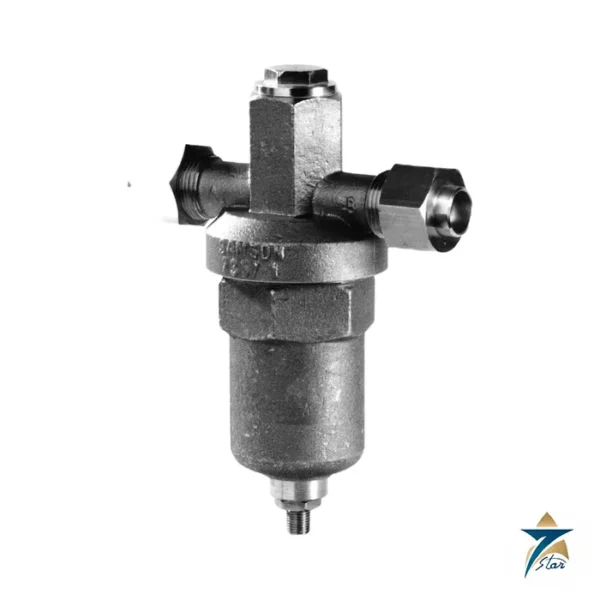
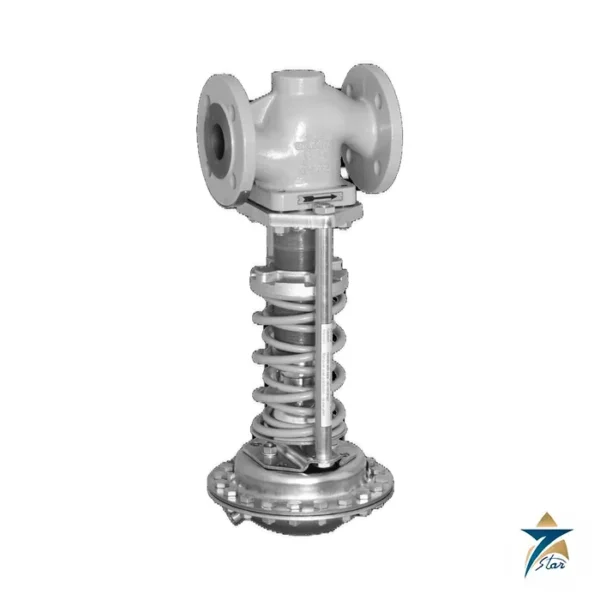
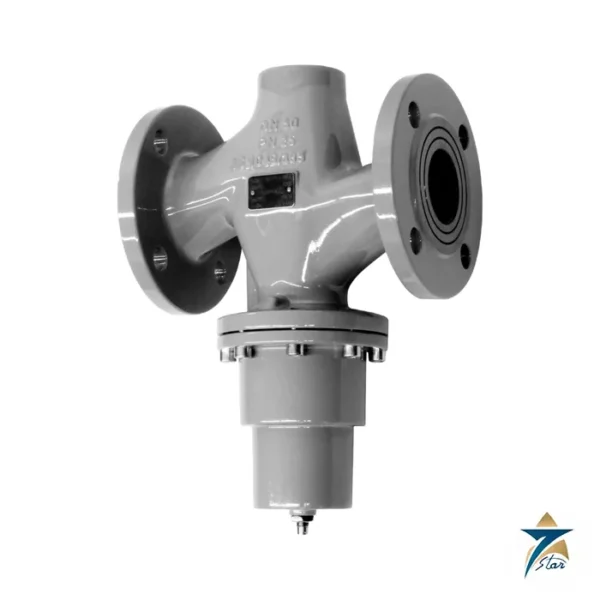
Seven Star LLC supplies models from the Samson Tank Blanketing range in Oman and the GCC. Compare the related models below and request a quote for the one that matches your application.






















Reviews
There are no reviews yet.