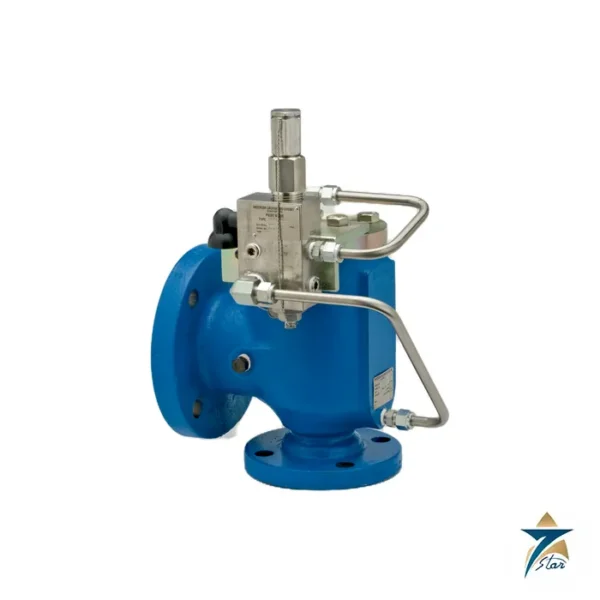
LESER Type 484 vessel-integrated hygienic safety valve for high-purity vessels
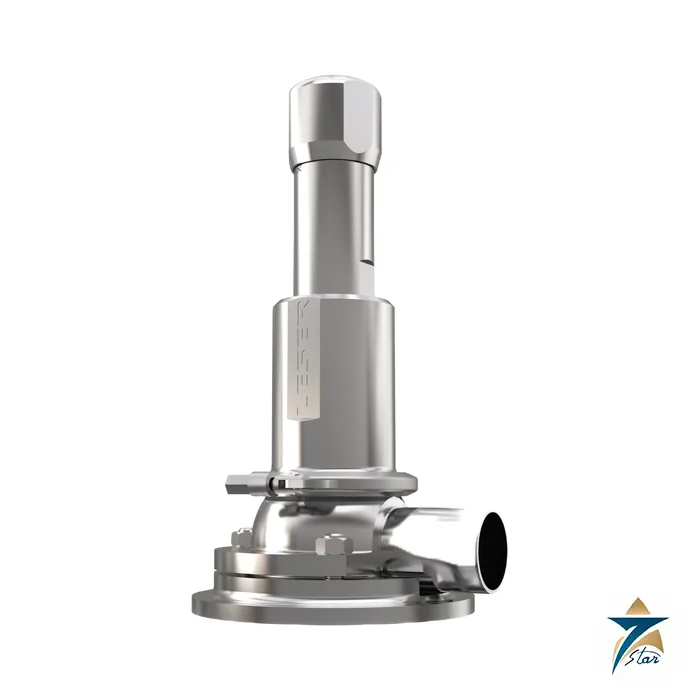
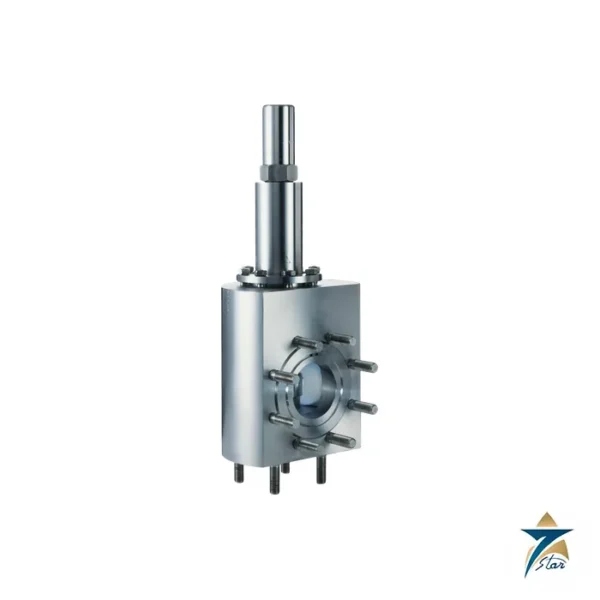
The LESER Type 484 is a clean-service safety valve designed to be welded directly into the wall of a vessel. It is one of the two valves in the Clean Service range that LESER places in the superior class for sanitary requirements. The valve inlet is a dead-space-free vessel connection, so the usual pocket between the vessel and the valve seat practically disappears; LESER quotes a dead-space ratio L/D below 0.33. Seven Star LLC supplies the Type 484 in Oman and the GCC as an independent supplier in Muscat.
The intended application is the protection of fermenters, bioreactors and other high-purity pressure vessels in pharmaceutical, biotechnology, food and beverage plants, where residues that collect in a conventional valve neck would count as a contamination risk.
| Parameter |
Specification |
| Manufacturer / part number |
LESER Type 484 (article series 4844, vessel connection Type 5034) |
| Product line |
Clean Service, spring-loaded, superior sanitary class |
| Actual orifice options |
d0 = 13 mm (133 mm²) or d0 = 25 mm (491 mm²) |
| Set pressure |
0.3 to 16 bar (4.4 to 232 psig) for 13 mm; 0.1 to 16 bar (1.5 to 232 psig) for 25 mm |
| Body material |
1.4435 (316L) |
| Vessel connection |
Type 5034 weld-in connection, 1.4435 (316L), supplied separately |
| Outlet connection |
DN 25 / 1 1/2 in. (13 mm orifice) or DN 40 / 2 in. (25 mm orifice) as clamp, aseptic, flange or thread |
| O-ring materials |
EPDM (D), FKM (L), FFKM (C) |
| Dead-space ratio |
L/D below 0.33 |
| Lifting devices |
Cap H2, packed knob H4, pneumatic H8 |
What makes the Type 484 different from a conventional clean service valve
On a conventional hygienic safety valve the inlet is a clamp or flange fitting, and the neck between the vessel and the disc has a length that the inlet diameter divides into a dead-space ratio. LESER quotes a ratio below 1.5 for the Types 481 and 483 and below 1.5 to 3.0 for the Type 488, depending on size; for the Type 484 it is below 0.33. The way it is done is by welding the vessel connection into the vessel wall so that the seat sits almost flush with the inside surface, and the product contacts the seat directly.
Because the weld-in piece is part of the vessel, it must be ordered separately and chosen for the vessel wall thickness. The Type 5034 connection is offered for wall thicknesses up to 5 mm (13/64 in.) and above 5 mm, in each of the two orifice sizes. A blind flange for the pressure test is also a separate part, so the plant can pressure test the vessel without the valve fitted.
- Dead-space-free inlet for maximum cleanability of the seat.
- Weld-in vessel connection in 316L, chosen for the vessel wall thickness.
- Two orifice sizes to cover small and medium capacities.
- Clamp, aseptic, flanged or threaded outlet options.
- Pneumatic lifting device for functional checks in place.
Ordering structure: article 4844 and vessel connection 5034
The valve itself is article series 4844, with the cap or lifting device selected by the last digits: H2 (cap), H4 (packed lifting knob) and H8 (pneumatic lifting device). The catalogue lists separate article numbers for the 13 mm and 25 mm orifice versions, each in the H2, H4 and H8 designs. The vessel connection, article series 5034, has four variants covering the two orifice sizes and the two wall thickness classes.
The outlet connection is chosen from a table of option codes covering clamps (DN 25 / 1 1/2 in. for the small orifice and DN 40 / 2 in. for the large), aseptic screwed and flanged connections in DIN 11850, EN ISO 1127 and BS 4825-1 ranges, and threaded or flanged outlets. Option codes defined in the catalogue should be quoted exactly in an enquiry, because a wrong code on a hygienic valve cannot be reworked easily.
Design data and dimensions for the Type 484
| Dimension (13 mm / 25 mm orifice) |
Value |
| Center to face, welded inlet / outlet |
24 / 80 mm and 30 / 90 mm |
| Center to face, clamp outlet |
24 / 102 mm and 30 / 112 mm |
| Center to face, threaded outlet |
24 / 120 mm and 30 / 130 mm |
| Height with H4 |
201 mm and 289 mm |
| Height with H8 double-piston |
229 mm and 296 mm |
| Vessel connection flange (13 mm size) |
D 130 mm, bolt circle 90 mm, PN 16 |
| Vessel connection flange (25 mm size) |
D 150 mm, bolt circle 110 mm, PN 16 |
For a lifting device H8 with FKM on the 25 mm orifice, the catalogue limits the maximum operating temperature to 50 °C, so check this against your CIP and SIP conditions. The space between the valve outlet (clamp or flange) and the vessel wall must be sufficient, and if more space is required a longer outlet connection can be ordered to your specification.
Surface quality and cleanability
Hygienic design is only meaningful with a controlled surface. The Clean Service catalogue defines the same three LESER surface packages used across the family: Clean finish B50 and HyClean finish B51 with a maximum roughness of 0.750 µm on the product-contact area, and Sterile finish B52 with 0.500 µm. The blow-off side and outer surfaces are held at 3.0 µm. Because the Type 484 puts the seat in direct contact with the process, the packages that apply to the inlet and the underside of the disc matter more here than on a clamp-connected valve.
Specify the surface package and the elastomer together with the cleaning agents the plant uses, and keep a record of the delivered surface finish for validation files.
Type 484 or Type 485: choosing the right superior-class valve
| Type |
Typical use |
| Type 484 |
Welded directly into a vessel wall; L/D below 0.33; 13 mm or 25 mm orifice |
| Type 485 |
Welded into pipework; L/D below 0.95; used where a direct vessel connection is not possible, for example glass vessels |
| Type 483 |
Small to medium capacity with standardized clamp or aseptic connections; L/D below 1.5 |
The Type 484 is the first choice when the vessel is stainless steel and can accept a weld-in connection. If the vessel is glass or the valve must be in a pipe, the Type 485 fills the gap.
Applications of the Type 484 in Oman and the GCC
High-purity vessels in the GCC are found in pharmaceutical formulation, vaccine and biologics fill plants, dairy and beverage fermentation, and laboratory and pilot plants in universities and research parks. Large water bottlers and infant-nutrition producers also use sterile vessels. A weld-in safety valve helps validation because it removes a potential cleaning hot spot, and the vessel manufacturer can integrate it at fabrication time.
In hot, humid sites the outside of the valve must also withstand frequent washdown, which favors the 316L body and the 3.0 µm outer surface specification.
Selection checklist for a Type 484
- Required capacity, which decides between the 13 mm and 25 mm orifice.
- Set pressure within 0.3 to 16 bar for 13 mm and 0.1 to 16 bar for 25 mm.
- Vessel wall thickness, so the correct Type 5034 vessel connection is ordered.
- Outlet connection standard and diameter, with the distance needed from the vessel wall.
- O-ring material: EPDM, FKM or FFKM, and the maximum CIP and SIP temperature.
- Surface package and lifting device.
- Pressure test blind flange, if required.
Information to send with a Type 484 RFQ
- Medium, operating pressure and temperature, and cleaning agents.
- Vessel material, wall thickness and the position of the connection.
- Set pressure, required capacity and standard of calculation.
- Quantity, delivery site, certificates and documentation level.
Documents and quotation
A LESER Clean Service catalogue that includes the Type 484 and its vessel connection tables is attached to this page. Please send the details above and we will confirm the correct combination of valve, vessel connection and options before quoting.
Other Models in the Leser Clean Service Range
Seven Star LLC supplies models from the Leser Clean Service range in Oman and the GCC. Compare the related models below and request a quote for the one that matches your application.
























Reviews
There are no reviews yet.