LESER Type 712 supplementary loading system for spring-loaded safety valves
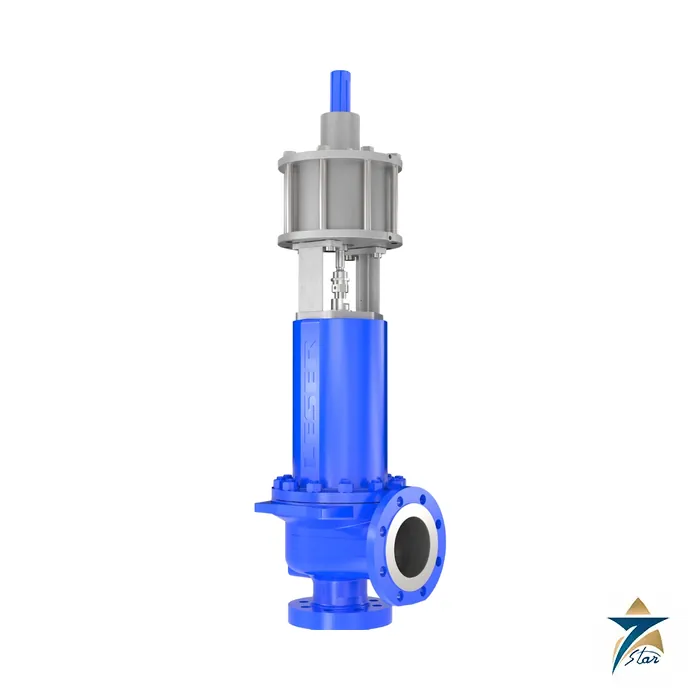
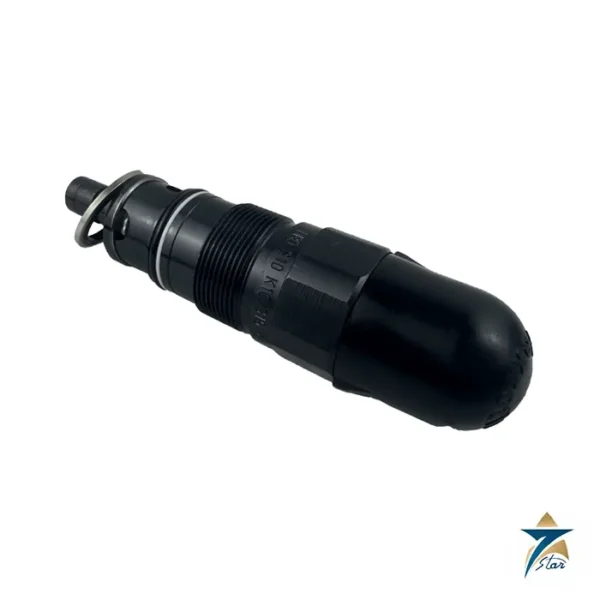
The LESER Supplementary Loading System, usually abbreviated SLS, is an accessory that adds a controlled pneumatic closing force to a spring-loaded safety valve. It can be fitted to a new valve or retrofitted to a valve already in service. The control unit is the Type 712, and it works together with a pneumatic actuator, the Type 702, mounted on the safety valve spindle. A variant with electric-pneumatic control exists as the Type 714. Seven Star LLC supplies the Type 712 system in Oman and the GCC as an independent supplier in Muscat.
The point of the system is to let a plant run closer to its maximum allowable working pressure without the valve leaking, simmering or wasting steam. A conventional spring valve in steam or gas service typically operates at 85 to 90 percent of MAWP; with the SLS LESER states that operation up to 97 percent is possible.
| Parameter |
Specification |
| Manufacturer / part number |
LESER Type 712 control unit with Type 702 pneumatic actuator (SLS) |
| System type |
Controlled safety pressure relief system (CSPRS) according to ISO 4126-5 |
| Set pressure (Type 712) |
0.1 to 250 barg (1.5 to 3,626 psig) |
| Set pressure (Type 714) |
0.1 to 200 barg (1.5 to 2,900 psig) |
| Connections |
DIN EN 1092 DN 25 to DN 400; ASME B16.5 NPS 3/4 to NPS 16 |
| Capacity (orifice) |
F to X |
| Temperature |
−40 to 550 °C (−40 to 1,022 °F) |
| Typical operating pressure |
Up to 97 percent of MAWP (conventional valve: 85 to 90 percent) |
| Air supply |
Dry, oil-free and dust-free compressed instrument air |
| Air consumption |
Control unit 0.07 Nm³/h continuous |
How the Type 712 supplementary loading system works
The system has three components: the Type 702 pneumatic actuator, which transfers opening and closing forces to the safety valve spindle; the Type 712 control unit, which pressurizes or depressurizes the actuator; and the safety valve itself. Three pressure tapping lines connect the protected system to the control unit, and three lines are used so that the sensing is redundant in line with ISO 4126-5. Connection pipes link the control unit and the actuator.
Operation follows three phases. In normal operation the actuator is pressurized and adds a closing load that supplements the spring, so the valve is fully tight right up to the set pressure. When the system pressure reaches the set pressure, the control unit vents the actuator and the valve opens with a pop action, assisted by lifting air. In the closing phase, as pressure falls back below the set pressure, the actuator supports reseating with an additional load, and the valve closes at about 98 percent of set pressure, meaning a blowdown of roughly 2 percent.
Fail-safe behavior
If the pneumatic supply is lost, the safety valve still functions as an ordinary spring-loaded safety valve. The system therefore adds performance without taking away the underlying safety function, which is the reason it is accepted under pressure equipment rules.
Benefits and effects on plant operation with the Type 712 SLS
The brochure lists the following effects of the SLS compared with a conventional valve: higher process productivity because the system can run closer to MAWP; less loss of medium when the valve opens and closes, since both opening and closing times are shortened; a shorter period of noise emission; full tightness up to the set pressure, including during pressure spikes below it; and less wear on the valve because the simmering phase before the response is eliminated. LESER states that the system amortizes itself in three to six months in suitable applications.
| Parameter |
Conventional safety valve |
Safety valve with SLS |
| Typical operating pressure, % of MAWP |
85 percent (conventional) |
97 percent (SLS) |
| Overpressure, completely open |
Max. 3 % ASME I; max. 10 % ASME VIII; max. 10 % full lift PED |
Below 1 % |
| Blowdown |
Max. 4 % ASME I; max. 7 % ASME VIII; max. 15 % full lift PED |
Approximately 2 % |
These are figures from the LESER brochure and the codes it quotes; the actual values for a particular installation depend on the valve and on the set pressure.
Air supply, installation space and maintenance
The control unit needs compressed instrument air that is dry, oil-free and dust-free. LESER gives a continuous standard consumption of 0.07 Nm³/h for the control unit and recommends a compressor discharge capacity of 12 Nm³/h. The installation space for the control unit is given as 1,000 mm × 800 mm × 800 mm, and the three pressure tapping lines and the connection pipes to the actuator must be planned from the start. The safety valve is installed as normal.
The brochure specifies annual maintenance carried out by LESER. For a plant in the GCC, where compressed-air quality is frequently affected by dust and humidity, the instrument air dryer and filters are as important as the unit itself, and the air supply should be included in the design review.
Applications: boilers and drying cylinders
The main application of the SLS is steam service. The brochure describes two typical uses: protection of the steam drum and superheater of a boiler, where MAWP is typically above 1 bar, and protection of steam-heated drying equipment such as paper-machine drying cylinders, where MAWP is above 10 bar. In a worked example for a drying cylinder with a set pressure of 4 bar, operating at 97 percent instead of 85 to 90 percent raises the saturated-steam temperature from about 147 to 149 °C to about 151 °C, which the brochure translates into a 2 to 5.7 percent increase in production output.
LESER reports that it had supplied 900 SLS systems up to 2022 and about 50 more each year, in applications such as recovery boilers, boiler main steam and drum protection, biomass and waste-to-energy plants, and power plant boilers. On the website the system is also described for helium plant protection at very low temperature with high back pressure.
Approvals and code position of the Type 712
The system is type-tested and complies with the European Pressure Equipment Directive 2014/68/EU, ISO 4126-5 and AD 2000 A2, and it carries the CE mark for EU countries. The PED permits supplementary loading systems for both boiler protection and steam-heated equipment. According to the brochure, the ASME code authorizes power-actuated relief systems under Sections I and VIII, and LESER can meet the ASME requirements but had not yet certified the SLS at the time of the brochure, with an approval application in progress.
Always confirm the code basis your project requires. For installations in Oman that follow PED or ASME rules, the certification route should be agreed at the enquiry stage.
Selecting an SLS: what must be defined
- Type of installation: new safety valve or retrofit of an existing valve.
- Set pressure, MAWP and the desired operating pressure.
- Medium: steam, gas, or a special service such as helium.
- Valve type, size, orifice and connection of the existing or planned valve.
- Back-pressure situation, because the SLS adds closing force.
- Instrument-air quality and available supply.
- Choice between the pneumatic Type 712 and the electric-pneumatic Type 714.
- Code basis: PED, ISO 4126-5 or ASME.
Type 712 compared with Type 714
| Type |
Role |
| Type 712 |
Pneumatic control unit; set pressure 0.1 to 250 barg |
| Type 714 |
Electric-pneumatic supplementary loading; set pressure 0.1 to 200 barg |
| Type 702 |
Pneumatic actuator that carries the load onto the valve spindle |
All three belong to the High Efficiency product group, alongside the pilot-operated valves such as the Type 811 and 821.
Information to send with a Type 712 SLS RFQ
- Plant, service and protected equipment, with MAWP and operating pressure profile.
- Existing safety valve data, or the new valve specification.
- Instrument air availability.
- Delivery location and the standard that the project requires.
- Quantity and spare-parts expectations.
Documents and quotation
The LESER Supplementary Loading System brochure for the Type 712 and Type 714 is attached to this page. Send us the safety valve data and process conditions and we will confirm the matching scope and available documents.























Reviews
There are no reviews yet.