- Automation & ControlView all 3,126 products
- Automation Accessories
- AC Drives
- PLC & I/O Cards
- Industrial Communications
- Vibration Monitoring
- Controllers & Data Acquisition
- Isolator & Barrier
- Safety Switches & Guard Locking
- Encoders
- Motor Soft Starters
- CCTV & Security
- Pneumatic Cylinders
- HMI Displays
- Servo Drives
- Industrial Computers
- Machine Vision
- Automation Software
- Robotics
Brand: Bürkert
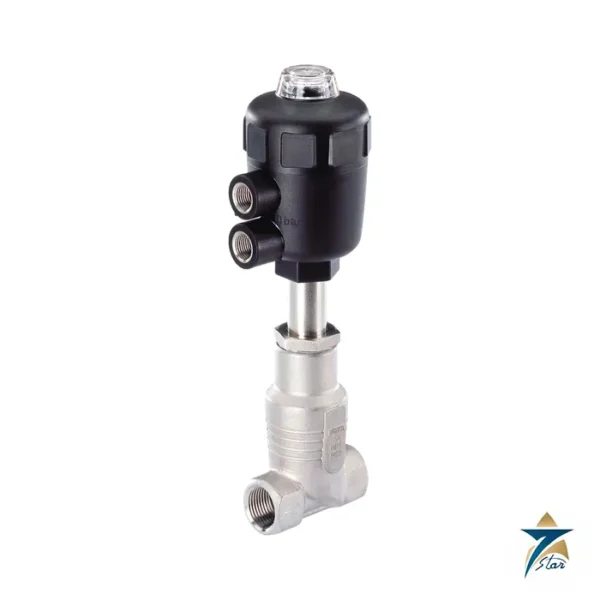
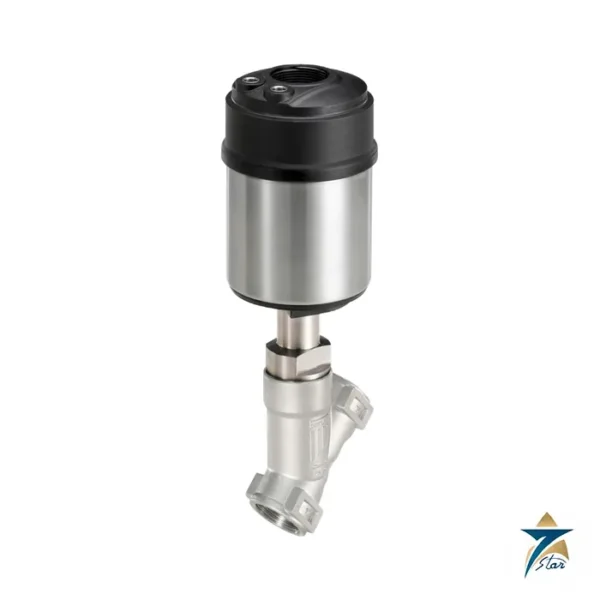
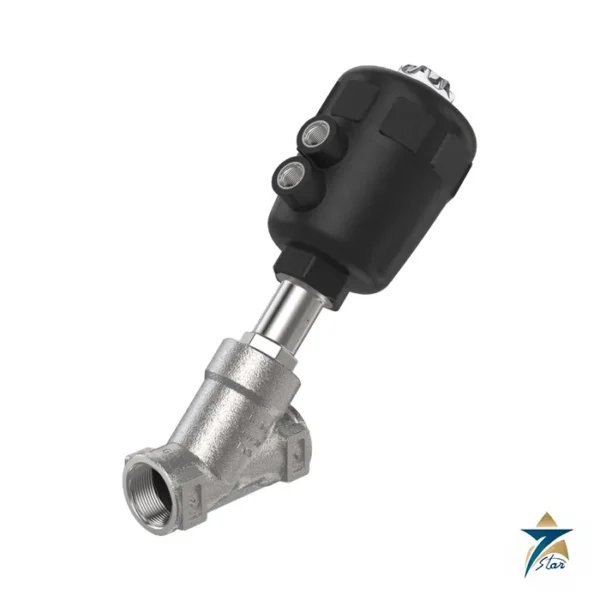
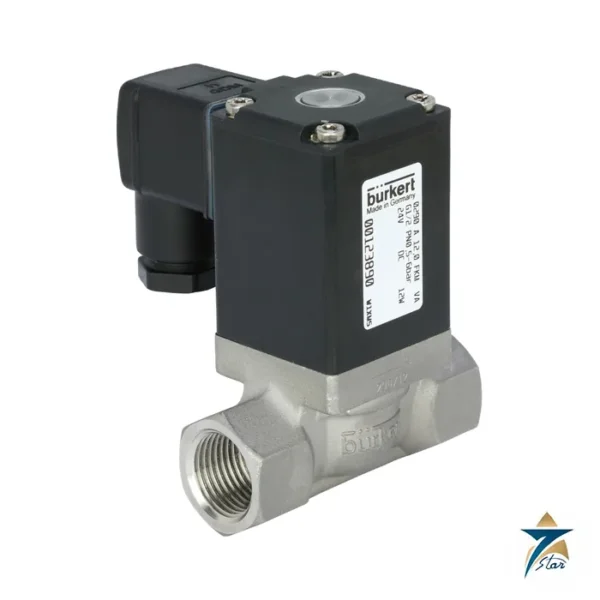
Bürkert 213718 Type 2300 Stainless Angle Seat Valve DN25 G1 PTFE
Description
Overview
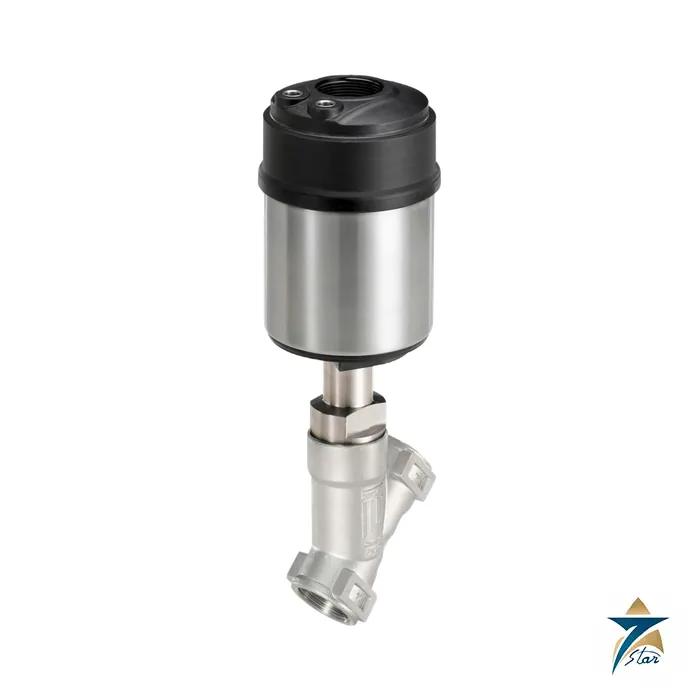
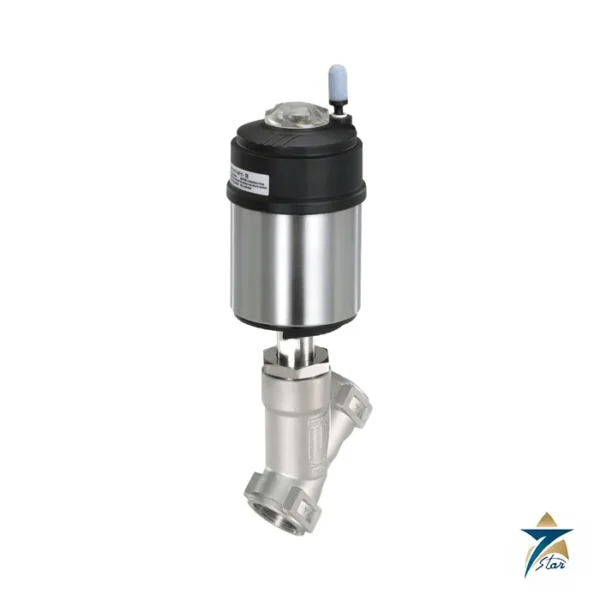
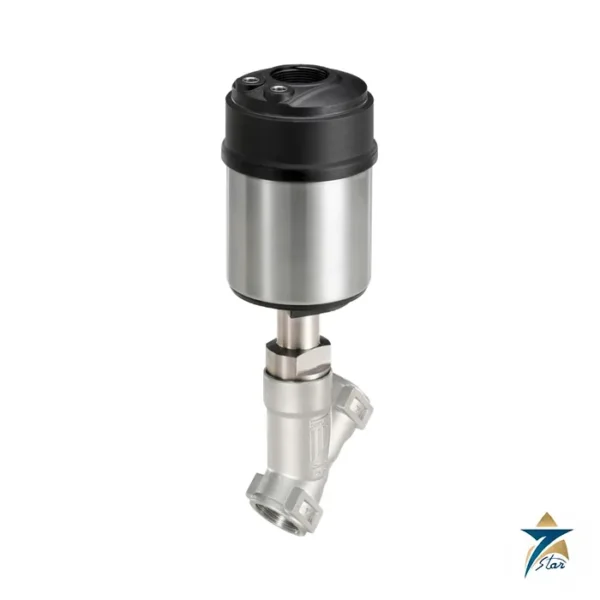
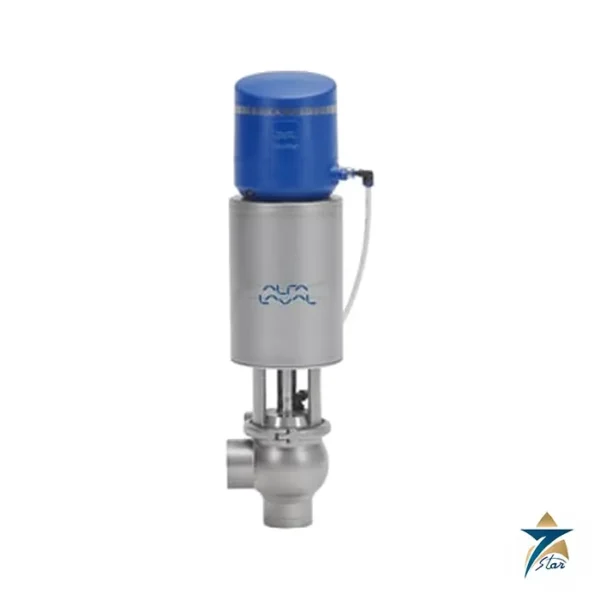
For flows of up to 16 m3/h of water-equivalent capacity, the Bürkert 213718 gives a compact stainless steel solution. It is the DN 25 threaded angle seat valve of Bürkert Type 2300, with G1 internal threads, a 70 mm pneumatic actuator, a PTFE seat and normally closed control function A. Seven Star LLC is an independent supplier serving Oman and the GCC.
Limits you should know
The datasheet lists two actuator sizes for DN 25, and the choice decides the pressure rating. With the 70 mm actuator, the valve of this number is rated to 12 bar with the PTFE seat; with a 90 mm actuator, the article 245405 is rated to 25 bar. The Bürkert 213718 is therefore for moderate-pressure lines such as cooling water, process water, air and low-pressure steam, while 245405 is for the full-pressure duty. The KVS value is 16 m3/h, and the characteristic is modified equal percentage.
Data of Bürkert 213718
| Item | Value |
|---|---|
| Article number | Bürkert 213718 |
| Nominal diameter | DN 25 |
| Port connection | G1 |
| Actuator size | 70 mm (M) |
| Max. operating pressure | 12 bar(g) |
| Seat seal | PTFE |
| Seat leakage class | VI |
| KVS value | 16 m3/h |
| Design | pneumatically operated 2/2-way angle seat control valve, ELEMENT series, modified equal percentage characteristic |
| Control function | A, normally closed by spring, opened by pilot air |
| Flow direction | flow to open, below the seat |
| Valve body | stainless steel CF3M with G (DIN ISO 228-1) internal thread |
| Actuator | stainless steel 1.4561 casing, PPS cover, FKM piston seal |
| Spindle seal | filled PTFE V-rings with spring compensation |
| Pilot pressure | 5.6 to 7 bar(g), air or neutral gas |
| Process media | steam, water, neutral gases, alcohols, oils, fuels, hydraulic fluids, salt solutions, alkalis, organic solvents, oxygen |
| Medium temperature | minus 40 to plus 230 degrees C depending on seat seal and limits chart |
| Maximum viscosity | 600 mm2/s |
| Nominal pressure | PN 25 (DIN EN 1333), Class 150 (DIN EN 1759) |
| Seat leakage standard | DIN EN 60534-4 |
How Bürkert 213718 differs from other Type 2300 variants
Against DN 20 (213715) it gains 60 percent in flow, from KVS 10 to 16, but loses pressure capability, 12 against 25 bar, because the same actuator now has to hold off a larger seat. Against DN 32 valves, such as 213719 at KVS 23 and 6 bar with a 70 mm actuator, it is more pressure capable. The stainless seat version of this DN 25, 70 mm configuration is 213768 with leakage class IV. The PTFE seat of this one gives class VI.
Where it is used
Look for it on cooling circuits, process water headers, compressed gas distribution and dosing manifolds. In Oman, DN 25 valves of this style are used in utility rooms at refineries, power stations and food plants. The valve handles steam, water, neutral gases, alcohols, oils, fuels, hydraulic fluids, salt solutions, alkalis, organic solvents and oxygen, subject to material suitability.
Fitting
Observe the flow marking so the medium flows below the seat. Support the line near the valve, because a DN 25 stainless valve with actuator is substantial in weight. Connect pilot air at 5.6 to 7 bar(g) and set the exhaust restrictor for gentle closing. In liquid lines, avoid slamming closed against high flow velocities, since water hammer would exceed the modest 12 bar rating on the smaller actuator.
Pressure test the line before commissioning and check that the actuator vent is not blocked.
Upkeep
Keep the pilot air dry and clean, check actuator vents for dirt and plan seal replacement by cycle count. Documentation of operating pressure and temperature helps in deciding whether a rebuild or replacement is more economic.
Testing after installation
A simple test protocol after installation avoids surprises at start-up. First pressurise the line slowly with the valve closed and look for leaks at the threads with a leak-detection spray or soapy water. Then energise the valve and confirm full flow, listening for chatter that might indicate low voltage or excessive pressure. De-energise it and watch the pressure gauge downstream: it should hold or decay in the manner expected for the circuit function. Finally, simulate a power loss and verify that the valve moves to its safe position within the time the process requires. Record the results so that the test can be repeated after maintenance.
Commissioning documentation
Good commissioning records pay back during the first fault. Note the date, the article number, the supply voltage measured at the coil, the line pressure at the valve and the medium temperature. Add a short functional test result: how the valve behaves at minimum and maximum pressure, and whether the response time is in line with the control sequence. Keep a copy of the manufacturer datasheet with the machine file so that technicians in future years can find the ordering chart, dimension drawings and material list without searching. For plants subject to inspection or insurance audits, a clear parts list with article numbers also shortens the review.
Material compatibility
Seal and body materials decide the service life more than any other design feature. Elastomers swell, harden or crack when exposed to the wrong chemical, and brass can suffer dezincification in aggressive water. Before approving a valve for a new medium, check the chemical resistance of both the body and the seal against the exact composition, concentration and temperature of the fluid, and not only against its common name. Manufacturers publish resistance charts and online tools for this purpose. When data is missing, ask for a sample trial or choose a more resistant material. A seal that is slightly oversized for the duty usually costs little compared with an unplanned stoppage.
Training and handover
When a new valve type is introduced to a plant, a short briefing for the maintenance team prevents mistakes later. Cover the article number system, how to read the nameplate, where the datasheet is stored, how to isolate and depressurise safely and what the typical failure signs look like. Provide a laminated sheet at the panel with the valve number, supply voltage and the expected behaviour on power loss. A plant that keeps this knowledge in the heads of a few engineers is vulnerable to staff changes, whereas written records and a small amount of training keep service quality constant across shifts.
Related items you may also need: Bürkert Type 6026 Direct-Acting 2/2-Way Plunger Solenoid Valve | Bürkert Type 8681 Control Head for Hygienic Process Valves | Spirax Sarco BSA3BD Bellows Sealed Stop Valve | All Bürkert products.
Before you order the Bürkert 213718
- To avoid a wrong delivery, compare the code on the nameplate of the installed unit with the Bürkert 213718 code on this page.
- The quotation for the Bürkert 213718 states the confirmed code and the lead time to site.
- The attached manufacturer datasheet covers the Bürkert 213718 ratings, dimensions and installation details.
- Delivery of the Bürkert 213718 is arranged to project sites in Oman and across the GCC, alongside the rest of our globe valves range.
- A spare Bürkert 213718 on the shelf is a simple way to protect critical service from long lead times.
Documents and quotation
The Type 2300 datasheet with the threaded ordering chart is attached. Send your RFQ with Bürkert 213718, quantity and delivery location in Oman or the GCC.
Other Models in the 2300 Range
Seven Star LLC supplies models from the 2300 range in Oman and the GCC. Compare the related models below and request a quote for the one that matches your application.
| Model | Category | |
|---|---|---|
| Bürkert 213712 Type 2300 Stainless Angle Seat Valve DN15 G1/2 PTFE | Globe Valves | View details |
| Bürkert 213715 Type 2300 Stainless Angle Seat Valve DN20 G3/4 PTFE | Globe Valves | View details |
| Bürkert 213718 Type 2300 Stainless Angle Seat Valve DN25 G1 PTFE | Globe Valves | You are viewing this model |
Datasheets & Documents
- Datasheet Bürkert 213718 Type 2300 Stainless Angle Seat Valve DN25 G1 PTFE Datasheet Download
Reviews (0)
How would you rate this product? Cancel reply
About brand
Bürkert is a German family-owned maker of fluid control systems, headquartered in Ingelfingen, Baden-Württemberg. Christian Bürkert founded the company in 1946, and it is known for solenoid valves, process and control valves, flow and analytical sensors, and mass flow controllers. Its products serve water treatment, hygienic processing, gas handling and laboratory applications.
Seven Star LLC lists Bürkert valves and valve automation devices and supplies Bürkert solenoid valves and spare parts to plants in Oman as an independent supplier.
Bürkert company profile
| Founded | 1946, by Christian Bürkert |
|---|---|
| Headquarters | Ingelfingen, Germany |
| Ownership | Family-owned |
| Product families | Solenoid valves, angle seat process valves, positioners, flow meters, mass flow controllers |
Bürkert types listed on this page
Two types are listed. Type 6026 is a direct-acting 2/2-way plunger solenoid valve, with a stainless steel bellows that separates the medium from the coil, and as a direct-acting valve it switches without needing a pressure difference. Type 8681 is the Bürkert control head that mounts on top of hygienic process valves to pilot the actuator and report valve position to the control system. Control heads of this kind are common in food, beverage and pharmaceutical plants in the GCC.
Ordering Bürkert valves: what we need
The type number alone is not enough. Send the identification number from the label, or else the type with orifice, port connection, body and seal material, coil voltage and frequency, circuit function and pressure range. For a Type 8681 control head add the communication variant and the make and model of the process valve it sits on.
Facts checked against Bürkert's published company history, October 2026.
Browse Bürkert products by category: Solenoid Valve, Control Valves.
FAQ
Questions about the Bürkert 213718 Type 2300 Stainless Angle Seat Valve
Answers from our engineering team on installation, compatibility and integration.
01What pressure is the Bürkert 213718 rated for?
With its 70 mm actuator and PTFE seat it is rated to 12 bar(g); the 90 mm actuator version 245405 is rated to 25 bar.
02What size and thread does the Bürkert 213718 have?
DN 25 with G1 internal threads, stainless steel body and normally closed control function A.
03What is the KVS of the 213718?
The KVS value is 16 m3/h according to DIN EN 60534-2-4.
04Is there a stainless seat version of the Bürkert 213718?
Yes, the same configuration with a stainless steel seat is 213768, leakage class IV.
05What pilot pressure does the 213718 need?
The datasheet specifies 5.6 to 7 bar(g) of air or neutral gas as pilot medium.


Reviews
There are no reviews yet.