Brand:

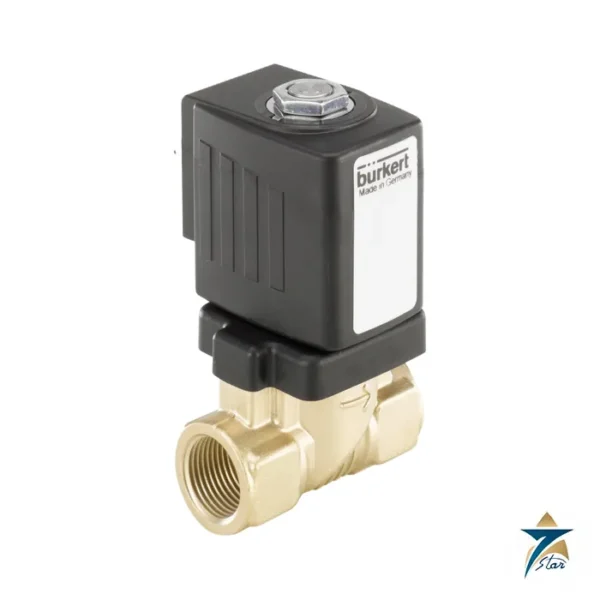
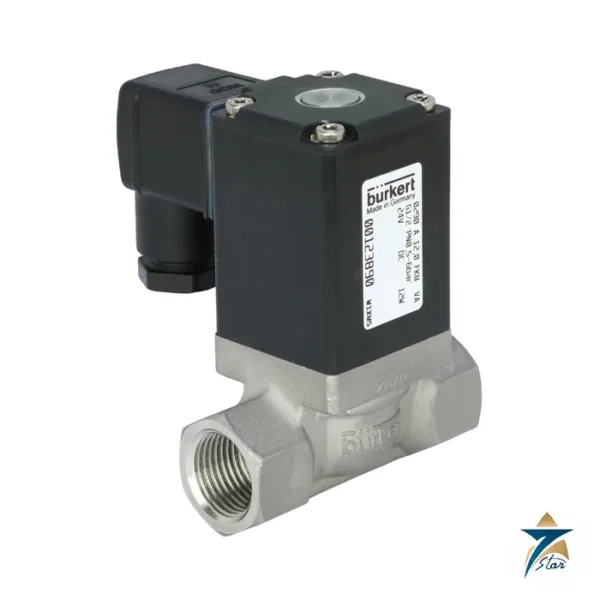
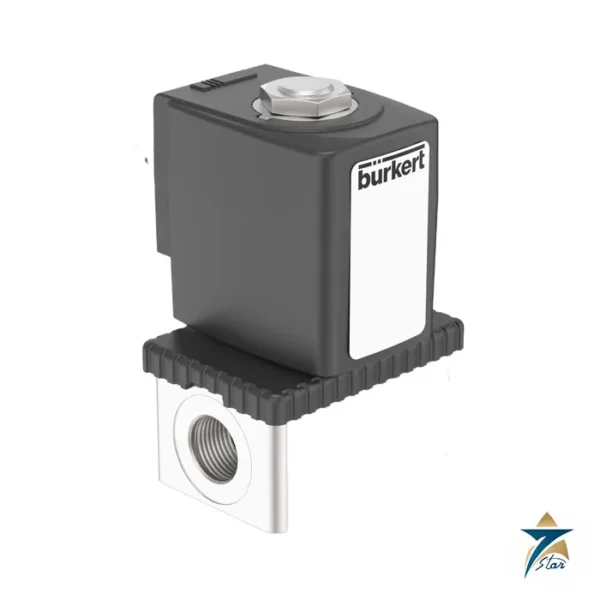
Bürkert 213712 Type 2300 Stainless Angle Seat Valve DN15 G1/2 PTFE

Description

Overview

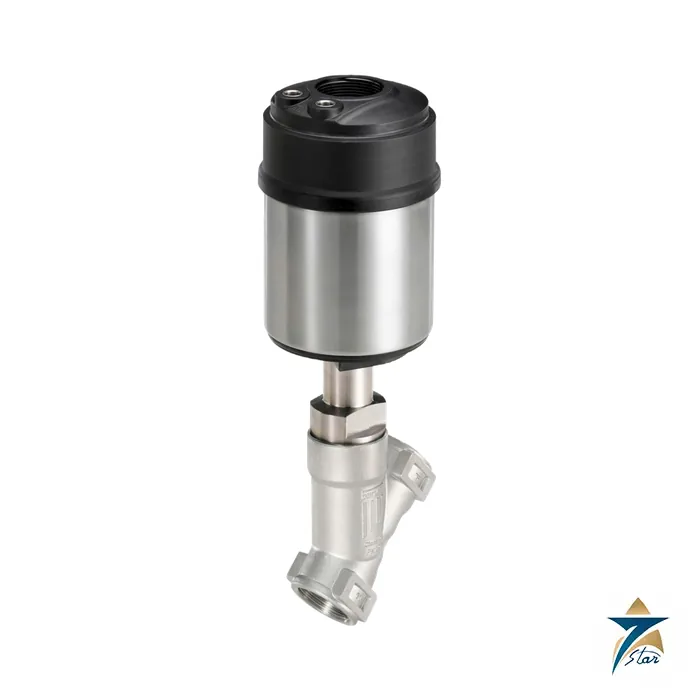
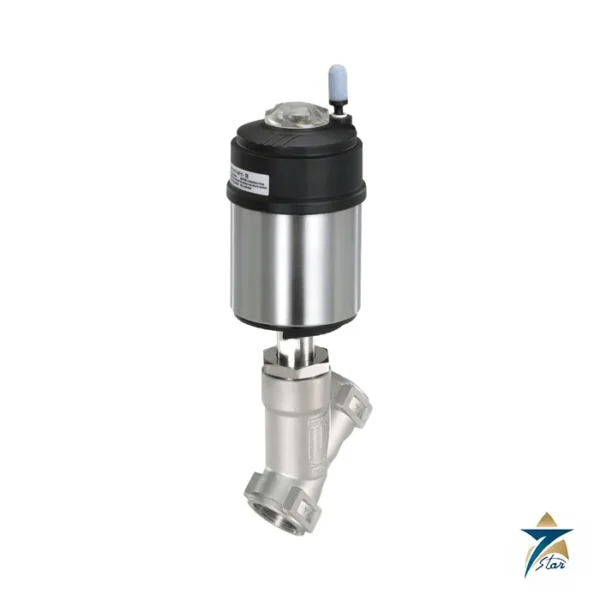
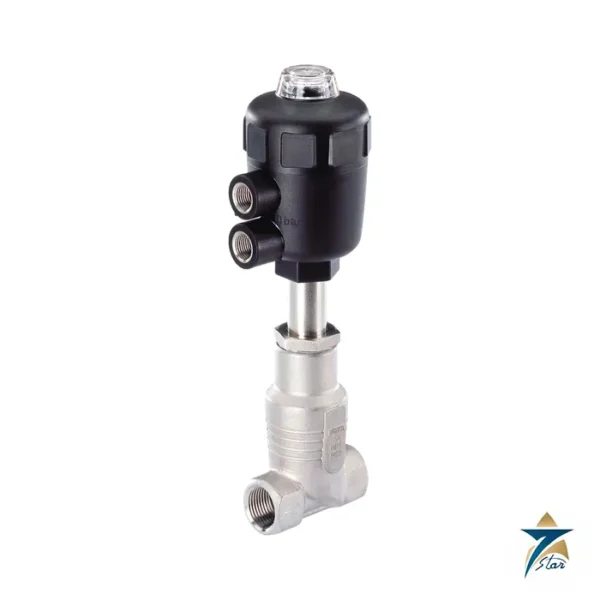
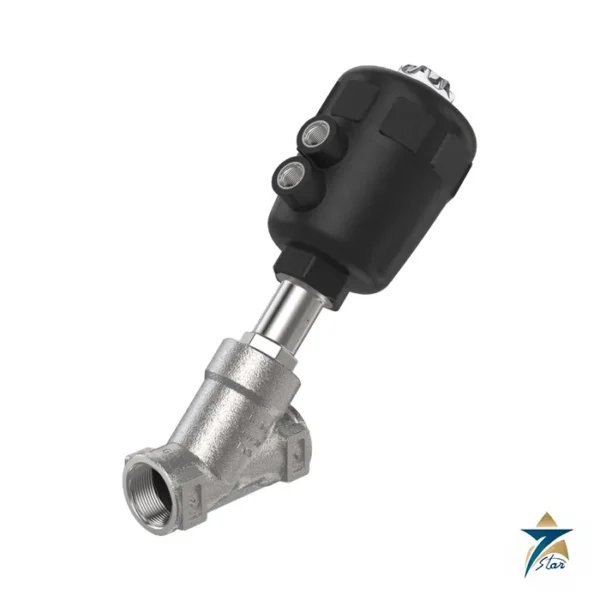
Process plants rely on a few thousand pneumatically actuated shut-off valves, and many of them are angle seat valves. The Bürkert 213712 is the DN 15 member of the Bürkert Type 2300 ELEMENT range in its threaded form: a stainless steel angle seat valve with G1/2 internal threads, a 50 mm pneumatic actuator, a PTFE seat seal and normally closed control function A. It opens when pilot air is applied and closes by spring force when the air is vented. Seven Star LLC is an independent supplier serving Oman and the GCC.

The angle seat geometry places the seat at an angle to the flow, so the medium pushes the plug off its seat when pressure is applied below it. That arrangement, with flow to open, gives good flow capacity and a pressure rating of 25 bar on the family, and it makes the valve well suited to steam, condensate, solvents and cleaning fluids.

Reading the code

In the threaded chart of the datasheet, each row gives nominal diameter, port thread, actuator size, KVS value, maximum operating pressure and the seat seal, and the article number depends on the seat. The Bürkert 213712 is the PTFE seat entry for DN 15 with the smaller 50 mm actuator, in control function A. The stainless steel seat version of the same configuration carries a different number, 213763, and the version with the larger 70 mm actuator, 213713, supports a higher operating pressure of 25 bar.

Specification of Bürkert 213712

Item Value
Article number Bürkert 213712
Nominal diameter DN 15
Port connection G1/2
Actuator size 50 mm (D)
Max. operating pressure 16 bar(g)
Seat seal PTFE
Seat leakage class VI
KVS value 5 m3/h
Design pneumatically operated 2/2-way angle seat control valve, ELEMENT series, modified equal percentage characteristic
Control function A, normally closed by spring, opened by pilot air
Flow direction flow to open, below the seat
Valve body stainless steel CF3M with G (DIN ISO 228-1) internal thread
Actuator stainless steel 1.4561 casing, PPS cover, FKM piston seal
Spindle seal filled PTFE V-rings with spring compensation
Pilot pressure 5.6 to 7 bar(g), air or neutral gas
Process media steam, water, neutral gases, alcohols, oils, fuels, hydraulic fluids, salt solutions, alkalis, organic solvents, oxygen
Medium temperature minus 40 to plus 230 degrees C depending on seat seal and limits chart
Maximum viscosity 600 mm2/s
Nominal pressure PN 25 (DIN EN 1333), Class 150 (DIN EN 1759)
Seat leakage standard DIN EN 60534-4

Strength of the soft seat

A PTFE seat seal gives leakage class VI, which is the tightest class defined in DIN EN 60534-4 and essentially bubble-tight. Stainless steel seats reach class IV, which is acceptable for many process duties but allows a small leakage. PTFE does have a lower temperature limit, and for steam service the operating limits chart in the datasheet must be consulted to find the permitted pressure and temperature pair. The flow characteristic is modified equal percentage, giving fine control at small strokes.

How Bürkert 213712 differs from other Type 2300 variants

The DN 15 valve with a 50 mm actuator has a KVS of 5 m3/h and handles up to 16 bar with the PTFE seat. The DN 20 valve (213715) steps up to KVS 10 with a 70 mm actuator and 25 bar; the DN 25 valve (213718) reaches KVS 16 but only 12 bar with its 70 mm actuator, and 25 bar with the 90 mm actuator. So this DN 15 valve is the smallest standard threaded size, and the lowest-flow choice of the series, ideal for sample lines, small steam traps and dosing.

Process uses

Typical roles include steam supply to heat exchangers, hot water and condensate isolation, solvent and fuel transfer, compressed air and gas lines, and clean-in-place return lines. At utilities in Oman, small angle seat valves are common on boiler auxiliaries, thermal oil systems, desalination dosing lines and skid-mounted packages. The process medium range is wide, from steam and water to alcohols, oils, alkalis and even oxygen, subject to material and cleanliness requirements.

Installation and commissioning

Install the valve with flow entering below the seat, as indicated by the flow direction marking. Use sealing suitable for stainless steel threads and avoid leaving sealant in the bore. Connect the pilot air to the push-in fitting using clean, dry air of 5.6 to 7 bar. Cycle the valve a few times with pilot air to check the stroke and response. When used with a positioner or control head from Bürkert, follow the mounting instructions of that product.

For steam service, drain condensate upstream and open the valve slowly during warm-up to avoid thermal shock to the PTFE seal.

Maintenance

Spindle packing, piston seal and seat seal are wear parts. Plan inspection by cycle count and by service severity, and listen for air escaping from the actuator vent. If the valve leaks through the seat after cleaning, replace the seat set or the complete valve.

Pressure surges and water hammer

Rapid closing of a valve in a liquid line can generate a pressure spike well above the static pressure. Small solenoid valves close in milliseconds, which is an advantage for control but a risk for pipework. If the line is long, if the liquid velocity is high or if the pump is large, estimate the possible surge and check it against the pressure rating of the valve and of the pipe. Remedies include slower valve variants, surge dampers, accumulators or a reduction in flow velocity. The datasheet pressure range refers to steady conditions, so surges must be treated as an additional load.

Environmental conditions in the Gulf

Equipment installed in Oman and the other Gulf countries faces heat, dust, salt and humidity, often in the same location. Direct sunlight can heat a valve body well above the ambient air temperature, and a coil that is already warm from its own losses has less margin. Shade valves where possible, and keep enclosures ventilated. Sand and dust can enter plugs and manual overrides, so check seals regularly. Coastal sites add salt, which accelerates corrosion on exposed metal parts and screws, so materials and coatings should be chosen with this in mind. Air drying is also more demanding in humid coastal conditions.

Related items you may also need: Bürkert Type 6026 Direct-Acting 2/2-Way Plunger Solenoid Valve | Bürkert Type 8681 Control Head for Hygienic Process Valves | Alfa Laval Unique DV-ST UltraPure Diaphragm Valve | All Bürkert products.

Before you order the Bürkert 213712

  • To avoid a wrong delivery, compare the code on the nameplate of the installed unit with the Bürkert 213712 code on this page.
  • The quotation for the Bürkert 213712 states the confirmed code and the lead time to site.
  • The attached manufacturer datasheet covers the Bürkert 213712 ratings, dimensions and installation details.
  • Delivery of the Bürkert 213712 is arranged to project sites in Oman and across the GCC, alongside the rest of our globe valves range.
  • A spare Bürkert 213712 on the shelf is a simple way to protect critical service from long lead times.

Documents and quotation

The Type 2300 datasheet, with fluidic data, operating limits, accessories and the ordering charts for threaded, welded and clamp connections, is attached. Send your RFQ with Bürkert 213712, quantity and delivery location in Oman or the GCC.

Datasheets & Documents
  • PDF Datasheet Bürkert 213712 Type 2300 Stainless Angle Seat Valve DN15 G1/2 PTFE Datasheet Download
Reviews (0)

Reviews

There are no reviews yet.

How would you rate this product?

It takes about 10 seconds — just tap a star. Your email is never published.

About brand

Bürkert is a German family-owned maker of fluid control systems, headquartered in Ingelfingen, Baden-Württemberg. Christian Bürkert founded the company in 1946, and it is known for solenoid valves, process and control valves, flow and analytical sensors, and mass flow controllers. Its products serve water treatment, hygienic processing, gas handling and laboratory applications.

Seven Star LLC lists Bürkert valves and valve automation devices and supplies Bürkert solenoid valves and spare parts to plants in Oman as an independent supplier.

Bürkert company profile

Founded 1946, by Christian Bürkert
Headquarters Ingelfingen, Germany
Ownership Family-owned
Product families Solenoid valves, angle seat process valves, positioners, flow meters, mass flow controllers

Bürkert types listed on this page

Two types are listed. Type 6026 is a direct-acting 2/2-way plunger solenoid valve, with a stainless steel bellows that separates the medium from the coil, and as a direct-acting valve it switches without needing a pressure difference. Type 8681 is the Bürkert control head that mounts on top of hygienic process valves to pilot the actuator and report valve position to the control system. Control heads of this kind are common in food, beverage and pharmaceutical plants in the GCC.

Ordering Bürkert valves: what we need

The type number alone is not enough. Send the identification number from the label, or else the type with orifice, port connection, body and seal material, coil voltage and frequency, circuit function and pressure range. For a Type 8681 control head add the communication variant and the make and model of the process valve it sits on.

Facts checked against Bürkert's published company history, October 2026.

FAQ

Questions about the Bürkert 213712 Type 2300 Stainless Angle Seat Valve

Answers from our engineering team on installation, compatibility and integration.

01What size is the Bürkert 213712?
It is a DN 15 angle seat valve with G1/2 internal threads and a 50 mm pneumatic actuator, in stainless steel with a PTFE seat.
02What is the KVS value of the Bürkert 213712?
The KVS value is 5 m3/h for water measured according to DIN EN 60534-2-4.
03What pilot pressure does the 213712 need?
The datasheet gives a pilot pressure of 5.6 to 7 bar(g) with air or neutral gas.
04How tight is the seat of the Bürkert 213712?
With the PTFE seat the leakage class is VI according to DIN EN 60534-4, the tightest class.
05Is the Bürkert 213712 normally closed?
Yes, control function A is normally closed: spring force closes the valve and pilot air opens it.