- Automation & ControlView all 3,091 products
- Automation Accessories
- AC Drives
- PLC & I/O Cards
- Industrial Communications
- Vibration Monitoring
- Isolator & Barrier
- Controllers & Data Acquisition
- Safety Switches & Guard Locking
- Encoders
- Motor Soft Starters
- CCTV & Security
- Pneumatic Cylinders
- HMI Displays
- Servo Drives
- Industrial Computers
- Machine Vision
- Automation Software
- Robotics
Brand: Autonics
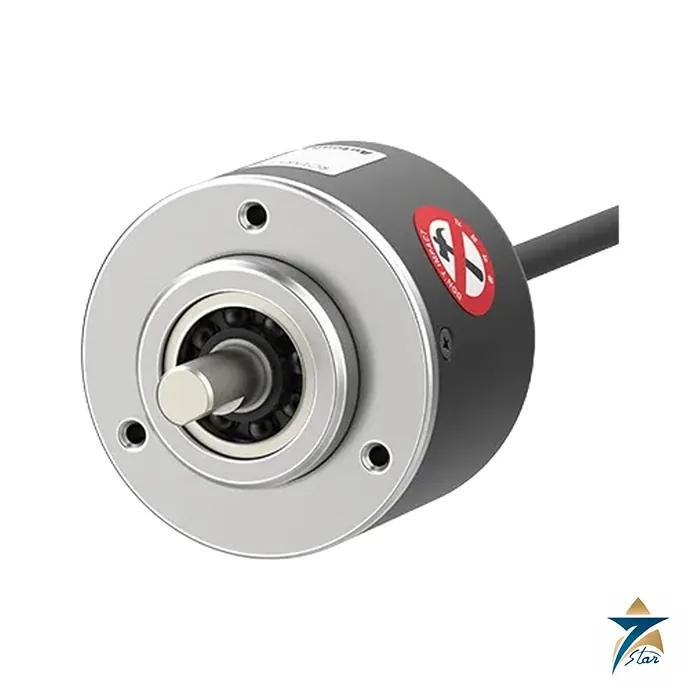
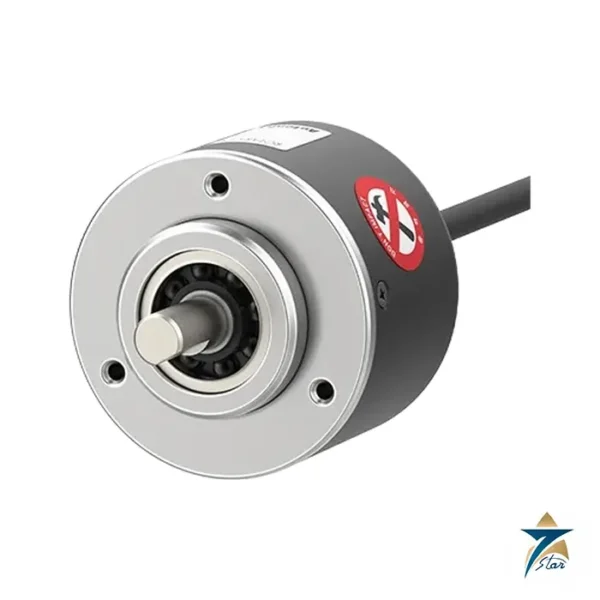
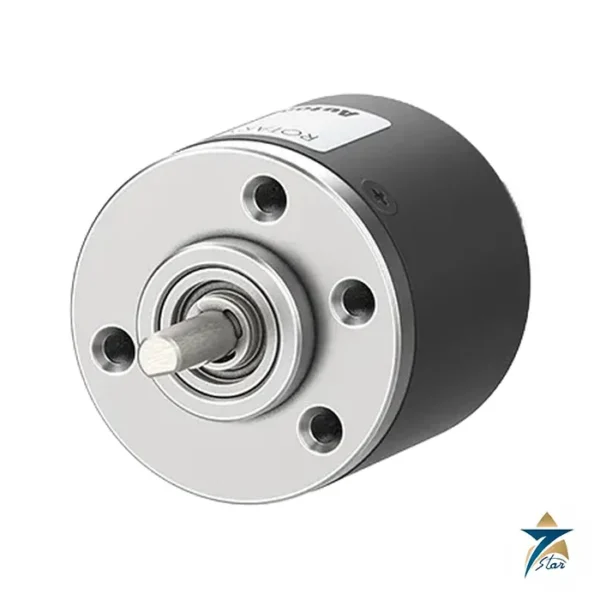
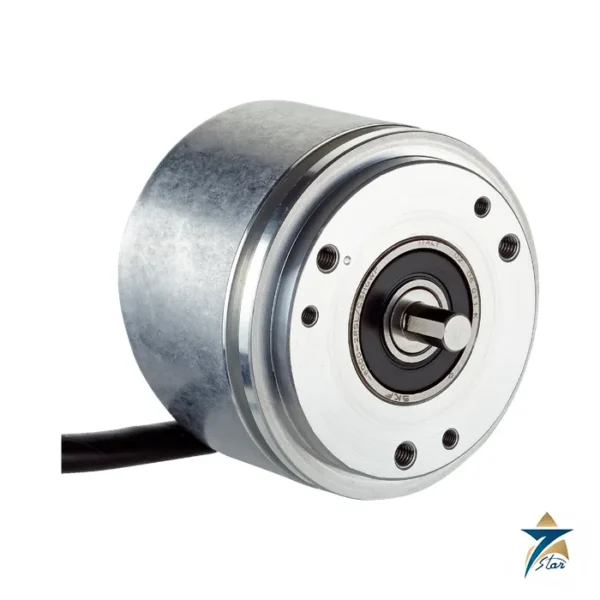
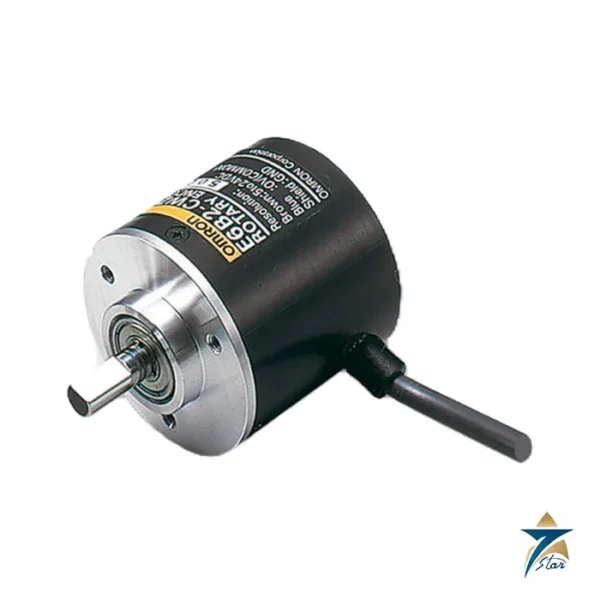
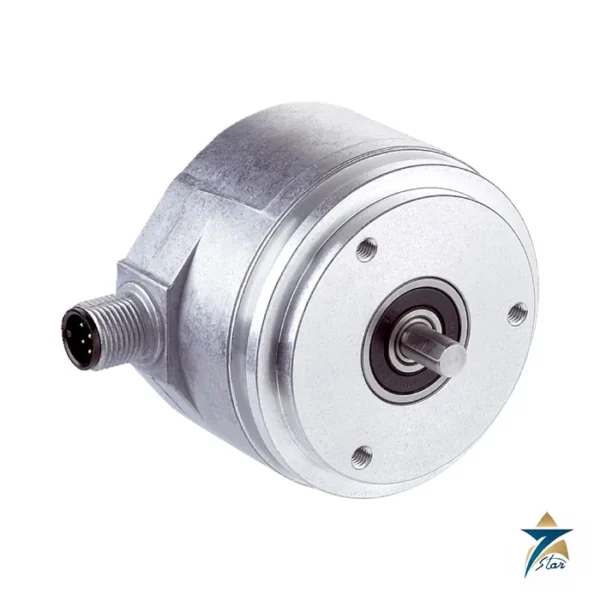
Autonics E50S8-1024-3-T-24 50 mm Incremental Rotary Encoder
Description
Overview
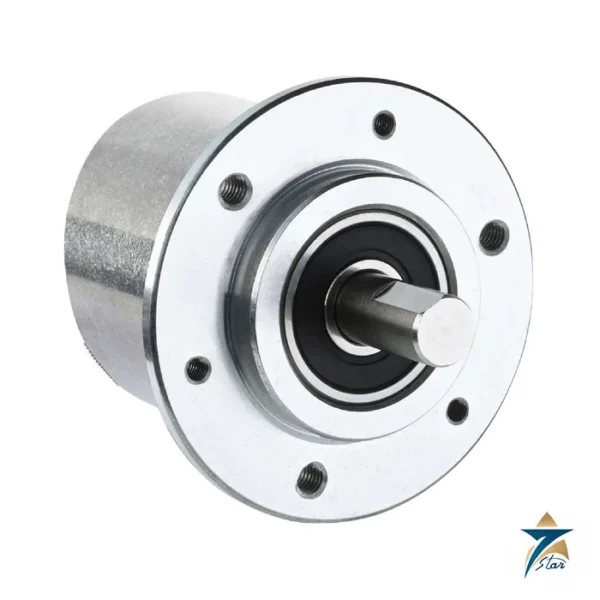
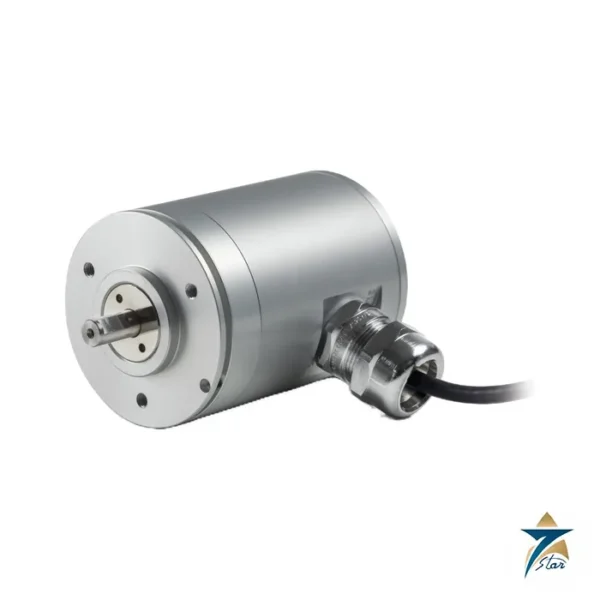
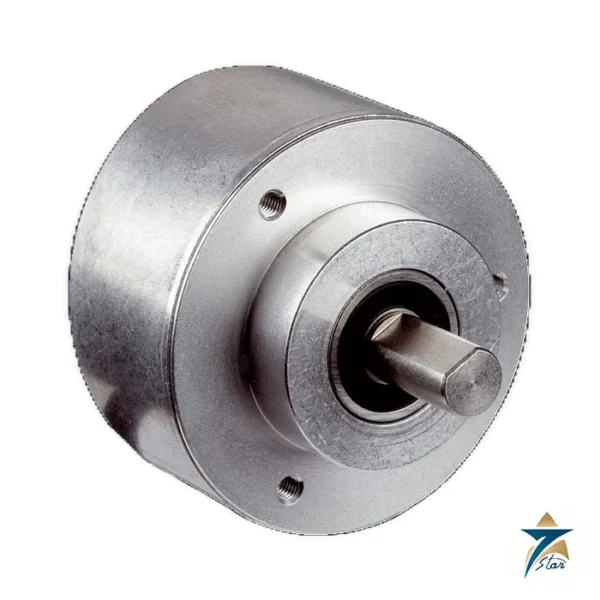
Binary-based resolution is what a digital controller likes, and 1,024 pulses per revolution is the usual choice where a counter or drive works in powers of two. The Autonics E50S8-1024-3-T-24 is a 50 mm incremental rotary encoder with an 8 mm solid shaft that produces 1,024 pulses per turn on three phases, A, B and Z, from a totem-pole output driven by 12 to 24 V DC. The totem-pole stage actively pulls both up and down, so the signal edges are crisp even with longer cables. Seven Star LLC is an independent supplier serving Oman and the GCC.
What each part of Autonics E50S8-1024-3-T-24 means
E50 is the series, S the solid shaft and 8 the shaft diameter of 8 mm. The 1024 is the number of pulses per revolution, 3 gives the phases A, B and Z, T is the totem-pole output and 24 is the 12 to 24 V DC supply. No letter at the end means an axial cable of 2 m.
Datasheet values for Autonics E50S8-1024-3-T-24
| Item | Data |
|---|---|
| Shaft and body | 8 mm solid shaft, 50 mm body |
| Pulses per turn | 1,024 on A and B, Z once per turn |
| Output | Totem-pole, sink 30 mA or less, source 10 mA or less |
| High level | at least supply voltage minus 3.0 V (12 to 24 V supply) |
| Residual voltage | 0.4 V DC or less |
| Response | 1 microsecond or less; 300 kHz maximum |
| Supply | 12 to 24 V DC plus or minus 5 percent |
| Current | 80 mA or less without load |
| Maximum rpm | 5,000 |
| Starting torque | 0.007 N m or less; inertia 80 g cm2 or less |
| Shaft load | radial 10 kgf; thrust 2.5 kgf |
| Temperature | minus 10 to plus 70 degrees C |
| Protection | IP50 cable type |
| Weight | about 275 g |
How the Autonics E50S8-1024-3-T-24 differs from other E50 variants
The nearest siblings change a single field of the code. With 360 pulses and an NPN output the E50S8-360-3-N-24 is a degree encoder that sinks only; with 1,000 pulses the T version has a decimal count. The Autonics E50S8-1024-3-T-24 differs by its binary resolution of 1,024 and by its totem-pole drive. At the full 5,000 rpm, 1,024 pulses give about 85 kHz, still far under the 300 kHz limit; the maximum response revolution from the formula, 300 kHz divided by 1,024 times 60, is roughly 17,600 rpm, so again mechanical speed is the limit. A line driver version would be chosen for runs above about 30 m or in noisy plants.
Totem-pole output in practice
A totem-pole stage has two transistors, one connecting the output to the supply and one to 0 V, so it drives the line actively in both directions. The result is fast rise and fall times and compatibility with both sinking and sourcing inputs, provided that the receiver tolerates the supply level, which is 12 to 24 V here. The manual gives a high level of at least supply voltage minus 3.0 V and a low level of 0.4 V or less. Source current is limited to 10 mA, so use inputs with low current demand, or add a buffer if a long cable or an optocoupler needs more.
Checking the signal quality of the Autonics E50S8-1024-3-T-24
A first commissioning test is to turn the shaft by hand and count pulses on the PLC input monitor. One full turn should produce 1,024 counts on A, and the Z indicator should flash once. For a more thorough test, connect an oscilloscope across A and B with a 0 V reference, and look for a clean square wave with a quarter-cycle phase difference and a low level near 0.4 V or less. A rounded or slow edge points to excessive cable capacitance, a missing ground, or a receiver with too low an input resistance. A totem-pole output is forgiving, but its source current is limited to 10 mA, so a heavy optocoupler input may pull the high level down and shorten the pulse width.
Record the counts per revolution on the commissioning sheet, together with the supply voltage measured at the encoder and not at the panel, since voltage drop in a long cable can leave the encoder below its 12 V minimum. After a few weeks of service, repeat the check, and look at the coupling for fretting marks, which are an early sign of misalignment.
Finally, keep the manual’s relationship in mind when you change a machine’s speed: the maximum response revolution is the maximum response frequency divided by the resolution times 60, and the allowable revolution of 5,000 rpm must not be exceeded by the machine in any mode, including coasting after a trip or test runs at overspeed.
Uses in Oman and the GCC
Binary resolution suits servo and drive feedback, speed monitoring, robotic positioning, and PLC high-speed counters that work in powers of two. Typical hosts include conveyor and packaging drives, printing and coating lines, rotary indexers, hoists and test benches. The 50 mm size with a 8 mm shaft is a standard in industrial machinery, so replacement is straightforward in existing flange mounts.
Fitting and alignment
Use a flexible coupling and keep radial load under 10 kgf and thrust under 2.5 kgf. Make sure that coupling and shaft diameters match, and tighten the grub screws without distortion. Fix the body with its flange screws, and avoid hammering. If the machine shaft has appreciable run-out, the coupling must absorb it, because a bent shaft produces bearing wear and jitter in the signal.
Connection and shielding
Wire brown to the plus supply, blue to 0 V, black to A, white to B, orange to Z and ground the shield to the frame. Insulate any unused wires. Since the encoder case is metal, ground it as well, and separate the cable from motor and inverter wiring. In long cables, line resistance and capacitance increase residual voltage and degrade edges, so check the signal with an oscilloscope on long runs and consider a line driver model for them.
Service
Inspect the coupling and cable, listen for bearing noise, and check the index pulse alignment after any remounting. The encoder is not field repairable. In dusty or wet environments request the IP64 option or shield it, because the standard cable type is rated IP50.
Related items you may also need: Autonics E40S6-2500-6-L-5 Rotary Encoder Incremental | Kübler Sendix 5020 Incremental Hollow Shaft Encoder | Eltra ER 38 F/G Miniature Blind Hollow Shaft Incremental Encoder | All Autonics products.
Documents and quotation
The E50 series product manual that covers the Autonics E50S8-1024-3-T-24 is attached with ordering information, waveforms, wiring and dimensions. Send an RFQ with the part number Autonics E50S8-1024-3-T-24, quantity and delivery location in Oman or the GCC.
Other Models in the E50 Range
Seven Star LLC supplies models from the E50 range in Oman and the GCC. Compare the related models below and request a quote for the one that matches your application.
| Model | Category | |
|---|---|---|
| Autonics E50S8-360-3-N-24 50 mm Incremental Rotary Encoder | Encoders | View details |
| Autonics E50S8-1024-3-T-24 50 mm Incremental Rotary Encoder | Encoders | You are viewing this model |
Datasheets & Documents
- Datasheet Autonics E50S8-1024-3-T-24 50 mm Incremental Rotary Encoder Datasheet Download
Reviews (0)
How would you rate this product? Cancel reply
About brand
Autonics is a South Korean maker of sensors and controllers, founded in 1977 as a small engineering business making controllers for looms. It took the Autonics name in 1988 and opened a new corporate headquarters in Busan in 2014. Autonics makes proximity and photoelectric sensors, rotary encoders, temperature controllers, counters, timers and stepper motor systems, with factories in Busan and Yangsan.
Seven Star LLC lists the Autonics E40S6-2500-6-L-5 incremental rotary encoder and supplies Autonics sensors and control devices in Oman and the GCC.
Autonics company profile
| Founded | 1977, South Korea |
|---|---|
| Current name | Autonics, since 1988 |
| Headquarters | Busan, South Korea |
| Factories | Busan and Yangsan |
| Product families | E40 and E50 rotary encoders, PR proximity sensors, BJ photoelectric sensors, TK temperature controllers |
Milestones
- 1977: The company is founded.
- 1988: Renamed Autonics Corporation.
- 2014: Opens its Busan headquarters.
Reading the Autonics E40S encoder code
E40S is the 40 mm diameter shaft-type incremental encoder, and the 6 that follows is the 6 mm shaft. 2500 is the resolution in pulses per revolution. The next 6 means six output signals: A, B and Z with their inverted signals. L is a line driver output and the final 5 is a 5 V DC supply. The same 40 mm body is made in hollow shaft form as the E40H and E40HB series.
Where Autonics encoders are used
Servo and spindle feedback, conveyor length measurement, packaging and printing machines.
Ordering Autonics encoders: what we need
Send the complete model string from the label. If it is worn off, give the body and shaft diameter, pulses per revolution, output type, supply voltage and cable or connector style.
Facts checked against Autonics corporate profiles, October 2026.
Browse Autonics products by category: Encoders.
FAQ
Questions about the Autonics E50S8-1024-3-T-24 50 mm Incremental Rotary
Answers from our engineering team on installation, compatibility and integration.
01What is the resolution of the Autonics E50S8-1024-3-T-24?
It gives 1,024 pulses per revolution on A and B, with a Z pulse once per turn, a binary count favoured by digital controllers.
02What output does the Autonics E50S8-1024-3-T-24 have?
A totem-pole output that sinks up to 30 mA and sources up to 10 mA, with a low level of 0.4 V DC or less.
03What supply does the Autonics E50S8-1024-3-T-24 use?
12 to 24 V DC plus or minus 5 percent, drawing 80 mA or less with no load.
04What is the shaft of the Autonics E50S8-1024-3-T-24?
An 8 mm solid shaft on a 50 mm body, with radial load up to 10 kgf and thrust load up to 2.5 kgf.
05How fast can the Autonics E50S8-1024-3-T-24 turn?
The maximum allowable revolution is 5,000 rpm, at which 1,024 pulses produce about 85 kHz.


Reviews
There are no reviews yet.