Alfa Laval LKH Multistage hygienic pump: what the range covers
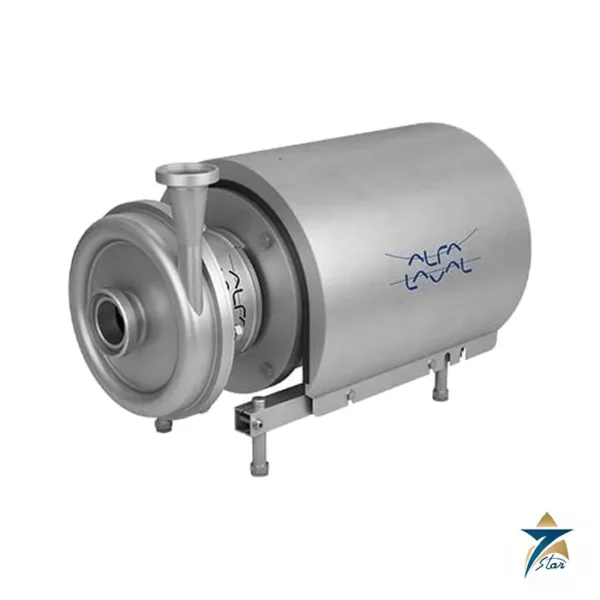
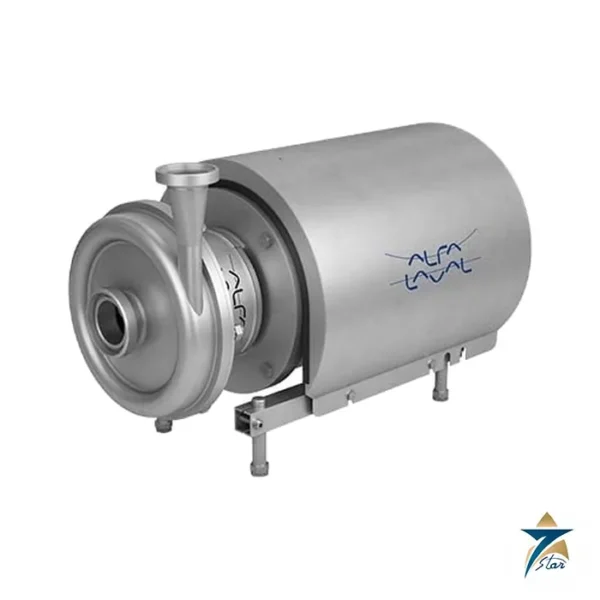
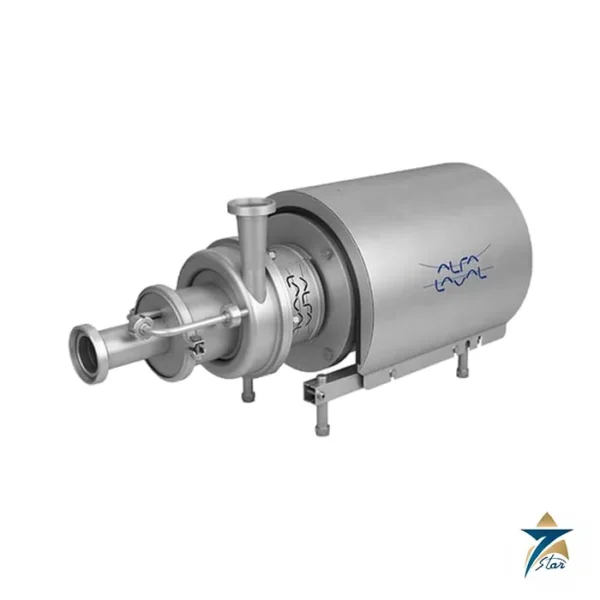
The Alfa Laval LKH Multistage is a stainless steel hygienic centrifugal pump built for duties where a single impeller cannot reach the discharge pressure the process needs. The range is made up of three models, LKH-110, LKH-110P and LKH-120P, and each can be supplied with two, three or four stages. Seven Star LLC supplies Alfa Laval LKH Multistage pumps in Oman and the GCC as an independent supplier based in Muscat.
The key idea behind LKH Multistage is to stack impellers on one shaft so that one machine does the work of up to three booster pumps placed in series along a line. That saves floor space, pipework and motors, and it keeps the hygienic features of the wider LKH family: a semi-open impeller, an external front-loading shaft seal and a design intended for cleaning in place. This page explains how to read the range, what to check before ordering and what to prepare for maintenance.
Decoding the LKH Multistage model names
Alfa Laval does not publish a single numeric ordering code for this range on its public page, so the practical way to define a pump is by model and stage count. The table below shows what is stated for the LKH Multistage family and what must be confirmed with the exact quotation data.
| Item |
What it means |
| Model group |
LKH-110, LKH-110P and LKH-120P |
| Stages available |
Two, three or four stages per model |
| Impeller |
Semi-open impeller with a special vane design and balance holes |
| Shaft seal |
External, front-loading seal; single or flushed arrangement with interchangeable parts |
| Intended duty |
High pressure, low capacity hygienic transfer and filtration feed |
| Details confirmed at quotation |
Motor frame and voltage, seal faces, elastomer, connection standard |
LKH Multistage technical specifications
| Parameter |
Specification |
| Manufacturer / part number |
Alfa Laval / LKH Multistage (models LKH-110, LKH-110P, LKH-120P) |
| Pump type |
Multistage hygienic centrifugal pump |
| Number of stages |
2, 3 or 4 |
| Maximum system (inlet) pressure |
Up to 40 bar |
| Differential pressure |
Up to 19 bar at 50 Hz |
| Typical duty |
High outlet pressure with low capacity |
| Cleaning |
Designed for cleaning in place (CIP) |
| Hygienic design |
Crevice-free internals, controlled compression gaskets, external shaft seal |
| Warranty note from maker |
Three years on non-wearing parts when genuine parts are used |
Flow and head for a given stage count depend on the model, impeller and motor speed, so these should be read from the performance curve supplied for the selected pump rather than estimated from the table above.
How the LKH Multistage pump works
Liquid enters at the suction branch and is accelerated by the first impeller. Instead of leaving the casing at that pressure, it passes into the next stage, where another impeller adds energy. With four stages the pressure gain is roughly the sum of the individual stages, which is why the family can deliver differential pressures up to 19 bar at 50 Hz where a single-stage hygienic pump would need an oversized motor and impeller.
The semi-open impeller has a special vane geometry that keeps the required NPSH low, which lowers the risk of cavitation and mechanical damage. Balance holes in the impeller improve circulation around the shaft seal and reduce axial force, so the seal and motor bearings see less load. The pump is designed to handle inlet pressure up to 40 bar, an important point for membrane filtration where the feed is already pressurised by an upstream pump.
LKH Multistage in the system and related Alfa Laval parts
LKH Multistage sits in the same family as the LKH, LKH Prime, LKH Evap and LKH UltraPure pumps. The same single shaft seal that fits most LKH models also fits all SolidC models, and the seal can be changed between single and flushed arrangements with a few extra parts. This is useful for plants that already hold LKH or SolidC spares, because wear parts overlap.
The Multistage range is aimed mainly at filtration duties such as reverse osmosis and ultrafiltration, where it can replace a series of booster pumps. When a duty needs only moderate pressure, a single-stage LKH or a SolidC may be the more economical choice, and when the product is viscous or shear sensitive a positive displacement pump may be more suitable. We can discuss the alternatives when you send the process data.
Selection and ordering checklist for LKH Multistage
- Required flow rate at the duty point and the minimum and maximum flow the process will see.
- Differential pressure needed across the pump and the highest system pressure on the suction side (the family handles up to 40 bar inlet pressure).
- Fluid name, density, viscosity and temperature, including the CIP solution and its temperature.
- Number of stages (two, three or four) and which of the models LKH-110, LKH-110P or LKH-120P is intended.
- Shaft seal type: single or flushed, with the flushing medium and its supply pressure.
- Elastomer grade to suit product and cleaning chemicals.
- Motor voltage, frequency (50 Hz data is quoted by the maker), enclosure and frame size.
- Connection standard on suction and discharge and the available space on the skid.
Installation, commissioning and maintenance of LKH Multistage
Mount the pump on a rigid base with the suction line as short and straight as possible, because a hygienic pump with low NPSH margin is still sensitive to air entry and starved suction. Check the direction of rotation before running with liquid, and never run the pump dry, since the shaft seal depends on the pumped fluid or the flush for lubrication and cooling.
The compression coupling holds the stub shaft to the motor shaft with precise alignment, so install it according to the instruction manual and re-check after the first runs. Because the shaft seal is front-loading with spring and washers on the atmospheric side, seal replacement is a quick job and does not require the casing to be removed from the line. Keep a spare seal kit and elastomer set for each installed pump, and record the operating hours and CIP cycles so replacement can be planned during scheduled stops.
Where LKH Multistage is used in Oman and the GCC
Hygienic multistage pumps find work wherever pressurised, clean fluids are processed: dairy and juice plants, bottled water and beverage lines, personal care, biotechnology and pharmaceutical facilities. In the GCC these plants often face high ambient temperatures, dusty air and washdown routines, so the choice of motor enclosure, cooling and seal flushing deserves attention at the order stage.
Membrane filtration skids for dairy concentration, juice clarification and process water polishing are the typical home of this pump. A multistage unit lets the skid builder reach feed pressure without a chain of booster pumps, which also reduces the number of seals and connections that have to be kept hygienic.
Model comparison within LKH Multistage
| Model |
Note |
| LKH-110 |
Multistage hygienic pump, two to four stages |
| LKH-110P |
Multistage hygienic pump, two to four stages, P version |
| LKH-120P |
Multistage hygienic pump, two to four stages, P version, larger of the three |
The maker’s public page groups the three models together and does not give separate flow tables, so the exact hydraulic differences must be taken from the selection curve for your duty. Send the duty point and we will help identify which model and stage count fit.
Information to send with an RFQ for LKH Multistage
- Model and stage count, if already known from an existing pump nameplate.
- Nameplate photo or serial number for replacements and spare kits.
- Duty point: flow, differential pressure and suction pressure.
- Product and CIP data: fluid, temperature, chemicals used.
- Motor and electrical supply at site, plus any hazardous-area or ingress-protection requirement.
- Required quantity, delivery location in Oman or the GCC and target date.
Documents and quotation
Send the model name, the number of stages and your duty data and we will confirm which documents are available for this pump. Please include the existing nameplate details if you are replacing a unit.
Seven Star LLC quotes LKH Multistage pumps and related spares from Muscat for Oman and the GCC. Our team will reply with availability and lead time on request.
Other Models in the Al Centrifugal Lkh Range
Seven Star LLC supplies models from the Al Centrifugal Lkh range in Oman and the GCC. Compare the related models below and request a quote for the one that matches your application.























Reviews
There are no reviews yet.