Brand:

Autonics BJ10M-TDT 10 m Through-Beam Photoelectric Sensor

Description

Overview

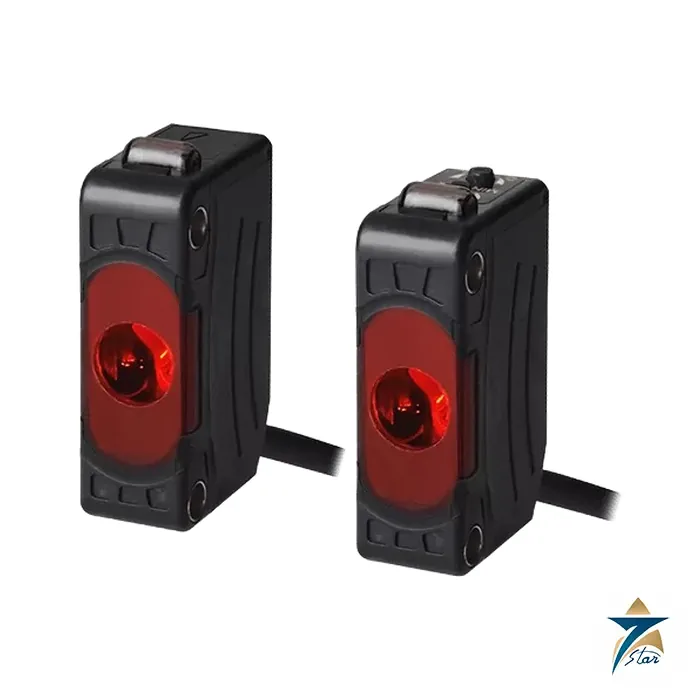
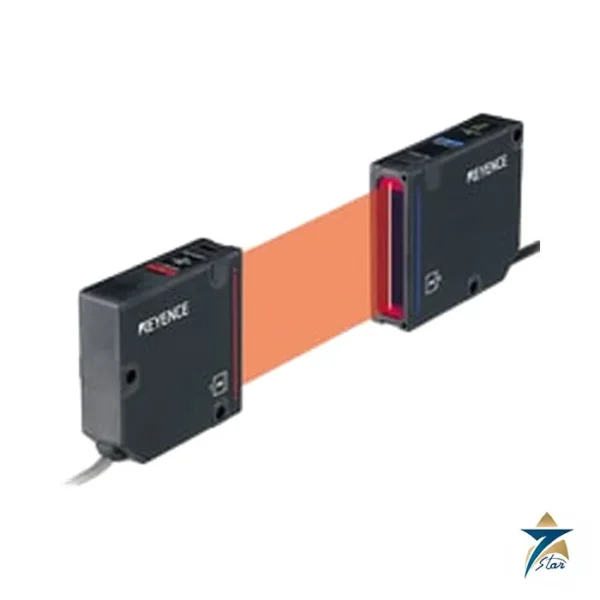
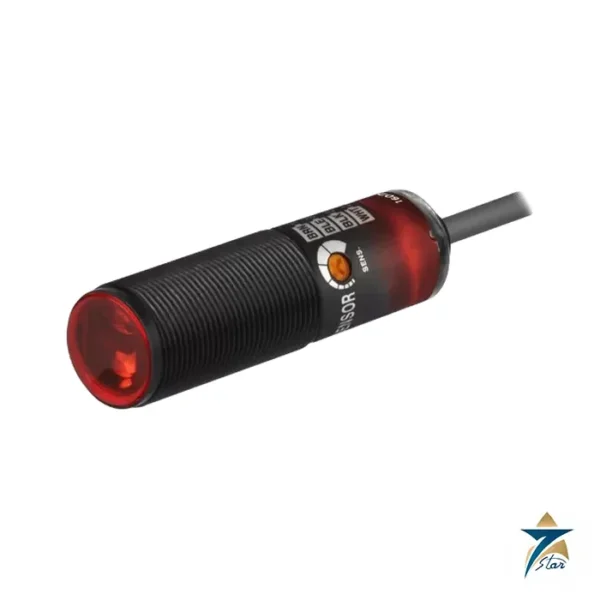
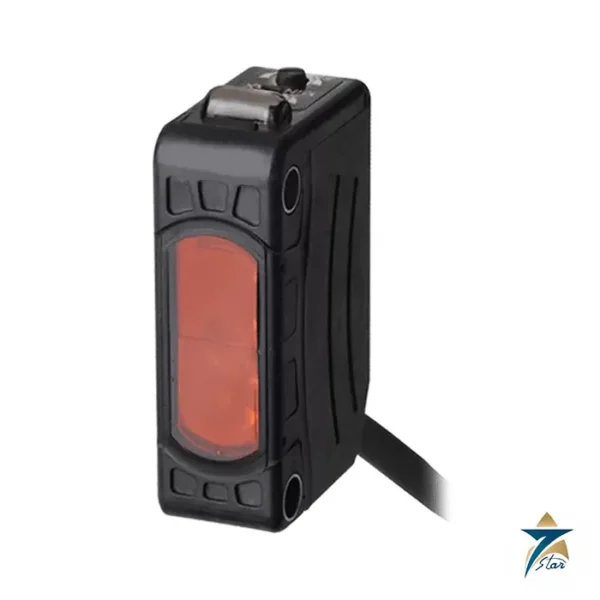
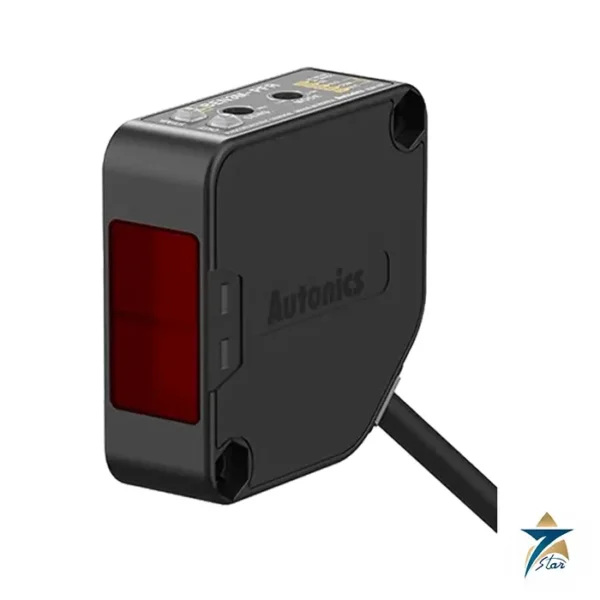
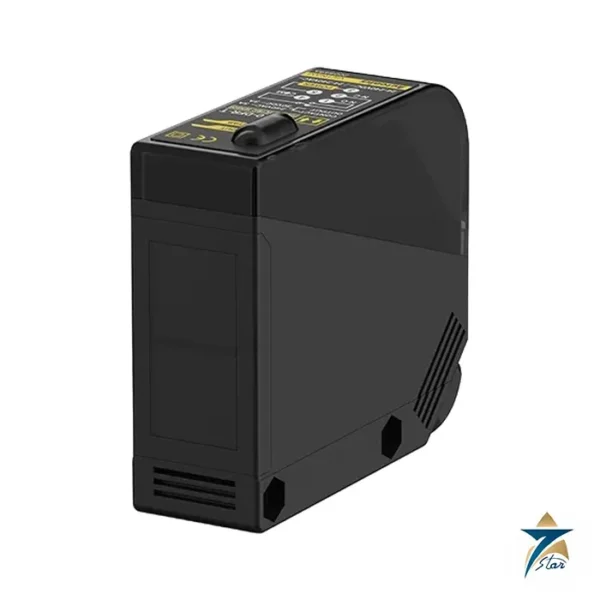
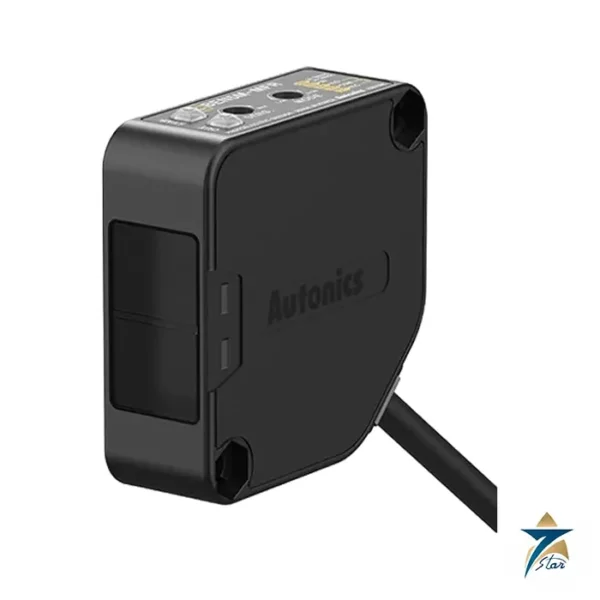
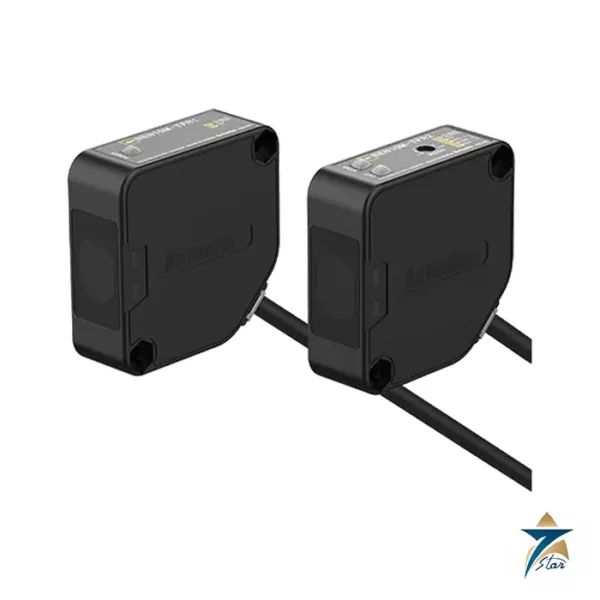
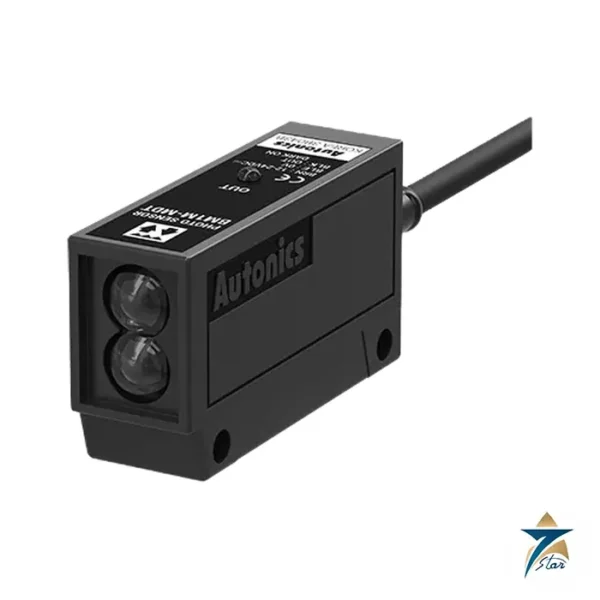
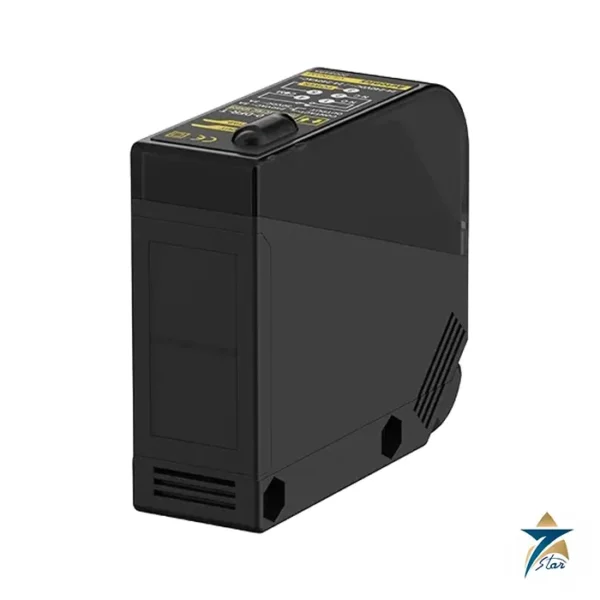
Two small housings, one on each side of the opening: that is how the Autonics BJ10M-TDT works. It is the 10 m through-beam member of the Autonics BJ compact photoelectric range, supplied as an emitter and a receiver on separate cables. An object is detected when it interrupts the red beam travelling between the two units, so the reading does not depend on the colour, finish or reflectivity of the object. Dark rubber, bright steel and wet plastic all look the same to it.

Seven Star LLC is an independent supplier serving Oman and the GCC. We list this exact code for plants that need long-distance, high-certainty detection, for example across wide conveyors, vehicle lanes or loading bays, and we can usually quote it together with bracket and cable accessories.

Where the Autonics BJ10M-TDT fits best

Choose a through-beam pair when the detection distance is long or the target surface is difficult. At 10 m the pair spans a double-lane conveyor, a roller shutter door or a small truck bay. Diffuse sensors lose range on dark materials and retroreflective ones can be fooled by shiny loads, but the beam between a through-beam emitter and receiver is much stronger, so a margin remains even in dusty air.

In Oman, dust from construction materials plants, cement handling and desert-edge logistics yards is a daily reality. A through-beam link with a 10 m rating leaves room for the lens to get dirty before the signal margin disappears, which is exactly why maintenance teams in those places prefer it for critical presence checks.

Autonics BJ10M-TDT data sheet values

Parameter Value
Model BJ10M-TDT, cable type, NPN output
Sensing type Through-beam, emitter plus receiver
Sensing distance 10 m
Minimum sensing target Opaque object, 12 mm diameter or larger
Light source Red
Power supply 12 to 24 VDC, tolerance plus or minus 10 percent
Current draw Emitter 20 mA or less, receiver 20 mA or less
Control output NPN open collector on the receiver, up to 100 mA, 26.4 VDC maximum
Residual voltage 1 VDC or less (NPN)
Response time 1 ms or less
Operation mode Light ON or Dark ON by adjuster
Indicators Receiver: operation (red) and stability (green); emitter: power (green)
Ambient temperature -25 to 55 C
Protection rating IP65
Cable 3.5 mm diameter, 2 m; emitter uses two wires, receiver three
Unit weight About 90 g for the set, 115 g packaged

How BJ10M-TDT differs from other BJ variants

Inside the same BJ family, the through-beam models are offered at 7 m, 10 m and 15 m. The Autonics BJ10M-TDT is the middle option: more reach than the 7 m pair and a lower cost of alignment effort than the 15 m pair. The polarized retroreflective BJ3M-PDT reaches only 3 m, and the diffuse BJ100-DDT and BJ300-DDT detect at 100 mm and 300 mm.

One practical difference from the other sensing types is the wiring. A reflective BJ sensor needs one three-wire cable. This through-beam set needs two cables, because the emitter takes just the supply (brown and blue) while only the receiver carries the black output wire. Another difference is that mutual interference prevention is not listed for the through-beam type, so keep adjacent pairs facing in the same direction or separate them by distance.

Wiring and installation

Mount both housings so their optical axes face each other and are parallel. The supplied brackets use M3 bolts and nuts, tightened at about 0.5 N m. Wire the emitter to 12 to 24 VDC with the brown wire to plus and the blue wire to 0 V. On the receiver, add the black wire to the load or PLC input; the load sits between the output and the positive line for an NPN sensor.

A short cable run and separation from power cables reduce noise problems. If you use an SMPS, a spike suppression component on any inductive load is recommended. Turn the adjuster slowly with the supplied screwdriver and avoid force.

Alignment and setting procedure

With the beam path clear, turn the receiver sensitivity from minimum to maximum and mark the point at which the operation indicator changes. Then place a test object in the beam, continue turning, and mark the second point. A setting at about the midpoint gives margin on both sides. The green stability indicator must be steady in both states; if it flashes with a clear beam, adjust the angle of one of the housings by a few degrees and try again.

Choose Light ON if the output should be active while the beam is received, or Dark ON if the output should be active while the beam is interrupted. The selector is on the receiver. Most conveyors use Dark ON so that the output goes active when a carton blocks the beam.

Maintenance

Lenses of both housings collect dust. Clean them with a dry soft cloth; avoid solvents. Check alignment after any vibration event or mechanical impact. Replace the pair together if the lens is cracked, as water ingress would affect the IP65 rating. Keep a record of the sensitivity setting when a unit is replaced, so the new pair can be set to the same margin.

Ordering notes

State on your RFQ that you need the complete BJ10M-TDT set (emitter plus receiver) and whether NPN or PNP output is required. The through-beam name for a single emitter or receiver is for management purposes only, so you do not need to order the two halves separately for this code. Connector-type BJ sensors and M8 cables are separate items if the machine design needs plug-in wiring.

Related items you may also need: Autonics PR18-8DN M18 Inductive Proximity Sensor 8 mm | Autonics E40S6-2500-6-L-5 Rotary Encoder Incremental | Autonics BEN5M-MFR Retroreflective Photoelectric Sensor 5 m | All Autonics products.

Documents and quotation

The manufacturer publishes a product manual that covers Autonics BJ10M-TDT, and the PDF is attached to this page for download so your engineers can check wiring, ratings and dimensions before ordering. Please send your RFQ with the part number and the quantity you need, plus the delivery site, and our team will reply with availability and lead time.

Other Models in the BJ Range

Seven Star LLC supplies models from the BJ range in Oman and the GCC. Compare the related models below and request a quote for the one that matches your application.

ModelCategory
Autonics BJ15M-TDT 15 m Through-Beam Photoelectric Sensor NPNPhotoelectric SensorsView details
Autonics BJ3M-PDT Polarized Retroreflective Photoelectric Sensor 3 mPhotoelectric SensorsView details
Autonics BJ10M-TDT 10 m Through-Beam Photoelectric SensorPhotoelectric SensorsYou are viewing this model
Datasheets & Documents
  • PDF Datasheet Autonics BJ10M-TDT 10 m Through-Beam Photoelectric Sensor Datasheet Download
Reviews (0)

Reviews

There are no reviews yet.

How would you rate this product?

It takes about 10 seconds — just tap a star. Your email is never published.

About brand

Autonics is a South Korean maker of sensors and controllers, founded in 1977 as a small engineering business making controllers for looms. It took the Autonics name in 1988 and opened a new corporate headquarters in Busan in 2014. Autonics makes proximity and photoelectric sensors, rotary encoders, temperature controllers, counters, timers and stepper motor systems, with factories in Busan and Yangsan.

Seven Star LLC lists the Autonics E40S6-2500-6-L-5 incremental rotary encoder and supplies Autonics sensors and control devices in Oman and the GCC.

Autonics company profile

Founded 1977, South Korea
Current name Autonics, since 1988
Headquarters Busan, South Korea
Factories Busan and Yangsan
Product families E40 and E50 rotary encoders, PR proximity sensors, BJ photoelectric sensors, TK temperature controllers

Milestones

  • 1977: The company is founded.
  • 1988: Renamed Autonics Corporation.
  • 2014: Opens its Busan headquarters.

Reading the Autonics E40S encoder code

E40S is the 40 mm diameter shaft-type incremental encoder, and the 6 that follows is the 6 mm shaft. 2500 is the resolution in pulses per revolution. The next 6 means six output signals: A, B and Z with their inverted signals. L is a line driver output and the final 5 is a 5 V DC supply. The same 40 mm body is made in hollow shaft form as the E40H and E40HB series.

Where Autonics encoders are used

Servo and spindle feedback, conveyor length measurement, packaging and printing machines.

Ordering Autonics encoders: what we need

Send the complete model string from the label. If it is worn off, give the body and shaft diameter, pulses per revolution, output type, supply voltage and cable or connector style.

Facts checked against Autonics corporate profiles, October 2026.

FAQ

Questions about the Autonics BJ10M-TDT 10 m Through-Beam Photoelectric

Answers from our engineering team on installation, compatibility and integration.

01What is the sensing distance of the Autonics BJ10M-TDT?
The through-beam pair is rated for 10 m between emitter and receiver, which is suited to wide conveyors, doors and loading bays.
02Does a through-beam sensor need two cables?
Yes. The emitter has its own two-wire supply cable and the receiver has a three-wire cable that includes the black output wire.
03What is the smallest object the BJ10M-TDT can detect?
The manual states an opaque target of about 12 mm diameter or larger for the 10 m through-beam type; smaller objects may pass through unnoticed.
04Is BJ10M-TDT suitable for dusty locations?
The IP65 housing resists dust and water jets, and the long-range beam leaves signal margin, but lenses should still be wiped regularly in dusty plants.
05How do I set Light ON or Dark ON?
Use the adjuster on the receiver with the small screwdriver in the package. Dark ON makes the output switch when the beam is interrupted by a product.