- Automation & ControlView all 3,138 products
- Automation Accessories
- AC Drives
- PLC & I/O Cards
- Industrial Communications
- Vibration Monitoring
- Controllers & Data Acquisition
- Isolator & Barrier
- Safety Switches & Guard Locking
- Encoders
- Motor Soft Starters
- CCTV & Security
- Pneumatic Cylinders
- HMI Displays
- Servo Drives
- Industrial Computers
- Machine Vision
- Automation Software
- Robotics
Brand: Autonics
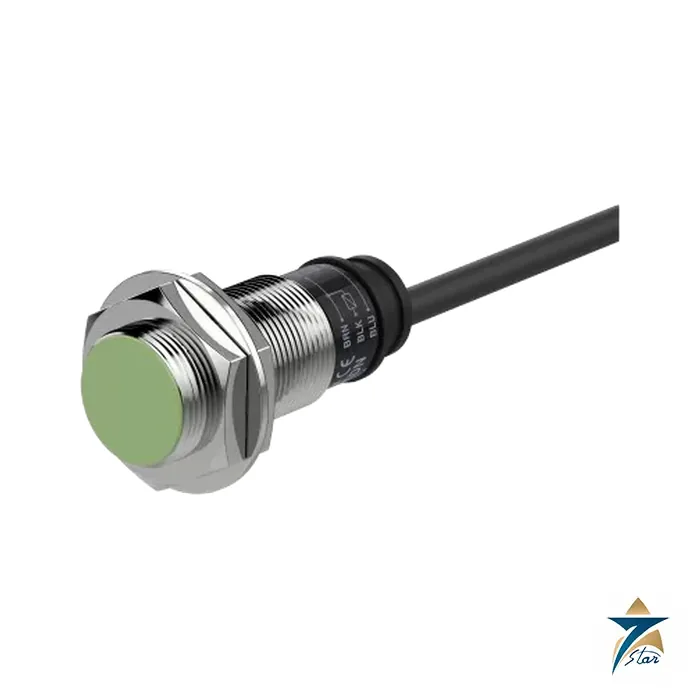
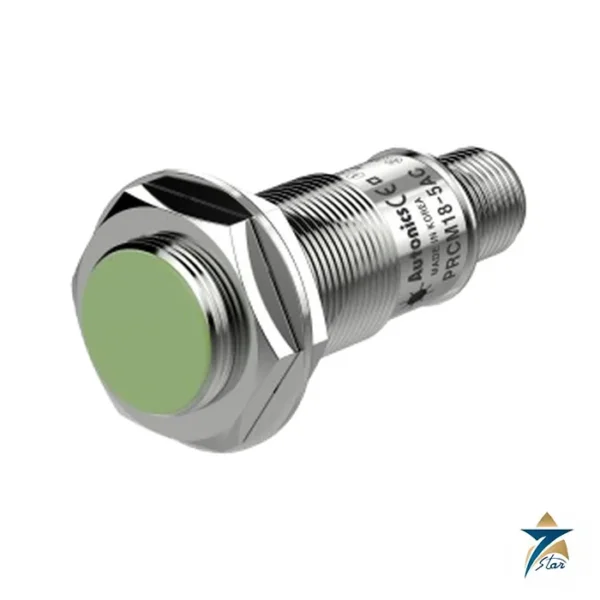
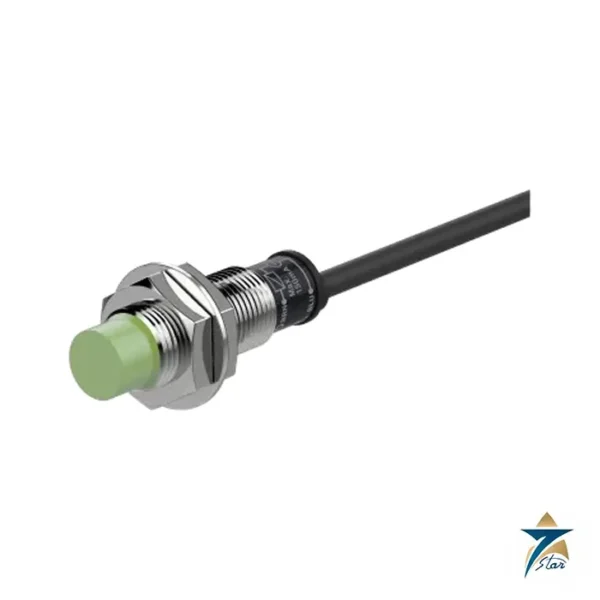
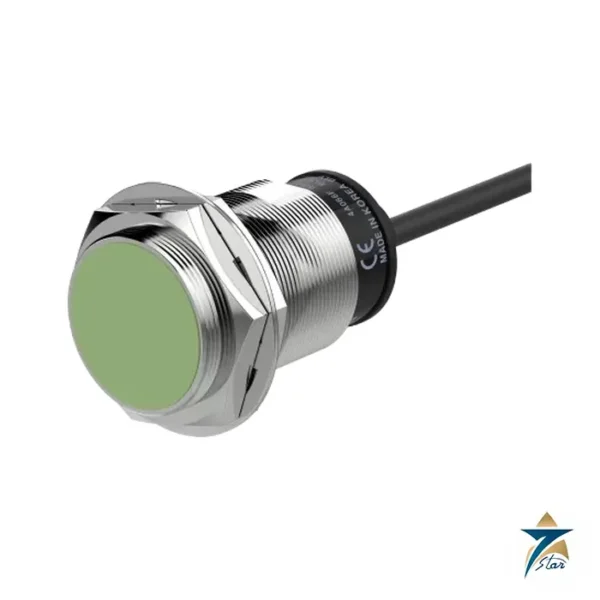
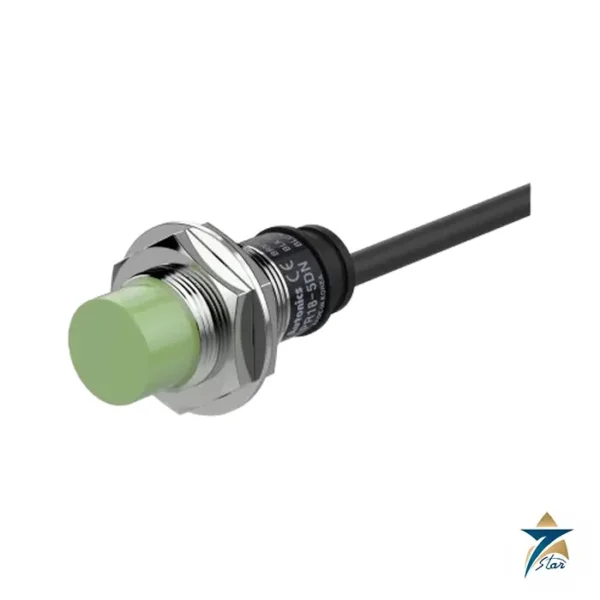
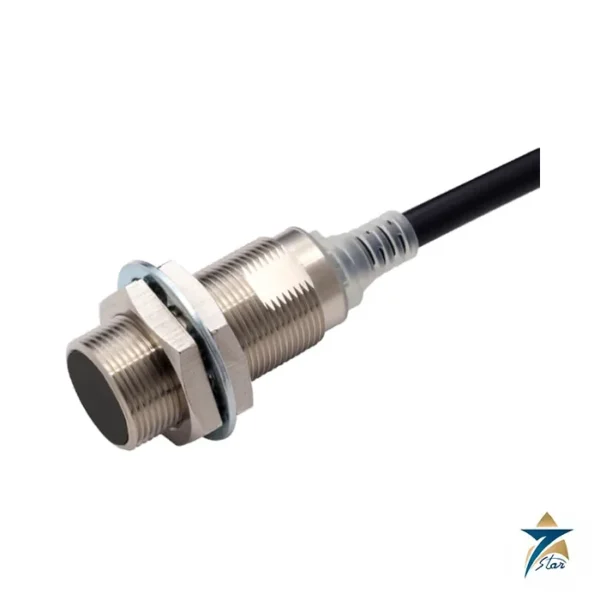
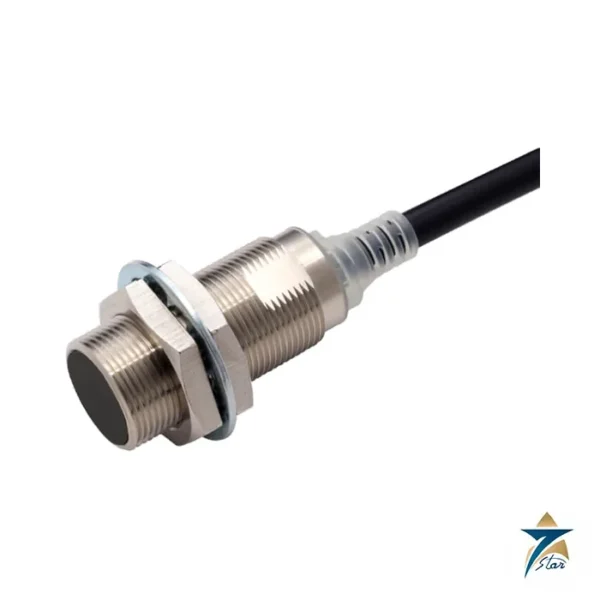
Autonics PR18-5DN M18 Inductive Proximity Sensor, NPN NO
Description
Overview
The Autonics PR18-5DN is a cylindrical inductive proximity sensor in the common M18 size, built for flush mounting and a switching distance of 5 mm. It switches a 12 to 24 V DC load through an NPN normally open output and reports each detection on a red operation indicator. Seven Star LLC is an independent supplier serving Oman and the GCC. This page lists the data of the PR DC 3-wire series that applies to this code, so that a maintenance planner or buyer can compare it with the sensor already fitted on a conveyor, a machine guard or a valve skid.
Metal-detecting sensors of this size are among the most frequently replaced items on process packages, because they sit near moving steel and are often knocked or washed. Having the exact code in stock avoids waiting for a rebuild of the whole control panel.
Reading the code Autonics PR18-5DN
PR is the cylindrical series. There is no letter after PR, so the housing is the general type and not the spatter-resistant A version, and the cable type has no W or CM suffix. 18 is the diameter of the sensing side in millimetres, and 5 is the sensing distance in millimetres. D means a 12 to 24 V DC supply, and N means NPN output, normally open. The ordering table of the manual also offers N2 for NPN normally closed, P for PNP normally open and P2 for PNP normally closed, plus a V suffix for an oil resistant cable, so confirm every field on the nameplate before ordering.
Specifications of Autonics PR18-5DN
| Item | Data |
|---|---|
| Housing and sensing face | Cylindrical, 18 mm diameter, nickel plated brass case and nut, PBT sensing side |
| Installation | Flush type |
| Sensing distance | 5 mm |
| Setting distance | 0 to 3.5 mm |
| Hysteresis | 10 percent of sensing distance or less |
| Standard target | Iron, 18 x 18 x 1 mm |
| Response frequency | 500 Hz (average value) |
| Supply | 12 to 24 V DC, operating range 10 to 30 V DC, ripple 10 percent or less |
| Current consumption | 10 mA or less |
| Control output | NPN normally open, up to 200 mA |
| Residual voltage | 1.5 V or less |
| Temperature drift | Within plus or minus 10 percent of the sensing distance at 20 C |
| Ambient temperature | -25 to 70 C, storage -30 to 80 C |
| Protection | IP67, surge, short-circuit and reverse polarity protection |
| Cable | 5 mm diameter, 3-wire, 2 m, AWG 22 |
| Weight | About 110 g without packing |
Key features
- A flush body lets the face sit level with a steel bracket or machine plate
- Protection circuits against surge, output overcurrent and reversed supply polarity
- IP67 housing with a nickel plated brass case that tolerates washdown and light oil mist
- A visible red indicator to speed up commissioning and fault finding
- Two nuts and one washer are supplied, so no loose hardware has to be sourced
Where it is used in Oman and the GCC
In Omani and Gulf plants the sensor is typically a position or presence element on rotating and sliding equipment. Examples include proving the open position of a damper on an air-handling skid, counting steel pins on a bottling or packing line, detecting a coupling guard that is closed on a pump driver, and confirming a gate or door on a utilities enclosure. Its standard target is mild steel, so it does best on iron parts; other metals are seen at a reduced distance.
Because the housing is brass and the sensing face is PBT, it is not meant for strong solvents, and its manual excludes locations with flammable or explosive gas, so it belongs in general industrial areas and not in classified zones. In hot outdoor installations, keep the sensor in shade or inside an enclosure: the rated ambient limit is 70 C.
How PR18-5DN differs from other PR DC 3-wire variants
Within the same table the 18 mm flush column has a 5 mm range and a 500 Hz response. The non-flush PR18-8DN reaches 8 mm but responds at 350 Hz and needs a free zone around the face. The 12 mm flush PR12-2DN offers 2 mm and 1.5 kHz, while the 30 mm flush PR30-10DN offers 10 mm at 400 Hz. Choose Autonics PR18-5DN when 5 mm of gap is needed in an M18 hole and the target is a sizeable piece of steel (the standard plate is 18 mm square).
The setting distance, the zone in which the sensor works stably, is 70 percent of the sensing distance, which is 0 to 3.5 mm here. Plan the mechanical gap inside that range and not at the limit.
Mounting and wiring
Thread the sensor into its bracket and tighten the nuts with the washer in place. For the Autonics PR18-5DN the manual gives 14.7 N m for both the front and the rear nut position, so do not exceed that figure. Wire brown to the positive supply, blue to 0 V and black to the load. Wait 0.8 seconds after power-up before relying on the output. Keep the cable away from drive output cables and use a diode or varistor across any inductive load nearby.
Do not pull the cable with more than 50 N, and if you extend it use AWG 22 or heavier wire over a length not above 200 m. Flush mounting still needs spacing between neighbours: with two sensors face to face keep at least 30 mm apart, and side by side 36 mm.
Maintenance and troubleshooting
Clean the face with a dry cloth, never water or an organic solvent. If the sensor stops switching, check the supply at the cable end, then the distance to the target, then the indicator. A sensor that is permanently on often has a metal chip or swarf near the face. A damaged cable jacket is the usual cause of intermittent behaviour in moving installations, and the cable can be cut and replaced only with the sensor out of circuit.
Ordering notes
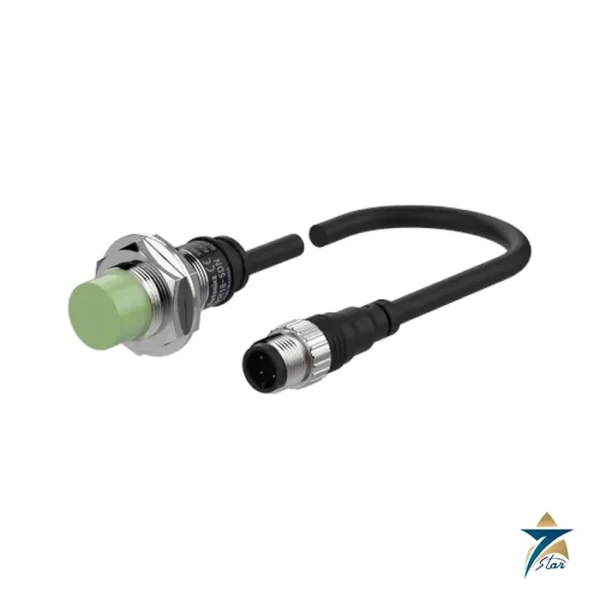
Alternative outputs of the same size are available as separate codes, so state N, N2, P or P2 clearly when you request Autonics PR18-5DN. A 12 to 24 V DC PLC input with a sinking or sourcing common decides whether NPN or PNP is correct, and the wrong type is the most common ordering error. Sold separately by the manufacturer are M12 connector cables, fixing brackets and spatter protection covers.
Related items you may also need: Autonics PR18-8DN M18 Inductive Proximity Sensor 8 mm | Autonics E40S6-2500-6-L-5 Rotary Encoder Incremental | SICK WL11G-2K3431 W11G-2 Sensor for Transparent Objects | All Autonics products.
Autonics PR18-5DN ordering checklist
- When the Autonics PR18-5DN replaces an installed unit, check the existing nameplate against the code on this page before ordering.
- Every enquiry for the Autonics PR18-5DN is answered with a written confirmation of the code, condition and expected lead time.
- Use the attached datasheet to check the Autonics PR18-5DN ratings, dimensions and connection details against your drawings.
- We supply the Autonics PR18-5DN as part of our inductive proximity sensors range to plants in Oman and the GCC.
- For critical duty, keeping one Autonics PR18-5DN as a site spare shortens downtime after a failure.
Documents and quotation
The instruction manual of the PR DC 3-wire series is attached to this product page as a datasheet. To receive a quotation, send an RFQ to Seven Star LLC with the part number Autonics PR18-5DN, the quantity and the delivery location. Our team in Muscat will confirm lead time and shipping to Oman and the GCC.
Datasheets & Documents
- Datasheet Autonics PR18-5DN M18 Inductive Proximity Sensor, NPN NO Datasheet Download
Reviews (0)
How would you rate this product? Cancel reply
About brand
Autonics is a South Korean maker of sensors and controllers, founded in 1977 as a small engineering business making controllers for looms. It took the Autonics name in 1988 and opened a new corporate headquarters in Busan in 2014. Autonics makes proximity and photoelectric sensors, rotary encoders, temperature controllers, counters, timers and stepper motor systems, with factories in Busan and Yangsan.
Seven Star LLC lists the Autonics E40S6-2500-6-L-5 incremental rotary encoder and supplies Autonics sensors and control devices in Oman and the GCC.
Autonics company profile
| Founded | 1977, South Korea |
|---|---|
| Current name | Autonics, since 1988 |
| Headquarters | Busan, South Korea |
| Factories | Busan and Yangsan |
| Product families | E40 and E50 rotary encoders, PR proximity sensors, BJ photoelectric sensors, TK temperature controllers |
Milestones
- 1977: The company is founded.
- 1988: Renamed Autonics Corporation.
- 2014: Opens its Busan headquarters.
Reading the Autonics E40S encoder code
E40S is the 40 mm diameter shaft-type incremental encoder, and the 6 that follows is the 6 mm shaft. 2500 is the resolution in pulses per revolution. The next 6 means six output signals: A, B and Z with their inverted signals. L is a line driver output and the final 5 is a 5 V DC supply. The same 40 mm body is made in hollow shaft form as the E40H and E40HB series.
Where Autonics encoders are used
Servo and spindle feedback, conveyor length measurement, packaging and printing machines.
Ordering Autonics encoders: what we need
Send the complete model string from the label. If it is worn off, give the body and shaft diameter, pulses per revolution, output type, supply voltage and cable or connector style.
Facts checked against Autonics corporate profiles, October 2026.
Browse Autonics products by category: Encoders.
FAQ
Questions about the Autonics PR18-5DN M18 Inductive Proximity Sensor,
Answers from our engineering team on installation, compatibility and integration.
01What does the N in Autonics PR18-5DN mean?
It marks an NPN output with a normally open function, so the output sinks the load to 0 V when steel is present in the sensing range.
02What is the sensing distance of the PR18-5DN?
The rated sensing distance is 5 mm for the standard 18 x 18 x 1 mm iron target, and the recommended setting distance is 0 to 3.5 mm.
03Can the PR18-5DN be mounted flush in steel?
Yes. It is the flush type, so the face may sit level with the surrounding metal; keep 30 mm face to face and 36 mm side by side between sensors.
04What supply does the PR18-5DN need?
It runs on 12 to 24 V DC with an operating window of 10 to 30 V DC, drawing 10 mA or less and switching up to 200 mA.
05Is the PR18-5DN suitable for hazardous areas?
The manual advises against flammable or explosive gas locations, so use it in general industrial areas and fit a suitable certified device where zones apply.


Reviews
There are no reviews yet.