- Automation & ControlView all 3,134 products
- Automation Accessories
- AC Drives
- PLC & I/O Cards
- Industrial Communications
- Vibration Monitoring
- Controllers & Data Acquisition
- Isolator & Barrier
- Safety Switches & Guard Locking
- Encoders
- Motor Soft Starters
- CCTV & Security
- Pneumatic Cylinders
- HMI Displays
- Servo Drives
- Industrial Computers
- Machine Vision
- Automation Software
- Robotics
Brand: Bürkert
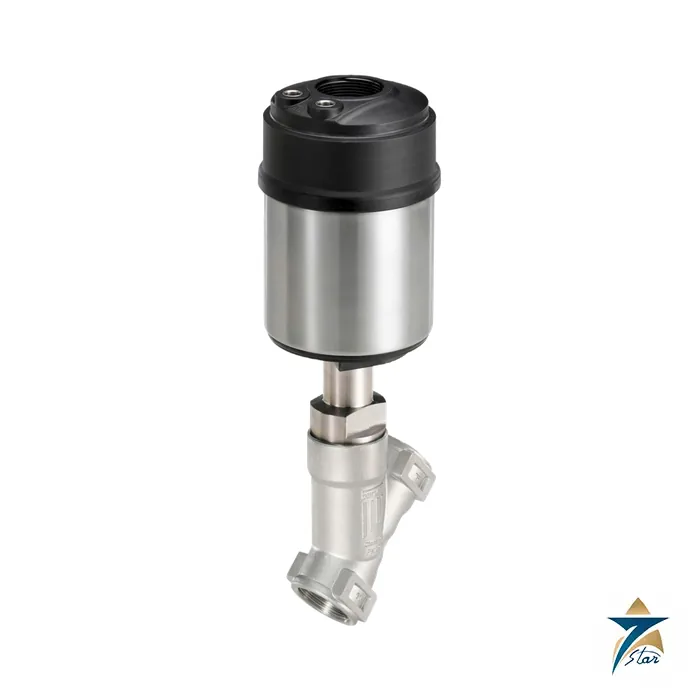
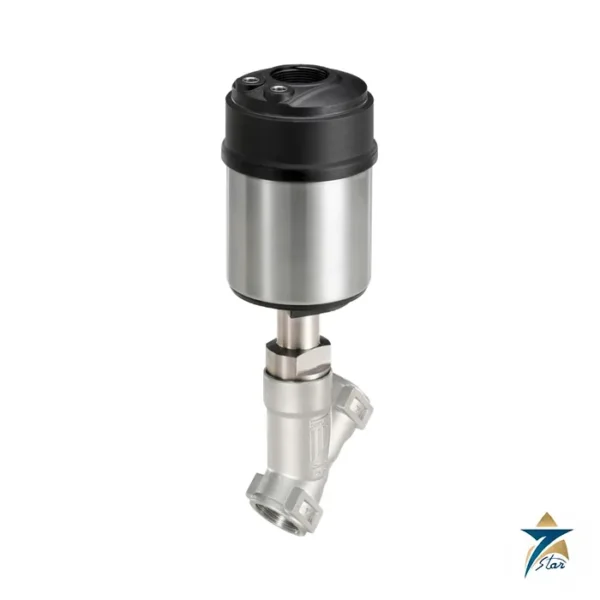
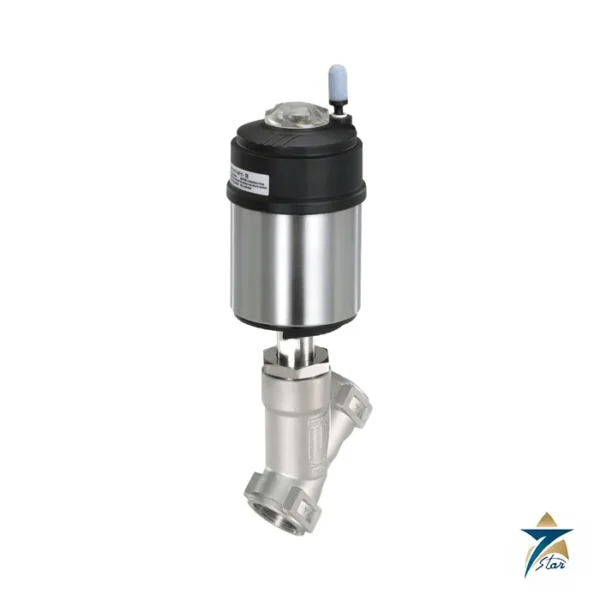
Bürkert 213763 Type 2300 Stainless Angle Seat Valve DN15 Metal Seat
Description
Overview
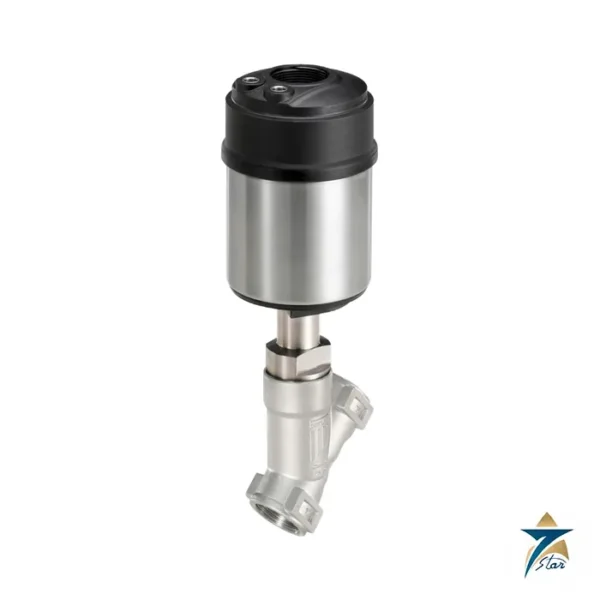
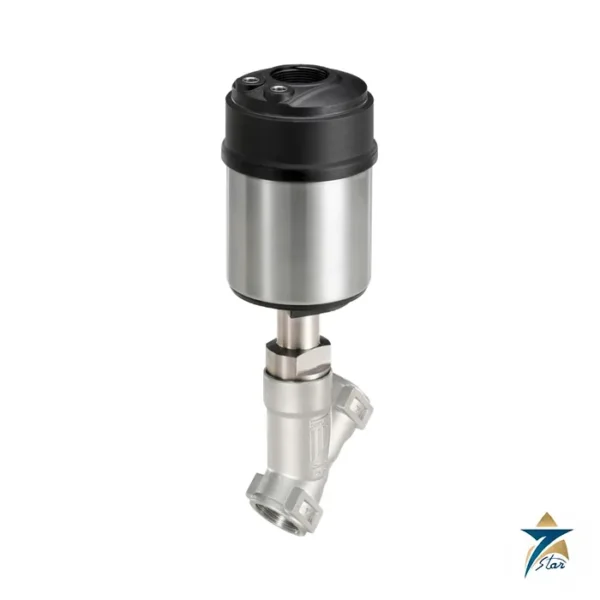
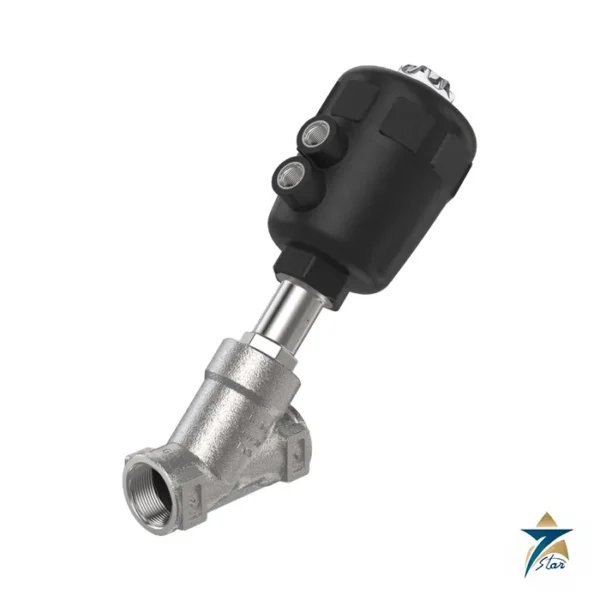
Hot media, steam and abrasive fluids call for a metal seat, and the Bürkert 213763 provides one in the smallest threaded size of the Bürkert Type 2300 range. It is a DN 15 stainless steel angle seat valve with G1/2 internal threads, a 50 mm pneumatic actuator, normally closed control function A and a stainless steel seat seal instead of PTFE. Seven Star LLC is an independent supplier serving Oman and the GCC.
Metal seat or soft seat
The same DN 15, G1/2, 50 mm actuator configuration is available with a PTFE seat as 213712. The difference is in tightness and temperature. A stainless steel seat reaches leakage class IV of DIN EN 60534-4, which permits a small controlled leakage, while PTFE reaches class VI. In return, steel withstands higher temperatures and abrasion, and does not creep or cold-flow like PTFE. The Bürkert 213763 is therefore the choice where the operating limits chart calls for a metal seat, for example on higher-temperature steam or on media containing particles.
Parameters of Bürkert 213763
| Item | Value |
|---|---|
| Article number | Bürkert 213763 |
| Nominal diameter | DN 15 |
| Port connection | G1/2 |
| Actuator size | 50 mm (D) |
| Max. operating pressure | 16 bar(g) |
| Seat seal | stainless steel |
| Seat leakage class | IV |
| KVS value | 5 m3/h |
| Design | pneumatically operated 2/2-way angle seat control valve, ELEMENT series, modified equal percentage characteristic |
| Control function | A, normally closed by spring, opened by pilot air |
| Flow direction | flow to open, below the seat |
| Valve body | stainless steel CF3M with G (DIN ISO 228-1) internal thread |
| Actuator | stainless steel 1.4561 casing, PPS cover, FKM piston seal |
| Spindle seal | filled PTFE V-rings with spring compensation |
| Pilot pressure | 5.6 to 7 bar(g), air or neutral gas |
| Process media | steam, water, neutral gases, alcohols, oils, fuels, hydraulic fluids, salt solutions, alkalis, organic solvents, oxygen |
| Medium temperature | minus 40 to plus 230 degrees C depending on seat seal and limits chart |
| Maximum viscosity | 600 mm2/s |
| Nominal pressure | PN 25 (DIN EN 1333), Class 150 (DIN EN 1759) |
| Seat leakage standard | DIN EN 60534-4 |
How Bürkert 213763 differs from other Type 2300 variants
Key numbers: KVS 5 m3/h, maximum operating pressure 16 bar(g) with the 50 mm actuator, leakage class IV with the stainless seat. The sibling with the 70 mm actuator, 213764, allows 25 bar. The PTFE versions are 213712 and 213713. In DN 20 the stainless seat valve is 213766, and in DN 25 it is 213768. Choose this part when the smallest size is enough and the seat must be metallic.
Applications
Metal-seated angle seat valves are used on steam lines, thermal fluid circuits, hot condensate, fuel and solvent service. In the Gulf, where hot utilities are common, they appear on boiler house sample lines, heat-tracing steam and small process heaters. Tight shut-off is slightly lower than with PTFE, so they are not recommended where zero leakage is a requirement of the process.
Installation
Install with flow below the seat. Warm up steam lines slowly. Supply pilot air at 5.6 to 7 bar(g), and fit a restrictor in the exhaust for smooth closing. Do not exceed the limits chart for the pressure and temperature pair.
Make sure the actuator is positioned so that any condensate can drain away from the pilot air fitting, and keep insulation away from the actuator because heat transferred up the spindle shortens the piston seal life.
Care
Check the spindle packing and the actuator seals at intervals and replace by cycle count. A metal seat is robust, but dirt in the line can still scratch it, so strainers are recommended.
Vibration and mounting
Solenoid valves mounted directly on pipes inherit the vibration of the pipework, and on pump skids, compressors and engines this can loosen plugs and fatigue wiring. Support heavy lines near the valve so that the valve body does not carry the load, use flexible hoses where the machine moves and fit the cable with a service loop. Check that the plug retaining screw has a locking washer and that the cable gland is tight. If a valve must be mounted on an engine or reciprocating machine, ask the manufacturer for guidance on vibration limits before purchase and consider a remote mounting on a stable bracket with flexible connections.
Lifetime expectations
Service life depends on the number of switching cycles, the medium, the temperature and the supply conditions. Elastomer seals gradually harden or swell, springs relax and coils age through thermal stress. A valve in clean, dry air at moderate temperature can outlast the machine, while the same valve in dirty or hot service might need replacement in a year. Rather than waiting for failure, track the switching count on critical valves where the control system can log it and replace them at a fixed interval based on experience. Planned replacement during a shutdown is much cheaper than a fault during production.
Common wiring mistakes
Field experience shows a few wiring errors that account for most call-outs on newly installed valves. A plug that is not seated fully leaves the contacts intermittent and lets water into the housing. A cable gland tightened onto a damaged cable can pinch a conductor and cause a short only when the machine vibrates. Mixed-up polarity on a DC coil with a protection diode simply stops the valve from working. Control cabinets sometimes have a fuse that is too large for the coil, so a fault in one valve takes out a whole group of outputs. A short checklist covering seating, gland, polarity and fuse rating, followed by a continuity test, removes the large majority of these problems before start-up.
Response time and control logic
The switching times in the datasheet are measured under defined conditions, typically at 20 degrees C and a stated pressure with a stated outlet condition. In the field, tube length, cylinder volume and supply pressure change the effective response of the whole circuit far more than the valve alone. When a sequence depends on timing, measure the actual response with a pressure sensor or a stopwatch in the finished system and adjust timers or sensors accordingly. If two valves must act together, use identical numbers and equal tube lengths so that their delays match. Keep a margin in the control logic so that normal ageing does not push the sequence out of its tolerance.
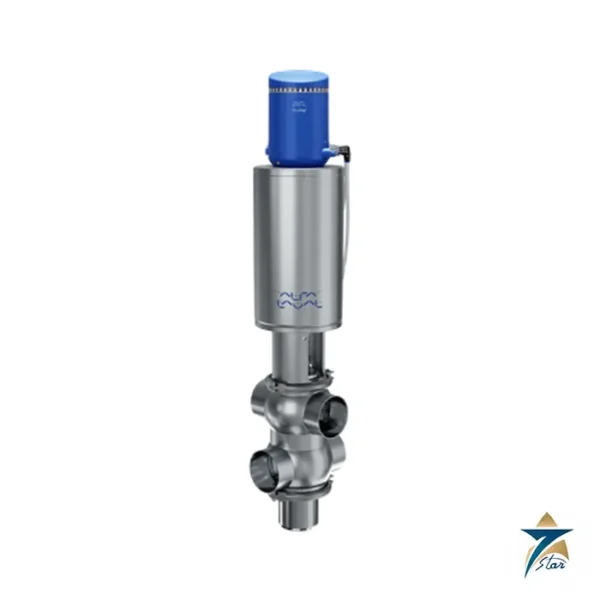
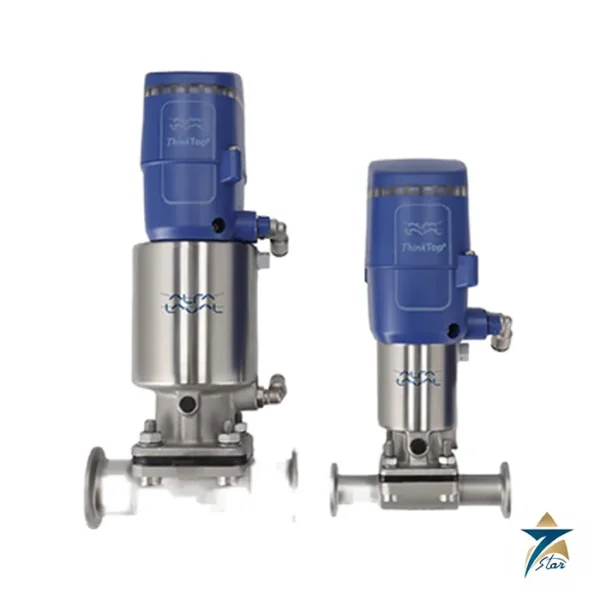
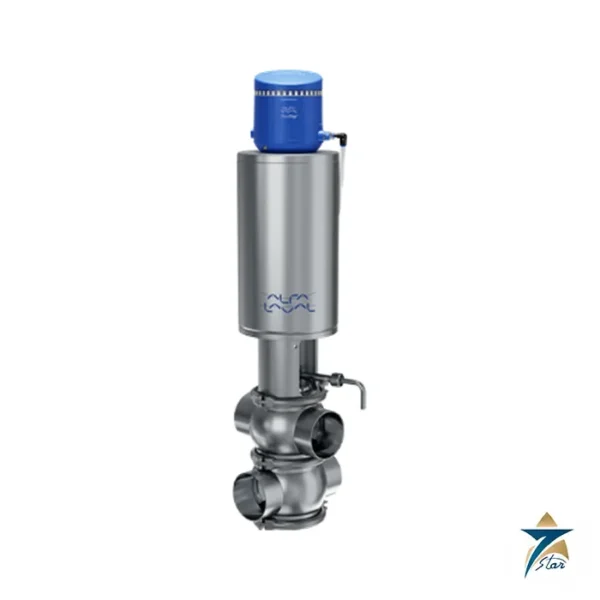
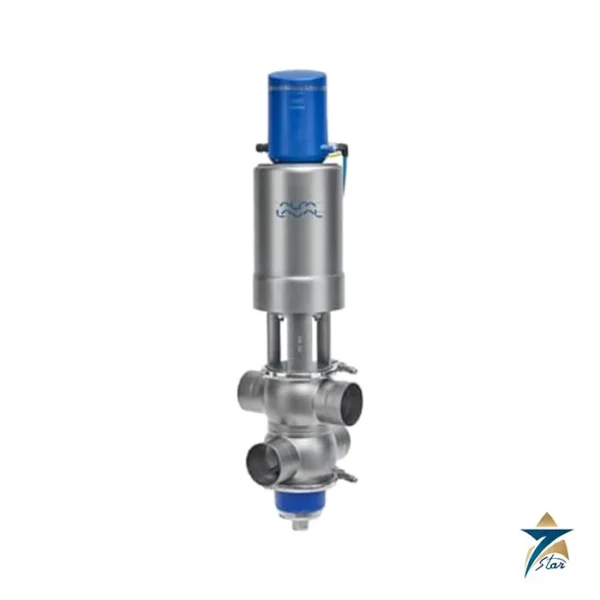
Related items you may also need: Bürkert Type 6026 Direct-Acting 2/2-Way Plunger Solenoid Valve | Bürkert Type 8681 Control Head for Hygienic Process Valves | Alfa Laval Unique Mixproof Double Seat Valve | All Bürkert products.
Checklist before ordering the Bürkert 213763
- Before ordering the Bürkert 213763, compare the nameplate of the unit being replaced with the code shown on this page, character by character.
- Our team confirms the Bürkert 213763 code and lead time in writing before any order is placed.
- The datasheet attached to this page is the reference for the Bürkert 213763 dimensions, ratings and connections.
- The Bürkert 213763 is listed in our globe valves range and ships to sites across Oman and the GCC.
- Spare quantities of the Bürkert 213763 are worth planning for critical duty so that a failure does not stop production.
Documents and quotation
The Type 2300 datasheet, with the ordering chart for this article, is attached. Send your RFQ with Bürkert 213763, the quantity and the delivery place in Oman or the GCC.
Other Models in the 2300 Range
Seven Star LLC supplies models from the 2300 range in Oman and the GCC. Compare the related models below and request a quote for the one that matches your application.
| Model | Category | |
|---|---|---|
| Bürkert 213712 Type 2300 Stainless Angle Seat Valve DN15 G1/2 PTFE | Globe Valves | View details |
| Bürkert 213715 Type 2300 Stainless Angle Seat Valve DN20 G3/4 PTFE | Globe Valves | View details |
| Bürkert 213718 Type 2300 Stainless Angle Seat Valve DN25 G1 PTFE | Globe Valves | View details |
| Bürkert 213763 Type 2300 Stainless Angle Seat Valve DN15 Metal Seat | Globe Valves | You are viewing this model |
Datasheets & Documents
- Datasheet Bürkert 213763 Type 2300 Stainless Angle Seat Valve DN15 Metal Seat Datasheet Download
Reviews (0)
How would you rate this product? Cancel reply
About brand
Bürkert is a German family-owned maker of fluid control systems, headquartered in Ingelfingen, Baden-Württemberg. Christian Bürkert founded the company in 1946, and it is known for solenoid valves, process and control valves, flow and analytical sensors, and mass flow controllers. Its products serve water treatment, hygienic processing, gas handling and laboratory applications.
Seven Star LLC lists Bürkert valves and valve automation devices and supplies Bürkert solenoid valves and spare parts to plants in Oman as an independent supplier.
Bürkert company profile
| Founded | 1946, by Christian Bürkert |
|---|---|
| Headquarters | Ingelfingen, Germany |
| Ownership | Family-owned |
| Product families | Solenoid valves, angle seat process valves, positioners, flow meters, mass flow controllers |
Bürkert types listed on this page
Two types are listed. Type 6026 is a direct-acting 2/2-way plunger solenoid valve, with a stainless steel bellows that separates the medium from the coil, and as a direct-acting valve it switches without needing a pressure difference. Type 8681 is the Bürkert control head that mounts on top of hygienic process valves to pilot the actuator and report valve position to the control system. Control heads of this kind are common in food, beverage and pharmaceutical plants in the GCC.
Ordering Bürkert valves: what we need
The type number alone is not enough. Send the identification number from the label, or else the type with orifice, port connection, body and seal material, coil voltage and frequency, circuit function and pressure range. For a Type 8681 control head add the communication variant and the make and model of the process valve it sits on.
Facts checked against Bürkert's published company history, October 2026.
Browse Bürkert products by category: Solenoid Valve, Control Valves.
FAQ
Questions about the Bürkert 213763 Type 2300 Stainless Angle Seat Valve
Answers from our engineering team on installation, compatibility and integration.
01How does the Bürkert 213763 differ from the 213712?
Both are DN 15, G1/2 valves with 50 mm actuators, but the 213763 has a stainless steel seat (class IV) instead of PTFE (class VI).
02What pressure does the Bürkert 213763 allow?
The maximum operating pressure with the 50 mm actuator is 16 bar(g); the 70 mm version 213764 allows 25 bar.
03What is the KVS of the 213763?
The KVS value is 5 m3/h for water, measured according to DIN EN 60534-2-4.
04Is the Bürkert 213763 normally closed?
Yes, control function A: spring-closed, opened by pilot air.
05What medium may the 213763 handle?
Steam, water, neutral gases, alcohols, oils, fuels, hydraulic fluids, salt solutions, alkalis, organic solvents and oxygen, within the operating limits.


Reviews
There are no reviews yet.